Birth in Huzhou
Born on the twenty-second day of the seventh lunar month in Linghu, Gui'an County, Huzhou Prefecture.
沈家本
Shen Jiaben (1840–1913), styled Zidun and art name Jiyi, hailing from Gui'an County, Huzhou Prefecture, Zhejiang, was an eminent jurist, legal educator, and philological legal historian of the late Qing dynasty. He is universally recognized as the pioneering architect and principal founder of China's modern legal modernization. After earning his Jinshi degree in 1883, he served successively as Department Director in the Board…
Shen Jiaben (1840–1913), styled Zidun and art name Jiyi, hailing from Gui'an County, Huzhou Prefecture, Zhejiang, was an eminent jurist, legal educator, and philological legal historian of the late Qing dynasty. He is universally recognized as the pioneering architect and principal founder of China's modern legal modernization. After earning his Jinshi degree in 1883, he served successively as Department Director in the Board of Punishments, Prefect of Baoding, Chief Minister of the Daliyuan (Supreme Court of Justice), Vice Minister of Justice, Imperial Commissioner for Law Codification, Vice President of the Political Consultative Council (Zizhengyuan), and Minister of Justice. Early in his career, Shen immersed himself in classical philology and imperial administrative history, serving over three decades within the Board of Punishments. He mastered the Qing codes and precedents, authoring foundational treatises including Cizi Ji, Qiuyan Xuzhi, and Lidai Xingfa Kao. In 1901, following the announcement of the Late Qing Reforms, the imperial court appointed Shen Jiaben and Wu Tingfang as Imperial Commissioners for Law Codification to direct the comprehensive restructuring of China's legal system. Adopting the guiding principle of "harmonizing Chinese and Western legal principles," Shen founded the Law Codification Bureau (Xiuding Falü Guan), directed the extensive translation of continental legal codes, and successfully petitioned the throne to abolish archaic punishments such as lingering slicing (Lingchi), decapitation display, corpse exposure, collective punishment, and facial tattooing. Shen directed the drafting of China's first modern criminal code, the Daqing Xinxinglü (New Criminal Code of the Great Qing), alongside the Court Organization Law of the Daliyuan, Criminal Procedure Code, Civil Code Draft, and Commercial Code Draft. These codes incorporated foundational principles of modern civil law, including the legality of crimes and punishments (nulla poena sine lege), judicial independence, the separation of executive and judicial functions, and the right to legal counsel. During the drafting process, Shen led the progressive legal faction in the historic Debate between Legalists and Moralists (Lifa Zhi Zheng) against conservative court officials, resolutely defending modern jurisprudence. He also founded the Peking Law School, establishing the foundation for modern Chinese legal education.
Born on the twenty-second day of the seventh lunar month in Linghu, Gui'an County, Huzhou Prefecture.
Appointed supernumerary secretary in the Board of Punishments, beginning thirty years of deep archival legal research.
Passed the metropolitan civil examination as Jinshi; promoted to Department Director overseeing the Autumn Assizes.
Appointed Prefect of Tianjin, managing judicial dockets and handling complex foreign commercial disputes with legal rigor.
Transferred to serve as Prefect of Baoding; protected local civilians during the Boxer crisis and withstood detention by Allied forces.
Appointed Imperial Commissioner for Law Codification alongside Wu Tingfang to spearhead national legal restructuring.
Established the Law Codification Bureau in Beijing, hiring Japanese legal scholars to translate Western continental codes.
Secured imperial approval to abolish slow slicing, head exposure, corpse mutilation, and penal tattooing.
Founded the Peking Law School; drafted the Daliyuan Court Organization Law, instituting a four-level three-trial judicial hierarchy.
Completed the Daqing Xinxinglü, igniting the fierce Debate between Legalists and Moralists against conservative ministers.
Appointed Minister of Justice in the first responsible cabinet; retired from public service following the 1911 Revolution.
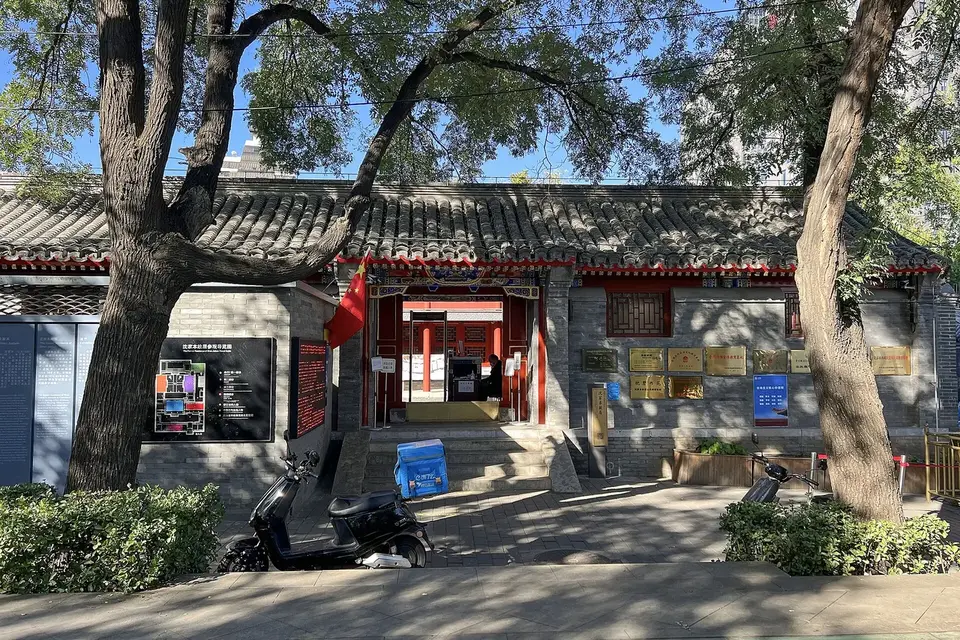
Passed away at his Zhenbilou residence in Jinjing Alley, Beijing, on June 9 at the age of seventy-four.
Shen Jiaben was born on August 19, 1840, in Linghu Town, Gui'an County, Huzhou Prefecture, Zhejiang. His father, Shen Bingying, earned the Jinshi degree in 1845 and served as Department Director in the Board of Punishments, providing his son with an early familiarity with imperial judicial administration. Gifted with sharp investigative intellect, Shen dedicated his youth to classical evidential research, studying the Rites of Zhou and classical phonology. His early philological treatise, Zhouguan Shuming Kaogu Ouzuan, rectified long-standing historical errors, demonstrating an empirical, evidentiary approach to scholarship.
In 1864, after his father retired, Shen entered imperial service as a supernumerary secretary in the Board of Punishments in Beijing. Facing mountains of dusty case records and convoluted legal precedents, Shen resolved to master the historical evolution of Chinese law. Conducting extensive archival research, he dissected statutory amendments and administrative precedents, compiling thousands of pages of analytical reading notes.
In 1883, Shen passed the metropolitan examinations to become a Jinshi and was promoted to Department Director in the Board of Punishments, concurrently managing the Autumn Assizes Office and the Statute Commission. During his years presiding over imperial capital reviews, he overturned numerous miscarriages of justice through meticulous cross-examination of evidence. Drawing upon decades of practical adjudication, he authored groundbreaking legal treatises, including Cizi Ji, Qiuyan Xuzhi, and Lüli Oujian, earning universal acclaim as the foremost statutory authority of the late Qing empire.
Working through the judicial archives of the Board of Punishments, Shen spent years compiling the monumental 124-volume Xing'an Huilan Sanbian (Third Collection of Examined Precedents). Gathering thousands of appellate and capital cases adjudicated between 1838 and the Guangxu era, the compendium incorporated precedent-setting disputes from treaty ports and foreign consular interactions, establishing an indispensable evidentiary bridge between traditional Chinese case law and modern international legal principles.
In the winter of 1893, Shen was dispatched to Zhili to serve as Prefect of Tianjin. As the primary maritime gateway to Beijing, Tianjin was a bustling commercial metropolis where foreign consular jurisdiction and local trade disputes frequently collided. Shen reformed prison hygiene, expedited backlogged lawsuits, and insisted on impartial statutory adjudication, earning broad popular acclaim from merchants and local residents.
In the summer of 1897, Shen was transferred to become Prefect of Baoding, the provincial capital of Zhili. When the Boxer Rebellion engulfed northern China in 1900, culminating in the capture of Beijing by the Eight-Nation Alliance, allied columns advanced toward Baoding. While other provincial officials fled in panic, Shen remained resolutely at his post inside the yamen, working to preserve urban peace and shield innocent citizens from reciprocal slaughter.
When allied armies occupied Baoding, foreign officers arrested Shen, falsely accusing him of aiding the Boxers and permitting attacks on foreign missionaries. Held in allied confinement for months under constant threat of execution, Shen maintained extraordinary composure. Defending himself through rigorous citations of Chinese statutory statutes and modern international law, he dismantled every allied allegation. In 1901, following forceful diplomatic protests lodged by Li Hongzhang and Prince Qing, the allied command released Shen without charge. This harrowing ordeal crystallized Shen's conviction that dynastic survival and the recovery of extraterritorial sovereignty required a complete modernization of Chinese law along Western constitutional lines.
In 1901, fleeing to Xi'an, the imperial court issued an edict establishing the Late Qing Reforms. Recognizing that reclaiming consular jurisdiction required comprehensive statutory harmonization, the court appointed Shen Jiaben and Western-trained jurist Wu Tingfang as Imperial Commissioners for Law Codification in May 1902.
In 1903, the Law Codification Bureau formally opened in Beijing. Shen established the foundational maxim of "harmonizing ancient and modern, synthesizing China and the West." He recruited returned overseas graduates from leading Japanese universities and engaged eminent foreign legal scholars as permanent consultants, including Japanese jurists Okada Asataro, Matsuoka Yoshimasa, and Shida Kotaro.
Under Shen's direction, the bureau undertook the most ambitious legal translation campaign in modern Chinese history. Over several years, the bureau translated and published the civil, commercial, criminal, and procedural codes of Germany, France, Japan, Austria, Russia, and Great Britain. These monumental translations introduced the systemic concepts and terminology of continental civil law, providing an empirical comparative foundation for drafting China's new statutory framework.
In April 1905, Shen Jiaben and Wu Tingfang submitted their historic memorial, Shanchu Lüli Nei Zhongxing Zhe (Memorial on Deleting Severe Punishments from the Statutory Codes). Shen denounced lingering slicing (Lingchi), public decapitation display, corpse mutilation, and facial tattooing as barbaric relics incompatible with enlightened global civilization, urging the throne to eliminate them permanently. The throne consented, officially abolishing dismemberment and corporal mutilation while standardizing capital punishment to strangulation and decapitation, alongside ending torture during trial interrogations and collective punishment for familial relations.
In 1906, Shen founded the Peking Law School, serving as its principal administrator and inviting international scholars to teach civil, criminal, and constitutional law, establishing the first formal modern legal academy in China. That same year, he drafted the Court Organization Law of the Daliyuan, officially instituting the constitutional principle of judicial independence and establishing a four-level, three-trial court hierarchy headed by the Daliyuan as the supreme court of appeal.
In 1907, Shen completed the drafting of the Daqing Xinxinglü (New Criminal Code of the Great Qing). Abandoning the ancient tradition of fused civil and criminal liability, the code was organized strictly into General and Specific sections, incorporating foundational principles such as the distinction between intent and negligence, self-defense, necessity, and attempt, serving as a landmark achievement of Chinese legal modernization.
Upon the publication of the Daqing Xinxinglü draft, conservative high ministers led by Grand Secretary Zhang Zhidong and Vice Minister of Education Lao Naixuan launched a ferocious counterattack, triggering the historic Debate between Legalists and Moralists (Lifa Zhi Zheng). Conservative critics argued that deleting traditional penalties for unfilial conduct, theft between relatives, and illicit relations undermined the Three Cardinal Principles and destroyed social morality.
Shen mounted an uncompromising defense, drafting comprehensive memorials arguing that moral instruction and criminal law possessed distinct societal boundaries. He insisted that the purpose of criminal law was to safeguard individual rights and public order rather than to enforce hierarchical status distinctions through physical violence. Although forced to accept five temporary supplementary clauses to achieve legislative compromise, Shen preserved the core structure of the code, which was promulgated in late 1910.
In 1911, Shen was appointed Minister of Justice in the first responsible imperial cabinet, and was reappointed by Yuan Shikai following the Wuchang Uprising, but Shen declined to take office due to ill health. Following the abdication of the Qing emperor in 1912, Shen lived in scholarly seclusion at his Zhenbilou residence in Jinjing Alley, Beijing, collating his vast library of five-thousand-volume rare books. On June 9, 1913, Shen passed away peacefully at his Beijing residence at the age of seventy-four.
Shen Jiaben's leadership of the Late Qing Law Codification Bureau transformed China's legal landscape from an ancient, undifferentiated dynastic code into a modern, sophisticated civil law system. Prior to his reforms, imperial China had maintained a singular penal code that merged criminal, civil, and administrative liabilities without procedural distinction.
Shen dismantled this ancient framework by instituting independent branches of modern law, separating substantive law from procedural law and public law from private law. Under his direction, the bureau drafted the New Criminal Code, the Civil Code Draft, the Commercial Code Draft, the Criminal Procedure Code, the Civil Procedure Code, and the Court Organization Law, successfully establishing the institutional infrastructure of the continental civil law tradition in modern China.
Shen's successful campaign to abolish cruel feudal punishments represents a monumental triumph in Chinese civil rights and humanitarian history. For over two millennia, punishments such as slow slicing, public display of severed heads, desecration of corpses, and permanent facial branding had inflicted horrific degradation upon prisoners and their families.
Invoking modern humanitarian principles and international legal standards, Shen persuaded the Qing court in 1905 to permanently outlaw slow slicing, corpse exposure, tattooing, collective family punishment, and judicial torture. This reform ended thousands of years of sanctioned corporal cruelty, aligning Chinese penal practices with the emerging humanitarian standards of the civilized world.
The Daqing Xinxinglü, drafted under Shen's direction, was China's first purely modern criminal code. The code discarded obsolete administrative and ritual injunctions, establishing a rigorous structure divided into General Principles and Specific Offenses.
Crucially, Shen introduced the fundamental maxim of modern jurisprudence: nulla poena sine lege ("no crime and no punishment without a previous law"). The code outlawed arbitrary judicial sentencing by analogy, strictly defining legal culpability, criminal intent, negligence, justifiable self-defense, and mitigating circumstances, serving as the foundational model for all subsequent Chinese criminal codifications in the twentieth century.
Through the Court Organization Law of the Daliyuan and subsequent judicial statutes, Shen abolished the imperial tradition wherein local administrative magistrates concurrently served as trial judges. He formally established the modern constitutional principle of judicial independence, separating adjudication from executive interference.
Shen designed the four-tiered, three-instance judicial court system comprising Local Courts, District Courts, High Courts, and the Daliyuan as the supreme appellate court. He instituted separate procuratorial offices, established life tenure for judges, guaranteed public trials, and legally recognized the status of professional defense attorneys, creating the organizational framework of the modern Chinese judiciary.
During the historic Debate between Legalists and Moralists, Shen demonstrated remarkable theoretical courage by defending modern legal principles against entrenched bureaucratic opposition. When conservative scholars argued that law must remain subordinate to Confucian ritual hierarchy, Shen articulated the progressive boundary separating personal morality from statutory law.
His memorials demonstrated that modern criminal codes sought to protect universal human rights and social peace rather than to enforce patriarchal feudal dominance. His resolute defense preserved the foundational architecture of the new codes, ensuring that modern concepts of civil equality, individual responsibility, and statutory legality took permanent root in Chinese intellectual life.
Recognizing that modern laws could not function without professionally trained jurists, Shen founded the Peking Law School in 1906, serving as its director and primary patron.
Shen designed a comprehensive modern curriculum encompassing constitutional law, civil jurisprudence, criminal law, procedural law, and public international law, recruiting leading international jurists such as Okada Asataro to lecture. Over its years of operation, the school educated thousands of legal professionals who staffed the Daliyuan, the Ministry of Justice, and the judicial system of the early Republic of China.
Beyond his legislative triumphs, Shen was the foremost legal historian and philological scholar of ancient Chinese jurisprudence. His monumental research treatise, Lidai Xingfa Kao (Studies on Penal Law of Past Dynasties), spanned hundreds of volumes and provided an exhaustive historical analysis of legal codes, penal institutions, and judicial procedures from the Xia and Shang dynasties through the Ming and Qing eras.
Shen conducted pioneering philological research to restore rare ancient legal texts. Notably, he tracked down surviving fragments of the northern Song dynasty Xingtong Fu, conducting rigorous textual collations to rectify thousands of transcriptional corruptions and publishing Song Xingtong Fu Kao, which revived the study of medieval Chinese legal literature. His collected legal and historical writings, preserved in Shen Jiyi Xiansheng Yishu, remain the definitive foundational canon for Chinese legal historiography worldwide.
Shen made lasting contributions to judicial case law through the compilation of the 124-volume Xing'an Huilan Sanbian. Analyzing decades of complex appellate cases adjudicated by the Board of Punishments between 1838 and the turn of the century, Shen organized judicial decisions into a coherent, categorized taxonomy.
He introduced detailed comparative commentaries examining how imperial statutes interacted with emerging commercial realities and foreign consular treaties, establishing the empirical foundation for modern Chinese case law and comparative jurisprudence.
In his final years, Shen resided in his Zhenbilou library in Beijing, which housed over fifty thousand volumes of rare historical, administrative, and legal manuscripts. A master of evidential bibliography, he authored specialized catalogs including Gushumu Sizhong and extensive colophons for legendary collections such as Tianyige and Tianlu Linlang.
His rigorous bibliographic studies verified the provenance, authenticity, and historical variants of early institutional texts. Published within the Zhenbilou Congshu, his scholarly editions preserved priceless legal and historical treatises that would otherwise have been lost during the turbulent collapse of imperial China.
FIGURES ASSOCIATED WITH THIS DYNASTY