Birth in Changzhou
Born into a respected gentry household in Changzhou; studied classical canons and ancient versification from youth.
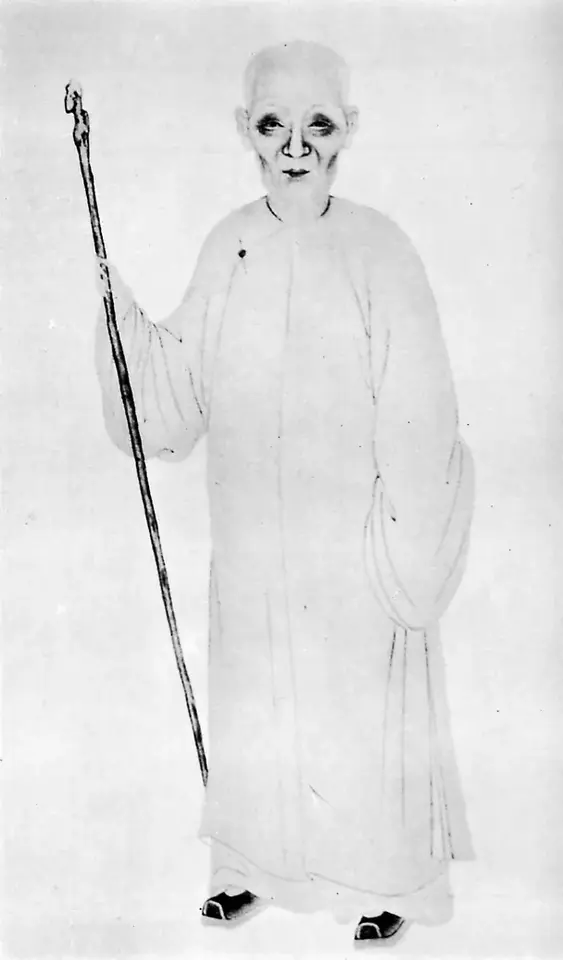
沈德潜
Shen Deqian (沈德潜, 1673–1769), courtesy name Queshi, styled Guiyu, was an illustrious poet, literary scholar, and court official during the high Qing Dynasty. Originating from Changzhou County in Suzhou Prefecture, he experienced severe early frustration in the civil examination hall, failing repeated attempts over more than four decades before achieving the highest metropolitan degree (jinshi) at the exceptional age of…
Shen Deqian (沈德潜, 1673–1769), courtesy name Queshi, styled Guiyu, was an illustrious poet, literary scholar, and court official during the high Qing Dynasty. Originating from Changzhou County in Suzhou Prefecture, he experienced severe early frustration in the civil examination hall, failing repeated attempts over more than four decades before achieving the highest metropolitan degree (jinshi) at the exceptional age of sixty-seven in 1739. Entering the Hanlin Academy, he earned the deep literary favor of the Qianlong Emperor, rising rapidly to Grand Secretary of the Cabinet and Vice Minister of Rites. Shen was the supreme theorist of the "Tone and Pattern School" (Gediao Pai) in Qing poetry, advocating the classical Confucian doctrine of poetry as moral education (shijiao). He insisted that poetry should inherit the solemn balance of the Classic of Poetry, Han-Wei ballads, and High Tang verse, emphasizing refined prosodic cadence, emotional moderation, and structural elegance in direct opposition to Yuan Mei's individualistic "Spiritual Nature School" (Xingling Pai). After retiring to Suzhou, he directed the Ziyang Academy and compiled monumental anthologies, including Origins of Ancient Poetry (Gushi Yuan) and Selected Tang Poetry (Tangshi Biechai Ji). Following his death at age ninety-six, his posthumous honors were posthumously revoked in 1778 due to association with Xu Shuikui's literary inquisition.
Born into a respected gentry household in Changzhou; studied classical canons and ancient versification from youth.
Admitted as a student (xiangsheng) of Changzhou County; endured repeated failures in provincial examinations over forty years.
Recommended by provincial officials for the Special Examination for Men of Extensive Learning (Boxue Hongci), but did not attain ranking.
Succeeded at the provincial examination in Jiangning at the age of sixty-six, earning the juren degree.
Earned the jinshi degree at age sixty-seven; selected as a Hanlin bachelor and praised personally by the Qianlong Emperor.
Appointed Compiler in the Hanlin Academy; participated in editing the Comprehensive Gazetteer of the Great Qing.
Promoted to Grand Secretary of the Cabinet and Vice Minister of Rites; accompanied the emperor on imperial excursions and exchanged verses.
Retired with full ministerial rank; granted imperial farewell poems and presided over Ziyang Academy for over a decade.
Passed away in his Suzhou residence at age ninety-six; posthumously honored as Grand Tutor to the Crown Prince and given the posthumous name Wenque, though his posthumous titles were later rescinded due to Xu Shuikui's literary inquisition case.
Shen Deqian was born into an established scholarly household in Changzhou County, Suzhou Prefecture. Both his grandfather and father were respected local Confucians who emphasized classical moral discipline. Benefiting from this rigorous upbringing, Shen studied the Six Classics and immersed himself in poetic traditions, establishing an early literary reputation among the intellectual circles of Jiangnan.
In 1694, at age twenty-two, Shen achieved the status of licentiate (xiangsheng) in Changzhou County. However, his subsequent examination path proved exceptionally tortuous. Over the next forty-four years, Shen repeatedly sat for the Jiangnan provincial civil service examinations without success.
Despite systemic disappointment, Shen refused to abandon his scholarship. He supported his household by tutoring students in local academies, devoting his leisure hours to collating ancient poetic corpora and annotating classical verse.
In 1736, the Qianlong Emperor inaugurated the Special Examination for Men of Extensive Learning (Boxue Hongci). Although recommended by provincial governors, Shen did not pass. Undaunted, the sixty-six-year-old scholar sat once more for the provincial examination in 1738 and finally achieved the juren degree.
The following spring in 1739, Shen traveled to Beijing and triumphed in the imperial metropolitan examination (jinshi). During the palace interview, the Qianlong Emperor was struck by Shen's dignified bearing and encyclopedic erudition, specially conferring upon the sixty-seven-year-old scholar a seat in the Hanlin Academy as a bachelor.
Upon completing his probationary tenure in 1742, Shen was appointed Hanlin Compiler (Bianxiu), serving as Diarist of Imperial Activities and Reader of the Hanlin Academy, while contributing to the official compilation of the Comprehensive Gazetteer of the Great Qing (Da Qing Yitong Zhi).
The Qianlong Emperor, who prided himself on literary sophistication and composed voluminous poetry, found Shen's grand cadence and orthodox elegance ideally suited to celebrate the peace and majesty of the imperial realm. The emperor frequently summoned Shen to review his imperial compositions, compose complementary stanzas, and debate prosodic nuances. Qianlong warmly referred to Shen as the "Venerable Scholar of Jiangnan".
In 1747, Shen was promoted to Grand Secretary of the Cabinet (Neige Xueshi) and concurrently Vice Minister of the Board of Rites (Libu Shilang). In palace consultations, Shen articulately defended the Confucian premise that poetic culture was directly bound to public morality and political governance, reinforcing the emperor's high esteem.
In 1749, approaching the age of eighty, Shen requested permission to retire to his native region. The Qianlong Emperor granted his resignation with full official rank and emoluments, composing personal farewell verses and decreeing that Shen could continue attending major state ceremonial banquets.
Following his return to Suzhou, Shen lived in dignity, serving as director of the prestigious Ziyang Academy for over ten years. He established rigorous curricular statutes, lecturing on classical literature to thousands of students and fundamentally revitalizing the poetic culture of the lower Yangtze region.
During the Qianlong Emperor's multiple southern inspection tours to Suzhou, the emperor repeatedly granted Shen private audiences, showering him with imperial calligraphic plaques, precious artifacts, and commissions to edit imperial verse collections.
During this period, Shen completed his monumental series of poetic anthologies, including Origins of Ancient Poetry (Gushi Yuan), Selected Tang Poetry (Tangshi Biechai Ji), Selected Ming Poetry (Mingshi Biechai Ji), and Selected Qing Poetry (Qingshi Biechai Ji).
Using his "Tone and Pattern" doctrine as an editorial touchstone, Shen categorized poetic evolution, refined textual variants, and established rigorous aesthetic standards. His anthologies circulated across the Qing Empire, becoming the standard reference textbooks for classical poetic education throughout the Qianlong and Jiaqing eras.
In the ninth month of 1769, Shen Deqian passed away peacefully in his Suzhou residence at the age of ninety-six. Deeply grieved, the Qianlong Emperor issued an imperial edict posthumously granting him the title Grand Tutor to the Crown Prince (Taizi Taishi), conferring the posthumous name Wenque, ordering his tablet enshrined in Suzhou's Temple of Worthies, and dispatching officials of the Board of Rites to oversee memorial rites.
However, in 1778, an imperial literary inquisition erupted over the posthumous collection Yizhoulan Shiji (Poems of the One-Pillar Pavilion) written by the deceased provincial scholar Xu Shuikui. The Qianlong Emperor personally reviewed the collection, identifying lines that ostensibly expressed subversive nostalgia for the fallen Ming Dynasty.
During the judicial investigations, officials discovered that Shen Deqian had written an appreciative preface for Xu's poetry collection in his final years, praising the author's moral character. Enraged that his former literary advisor had endorsed a purportedly seditious text, the emperor accused Shen of harboring moral duplicity.
The Qianlong Emperor issued punitive decrees rescinding all of Shen's posthumous ranks, stripping the posthumous title Wenque, destroying the imperial commemorative steles erected at his tomb, and ordering his grave opened to formally punish his deceased remains. This reversal highlighted the absolute, unforgiving nature of ideological control during the mid-Qing literary inquisitions.
Shen Deqian's principal theoretical achievement was the establishment and institutionalization of the "Tone and Pattern School" (Gediao Pai) of Qing poetry.
Inheriting the renaissance classicism of the Ming Ming-dynasty Early and Latter Seven Masters while avoiding their mechanical slavishness, Shen anchored his aesthetics in the Confucian concept of poetic moral education (shijiao). He maintained that poetry must adhere to the foundational virtues of "gentle moderation" (wenrou dunhou) and "purity of thought" (si wu xie).
Aesthetically, Shen argued that poets must trace verse to the Classic of Poetry and Elegies of Chu, model ancient ballads upon Cao Zhi and Ruan Ji, and master regulated metrics through Du Fu and Li Bai. By balancing emotional sincerity with strict metrical harmony, his doctrine became the dominant poetic ideology of the high Qing court.
Shen Deqian's lifelong anthological work occupies a foundational position in Chinese classical textual bibliography.
His Origins of Ancient Poetry (Gushi Yuan) in fourteen volumes assembled over seven hundred verses from antiquity down through the Sui Dynasty, providing definitive textual recensions and commentary on early Chinese poetic forms. His Selected Tang Poetry (Tangshi Biechai Ji) in twenty volumes established the definitive standard for Tang poetic style, emphasizing the moral authority of Du Fu's verse.
Accompanied by his companion anthologies for the Ming and Qing dynasties, Shen's collections established coherent canons that rescued obscure verses, eliminated decadent triviality, and shaped popular and elite understandings of the classical poetic heritage.
During his decade directing the Ziyang Academy in Suzhou, Shen played a vital role in integrating Jiangnan literati into the Qing cultural establishment.
He reformed academy curricula, emphasizing classical moral philosophy alongside refined poetic composition. Eminent scholars such as Wang Chang, Qian Daxin, and Wang Mingsheng benefited from his early mentorship.
His intellectual prestige helped transform Jiangnan intellectual life from early Qing anti-Manchu estrangement into harmonious cooperation with the high Qing cultural renaissance.
In an imperial poem composed upon Shen's retirement, the Qianlong Emperor praised him: "A noble gentleman of Wu, Shen Queshi, whose erudition and poetic mastery are celebrated under Heaven; steeped in classics and history with ancient grace, his renown was long worthy of the imperial presence."
In Poetry Talks of Suiyuan (Suiyuan Shihua), rival critic Yuan Mei conceded the excellence of his anthologies: "Grand Minister Shen Guiyu selected Tang poetry with rigorous criteria; his collection constitutes an enduring independent perspective."
Disciple Wang Chang evaluated his lifelong devotion: "The Master dedicated his life to poetic scholarship, tracing the river to its fountainhead. Taking Du Shaoling as the true standard, his harmonic and structural regulations crowned an era."
The Draft History of Qing (Qing Shi Gao) summarized his life: "Shen Deqian compiled poetry prioritizing prosodic tone and moral harmony. In life he enjoyed unprecedented imperial affection, crowning the literary forest; after death he fell tragically into the net of statutory law, a rare calamity in the annals of history."
FIGURES ASSOCIATED WITH THIS DYNASTY