Birth in Xiangzhou
Born on the 25th day of the 12th lunar month in Linlü, Xiangzhou, exhibiting broad intellectual ambition from youth.
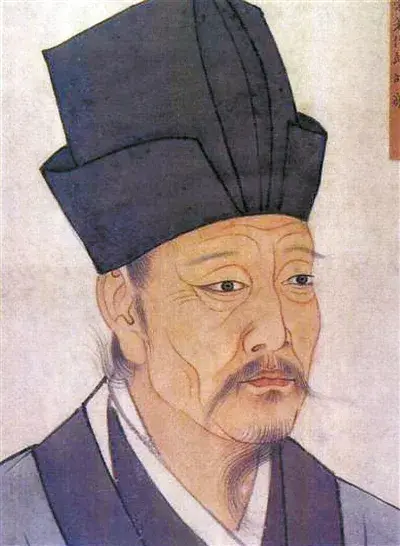
邵雍
Shao Yong (邵雍, 1012–1077) was an eminent philosopher, cosmologist, Neo-Confucian thinker, and Book of Changes specialist of the Northern Song dynasty, celebrated alongside Zhou Dunyi, Zhang Zai, Cheng Hao, and Cheng Yi as one of the "Five Masters of the Northern Song." In his youth he moved with his father to Mount Sumen in Gongcheng, Weizhou, where he engaged in rigorous ascetic scholarship, refusing charcoal heaters in…
Shao Yong (邵雍, 1012–1077) was an eminent philosopher, cosmologist, Neo-Confucian thinker, and Book of Changes specialist of the Northern Song dynasty, celebrated alongside Zhou Dunyi, Zhang Zai, Cheng Hao, and Cheng Yi as one of the "Five Masters of the Northern Song." In his youth he moved with his father to Mount Sumen in Gongcheng, Weizhou, where he engaged in rigorous ascetic scholarship, refusing charcoal heaters in winter, folding fans in summer, and reclining sleep at night. He subsequently studied under Li Zhicai, mastering the secrets of the River Chart (Hetu), Luo Inscription (Luoshu), and Fuxi's Prior Heaven (Xiantian) numerological cosmology. In his later years, Shao Yong relocated to Luoyang, where he lived for thirty years in rural self-sufficiency. Senior statesmen including Fu Bi, Sima Guang, and Lü Gongzhu admired his scholarship and gathered funds to build him a residence, which Shao Yong named the "Nest of Peace and Happiness" (Anlewo), styling himself "Master of Peace and Happiness" and posthumously honored as "Master Kangjie." He constructed a monumental philosophical system of cosmic generation and historical cyclical evolution, authoring masterpieces such as Book of Supreme World Ordering Principles (Huangji Jingshi Shu), Observation of Things (Guanwu Pian), and Yichuan Jirang Ji, exerting deep influence on Song-Ming Neo-Confucianism.
Born on the 25th day of the 12th lunar month in Linlü, Xiangzhou, exhibiting broad intellectual ambition from youth.
Moved with his father to Mount Sumen in Gongcheng, engaging in relentless ascetic study without heat or fans.
Studied under Gongcheng magistrate Li Zhicai, receiving the secret lineage of Prior Heaven numerology and changes.
Moved to Western Capital Luoyang, farming and building a thatched cottage as scholars flocked to his door.
Fu Bi and Sima Guang funded a spacious estate for him in Luoyang, which he named the Nest of Peace and Happiness.
Repeatedly summoned to serve as collateral judge and imperial collator, but firmly declined all official posts.
Passed away peacefully at home in Luoyang in July at age sixty-six; posthumously honored as Kangjie during the Yuanyou era.
On January 21, 1012 (the 25th day of the 12th lunar month of 1011 in the traditional calendar), Shao Yong was born in Linlü, Xiangzhou (present-day Linzhou, Henan). His father Shao Gu was a classical scholar and recluse. Endowed with precocious intellect, Shao Yong read voraciously from early childhood, aspiring to comprehend universal principles.
As a young man, Shao Yong accompanied his father to Mount Sumen northwest of Gongcheng (present-day Huixian, Henan), dwelling above the Baiyuan springs. To forge an unyielding will, Shao Yong lived ascetically for years: he lit no charcoal fire in bitter winter, used no fans in sweltering summer, and sat upright with closed eyes when fatigued rather than lying down. He not only mastered the Confucian classics and dynastic histories, but also explored cosmic generation, meditating on the hexagram permutations of the Book of Changes.
Realizing that reading books alone was insufficient to understand the world, Shao Yong packed his belongings to travel through Qilu, Yanzhao, the Fen and Yellow River valleys, and the Huai and Han regions. He inspected ancient ruins, explored strategic mountain passes, and conversed with scholars and knights-errant. After broad travel, he declared: "The Dao resides within myself and between Heaven and Earth!" Returning home, he achieved independent philosophical mastery.
In 1039, the scholar Li Zhicai assumed office as magistrate of Gongcheng. Li had studied under Mu Xiu, who studied under Chong Fang, who in turn received the esoteric cosmological teachings of Mount Hua Daoist master Chen Tuan, preserving the secret lineages of the River Chart, Luo Inscription, and Prior Heaven changes.
Upon arrival, hearing of Shao Yong's reclusion at Mount Sumen, Li Zhicai visited his thatched hut and asked: "Would you care to hear of the operations of Heaven and Earth, the ultimate nature of things, and the teachings of destiny?" Shao Yong bowed respectfully and formally became his disciple. Li Zhicai transmitted the entire corpus of Prior Heaven hexagram charts and divination calculations to Shao Yong. Synthesizing this transmission with Confucian ethics, Shao Yong formulated his revolutionary "Prior Heaven Learning" (Xiantian Xue).
In 1049, approaching age forty, Shao Yong relocated with his parents to Western Capital Luoyang. Luoyang was an ancient cultural capital where retired statesmen gathered. Initially living in poverty in a thatched hut with earthen walls, his wife and children carried firewood and water while Shao Yong remained cheerful and serene.
Shao Yong was magnanimous, honest, and unpretentious, treating retired grand councilors, woodcutters, and farmers with equal warmth and sincerity. Renowned statesmen such as Fu Bi, Sima Guang, Lü Gongzhu, and Wen Yanbo admired his profound wisdom and visited his humble alley regularly as devoted friends.
During the Jiayou era, unwilling to see the master dwell in damp quarters, Fu Bi, Sima Guang, and Wen Yanbo pooled funds to purchase a garden estate for him in Lüdao Ward near Tianjin Bridge. Shao Yong accepted without pretense, naming the retreat the "Nest of Peace and Happiness" (Anlewo) and styling himself "Master of Peace and Happiness" (Anle Xiansheng). Strolling through Luoyang streets, citizens and scholars cheered warmly: "Our Master of Peace and Happiness has arrived!"
Shao Yong's moral stature reached the imperial court. During the Jiayou and Xining eras, Emperors Renzong and Shenzong issued special edicts summoning him to serve as Collator in the Palace Library and military judicial commissioner, inviting him into court service.
Observing mounting factional polarization surrounding the New Policies, Shao Yong understood that his philosophical mission lay in cosmic inquiry and fundamental moral cultivation rather than day-to-day administrative paperwork. While grateful for imperial favor, he respectfully declined all appointments. When Wang Anshi implemented the New Policies, while many conservative elders reacted with outrage, Shao Yong maintained an equanimous outlook, counseling Sima Guang and Lü Gongzhu to adapt to historical change without anger.
During his thirty years at the Nest of Peace and Happiness, Shao Yong devoted his energies to authoring the Book of Supreme World Ordering Principles (Huangji Jingshi Shu), alongside Observation of Things (Guanwu Pian) and over a thousand philosophical poems in Yichuan Jirang Ji.
In July 1077, Shao Yong fell gravely ill, with Sima Guang, Cheng Hao, and Cheng Yi attending his bedside daily. Shao Yong remained lucid, arranging his funeral frugally and forbidding his family from requesting an imperial spirit-way stele or posthumous title. Hundreds of citizens gathered outside his gates to pray for his recovery. On July 4, Shao Yong passed away peacefully in the Nest of Peace and Happiness at age sixty-six. Citizens of Luoyang mourned him universally, and during the Yuanyou era, the court conferred the posthumous title Kangjie.
Shao Yong's supreme original contribution to Chinese intellectual history was his grand Prior Heaven cosmological and historical evolutionary system. Expanding upon Chen Tuan's charts, he formulated the macro-historical cycle theory based on Cosmic Eras (Yuan), Epochs (Hui), Cycles (Yun), and Generations (Shi).
In Huangji Jingshi Shu, Shao Yong established that one Era (Yuan) contains twelve Epochs, one Epoch contains thirty Cycles, one Cycle contains twelve Generations, and one Generation spans thirty years, totaling 129,600 years for a complete cosmic cycle. Through this mathematical model, he integrated cosmological generation, dynastic evolution, and moral rise and fall into a unified metaphysical architecture, marking the peak of Chinese numerological cosmology.
Beyond cosmology, Shao Yong was a foundational pioneer of Song Neo-Confucian epistemology. In Guanwu Pian, he formulated his renowned doctrines of "observing things through things" (yi wu guan wu) and "reflective introspection" (fanguan).
Shao Yong posited that people usually err by "observing things through the self" (yi wo guan wu), falling prey to subjective bias and selfish desires. Only by "observing things through things"—abandoning private prejudice to observe natural phenomena in accordance with their inherent principles—can one achieve unity with Heaven and comprehend universal truth. After listening to him converse, Cheng Hao remarked in awe: "Yaofu's learning is truly the ultimate doctrine of inner sageliness and outer kingliness!"
Shao Yong pioneered the tradition of philosophical poetry (lixueshi) in the Song dynasty. His twenty-volume poetic collection Yichuan Jirang Ji contains over a thousand philosophical verses.
His poetry was clear, colloquial, and natural, unburdened by ornate diction, conveying cosmic insight and contentment through everyday scenes of sipping wine, admiring blossoms, riding carts, and conversing with friends. His poetry deeply inspired later masters like Zhu Xi and Lu Jiuyuan.
Dwelling in Luoyang for thirty years without seeking office or wealth, Shao Yong made the Nest of Peace and Happiness a spiritual sanctuary for the empire's leading intellectuals. Sima Guang compiling the Zizhi Tongjian, the Cheng brothers teaching Neo-Confucianism, and Fu Bi residing in retirement all looked to Shao Yong as a moral compass.
Though holding no official authority, his personal virtue elevated the moral tone of Luoyang. Whenever neighbors quarreled, they cautioned one another: "Do not act dishonorably, lest Master Kangjie hear of it!" His gentle moral influence remains an enduring model of traditional scholarly rectitude.
FIGURES ASSOCIATED WITH THIS DYNASTY