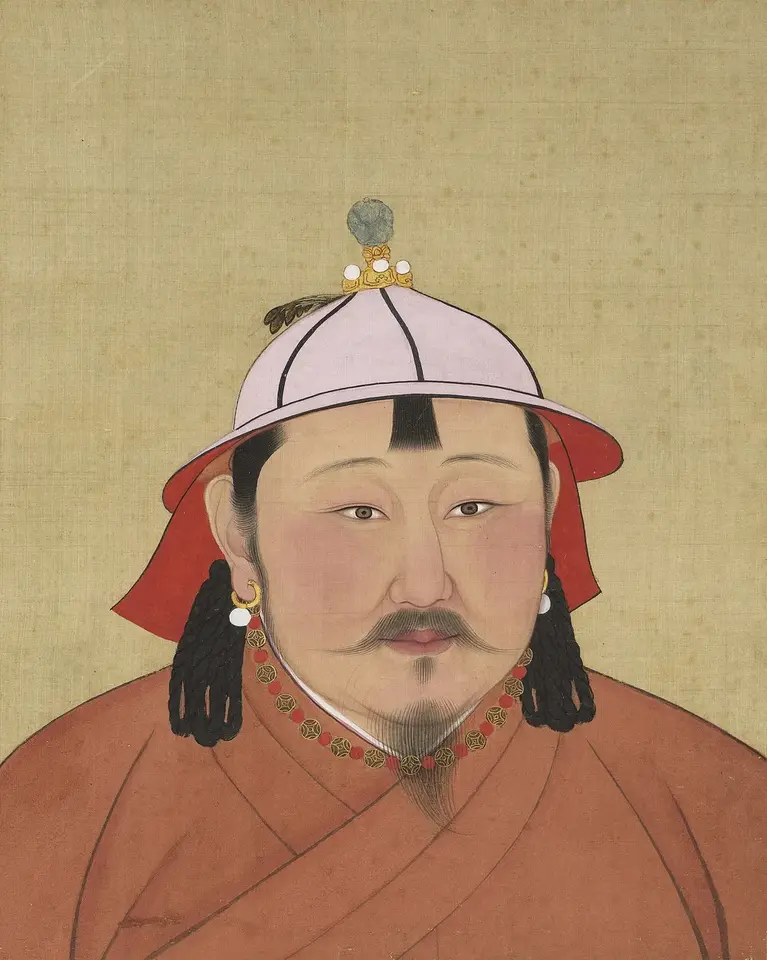
Life and Career
Local Militia Defense and Joining the Chaohu Fleet
Sang Shijie was born in Taiping Township, Wuwei State, during the late Yuan dynasty. Endowed with imposing stature and an unyielding, generous disposition, he was celebrated from his youth for his proficiency in cavalry weapons, mounted archery, and riverine navigation. In 1352, during the twelfth year of the Zhizheng reign of the Yuan dynasty, nationwide uprisings erupted following the flooding of the Yellow River. The Huai and Yangtze river basins were plunged into turmoil, with predatory bandits and competing warlords laying waste to agrarian communities. Confronting the collapse of civil order, Sang gathered young, hardy men from his native township, fortifying stockades and stockpiling weapons to defend their villages, keeping the territory free from devastation and winning widespread local trust.
In 1354, veteran commanders Yu Tingyu and Liao Yongan assembled a naval confederation of over ten thousand boatmen and more than a thousand river vessels at Lake Chao. Evaluating the broader strategic picture, Sang concluded that an isolated local redoubt could not survive amidst surrounding wars. He led his militia force and vessels to Lake Chao, formally integrating his units into the Chaohu fleet as one of its core tactical commanders.
In May 1355, Zhu Yuanzhang occupied Heyang across the river from Jinling. While commanding formidable Huai infantry and cavalry, Zhu lacked river vessels to cross the wide expanse of the Yangtze. At that moment, Yuan naval forces under Manzi Haiya blockaded the Ruxu river mouth, cutting off supplies to the Chaohu fleet. Liao Yongan, Yu Tingyu, and Sang Shijie resolved to join Zhu Yuanzhang. However, fellow Chaohu chieftain Zhao Pusheng secretly negotiated to defect to eastern warlord Zhang Shicheng. Discovering the plot, Sang acted with decisive courage, galloping at night to report the conspiracy to general Hua Gao, who alerted Zhu Yuanzhang. Zhu rapidly deployed field forces to Ruxu, overwhelming Manzi Haiya while overawing the wavering naval factions. Zhao Pusheng fled in panic, enabling Zhu to absorb the entire Chaohu naval armada without bloodshed, providing the indispensable amphibious foundation for his southern campaigns.
Crossing the Yangtze and Campaigns across Jiangnan
In June 1355, amidst summer torrential rains, Zhu Yuanzhang launched his fleet from Lake Chao into the Yangtze, initiating the grand crossing into Jiangnan. Sang served in the vanguard of the assault armada, steering heavily armored warboats through enemy projectile fire to make an amphibious landing at Caishiji, routing Yuan coastal forces. Advancing inland, the army captured Taiping Prefecture. Yuan royalist general Chen Yexian concentrated tens of thousands of troops in fortified camps at Dashengguan and Fangshan to stage a counteroffensive. Zhu dispatched Sang alongside senior general Xu Da to dismantle the defense. Sang directed fire-ships that burned Chen's riverine camps, severing his supply lines and throwing the defense into panic. Ming shock troops broke into the main redoubt, taking Chen Yexian prisoner along with twenty thousand soldiers.
In February 1356, Sang followed Xu Da in capturing Jintan and Danyang. In March, Zhu Yuanzhang's forces conquered the grand regional capital of Jiqing (Nanjing), renaming it Yingtian Prefecture. For his repeated frontline valor, Sang was promoted to Marshal of the Qinhuai Wing, entrusted with guarding the vital river and land entrances to the new capital. Later that year, he led amphibious columns to seize Zhenjiang. In December, when Zhang Shicheng sent large armies into Ningguo, Sang accompanied Vice General Tang He to confront them in the mountain defiles, breaking the enemy pikemen and killing over a thousand enemy soldiers.
In February 1357, Sang coordinated with naval commander Zhao Guo to advance against Shuiyang, setting ambushes that drew out the garrison and shattered the defense. In March, he joined Xu Da and Chang Yuchun in storming Matuosha along the lower river. Upon returning to the capital, Zhu Yuanzhang rewarded him with appointment as General of Glorious Martiality and Army-Commanding Marshal. During the difficult siege of Changzhou against Zhang Shicheng's dug-in forces, Sang directed heavy catapults and siege engines that breached the outer perimeter, securing the fall of the city. He was consequently promoted to Vice Director of the Branch Bureau of Military Affairs stationed at Changzhou. Sang then swept across Dapu Mouth, Lake Tai, Jiangyin, and Yixing, dismantling Zhang Shicheng's outposts and consolidating an impenetrable defense barrier east of Nanjing.
Battle of Shipai and Martyrdom in the Assault
Toward the close of 1357, King of Wu Zhang Shicheng recognized that the fall of Changzhou and Jiangyin posed a mortal threat to his capital at Suzhou. He dispatched senior administrators Zhu Ding and Luan Rui with tens of thousands of veteran soldiers to fortify the fortress of Shipai in Kunshan, deploying naval squadrons along regional canals to sever Ming logistics toward Jiangyin. Recognizing the critical importance of the stronghold, Zhu Yuanzhang ordered Sang and Liao Yongan to coordinate a combined land and water siege to reduce Shipai.
In January 1358, amidst bitter winter freezes, Sang and Liao encamped before the walls of Shipai. Garrison commander Luan Rui utilized deep concentric ditches, fortified ramparts, and heavy projectile weapons to repulse several Ming assaults. As casualties mounted and fearing that enemy relief columns would surround his rear, Sang resolved to breach the defenses through personal sacrifice. Gathering his officers before the lines, he drew his sword and swore an oath: "This stronghold is the key to pacifying Jiangdong. If we do not conquer it today, I swear I shall never return alive!" Encased in heavy armor and wielding a heavy spear, he spurred his horse and charged alone into the enemy battle lines.
Sang's charge threw the front ranks into confusion as he personally cut down dozens of enemy officers and soldiers. Inspired by his fearless example, Ming assault battalions surged forward with deafening battle cries. However, the defenders unleashed volleys of thousands of crossbow bolts and arrows from the battlements, darkening the sky. Sang was struck by numerous projectiles yet continued fighting on horseback until his mount was killed beneath him. Surrounded by overwhelming numbers, he fought to his dying breath in hand-to-hand combat, dying heroically on the field of honor.
News of Sang's sacrifice brought profound grief to Zhu Yuanzhang, who wept over the loss of his indispensable commander. In October 1363, remembering Sang's singular contributions during the river crossing and his unflinching martyrdom at Shipai, Zhu posthumously ennobled him as Grand General of Far-Reaching Pacification, Chief Commandant of Light Chariots, and Marquis of Yongyi, decreeing that his spirit tablet be enshrined in the Imperial Ancestral Temple and his portrait placed in the Temple of Meritorious Officials. In 1376, Ming Taizu conferred upon him the exalted title of Meritorious Minister Assisting the Founding of the Dynasty with Sincere Devotion and Dedicated Service, and Pillar of the State. His son Sang Jing inherited his father's rank as Assistant Commissioner-in-Chief and was subsequently created Earl of Huixian for battlefield merit. In 1644, the Southern Ming court granted Sang Shijie the posthumous title Zhonglie in recognition of his unyielding loyalty.
Major Achievements
Bringing the Chaohu Navy to Zhu Yuanzhang and Securing Command
In 1355, Sang was instrumental in leading the Chaohu naval fleet of over a thousand war vessels to join Zhu Yuanzhang, rectifying the Ming army's critical deficiency in naval power. Furthermore, his timely exposure of Zhao Pusheng's treasonous defection enabled Zhu to secure undisputed command over the entire fleet, laying the foundation for the amphibious conquest of Jiangnan.
Liberating Key Strongholds from Nanjing to Changzhou
Serving in the amphibious vanguard, Sang spearheaded the crossing at Caishiji, captured Yuan commander Chen Yexian, and helped seize Jinling and Zhenjiang. Promoted to Army-Commanding Marshal and Vice Director of the Branch Bureau of Military Affairs, he campaigned across Lake Tai, Jiangyin, and Yixing, breaking hostile armies and securing Ming dominion over the Lower Yangtze.
Charging the Breach at Shipai and Sacrificing His Life
During the siege of Zhang Shicheng's stronghold at Shipai in 1358, Sang led a lone charge into the breach to inspire his men. Slaying dozens of enemies before falling under arrows, his heroic martyrdom paved the way for subsequent Ming victories, earning him permanent enshrinement in the Imperial Ancestral Temple as Marquis of Yongyi.