Birth at Yanmen
Born into a military Semu lineage at Yanmen Pass in Daizhou; lived in modest circumstances and devoted himself to Confucian studies.
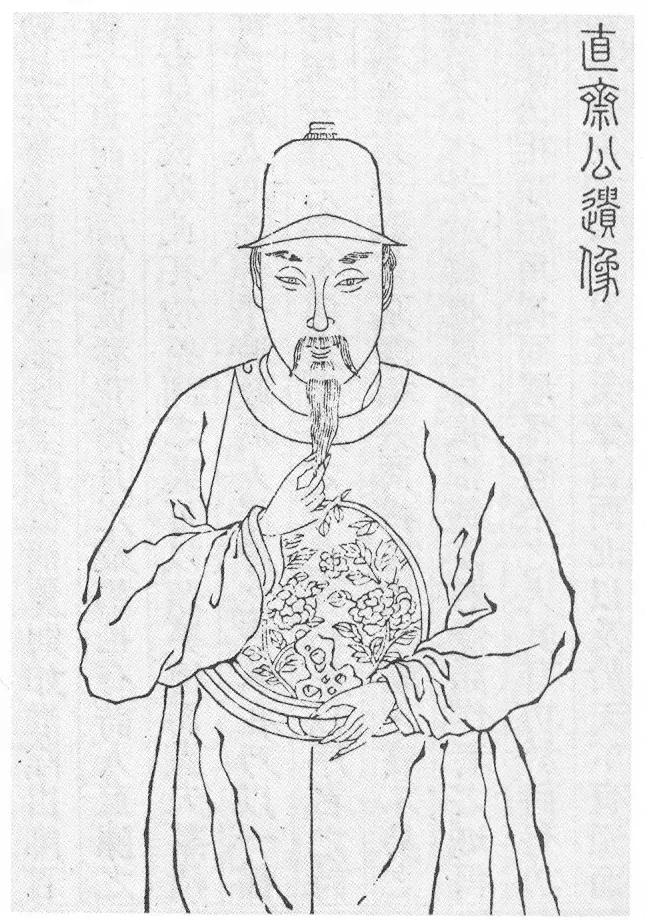
萨都剌
Sa Dula (萨都剌, 1272–1355), courtesy name Tianxi and art name Zhizhai, was a Hui (Muslim) scholar-official, poet, and painter born in Yanmen, Daizhou (modern Dai County, Shanxi). His ancestors hailed from the Western Regions and rendered military service to the Mongol court, with his grandfather Silanbuqa and father Aluchi commanding garrison forces in Yunzhou and Daizhou. Raised in modest economic circumstances, Sa Dula…
Sa Dula (萨都剌, 1272–1355), courtesy name Tianxi and art name Zhizhai, was a Hui (Muslim) scholar-official, poet, and painter born in Yanmen, Daizhou (modern Dai County, Shanxi). His ancestors hailed from the Western Regions and rendered military service to the Mongol court, with his grandfather Silanbuqa and father Aluchi commanding garrison forces in Yunzhou and Daizhou. Raised in modest economic circumstances, Sa Dula pursued classical Confucian studies with diligence, earning the metropolitan examination degree (jinshi) in 1327 during the reign of Emperor Taiding. Sa Dula held various regional offices, including Darughachi of the Zhenjiang Route Registry, Clerk of the Jiangnan Regional Censorate, Archivist of the Yannan Surveillance Office, Administrative Assistant of the Minhai Surveillance Office in Fujian, and Associate Administrator of the Yannan Hebei Surveillance Office. He was celebrated for his incorruptibility, didactic benevolence, and judicial fairness. In Zhenjiang, he hung an inscription reading "Benevolent Teaching" in his tribunal to inspire civil harmony, and in Fujian and Hebei he carefully resolved delayed criminal dockets. In his later years, he retired to Hangzhou, spending his twilight years composing verse amidst the scenic waters of West China. Sa Dula is revered in Chinese literary history as the Yanmen Prodigy and the Crown of Yuan Lyricists. Breaking away from late Song poetic pedantry, he revitalized the expansive lyrical style of the High Tang dynasty. His poetry combines energetic brushwork with sonorous cadence, capturing magnificent frontier terrains alongside sharp critiques of bureaucratic exploitation and anti-war sentiments. His celebrated ci lyrics, notably Man Jiang Hong: Nostalgia at Jinling and Nian Nu Jiao: Ascending the Stone City, are celebrated for their tragic majesty and historical pathos. His works are preserved in Yanmen Ji. He passed away in 1355 at age eighty-four.
Born into a military Semu lineage at Yanmen Pass in Daizhou; lived in modest circumstances and devoted himself to Confucian studies.
Traveled to Dadu and passed the metropolitan civil examinations (jinshi), entering officialdom.
Commissioned as Court Gentleman for Ceremonies and appointed Darughachi of the Zhenjiang Registry; advocated moral transformation of local citizens.
Transferred to the Jiangnan Regional Censorate as clerk; traveled through southern circuits and associated with poets Zhang Yu and Ni Zan.
Promoted to Archivist of the Yannan Regional Surveillance Office in Zhending; reviewed judicial proceedings in Cangzhou and Hejian.
Dispatched south as Administrative Assistant to the Minhai Surveillance Office in Fuzhou; authored numerous travel poems through southeastern passes.
Elevated to the rank of secondary seventh class and appointed Associate Administrator of the Yannan Hebei Surveillance Office.
Retired from active civil administration; settled near the Wulin Gate of Hangzhou, composing verse and painting landscapes.
Died peacefully at his Hangzhou retreat at age eighty-four, remembered as one of the preeminent literary masters of the Yuan dynasty.
The name Sa Dula is considered a transliteration of the Arabic name Sa'd Allah ("Blessing of God"), which corresponds in meaning to his chosen Chinese courtesy name Tianxi ("Heaven-Bestowed"). His ancestors originated from Central and Western Asia, belonging to the meritorious Semu aristocracy that assisted in early Mongol expansion. His grandfather Silanbuqa and father Aluchi served the Yuan throne as military commanders, stationed along the strategic northern passes of Yunzhou and Daizhou.
Sa Dula grew up in the rugged terrain of Yanmen Pass. Due to prolonged family service in the military, the clan's fortunes diminished, and Sa Dula's youth was marked by financial hardship. Nevertheless, he displayed intellectual brilliance, immersing himself in the classical Confucian curriculum. To sustain his livelihood, he engaged in long-distance trading journeys along the Yangtze River toward Hanyang. However, possessing little affinity for commercial gain, he spent his travels exploring mountains and rivers, composing celebrated nature poems such as Visiting Helin Temple on Qingming Festival and Ascending the Beigu Pavilion.
In 1327, Sa Dula journeyed to Dadu to compete in the triennial examinations, passing the metropolitan and palace tests to secure his jinshi status. In July 1328, holding the rank of Court Gentleman for Ceremonies, he was appointed Darughachi (Imperial Commissioner) of the Zhenjiang Route Registry.
In Zhenjiang, a vital commercial port at the confluence of the Grand Canal and the Yangtze, Sa Dula prioritized moral instruction over judicial severity. He personally wrote the characters for "Benevolent Teaching" onto a horizontal plaque for the administrative court, reminding subordinates to administer taxes leniently and preserve communal concord. His upright tenure earned broad gratitude from merchants and local townspeople.
In July 1331, Sa Dula was transferred as clerk to the Jiangnan Regional Censorate, serving for three years. During this assignment, he inspected administrative circuits across Jiangsu, Zhejiang, Hubei, and Hebei, traveling north to the summer capital Shangdu. He deepened his ties with southern literati circles, forming enduring artistic friendships with the Daoist poet Zhang Yu, the literatus Ma Jiugao, and the master painter Ni Zan. His celebrated poems and lyrics, including Man Jiang Hong: Nostalgia at Jinling, Nian Nu Jiao: Ascending the Stone City, and Song of the Girl for Sale, were written during this itinerant administrative phase.
In August 1334, Sa Dula was reassigned as Archivist of the Yannan Surveillance Office based in Zhending (modern Zhengding, Hebei). There, he was selected as ceremonial superintendent to assist Academician Zhirhezhou in offering formal sacrifices at the memorial hall of Tolui. He was subsequently dispatched on circuit to review judicial dockets in Cangzhou and Hejian, clearing lingering cases and freeing unjustly detained prisoners.
In the spring of 1336, Sa Dula journeyed south to Fujian to assume the post of Administrative Assistant in the Minhai Surveillance Office in Fuzhou. His travels across Xuzhou, Yangzhou, Suzhou, Hangzhou, Tonglu, the Xianxia Mountain Range, and Mount Wuyi yielded dozens of luminous lyrical poems that recorded southern topographies and customs.
In August 1337, Sa Dula was promoted to the rank of secondary seventh class and appointed Associate Administrator of the Yannan Hebei Surveillance Office, arriving at his post that winter. He served with administrative vigilance, exposing corrupt magnates and enforcing accountability. Later, he served as associate administrator of the Huai Northwest Circuit. His extensive official travel across China granted him profound insight into the social fractures underlying the apparent prosperity of the Yuan dynasty.
Viewing himself as a Confucian scholar, Sa Dula withdrew from bureaucratic life in his late years to settle outside the Wulin Gate in Hangzhou.
In retirement, he spent his days wandering West Lake with southern scholar-poets. He practiced standard calligraphy with structural balance, and developed refined landscape painting techniques. His surviving hanging scrolls, Yanling Angling Terrace and Plum Blossoms and Sparrows, were celebrated for their sparse elegance. In 1355, Sa Dula passed away peacefully in Hangzhou at age eighty-four.
Sa Dula authored approximately eight hundred surviving poems and song lyrics. Beyond his celebrated travel verse, his most significant literary contributions reside in his realistic poetry that exposed official corruption and sympathized with peasant destitution.
In Early Morning Departure at the Yellow River, he juxtaposed the misery of peasants facing predatory state taxation and flood risks with the decadent revelries of idle aristocrats in city towers. Works such as Song of the Girl for Sale, The Weaver Woman, Datong Post Station, and Yellow River Moonlit Night gave tragic voice to destitute families forced to sell their children to pay predatory debts.
In Record of Events, Sa Dula wrote the incisive lines: "Only knowing the imperial seal was yielded three times, who could foresee his departed soul wandering beyond nine heavens? The heavenly martial emperor weeps in the skies, wondering if flesh and blood shall ever reunite." This poem openly condemned Emperor Wenzong (Tugh Temur) for assassinating his elder brother Emperor Mingzong (Kusala) to usurp the imperial throne—an act obscured by official dynastic histories—elevating Sa Dula's verse to the status of poetic history (shishi).
Although Sa Dula composed a limited corpus of ci lyrics, his songs are universally recognized as the high-water mark of Yuan lyric poetry, earning him the honorific title of the Crown of Yuan Lyricists. Rejecting the precious diction and melancholic frailty common in late Southern Song lyrics, he revived the heroic ethos of Su Shi and Xin Qiji.
His masterpiece Man Jiang Hong: Nostalgia at Jinling surveys the ancient capitals of the Six Dynasties, weaving historical contemplation with the flow of the Yangtze River. His Nian Nu Jiao: Ascending the Stone City opens with panoramic majesty, contrasting human vanity with towering mountain bastions. These compositions stand as enduring classics of Chinese poetic literature.
Challenging the fragmented and pedantic trends prevalent among contemporary poets, Sa Dula sought inspiration in High Tang poetry. Qing scholar Gu Silie praised his style as "fresh and pure," emphasizing his departure from Song scholasticism to recover Tang lyrical directness. His complete works were compiled in Yanmen Ji, which underwent numerous printings, culminating in Sa Longguang's fourteen-volume edition in 1807.
Sa Dula was also an accomplished calligrapher and painter. His regular script displayed robust structure and lively brush transitions. His surviving landscape and bird paintings, Yanling Angling Terrace and Plum Blossoms and Sparrows, are preserved in the National Palace Museum in Taipei as prime examples of early Yuan literati painting.
FIGURES ASSOCIATED WITH THIS DYNASTY