Birth in Yarkand
Born on October 11 in Yarkand to Ali Khoja, a hereditary nobleman of the Uyghur Khoja clan.
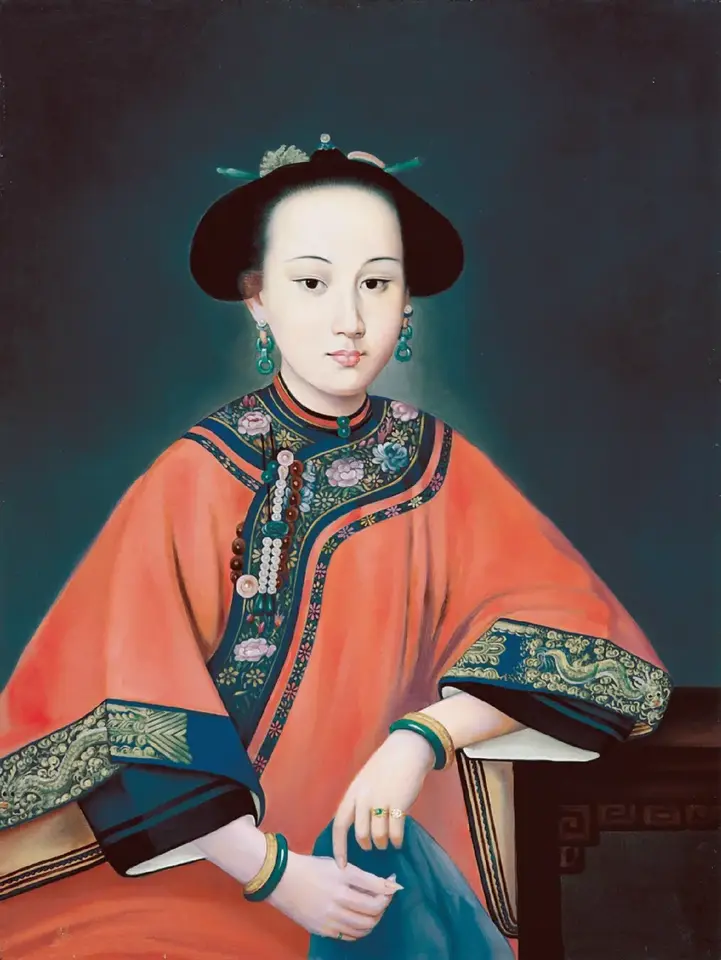
容妃
Consort Rong (容妃, October 11, 1734 – May 24, 1788), surnamed Khoja (Hezhuo or Huozhuo) and named Fatima, was a prominent imperial consort of the Qianlong Emperor of the Qing dynasty and the authentic historical prototype of the folkloric "Fragrant Concubine" (Xiangfei). Born into an influential Uyghur aristocratic house in Yarkand, she was a direct descendant of the revered Islamic holy lineage of Makhdumzada Khojas. During…
Consort Rong (容妃, October 11, 1734 – May 24, 1788), surnamed Khoja (Hezhuo or Huozhuo) and named Fatima, was a prominent imperial consort of the Qianlong Emperor of the Qing dynasty and the authentic historical prototype of the folkloric "Fragrant Concubine" (Xiangfei). Born into an influential Uyghur aristocratic house in Yarkand, she was a direct descendant of the revered Islamic holy lineage of Makhdumzada Khojas. During the Qing military campaigns to suppress the rebellion of the Altishahr Khoja brothers (Burhan al-Din and Jahan Khoja), her family firmly rejected separatist insurrections, actively assisting imperial armies in liberating southern Xinjiang and preserving territorial integrity. In 1760, following the triumph of imperial forces, Fatima and her meritorious kinsmen relocated to Beijing upon imperial invitation, where she was selected into the Forbidden City and created Noble Lady He. Admired for her modest grace, discretion, and devotion to Empress Dowager Chongqing, she was promoted to Concubine Rong in 1761 (whose Manchu title Baktan signifies "magnanimous" or "spacious") and elevated to Consort Rong in 1768. Throughout her palace life, the Qianlong Emperor demonstrated extraordinary respect for her Islamic faith and Uyghur customs: appointing dedicated halal palace chefs, having passages from the Quran inscribed upon the marble walls of the Belvedere (Fangwanguan) in the Old Summer Palace for her private devotions, and allowing her to wear traditional Xinjiang silks on ceremonial occasions. Consort Rong frequently accompanied the emperor on grand state tours, including the fourth southern inspection of Jiangnan, eastern pilgrimages to Mount Tai and Qufu, and dynastic ancestor veneration at Mukden (Shenyang), steadily ascending to become one of the most senior consorts in the inner court. She passed away from illness in the Old Summer Palace in May 1788 at age fifty-four and was interred in the Yuling Consort Mausoleum at the Eastern Qing Tombs. The archaeological excavation of her underground tomb chamber in 1979 uncovered golden Quranic calligraphy upon her lacquered coffin, conclusively refuting late-Qing romantic legends of forced suicide and proving that she lived in imperial honor and died of natural causes.
Born on October 11 in Yarkand to Ali Khoja, a hereditary nobleman of the Uyghur Khoja clan.
Qing forces suppressed the Altishahr rebellion; her kin rendered vital military assistance.
Moved to Beijing with her clan; inducted into the imperial palace in February as Noble Lady He.
Elevated to Concubine Rong under imperial edict for her filial piety and refined demeanor.
Bestowed formal imperial patents, maintaining her traditional Uyghur garments for ceremonies.
Accompanied the emperor and empress dowager to Jiangnan, receiving over eighty special halal dishes.
Promoted to Consort Rong in June, receiving golden seals in a grand ceremony led by Grand Secretary Yin Jishan.
Traveled with the imperial entourage to Mount Tai and attended ancestral rites at Confucius' Temple in Qufu.
Accompanied the emperor to Shenyang, holding second rank among attending palace consorts.
Succumbed to illness on May 24 at age 54; entombed in the Yuling Consort Mausoleum in November.
Consort Rong was born on October 11, 1734, in the oasis city of Yarkand in southern Xinjiang. Her family belonged to the prominent Makhdumzada Khoja lineage, claiming direct descent from the prophet Muhammad's family through Islamic religious leaders known as Khojas. Her father, Hazarat (known in Qing records as Ali Khoja), held the noble rank of Taiji of the 29th generation, while her elder brother Turdu (Hasan Khoja) was a prominent leader in the Tarim Basin.
In May 1755, the Qing government dispatched a punitive expedition to the Ili River valley, crushing the Dzungar rebel leader Amursana. In doing so, Qing armies liberated the two sons of Mahmut—Burhan al-Din (the Elder Khoja) and Jahan Khoja (the Younger Khoja)—who had long been imprisoned by the Dzungars. However, once restored to power in Kashgar and Yarkand, the two Khoja brothers rebelled against the Qing dynasty, murdering imperial envoy Amin Dao and attempting to establish an independent theocratic khanate across southern Xinjiang.
During this critical regional conflict, Fatima's family, led by Ali Khoja and her uncles Eseyin and Parsa alongside Turdu, recognized the catastrophic consequences of rebellion. Refusing to join the rebellion, they faced severe persecution from the insurgents and were forced to abandon their ancestral home in Yarkand, fleeing across the Tianshan Mountains to seek refuge in Ili. There, they established communication with advancing Qing armies, serving as scouts, procuring rations, and providing military intelligence that proved crucial in the pacification campaigns.
In the autumn of 1759, imperial generals Zhao Hui and Fu De decisively crushed the insurgent Khojas, restoring imperial authority across the Western Regions. To consolidate administrative control, ensure frontier stability, and reward meritorious local nobility, the Qianlong Emperor adopted policies of inclusion and political accommodation.
In early 1760, the Qing court summoned five leading Khoja households, including Turdu, along with other loyal Uyghur aristocrats, to take up permanent residence in the capital. Emperor Qianlong granted them generous estates and constructed the "Huizi Camp" near West Chang'an Avenue so that clan members could preserve their religious customs and language.
The twenty-six-year-old Fatima accompanied her family to Beijing. To cement the dynastic alliance between the central imperial government and the Muslim nobility of Altishahr, Qianlong selected her into the Forbidden City. On February 4, 1760, she entered the palace under the guidance of the Empress to learn court protocol and was directly invested as Noble Lady He. Skipping the customary junior ranks of Second-Class Female Attendant and First-Class Female Attendant, this direct investiture underscored the immense political value Qianlong attached to this union.
Within the imperial palace, Noble Lady He exhibited remarkable tact, grace, and modesty. She was exceptionally attentive to the needs of Emperor Qianlong's mother, Empress Dowager Chongqing, performing daily morning and evening devotions with unswerving filial piety. Her gentle disposition and respectful etiquette earned the genuine admiration of both the Empress Dowager and her fellow palace consorts. Soon after her arrival, several potted lychee trees brought from southern China unexpectedly bore more than two hundred ripe fruits, which palace attendants celebrated as an auspicious sign accompanying her entry.
On December 30, 1761, less than two years after her palace entry, Emperor Qianlong acted on Empress Dowager Chongqing's benevolent command to elevate Noble Lady He to Concubine Rong. In Qing imperial records, the title Rong corresponded to the Manchu word Baktan, signifying "one who is capable of containing and tolerating," reflecting her broad-mindedness, patience, and impeccable palace conduct.
On May 21, 1762, the court commissioned Minister of War Aligun and Vice Minister of Rites Wuji as imperial envoys to officiate her formal investiture ceremony. Recognizing her traditional customs, the emperor decreed that she need not discard her splendid native attire, permitting her to wear traditional Uyghur festive apparel and conferring upon her luxurious palace draperies and jades from the Old Summer Palace. In the same year, her brother Turdu was created a Duke of the Fourth Order (Fuguogong) in recognition of his frontier contributions.
Throughout her twenty-eight years in the Forbidden City, Consort Rong enjoyed unprecedented accommodations for her religious and cultural practices. To honor her dietary requirements under Islamic halal law, the Imperial Household Department established a specialized Muslim kitchen within the Imperial Tea and Meal Services, staffed by native Uyghur chefs. They prepared traditional dishes including pilaf mutton, stewed wild duck in clarified butter, roasted mutton, and specialized unleavened breads, while strictly banning any non-halal or prohibited ingredients from her apartments.
Regarding religious worship, Consort Rong maintained her daily Islamic prayer routines unimpeded. While residing at the Old Summer Palace, Qianlong permitted her to perform the five daily prayers and commissioned stone artisans to carve authentic Quranic verses in Arabic script upon the exterior marble walls of the Belvedere (Fangwanguan) in the Western-style palaces, providing a dignified and sacred space for her devotions. Moreover, although Qing sumptuary laws strictly forbade unauthorized apparel, the emperor granted her permission to dress in vibrant Xinjiang silks, head coverings, and traditional gold ornaments during private banquets. This thoughtful accommodation demonstrated the Qing Empire's deliberate policy of multicultural tolerance in managing a multi-ethnic state.
Intelligent, articulate, and culturally refined, Concubine Rong was a favored companion of Emperor Qianlong. Between January and April 1765, she was selected to accompany the emperor and the empress dowager on their celebrated fourth southern tour of the Yangtze River delta. Throughout the journey through Suzhou, Hangzhou, and Jiangning, Concubine Rong experienced the scenic beauty and cultural sophistication of Jiangnan. According to official dietary ledgers (Yushan Didang), the emperor bestowed specialized halal dishes upon her on more than eighty occasions during the journey.
On June 5, 1768, Emperor Qianlong issued an imperial decree elevating her to the senior rank of Consort Rong. On October 6 of that year, Grand Secretary Yin Jishan served as chief envoy, presenting her with the golden patents and seals of consort rank. The imperial edict praised her unwavering prudence, respectful service to the Empress Dowager, and exemplary fulfillment of inner court duties. Now thirty-four, Consort Rong received full sets of formal Manchu court robes and dragon insignia while retaining her unique status as a bridge between the imperial court and the northwestern borderlands.
In February 1771, Consort Rong accompanied the emperor and the empress dowager on their pilgrimage to Shandong, ascending Mount Tai and participating in state rituals at the Temple of Confucius in Qufu. In 1778, she attended the imperial pilgrimage to the ancestral tombs at Mukden, ranking second among all participating consorts.
During this period, profound structural changes occurred in the imperial harem. Following the disgrace and death of the Second Empress (Lady Nara) in 1766, Qianlong resolved never again to designate an empress. With the subsequent passings of Noble Consort Qing (1774) and Imperial Noble Consort Ling (1775), the emperor ceased creating noble consorts or imperial noble consorts, making the rank of Consort (Fei) the de facto pinnacle of the inner palace. Through the gradual passing of older concubines such as Consort Shu, Consort Rong rose to the third most senior position in the imperial harem. At major state banquets held in the Palace of Heavenly Purity and the Old Summer Palace in 1781, Consort Rong occupied prominent seats of honor.
In her fifties, Consort Rong's public appearances became less frequent due to failing health, though the emperor's attention remained constant. Court records note that on May 19, 1788, Qianlong sent a personal gift of ten freshly arrived southern tangerines to her bedside. Five days later, on May 24, 1788 (the nineteenth day of the fourth lunar month), Consort Rong passed away peacefully at her residence in the Old Summer Palace at the age of fifty-four.
Deeply grieved, Emperor Qianlong directed that her personal collection of jewelry, silks, fine porcelains, and jades be distributed among imperial consorts, princesses, imperial granddaughters, and her family members in Beijing. Her cedarwood coffin was temporarily stationed at the Western Garden of Changchunyuan and later escorted by Prince Yongxuan to the Eastern Qing Tombs. On October 23, 1788, she was solemnly entombed within the Yuling Consort Mausoleum, concluding a distinguished life of imperial honor.
Consort Rong's presence in the Forbidden City served as a crucial political instrument for the Qing court's consolidation of authority in southern Xinjiang. Following decades of devastating conflict in the Tarim Basin, the imperial government required stable political bridges with the influential Uyghur nobility.
By incorporating Fatima into the imperial family and bestowing hereditary noble titles upon her brother Turdu and uncles, the Qianlong Emperor fostered enduring loyalty among Xinjiang's ruling elites. The Khoja clan's honored status in Beijing reassured the regional populations of Altishahr that their traditions, lands, and religious leaders were safeguarded under imperial rule. Consort Rong's nearly three decades in the inner court symbolized the political integration of the Western Regions into the multi-ethnic Qing empire.
The exceptional treatment accorded to Consort Rong stands as a classic historical example of the Qing dynasty's policy of "governing according to local custom" (yinsu er zhi). Rather than imposing mandatory Manchu cultural assimilation upon a Muslim consort, the court instituted formal administrative mechanisms to respect her religious practices.
The creation of a specialized halal kitchen with Muslim chefs, the engraving of Arabic Quranic verses upon the architecture of the imperial gardens, and the accommodation of traditional Uyghur court attire illustrated remarkable institutional flexibility. This enlightened approach fostered genuine cultural harmony within the imperial palace and set a historical precedent for state protection of minority religious identities.
For over a century following the fall of the Qing dynasty, sensationalist folklore, private memoirs, and theatrical plays fabricated the myth of the "Fragrant Concubine" (Xiangfei), claiming she exuded a natural intoxicating aroma, was abducted by force, attempted to assassinate the emperor, and was secretly poisoned or strangled by Empress Dowager Chongqing before being escorted back to Kashgar for burial.
In October 1979, cultural relic authorities undertook an emergency archaeological excavation of the collapsed underground chamber of Consort Rong's tomb at the Yuling Consort Mausoleum. Archaeologists unearthed definitive historical evidence: her lacquered red coffin was covered in gilded Arabic inscriptions of passages from the Quran; her burial garments included both imperial Manchu court regalia adorned with cat's eye jewels and exquisite Suzhou-woven traditional Uyghur silk brocades; anthropological analysis of her skeletal remains confirmed her identity as a woman of approximately 167 cm in height whose age at death precisely matched archival records. These scientific discoveries proved beyond doubt that Consort Rong was the sole historical origin of the Xiangfei legend, demonstrating that she lived an honored life and died of natural causes in Beijing.
FIGURES ASSOCIATED WITH THIS DYNASTY