Accession to Rule
Following Duke Xiang's death on campaign against the Rong, Duke Wen ascends the Qin throne.
秦文公
Duke Wen of Qin (秦文公, died 716 BCE) was the seventh ruler of the State of Qin during the early Spring and Autumn period, succeeding his father Duke Xiang of Qin in 766 BCE. Reigning for half a century (765–716 BCE), Duke Wen was the foundational architect who transformed Qin from a frontier garrison state into an expanding powerhouse occupying the fertile Guanzhong plain. During his reign, Duke Wen executed a decisive…
Duke Wen of Qin (秦文公, died 716 BCE) was the seventh ruler of the State of Qin during the early Spring and Autumn period, succeeding his father Duke Xiang of Qin in 766 BCE. Reigning for half a century (765–716 BCE), Duke Wen was the foundational architect who transformed Qin from a frontier garrison state into an expanding powerhouse occupying the fertile Guanzhong plain. During his reign, Duke Wen executed a decisive eastward migration, moving the royal seat from the remote western valleys of Xichui to the strategic confluence of the Qian and Wei Rivers. Capitalizing on the mandate granted by King Ping of the Eastern Zhou dynasty, Duke Wen waged prolonged campaigns against the Quanrong and other Rong nomadic tribes, expelling them beyond Mount Qi and reclaiming the ancestral heartlands of Zhou. Domestically, Duke Wen established the first official state scribes to record annals, promulgated the severe legal code of the "extermination of three familial clans," and instituted the state worship of the mystical Chenbao spirit in Chencang, consolidating royal authority through centralized bureaucracy and theocratic sanction.
Following Duke Xiang's death on campaign against the Rong, Duke Wen ascends the Qin throne.
Resides initially at the ancestral palace of Xichui in Longxi, organizing tribal integration and eastern strategy.
Leads an elite force of seven hundred armed retainers on a reconnaissance hunt across western Guanzhong.
Arrives at the confluence of the Qian and Wei Rivers; divines good fortune and begins constructing a fortified settlement.
Appoints state scribes to formally document historical events, establishing archival literacy across the realm.
Crushes the Rong tribes around Mount Qi, absorbing Zhou remnants and extending sovereign borders to Mount Qi.
Establishes the grand Chenbao Shrine in Chencang to worship an auspicious divine stone, sanctifying dynastic rule.
Codifies the severe penal measure of executing three familial lineages for capital political treason.
Dies after fifty years of reign; buried at Mount Xishan and succeeded by his grandson Duke Xian of Qin.
Reared in the rugged borderlands of Longxi, Duke Wen inherited the unyielding martial tenacity of the early Qin lineage. In 766 BCE, his father Duke Xiang—who had escorted King Ping to Luoyi and earned formal feudatory rank—died during a campaign against the Western Rong near Mount Qi. Upon assuming power, Duke Wen recognized that the mountainous gorges of Xichui could no longer sustain an ambitious feudal realm, resolving to expand eastward into the broad, fertile valleys of the Guanzhong basin.
In 763 BCE, Duke Wen mobilized seven hundred armored warriors to undertake a grand hunt eastward across the Long Mountains. The expedition served simultaneously as military drilling and terrain surveying. In 762 BCE, the royal retinue arrived at the confluence of the Qian and Wei Rivers (near modern Baoji, Shaanxi). Gazing upon the expansive fertile plains and abundant water supplies, Duke Wen declared: "Anciently, the Zhou royal house enfeoffed my ancestor Qin Ying with this soil; now that we are full feudal lords, we must plant our roots here!" Divination yielded the auspicious omen that "future descendants shall water their horses in the Yellow River." Duke Wen immediately mobilized laborers to erect a walled settlement, creating a new administrative center for Qin's eastern advance.
Following the establishment at the Qian-Wei confluence, various Western Rong tribes continued to occupy the old Western Zhou royal domain, ravaging agricultural settlements and severing trade routes. When King Ping relocated the Zhou capital east to Luoyi, he had pledged: "The Rong are cruel and violent, plundering our lands of Qi and Feng. If Qin can drive out the Rong, Qin shall possess those lands." Duke Wen made this royal covenant the guiding mission of his reign.
In 750 BCE, following eight years of agricultural accumulation and military preparation, Duke Wen launched a massive coordinated offensive against the Rong tribes west of Mount Qi. Qin's heavily armed infantry and charioteers shattered the tribal confederation, driving the surviving nomads into the arid northwestern mountains. Duke Wen reclaimed the ancient Zhou lands, incorporating the agricultural populace into Qin's administrative registers. Honoring his commitment to the Zhou Son of Heaven, Duke Wen dispatched envoys to Luoyi to cede the reclaimed lands east of Mount Qi to King Ping, who in return formally confirmed Qin's sovereign ownership over all territories west of Mount Qi.
Concurrently with territorial expansion, Duke Wen enacted far-reaching institutional reforms. In 753 BCE, he formally instituted the office of state scribes (shi), commissioning official chroniclers to record state edicts, campaigns, and astronomical phenomena. This milestone elevated Qin from an illiterate frontier culture into a literate political entity with standardized administrative memory.
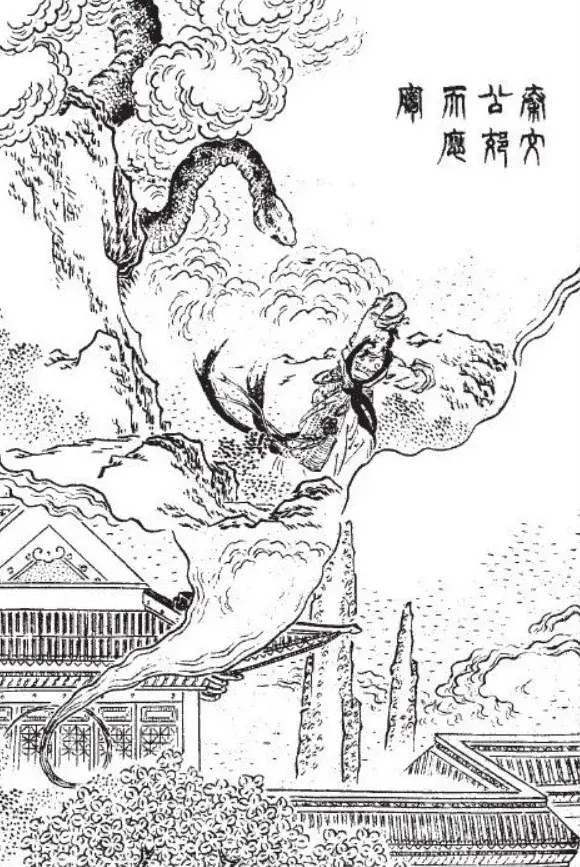
In 746 BCE, aiming to reinforce monarchical discipline over fractious warrior clans, Duke Wen established the legal statute of "punishment of three clans" (zhu san zu), decreeing that severe crimes against the throne would entail the collective execution of the offender's paternal, maternal, and marital lineages. This draconian measure marked the genesis of Qin's later legalist penal tradition. Furthermore, in 747 BCE, when woodcutters in Chencang discovered an extraordinary stone resembling a radiant pheasant that emitted thunderous sounds, Duke Wen founded the Chenbao Shrine at the Qian-Wei junction. By personally officiating at these sacred rites, he buttressed royal political legitimacy with celestial favor.
In 718 BCE, Duke Wen's eldest son and heir apparent, Prince Jing, passed away prematurely. Duke Wen invested Prince Jing's eldest son, Ying Li, as royal heir. In 716 BCE, Duke Wen died after reigning for fifty years and was interred at Xishan. Ying Li succeeded him as Duke Xian of Qin.
Duke Wen fundamentally altered Qin's geopolitical destiny by orchestrating the eastward crossing of the Long Mountains. By establishing the settlement at the Qian-Wei confluence, he unlocked the agricultural riches of the Guanzhong plain, providing the vital demographic and economic resources that propelled Qin's ascent and eventually paved the way for the historic capitals of Yongcheng and Xianyang.
Through systematic military campaigns, Duke Wen expelled the Rong tribes from western Guanzhong, securing undisputed control over Mount Qi. By absorbing the displaced agricultural subjects of the Western Zhou, Duke Wen integrated advanced central plains agronomy, bronze craftsmanship, and ritual administrative norms into Qin society, transforming a semi-pastoral border confederacy into a formidable aristocratic power.
FIGURES ASSOCIATED WITH THIS DYNASTY