Birth in Taiyuan
Born into a declining scholarly family in Taiyuan; showed early mastery of poetry and musical rhythm.
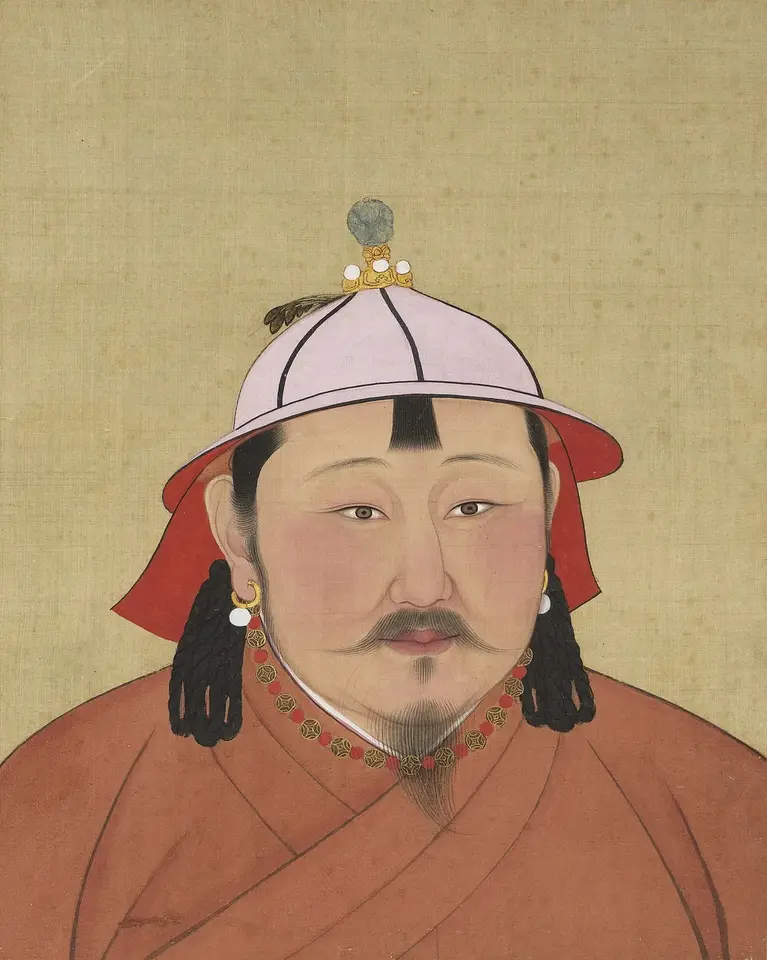
乔吉
Qiao Ji (乔吉, ?–1345), courtesy name Mengfu, literary names Shengheweng and Xingxing Daoren, was a native of Taiyuan (modern Taiyuan, Shanxi) who later resided permanently in Hangzhou. He was an eminent playwright of zaju drama and master of sanqu song-poetry during the Yuan dynasty. Celebrated alongside Zhang Kejiu as the "Twin Gems of Yuan Qu," the two were famously revered in literary circles as the "Li Bai and Du Fu of Qu…
Qiao Ji (乔吉, ?–1345), courtesy name Mengfu, literary names Shengheweng and Xingxing Daoren, was a native of Taiyuan (modern Taiyuan, Shanxi) who later resided permanently in Hangzhou. He was an eminent playwright of zaju drama and master of sanqu song-poetry during the Yuan dynasty. Celebrated alongside Zhang Kejiu as the "Twin Gems of Yuan Qu," the two were famously revered in literary circles as the "Li Bai and Du Fu of Qu poetry." Throughout his life, Qiao Ji embraced an unencumbered and bohemian existence as a commoner, scorning bureaucratic pursuits. Departing from his northern homeland in his youth, he wandered across the cultural centers of Jiangnan—including Jinling, Yangzhou, and Suzhou—before making his home beside West Lake in Hangzhou for over four decades. Living among common townsfolk, musicians, and courtesans, he channeled his creative vitality into theatrical scripts and lyrical songs. In dramatic history, Qiao Ji was an essential figure in late Yuan theatrical composition. Three of his eleven plays survive complete: Du Mu's Dream of Yangzhou, Li Bai's Golden Coin Match, and Pei Du Returns the Belt. In the domain of sanqu, he was celebrated for his polished, radiant, and inventive style, combining classical elegance with colloquial vigor. Furthermore, he formulated the structural paradigm of sanqu composition known as "phoenix head, pig belly, and leopard tail," which became a classical principle in traditional Chinese literary theory. Over two hundred of his surviving lyrics were published in collections including Qiao Mengfu's Lyric Poems and Brocade Bag Lyrics.
Born into a declining scholarly family in Taiyuan; showed early mastery of poetry and musical rhythm.
Departed northern China to travel across Jiangnan, eventually residing by West Lake in Hangzhou.
Produced zaju scripts performed in urban theaters of Hangzhou and across the south.
Exchanged poetic compositions with Zhang Kejiu, Guan Yunshi, and Lu Zhi, achieving empire-wide renown.
Proposed the structural principle of "phoenix head, pig belly, and leopard tail" for song-poetry composition.
Passed away in his Hangzhou dwelling; mourned by fellow artists and honored in Zhong Sicheng's Register of Ghosts.
Qiao Ji was born in Taiyuan during the early decades of the Yuan dynasty. His ancestors had served as minor literary officials under the Jin and early Mongol regimes, but the family fortune had dwindled by the time Qiao reached maturity. Gifted with an expansive and acute mind, Qiao excelled in poetic composition and was thoroughly versed in the complex tonal patterns of dramatic musical prosody. Confronting the rigid social hierarchy of the Mongol state and the erratic suspension of the civil examinations, Qiao harbored no ambition for bureaucratic office, choosing instead the unconstrained life of a traveling scholar-artist.
In his youth, Qiao traveled southward to the cultural centers of the lower Yangtze. He wandered through Jinling (modern Nanjing), Yangzhou, and Suzhou before settling permanently in Hangzhou. Proud and fiercely independent, he composed verses asserting that he never knew how to flatter superiors. Although he lived in modest penury, relying on writing scripts and song lyrics for performers and entertainment guildhalls, he never humbled himself before wealthy grandees, maintaining the proud spirit of an unyielding commoner.
Near the shores of West Lake, he lived in quiet seclusion, adopting sobriquets such as "The Crane-Flute Elder" and "The Awakened Daoist." Integrating himself into the lively urban milieu of Hangzhou, he absorbed the vibrant idioms and rhythms of city dwellers into his verse.
Qiao Ji was a primary representative of literati playwrights who actively engaged with commercial performance. During the fourteenth century, theatrical entertainment flourished in southern metropolitan centers through civilian writing societies like the Yujing Academy of Hangzhou. Qiao collaborated closely with contemporary theater historians and performers, composing eleven full-length zaju plays. Three of these have survived intact: Li Bai's Golden Coin Match, Du Mu's Dream of Yangzhou, and Pei Du Returns the Belt.
In Du Mu's Dream of Yangzhou, Qiao dramatized the romantic exploits of Tang dynasty poet Du Mu, expressing his own sense of neglected genius and bohemian amusement with the mundane world. In Li Bai's Golden Coin Match, he crafted lively dramatic dialogue and intricate musical suites celebrating romantic determination overcoming aristocratic obstacles. His verses were noted for their lyric richness and rhythmic grace, maintaining popularity on stages through the Yuan and Ming dynasties. The late Ming drama theorist Zang Maoxun incorporated all three extant works into the definitive anthology Selected Yuan Plays.
Beyond drama, Qiao's stature in sanqu song-poetry was monumental. Historians of Chinese literature consistently pair him with Zhang Kejiu as the "Twin Gems of Yuan Sanqu." While Zhang's compositions were celebrated for classical polish and strict tonal elegance, Qiao's style synthesized refined artistry with spontaneous vigor, uniting the elegance of classical poetry with the earthy vitality of marketplace street songs.
In his celebrated short lyric To the Tune of Zheguiling, he encapsulated his bohemian persona: "Asked what I pursue in this life: reckless wine, poetic audacity, flower-like spirit, and lute-soul." His landscape descriptions in pieces like To the Tune of Shuixianzi displayed dazzling imagery, delicate emotional resonance, and musical melody.
Moreover, Qiao made a foundational contribution to Chinese literary theory. As recorded in Tao Zongyi's fourteenth-century compendium Notes Taken While Pausing from the Plow, Qiao articulated the classical rule of song composition: "Composing song suites possesses an exact method: namely, the six characters 'phoenix head, pig belly, and leopard tail.' The phoenix head requires an opening of striking beauty; the pig belly demands a middle section rich and substantial in content; and the leopard tail insists upon a conclusion as swift, sharp, and resounding as the leap of a leopard." This theoretical maxim exerted profound influence on subsequent literary and dramatic aesthetics.
In his old age, Qiao faced worsening poverty and infirmity, often reduced to pawning his clothes to buy wine. Yet he maintained his good humor, composing verses declaring that he would never fawn on aristocratic circles and would remain true to his authentic self.
In 1345, Qiao Ji died in his modest lodgings in Hangzhou in his mid-sixties. His close literary companion Zhong Sicheng composed a moving elegiac notice in the Register of Ghosts, lamenting the departure of a brilliant literary genius. Later scholars collected and published his lyrics as Qiao Mengfu's Lyric Poems and Brocade Bag Lyrics, which were revered throughout the Ming and Qing eras as canonical masterpieces of Yuan verse.
Spent forty years wandering across Jiangnan as an uncompromised commoner poet, preserving the proud and independent spirit of the traditional Chinese literatus.
Penned eleven zaju dramatic works, with masterpieces such as Du Mu's Dream of Yangzhou and Li Bai's Golden Coin Match preserved and celebrated across centuries.
Paired with Zhang Kejiu as the "Twin Gems of Yuan Qu," fusing refined classical literary syntax with dynamic colloquial speech to define late Yuan song-poetry.
Formulated the classic "phoenix head, pig belly, leopard tail" structural paradigm for sanqu, providing an enduring aesthetic guideline for traditional Chinese literature.
FIGURES ASSOCIATED WITH THIS DYNASTY