钱元瓘
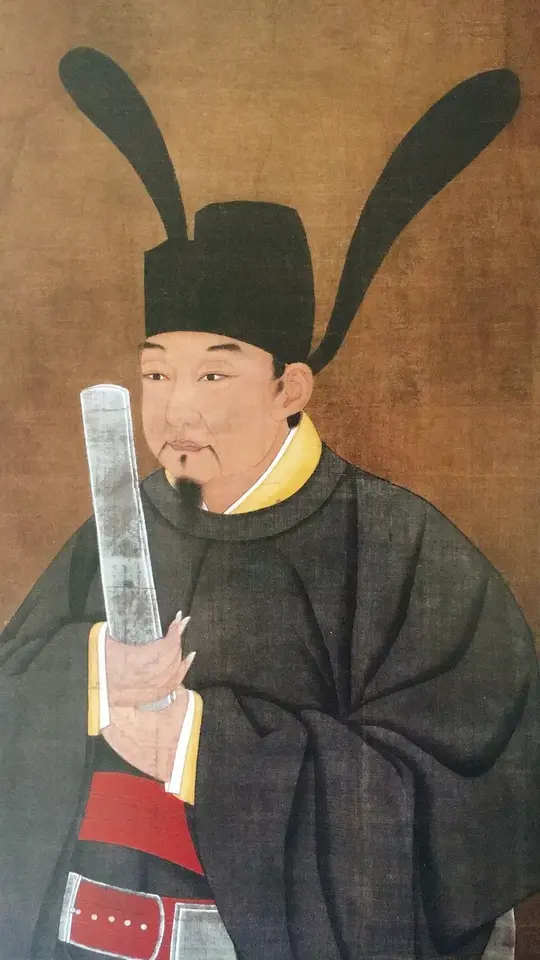
Historical portrait of Qian Yuanguan
Image creditsMing dynasty Painter · CC BY-SA 4.0Image source

Historical figure

Qian Yuanguan (钱元瓘)

钱元瓘

Qian Yuanguan (887–941), originally named Qian Chuanguan, courtesy name Mingbao, was a native of Lin'an, Hangzhou. He was the seventh son of King Wusu of Wuyue (Qian Liu) and the second sovereign of the Wuyue Kingdom during the Five Dynasties and Ten Kingdoms period. At the age of sixteen, he volunteered to go to Xuanzhou as a political hostage, marrying into the household of warlord Tian Yun to resolve a dire military crisis…

Era not stated

PROFILE

Qian Yuanguan (887–941), originally named Qian Chuanguan, courtesy name Mingbao, was a native of Lin'an, Hangzhou. He was the seventh son of King Wusu of Wuyue (Qian Liu) and the second sovereign of the Wuyue Kingdom during the Five Dynasties and Ten Kingdoms period. At the age of sixteen, he volunteered to go to Xuanzhou as a political hostage, marrying into the household of warlord Tian Yun to resolve a dire military crisis confronting Hangzhou. Following his survival and return, he distinguished himself in combat. In 918, as Naval Commander-in-Chief, Qian Yuanguan led the Wuyue fleet to a crushing victory over Southern Wu in the Battle of Langshan River on the Yangtze, using favorable winds to throw lime dust and fire, capturing enemy commander Peng Yanzhang and burning over four hundred war vessels. Following Qian Liu's death in 932, he was unanimously chosen by his brothers to succeed to the throne, subsequently receiving investiture from the Later Tang and Later Jin dynasties as King of Wuyue and Commander-in-Chief of All Troops. Throughout his decade of rule, Qian Yuanguan strictly adhered to the ancestral policy of "preserving the borders and securing the people," dismantling pretenses of imperial majesty to maintain the formal status of a tributary vassal. He instituted the Bureau of Selecting the Capable to recruit talented literati, welcomed displaced scholars from the north, and promoted agricultural reclamation and hydraulic seawall projects. In 941, traumatized by a catastrophic fire that consumed his palace archives and treasury, he suffered a stroke and died at age fifty-five, receiving the temple name Shizong and the posthumous title King Wenmu.

Alias
Qian Chuanguan, Qian Mingbao
Courtesy Name
Mingbao (明宝)
Ancestral Home
Lin'an, Hangzhou (modern Lin'an District, Hangzhou, Zhejiang)
Date of Birth
November 30, 887 (12th day of the 11th month, 3rd year of the Guangqi era, Tang)
Date of Death
September 17, 941 (24th day of the 8th month, 6th year of the Tianfu era, Later Jin)
Age at Death
55
Primary Identity
Second sovereign of Wuyue during the Five Dynasties and Ten Kingdoms period (King Wenmu)
Temple Name
Shizong (世宗)
Posthumous Title
King Wenmu (文穆王)
Highest Office
Commander-in-Chief of All Horses and Troops Under Heaven, Director of the Department of State Affairs (Shangshu Ling), Military Commissioner of Zhenhai and Zhendong, King of Wuyue

LIFE TIMELINE

Relationship graph

BIOGRAPHY

Chronology

  • 887 (3rd year of Guangqi era, Tang) | Princely Birth | Born in Lin'an, Hangzhou, as the seventh son of Qian Liu; given the childhood name Chuanguan.
  • 902 (2nd year of Tianfu era, Tang) | Hostage in Xuanzhou | Volunteered at age sixteen to serve as a hostage and marry into Tian Yun's clan, safeguarding Hangzhou.
  • 903 (3rd year of Tianfu era, Tang) | Return to Hangzhou | Returned to Hangzhou following Tian Yun's defeat and death; appointed Palace Guard Commander.
  • 918 (4th year of Zhenming era, Later Liang) | Victory at Langshan | Commanded the Wuyue navy to crush the Southern Wu fleet at Langshan River, capturing Peng Yanzhang and four hundred ships.
  • 923 (1st year of Tongguang era, Later Tang) | Regional Commands | Elevated to Military Commissioner of Qinghai and Military Commissioner of Zhendong.
  • 928 (3rd year of Tiancheng era, Later Tang) | Designated Successor | Endorsed by elder brothers Qian Chuanzhu and Qian Chuanjing; commissioned Military Commissioner of Zhenhai and Zhendong.
  • 932 (3rd year of Changxing era, Later Tang) | Accession to Kingship | Succeeded Qian Liu as ruler of Wuyue; replaced the generation character "Chuan" with "Yuan" and abandoned imperial pretenses.
  • 933 (4th year of Changxing era, Later Tang) | Invested as King of Wu | Confirmed by Emperor Mingzong of Later Tang as Director of the Department of State Affairs and King of Wu.
  • 934 (1st year of Qingtai era, Later Tang) | King of Wuyue | Formally invested by the Later Tang court as King of Wuyue.
  • 937 (2nd year of Tianfu era, Later Jin) | Vice Commander-in-Chief | Conferred the title Vice Commander-in-Chief of All Troops by Emperor Gaozu of Later Jin; designated Qian Hongzun as heir.
  • 939 (4th year of Tianfu era, Later Jin) | Commander-in-Chief | Elevated to Commander-in-Chief of All Troops Under Heaven, reaching the pinnacle of regional prestige.
  • 941 (7th month, 6th year of Tianfu era, Later Jin) | Palace Conflagration | Massive fire immolated the Hangzhou palace complex; Qian Yuanguan suffered a stroke from psychological shock.
  • 941 (8th month, 6th year of Tianfu era, Later Jin) | Death and Succession | Entrusted his young son Qian Hongzuo to minister Zhang De'an; passed away on September 17 at age fifty-five.

Biography

Political Hostage in Xuanzhou and Youthful Courage

Qian Yuanguan was born in 887 in Lin'an, Hangzhou, originally named Qian Chuanguan, courtesy name Mingbao. He was the seventh son of Qian Liu, founder of the Wuyue Kingdom. From early youth, he was skilled in mounted archery and exhibited courageous resolve. In 902, mutinous officers Xu Wan and Xu Zaisi allied with Military Commissioner Tian Yun of Xuanzhou to lay siege to Hangzhou. Facing catastrophic defeat, Qian Liu defended the walls and negotiated a truce.

Tian Yun demanded that Qian Liu send one of his sons to Xuanzhou as a political hostage in marriage to seal the treaty. When Qian Liu assembled his sons to solicit a volunteer, the elder brothers hesitated in dread. The sixteen-year-old Qian Chuanguan stepped forward and knelt, stating: "The state faces peril; I willingly obey my father's command." He accompanied Tian Yun to Xuanzhou as an in-law hostage. Soon afterward, Tian Yun rebelled against Yang Xingmi of Huainan, who formed an alliance with Qian Liu to crush Tian Yun. Whenever Tian Yun suffered military setbacks, he threatened to execute Qian Chuanguan. Tian Yun's mother, admiring Qian Chuanguan's dignified character, repeatedly hid and protected the youth. In 903, before riding into his final battle, Tian Yun vowed to decapitate Qian Chuanguan upon his return, to which his mother sighed: "That scoundrel will soon perish!" Tian Yun was killed in action, and his mother safely escorted Qian Chuanguan back to Hangzhou.

The Battle of Langshan River and Coastal Dominance

Deeply moved by his son's valor, Qian Liu appointed Qian Chuanguan Palace Guard Commander, placing elite palace garrisons under his direct authority. Qian Chuanguan campaigned against regional bandits, securing extensive military experience.

In the summer of 918, the Southern Wu kingdom dispatched generals Peng Yanzhang and Chai Zaiyong with an expansive river armada to invade Wuyue. Qian Liu appointed Qian Chuanguan Naval Commander-in-Chief, commanding hundreds of warships to intercept the enemy at Langshan River on the lower Yangtze. Confronting a numerically superior fleet, Qian Chuanguan loaded barges with limestone dust and combustibles. When strong river winds blew toward the enemy, his crews hurled lime into the air, blinding the Southern Wu sailors, before setting fire to the barges and driving them into the enemy line. The Southern Wu fleet collapsed in flames; Qian Chuanguan's forces captured commanding general Peng Yanzhang along with seventy officers, seizing and incinerating four hundred enemy vessels. This decisive victory shattered Southern Wu's maritime offensive capability, compelling them to sue for peace and cementing Wuyue's territorial security. For his achievements, he was promoted to Vice Military Commissioner of Zhenhai, Grand Defender, and Military Commissioner of Zhendong.

Succession and Dismantling of Imperial Pretenses

In July 928, as Qian Liu advanced in age, he assembled his sons to evaluate their achievements. Recognizing Qian Chuanguan's incomparable military record and filial devotion, his elder brothers Qian Chuanzhu and Qian Chuanjing jointly insisted that he be named heir. Qian Liu submitted a memorial to Later Tang, which appointed Qian Chuanguan Military Commissioner of Zhenhai and Zhendong.

In April 932, Qian Liu fell terminally ill. Assembling civil and military commanders, he tested their loyalty by suggesting his sons were inadequate to govern. The generals wept and proclaimed: "The Grand Marshal possesses unmatched military merit and virtuous benevolence; he is our ordained lord!" Qian Liu presented the state seals to Qian Chuanguan, charging him to safeguard the realm. Following Qian Liu's death on April 28, Qian Chuanguan succeeded to the throne. Officer Lu Renzhang established strict ceremonial separation between the new sovereign and his princely brothers. Upon taking power, Qian Chuanguan changed the generation character in his brothers' names from "Chuan" to "Yuan" and strictly enforced Qian Liu's deathbed injunction: abandoning all internal imperial protocols, he adhered strictly to the administrative apparatus of a tributary military commandery under Later Tang and Later Jin, receiving titles as King of Wuyue and Commander-in-Chief.

Civil Administration and the Bureau of Selecting the Capable

During his decade-long reign, Qian Yuanguan rigorously enforced the founding tenet of "preserving borders and securing the people." Barring generals from initiating external campaigns, he prioritized domestic recovery. He ordered regional land audits, remitting agricultural taxes and labor levies wherever floods or droughts struck. Expanding upon his father's hydraulic projects, he reinforced the stone seawalls protecting Hangzhou and maintained irrigation networks around Lake Tai, ensuring agricultural abundance throughout the Liangzhe circuits.

In government organization, Qian Yuanguan established the "Bureau of Selecting the Capable" (Zaineng Yuan), directed by Shen Song, to evaluate and promote administrative officials based on objective merit rather than aristocratic pedigree. He appointed Cao Zhongda and Pi Guangye as chief councilors, providing generous stipends to northern literati who sought asylum from chaotic northern wars. When jealous rivals plotted to assassinate veteran commanders Lu Renzhang and Liu Renqi, Qian Yuanguan defended his ministers and assigned them to regional governorships, maintaining harmony among the ruling elite.

The Great Fire and Tragic Demise

In July 941, a catastrophic fire broke out within the Hangzhou royal palace complex. Fanned by fierce winds, the blaze raged for days, consuming palace halls, weapons arsenals, treasuries, and archival libraries. Personally directing firefighting efforts, Qian Yuanguan witnessed the destruction of his father's lifelong material achievements. Overwhelmed by shock and despair, he collapsed from a severe stroke and developed violent delirium.

By August, Qian Yuanguan was bedridden. Aware that his end was near, he summoned Palace Attendant Zhang De'an, a trustworthy and decisive administrator, to his bedside. Fearing that his sixth son Qian Hongzuo was too young to maintain authority, Qian Yuanguan offered to pass the throne to an elder prince. Zhang De'an insisted that Qian Hongzuo possessed precocious intelligence and enjoyed the complete devotion of the army, swearing to safeguard the succession. Reassured, Qian Yuanguan designated Qian Hongzuo as his heir. He died on September 17, 941, at the age of fifty-five. He was interred at Mount Long in Xiaoshan with the posthumous title King Wenmu and the temple name Shizong.

Major Achievements

The Naval Triumph at Langshan River

The Battle of Langshan River in 918 was one of the decisive naval engagements of the Five Dynasties period. Facing an aggressive invasion by the superior naval forces of Southern Wu, Qian Yuanguan demonstrated exceptional tactical ingenuity. By exploiting river winds to deploy blinding limestone clouds followed by coordinated incendiary assaults, he incinerated four hundred enemy warships and captured elite commanders, permanently halting Southern Wu's eastward expansion and ensuring decades of stability for Wuyue.

Upholding Tributary Vassalage and Border Peace

Qian Yuanguan's foremost political achievement was his unyielding commitment to the policy of "preserving the borders and securing the people." Resisting the temptation to proclaim imperial titles like rival regional lords, he dismantled imperial apparatuses and governed as a loyal tributary to northern dynasties. His diplomatic conciliation with neighboring states, coupled with tax relief and hydraulic seawall maintenance, transformed the Liangzhe circuits into a tranquil sanctuary of agricultural and commercial prosperity amid widespread warfare.

Bureau of Selecting the Capable and Cultural Preservation

Qian Yuanguan was an accomplished poet who compiled the ten-volume Jinlou Ji. In administrative affairs, he pioneered the Bureau of Selecting the Capable, institutionalizing objective bureaucratic evaluation to dismantle entrenched hereditary privileges. He offered refuge and state support to eminent scholars fleeing the devastation of northern China, ensuring the survival of classical literature and laying the cultural foundations for Zhejiang's intellectual flourishing under the succeeding Song dynasty.
Personal Relationships

  • Father: Qian Liu, King Wusu of Wuyue, foundational monarch who instituted the policy of preserving borders.
  • Mother: Lady Chen, concubine of Qian Liu, posthumously honored as Consort Zhaoyi.
  • Eldest Brother: Qian Chuanjing, Marquess of Yuyao, who supported Qian Yuanguan's succession.
  • Second Brother: Qian Chuanzhu, Marquess of Dapeng, who championed Qian Yuanguan as heir.
  • Primary Consort: Lady Ma, Consort Gongmu.
  • Eldest Son: Qian Hongzun, designated heir who died prematurely.
  • Second Son: Qian Hongzuo, King Zhongxian of Wuyue, who succeeded to the throne.
  • Fourth Son: Qian Hongzong, King Zhongxun of Wuyue, later sovereign.
  • Fifth Son: Qian Hongchu, King Zhongyi of Wuyue, final sovereign who surrendered the realm to Song.
  • Father-in-law/Adversary: Tian Yun, Military Commissioner of Xuanzhou, to whom Qian Yuanguan was hostage.
  • Regent Minister: Zhang De'an, Palace Attendant entrusted with safeguarding the royal succession.
  • Prime Ministers: Cao Zhongda, Shen Song, and Pi Guangye, key civil statesmen during his reign.

Historical Evaluations

  • Xue Juzheng, Old History of the Five Dynasties: "Qian Yuanguan exhibited courage from youth. Serving as a hostage to Tian Yun, he remained undaunted in peril. Upon succeeding to the realm, he honored his father's teachings, abandoned presumptuous imperial rituals, governed through military commandery statutes, and paid tribute to the court. The borders were tranquil, marking him as a worthy ruler."
  • Ouyang Xiu, New History of the Five Dynasties: "Yuanguan possessed military brilliance from early youth, crushing Peng Yanzhang at Langshan River to the terror of Jianghuai. After ascending the throne, he faithfully served imperial decrees, reduced levies, and relaxed penal laws, allowing the people of Wuyue to live in peace."
  • Wang Fuzhi, On the Comprehensive Mirror: "Qian Yuanguan was benevolent, filial, and deferential to his brothers. He strictly followed his father's injunctions to preserve the borders and pacify the people, sparing the southeast from the devastation of war for decades. The enduring prestige of the Qian lineage owed much to Yuanguan."
  • Sima Guang, Zizhi Tongjian: "King Wenmu of Wuyue was humble and restrained, devoted to scholarship and cherishing men of talent. He paid homage to the Central Plains court with unswerving loyalty, maintaining peace and protecting the populace, who deeply revered his virtue."

Related Entries

  • Qian Liu
  • Qian Hongzuo
  • Qian Hongchu
  • Tian Yun
  • Battle of Langshan River
  • Preserving the Borders and Securing the People
  • Bureau of Selecting the Capable
  • Wuyue Kingdom

FIGURES ASSOCIATED WITH THIS DYNASTY

Bibliography

  • Old History of the Five Dynasties, Volume 133, Biographies of Illegitimate Regimes 2: Biography of Qian Liu (Appended: Biography of Yuanguan)
  • New History of the Five Dynasties, Volume 67, Hereditary Houses of Wuyue 7: Biography of Qian Liu (Appended: Biography of Yuanguan)
  • Zizhi Tongjian, Volume 263, Tang Chronicle 79
  • Zizhi Tongjian, Volume 276, Later Tang Chronicle 5
  • Zizhi Tongjian, Volume 282, Later Jin Chronicle 3
  • Spring and Autumn Annals of the Ten Kingdoms, Volume 78, Wuyue 2: Annals of Shizong