Birth in Changshu
Born into a distinguished scholarly lineage at Luoyuan, Changshu, steeped in classical literature.
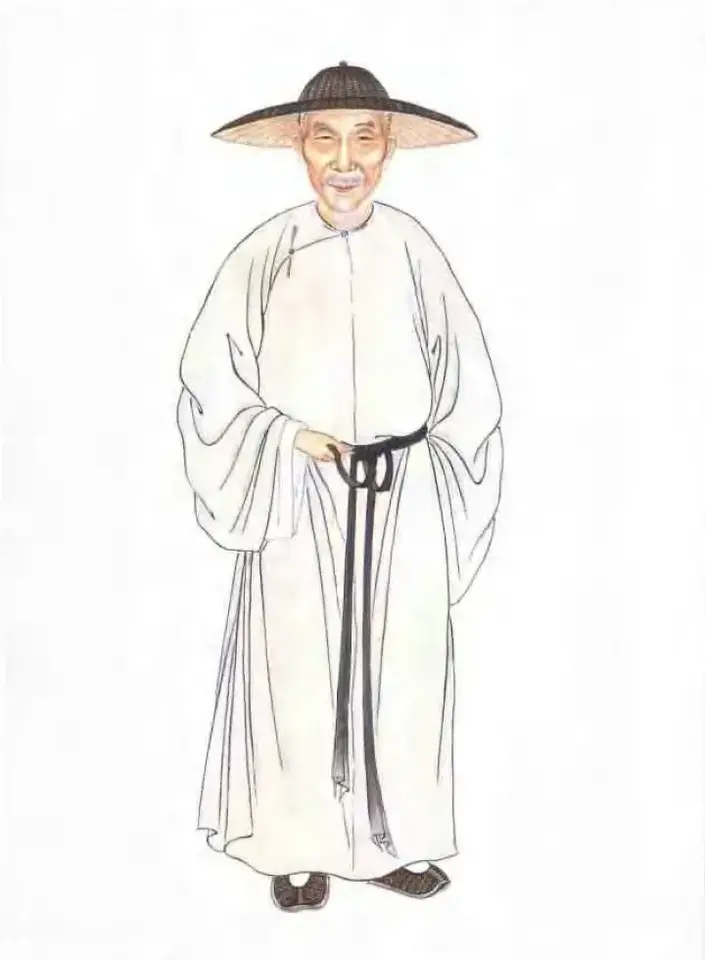
钱谦益
Qian Qianyi (1582–1664), courtesy name Shouzhi, pseudonyms Muzhai, Mengsou, Dongjian Laoren, and Jiangyun Laoren, venerated by scholars as Master Yushan, was a native of Changshu County, Suzhou Prefecture, South Zhili (modern Changshu, Jiangsu Province). He was the supreme literary patriarch, foremost poet, historian, and leader of the late Donglin Party during the Ming-Qing transition, celebrated alongside Wu Weiye and Gong…
Qian Qianyi (1582–1664), courtesy name Shouzhi, pseudonyms Muzhai, Mengsou, Dongjian Laoren, and Jiangyun Laoren, venerated by scholars as Master Yushan, was a native of Changshu County, Suzhou Prefecture, South Zhili (modern Changshu, Jiangsu Province). He was the supreme literary patriarch, foremost poet, historian, and leader of the late Donglin Party during the Ming-Qing transition, celebrated alongside Wu Weiye and Gong Dingzi as one of the "Three Masters of Jiangzuo," as well as one of the most controversial figures in late imperial Chinese history. Placing third in the palace examinations (Tanhua) in 1610, he was appointed Hanlin Compiler. During the Tianqi and Chongzhen reigns, he served as Junior Supervisor of the Household and Vice Minister of Rites, repeatedly impeached amidst ferocious factional struggles with Wen Tiren and Zhou Yanru. In 1641, he married the celebrated Jiangnan courtesan-poet Liu Rushi, constructing Jiangyun Pavilion to house tens of thousands of rare Song and Yuan editions. Following the fall of Beijing, he served as Minister of Rites in the Southern Ming Hongguang court. When Qing forces besieged Nanjing in 1645, failing to commit suicide, he led southern officials in surrender, briefly serving as Qing Vice Minister of Rites before retiring in illness. Spending his final decades in Changshu, plagued by remorse, he secretly devoted his personal fortune to financing anti-Qing resistance, covertly aiding his disciple Qu Shisi, Zheng Chenggong, and Zhang Huangyan in their northern expeditions. A titan of letters, he founded the Yushan Poetic School and compiled Anthology of Poetry of Successive Reigns, dying in Changshu at eighty-one.
Born into a distinguished scholarly lineage at Luoyuan, Changshu, steeped in classical literature.
Placed third in the imperial palace examinations (Tanhua), appointed Hanlin Compiler.
Served as chief examiner for the Zhejiang provincial examinations; fined over a candidate's covert cheating scandal.
Compiling the Veritable Records of Shenzong, impeached and stripped of office by Wei Zhongxian's eunuch faction.
Summoned as Vice Minister of Rites; purged and flogged after clashing with Wen Tiren over cabinet appointments.
Sold rare Song editions to marry Liu Rushi with formal rites, building Jiangyun Pavilion.
Supported the Prince of Fu in Nanjing, appointed Minister of Rites in the Hongguang court.
Surrendered Nanjing to Prince Dodo's Qing armies; served briefly as Vice Minister of Rites in Beijing.
Resigned on grounds of illness, returning to reside quietly at Banye Hall in Changshu.
Imprisoned over links to Huang Yuqi's anti-Qing rebellion; rescued through Liu Rushi's tireless advocacy.
Jiangyun Pavilion caught fire, destroying his lifelong collection of Song-Yuan manuscripts and rubbings.
Coordinated intelligence for Zheng Chenggong's Yangtze expedition, penning the Toubi Ji poems.
Died in poverty and political surveillance at Banye Hall at age eighty-one.
On October 22, 1582 (the twenty-sixth day of the ninth lunar month in the tenth year of the Wanli reign), Qian Qianyi was born in Luoyuan, Changshu County, South Zhili. The Qian lineage traced its descent to King Qian Liu of Wuyue. His grandfather Qian Shunshi and granduncle Qian Shunde had attained the metropolitan degree. Qian's father, Qian Shiyang, devoted his life to classical education, placing the family's aspirations upon his eldest son.
Qian displayed prodigious intellectual talent from childhood, memorizing classical histories after a single reading. By his early teens, he was composing sophisticated historical critiques and poetry. In 1598, he entered the prefectural academy.
In 1610 (the thirty-eighth year of the Wanli reign), twenty-eight-year-old Qian placed third overall in the palace examinations (Tanhua), receiving an appointment as Hanlin Compiler. However, shortly after his triumph, his father died. Qian returned to Changshu for three years of filial mourning, reading exhaustively in private libraries and establishing his reputation as the foremost young scholar in southeastern China.
In 1621 (the first year of the Tianqi reign), having completed his mourning, Qian returned to Beijing as Palace Intermediary, participating in the compilation of the Veritable Records of Emperor Shenzong and serving as Chief Examiner of the Zhejiang provincial examinations. During the examination, candidate Qian Qianqiu bribed examiners, using the coded phrase "A sudden step onto the azure clouds" at the end of each paragraph. Though Qian Qianyi was innocent of bribery, he was penalized with salary forfeiture as presiding examiner. In 1622, he took sick leave to return home.
In 1624, Qian returned to the capital. At that time, grand eunuch Wei Zhongxian held absolute power, brutally purging the reformist Donglin Party. As an acknowledged leader of the Donglin literati, Qian became a primary target of the eunuch clique. That winter, eunuch partisans Cui Chengxiu and Chen Yirui submitted memorials accusing Qian of factionalism, leading to his dismissal from court.
In 1628, Emperor Chongzhen ascended the throne, executing Wei Zhongxian and rehabilitating purged Donglin officials. Qian was appointed Junior Supervisor of the Household and acting Vice Minister of Rites. When the emperor solicited nominations for the Grand Secretariat, Qian was widely regarded as the leading candidate. However, rivals Wen Tiren and Zhou Yanru colluded to resurrect the 1621 Zhejiang examination scandal during an imperial audience. Emperor Chongzhen interrogated Qian aggressively in Wenhua Palace; Qian defended himself passionately, but was stripped of rank and subjected to imperial flogging.
In 1637, Wen Tiren orchestrated local agitator Zhang Hanru to falsely accuse Qian of treason and illegal assemblies. Qian was arrested and imprisoned. Thanks to the intervention of Southern Governor Zhang Guowei and Grand Eunuch Cao Huachun, the charges were proved false; Zhang was executed and Wen was forced into retirement. Though spared execution, the ordeal disillusioned Qian regarding court politics.
In the winter of 1640, nearly sixty years old, Qian experienced the most celebrated romantic turning point of his life. Twenty-two-year-old Liu Rushi, the foremost poet among the Eight Beauties of Qinhuai, traveled in male scholar's attire by boat to Changshu to visit Qian at Banye Hall.
Qian had long admired Liu's intellectual brilliance and political insight. Recognizing each other as kindred spirits, in June 1641 Qian broke traditional taboos by selling rare Song editions of the Book of Han to marry Liu Rushi with the formal bridal rites reserved for primary wives. While conservative literati hurled stones at their wedding vessel in protest, the two disregarded worldly gossip.
At Fushui Mountain Villa in Changshu, Qian constructed "I Have Heard Studio" and "Jiangyun Pavilion" for Liu. Surrounded by landscape gardens, they collated epigraphic texts, wrote poetry, and gathered tens of thousands of Song and Yuan editions. Liu's fiery patriotism profoundly reshaped Qian's moral consciousness during the impending dynastic collapse.
In March 1644, peasant rebel forces seized Beijing, and Emperor Chongzhen committed suicide. Two months later, Prince of Fu Zhu Yousong established the Southern Ming Hongguang court in Nanjing, appointing Qian Minister of Rites. However, internal governance was paralyzed by factional intrigue between courtiers Ma Shiying and Ruan Dacheng. Qian's strategic proposals for Yangtze defense were consistently ignored.
In June 1645, Qing forces under Prince Dodo captured Yangzhou and crossed the Yangtze River. The Hongguang Emperor fled in the night, leaving Nanjing in chaos. Facing catastrophe, Liu Rushi urged Qian to drown themselves in the municipal waters to preserve their loyalty; Qian tested the waters and famously demurred, "The water is too cold, I cannot go in." Overwhelmed by grief, Liu attempted to plunge into the river, but was restrained by Qian. Meanwhile, regional officials Yue Qijie and Yuan Shu starved themselves to death.
On June 15, amidst pouring rain, Qian led civil officials outside the gates to surrender Nanjing to Prince Dodo. In September, ordered to the Qing capital in Beijing, he was appointed Right Vice Minister of Rites, assigned to supervise the History of Ming. Liu Rushi refused to accompany him, remaining in Nanjing. Tortured by guilt and ostracized by former colleagues, Qian resigned on grounds of illness in June 1646, returning south to Changshu.
Back at Mount Yu, Qian devoted his remaining years to clandestine anti-Qing resistance. Using his status as a retired imperial collaborator as a shield, he leveraged his vast network among southeastern gentry to turn Changshu into a vital covert logistics hub for Southern Ming forces.
In 1647, Qian was implicated in providing shelter and funds for Huang Yuqi's armed insurrection. Arrested by Qing authorities, he was imprisoned in Nanjing. Despite having recently given birth, Liu Rushi traveled frantically between Nanjing and Beijing, selling personal jewelry to bribe Vice Minister of Justice Yan Hang, securing his release. Qian wrote gratefully: "Weeping by the river, there are no filial sons; facing doom together, I have a virtuous wife."
Following his release, Qian intensified his covert operations. In 1649, he dispatched a strategic memorandum to Southern Ming commander Qu Shisi in Guilin, analyzing Qing garrison weaknesses. In 1650, he traveled secretly to Jinhua to persuade Qing General Ma Jinbao to defect. In 1652, Southern Ming general Li Dingguo communicated with Qian through wax-sealed secret missives.
When Zheng Chenggong and Zhang Mingzhen launched naval campaigns along the Yangtze in 1654, Qian and Liu liquidated their remaining estates to purchase grain and weapons. To facilitate maritime intelligence, Qian built "Hongdou Villa" at Baimao Port. In 1659, when Zheng Chenggong and Zhang Huangyan sailed up the Yangtze to besiege Nanjing, seventy-eight-year-old Qian penned Jinling Autumn Inspirations and Toubi Ji, organizing covert support inside the city. When the campaign collapsed, Qian lamented the irreversible doom of the Ming cause.
In the winter of 1650, Qian suffered a devastating cultural loss. Jiangyun Pavilion caught fire due to a servant's negligence; seventy-two carved lacquer cabinets filled with thousands of unique Song and Yuan editions, calligraphic scrolls, and rubbings were reduced to ash. Heartbroken, Qian took the sobriquet "Elder of Jiangyun."
In his final years, with the Southern Ming Yongli Emperor executed in Yunnan, Qian realized all hope was lost. Living in poverty at Banye Hall under surveillance by local magistrates, on June 17, 1664 (the twenty-fourth day of the fifth lunar month in the third year of the Kangxi reign), Qian passed away at eighty-one. Within weeks of his death, predatory clansmen attempted to confiscate the estate; Liu Rushi hanged herself to protect her infant daughter and the family tombs. In 1776, Emperor Qianlong placed Qian in the Biographies of Twice-Serving Officials (Erchen Zhuan), ordering his literary works suppressed.
In Chinese classical literary history, Qian Qianyi occupied the supreme position as the literary arbiter bridging the late Ming and early Qing eras. During the late Ming, the Gongan and Jingling schools had descended into frivolous triviality, abandoning historical weight.
Qian founded the influential Yushan Poetic School. In literary theory, he rejected both shallow individualist self-expression and mechanical archaic imitation, championing the principle of "authentic emotion, rigorous factuality, and encyclopedic erudition." He insisted that poetry must reflect deep classical scholarship and historical awareness, integrating the monumental vigor of Han-Wei verse with the dense melancholic cadence of Du Fu.
His literary output was immense, comprising Chuxue Ji (110 volumes) and Youxue Ji (50 volumes). His vast vocabulary and effortless mastery of classical allusion transformed seventeenth-century poetry, influencing masters like Wang Shizhen and Zhu Yizun, and establishing the foundational aesthetic standard for Qing classical verse.
Beyond poetry, Qian was an accomplished documentary historian of the Ming dynasty. Amidst wartime disruption, thousands of private documents were vanishing.
Devoting over a decade of research, Qian gathered over ten thousand poems composed by Ming emperors, statesmen, commoners, and women, completing the monumental eighty-one-volume Anthology of Poetry of Successive Reigns (Liechao Shiji) in 1649.
Crucially, Qian composed an extensive biographical commentary for each poet, titled Biographical Notes on the Anthology of Poetry of Successive Reigns (Liechao Shiji Xiaozhuan). Drawing on his decades inside political circles, Qian recorded the inner history of court factionalism, scholar societies, and private lives. Many sensitive historical records suppressed by the Qing court survived exclusively within this compendium, making it an indispensable resource for late imperial historiography.
While his 1645 surrender remained a permanent moral blemish, his subsequent dedication to anti-Qing resistance illustrated a profound effort toward historical redemption.
Confronted with the brutal imposition of the queue order, Qian established covert intelligence networks across Jiangnan. Liquidating family estates, he funneled silver and provisions to Southern Ming loyalist Qu Shisi and coastal naval forces under Zhang Huangyan.
Prior to Zheng Chenggong's 1659 Northern Expedition, Qian communicated military intelligence regarding Qing river garrisons, composing strategic documents mobilizing regional gentry. His wartime poetry collection, Toubi Ji, burned with patriotic fervor, demonstrating his willingness to risk execution to sustain the resistance movement.
Qian was among the foremost bibliophiles in Chinese history, with his Jiangyun Pavilion rivaling Mao Jin's Jigu Pavilion.
From his early Hanlin years, Qian copied rare palace manuscripts, later acquiring entire family libraries including those of Yu Weiyan, Yang Yi, and Qian Yunzhi, accumulating hundreds of thousands of volumes. His collection was celebrated for pristine Song and Yuan woodblock printings and collated manuscripts.
At Jiangyun Pavilion, Qian and Liu Rushi collated rare texts, laying the documentation foundation for Ming historiography. Though destroyed by fire in 1650, surviving manuscripts preserved by his relative Qian Zeng in the "Ye Shi Yuan" collection became the core source for Qian Zeng's celebrated bibliography Dushu Minqiu Ji, preserving the intellectual heritage of the late imperial period.
FIGURES ASSOCIATED WITH THIS DYNASTY