Birth in Kunming
Born into poverty on Taihe Street in Kunming, collecting discarded paper to read by lamp-light.
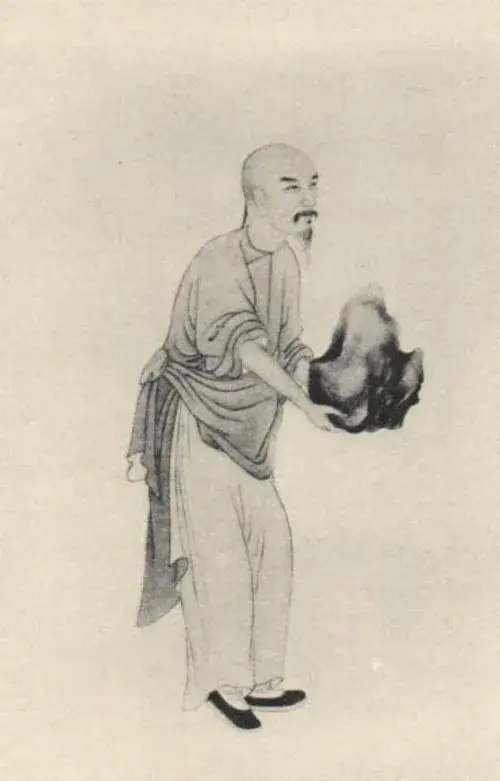
钱沣
Qian Feng (1740–1795), courtesy name Dongzhu, secondary courtesy name Yuefu, pseudonym Nanyuan, native of Kunming County, Yunnan Prefecture (modern Kunming, Yunnan Province), was an imperial censor and incorruptible statesman of the Qianlong era celebrated for outspoken remonstrance, as well as a preeminent calligrapher and painter. Born into rural poverty in southwestern Yunnan, he pursued rigorous classical study, attaining…
Qian Feng (1740–1795), courtesy name Dongzhu, secondary courtesy name Yuefu, pseudonym Nanyuan, native of Kunming County, Yunnan Prefecture (modern Kunming, Yunnan Province), was an imperial censor and incorruptible statesman of the Qianlong era celebrated for outspoken remonstrance, as well as a preeminent calligrapher and painter. Born into rural poverty in southwestern Yunnan, he pursued rigorous classical study, attaining the Metropolitan Graduate (Jinshi) degree in 1771. Selected into the Hanlin Academy, he served as Compiler in the State Historiography Institute, Circuit Censor of the Jiangnan Circuit, Sub-Chancellor of the Transmission Office, and Provincial Education Commissioner of Hunan. Throughout his career, Qian displayed uncompromising moral integrity, boldly challenging the corrupt network of grand favorite He Shen. He single-handedly prosecuted the monumental graft scandal of Shandong Governor Guotai and investigated Shaan-Gan Viceroy Le'erjin, upholding imperial justice to nationwide acclaim as "the upright voice shaking all under heaven." In calligraphy, reacting against the delicate mannerisms of Dong Qichang and Zhao Mengfu popular at the imperial court, he championed Tang loyalist Yan Zhenqing, developing monumental brushwork celebrated as the foremost revival of the Yan style in the Qing dynasty, profoundly inspiring late Qing statesmen Weng Tonghe and Tan Yankai. He was also famed for painting lean, spirited horses expressing literati defiance. He passed away in Beijing in 1795 amidst persistent suspicions of assassination by political rivals.
Born into poverty on Taihe Street in Kunming, collecting discarded paper to read by lamp-light.
Passed the provincial examination as a Juren under the tutelage of scholar Wang Jin.
Attained the Jinshi degree in the imperial examinations, entering the Hanlin Academy as a Bachelor.
Appointed Circuit Censor of the Jiangnan Circuit, gaining renown for unyielding prosecution of official corruption.
Impeached Shandong Governor Guotai for extortion; audited treasuries alongside Liu Yong, overcoming He Shen's obstruction.
Appointed Provincial Education Commissioner of Hunan, overhauling examination corruption and promoting poor scholars.
Returned to Kunming for four years of filial mourning following his parents' deaths, lecturing at Wuhua Academy.
Surveyed regional river systems amidst catastrophic flooding, submitting Explanations of the Six Rivers Map.
Reappointed Circuit Censor in Beijing, continuing investigations against He Shen's brother Helin.
Died suddenly of illness and overwork at his Beijing residence at age fifty-five.
In 1740 (the fifth year of the Qianlong reign), Qian Feng was born into an impoverished family on Taihe Street in Kunming County, Yunnan Province. His biological father died young, leaving the household destitute. Qian was intellectually precocious, yet extreme poverty prevented him from purchasing classical books.
To acquire knowledge, the boy frequently waited beside municipal paper-incineration shrines in Kunming, collecting discarded manuscripts and shredded pages to reassemble and study beneath oil lamps. His extraordinary memory enabled him to recite ancient histories after a single reading. His dedication moved local scholars Wang Jin and Chen Shilie, who accepted him tuition-free, teaching him classical philosophy, historical prose, and statecraft. Subsequently, Qian studied at the Wuhua Academy in Kunming, rising to become the foremost scholar in the province.
In 1768 (the thirty-third year of the Qianlong reign), twenty-eight-year-old Qian passed the provincial examinations as a Juren. In 1771, he passed the metropolitan examinations in Beijing, earning the Jinshi degree and selection into the Hanlin Academy as a Bachelor, subsequently being appointed Examining Editor. During his Hanlin tenure, he examined rare palace archives and participated in the compilation of the Siku Quanshu, establishing profound scholarly authority.
In 1781 (the forty-sixth year of the Qianlong reign), Qian was appointed Circuit Censor of the Jiangnan Circuit. At that time, Grand Councilor He Shen enjoyed the unprecedented favor of the Qianlong Emperor, amassing immense personal fortunes while establishing factional control over central and provincial bureaucracies. Fearing retribution, imperial officials flattered the favorite, leaving few willing to speak truth to power.
Qian viewed the duty of an imperial remonstrator as a sacred public trust. In 1782, discovering that Shandong Governor Guotai (an intimate ally of He Shen) had engaged in widespread extortion, causing massive deficits across county treasuries while terrorizing subordinates, Qian submitted an emergency memorial impeaching Guotai for corruption and fiscal collapse.
The Qianlong Emperor dispatched Grand Councilor He Shen, Censor-in-Chief Liu Yong, and Qian Feng to conduct a joint audit in Shandong. During the journey, He Shen sent secret couriers instructing Guotai to borrow silver from Jinan merchant banks to conceal treasury shortfalls. Upon arrival, Qian displayed brilliant investigative acumen, sealing the vaults, checking bullion casting dates and assay seals, exposing the borrowed funds. Faced with undeniable evidence, Guotai confessed and was sentenced to death. The triumph broke the myth of He Shen's invulnerability, earning Qian national renown as the "Iron-Faced Censor."
In 1783 (the forty-eighth year of the Qianlong reign), in recognition of his integrity, Qian was appointed Provincial Education Commissioner of Hunan. Regional literati culture in Hunan was litigious, with civil examinations corrupted by patronage networks.
Arriving in Hunan, Qian instituted strict ethical standards, forbidding assistants from accepting regional gifts. He toured academies across the province, including Yuelu Academy and Chengnan Academy, assessing students directly. During examinations, he barred aristocratic lobbying, personally evaluating examination papers in isolation. He severely penalized fraudulent examiners while promoting talented students from impoverished families.
Throughout his tenure, Qian transformed academic discipline in Hunan, instilling rigorous philological standards. Forefathers of later nineteenth-century statesmen, including Tao Shu and Wei Yuan, were nurtured under his administration, earning him renown as the foremost educator in Hunan history.
In 1789 (the fifty-fourth year of the Qianlong reign), following the death of his mother and adoptive father, Qian retired to Kunming for four years of filial mourning. When catastrophic flooding struck the Kunming basin, Qian traversed mountain ranges to survey river networks, drafting the Explanations of the Six Rivers Map for provincial authorities, orchestrating channel dredging that relieved thousands of inhabitants.
In 1794, Qian returned to Beijing, appointed Sub-Chancellor of the Transmission Office and reassigned to the Jiangnan Circuit. By then, He Shen's power had grown absolute, with his brother Helin installed as Shaan-Gan Viceroy. Witnessing systemic venality, Qian prepared a comprehensive memorial detailing dozens of charges against He Shen's abuses.
He Shen's agents discovered the initiative and sought his ruin. The relentless pressure of official labor and political intrigue exhausted Qian's physical vitality. In the autumn of 1795 (the sixtieth year of the Qianlong reign), Qian fell violently ill with pulmonary hemorrhage, dying suddenly at his residence outside Xuanwu Gate at age fifty-five. Public rumors suggested he had been poisoned by He Shen's assassins. Literati across the capital mourned his loss in white funeral robes.
Qian Feng's 1782 prosecution of Shandong Governor Guotai stands as a classic triumph in eighteenth-century anti-corruption history. Relying on aristocratic lineage and ties to He Shen, Guotai had extorted subordinate prefects, creating millions of taels in public deficits.
As a seventh-rank censor, Qian risked execution to memorialize against the viceroy. The emperor appointed He Shen, Liu Yong, and Qian to investigate. On the road, He Shen dispatched covert couriers warning Guotai to borrow commercial bullion to stage a solvent treasury.
Upon reaching Jinan, He Shen attempted to halt the investigation by prematurely inspecting the vaults. Qian intervened, noting that the treasury ingots possessed inconsistent assays and recent commercial marks inconsistent with official tax bullion. Demanding a confrontation with municipal banking guilds, Qian compelled merchants to reveal the secret borrowing. Subsequent audits in Licheng and Zhangqiu exposed millions in embezzled funds, forcing He Shen to capitulate and resulting in Guotai's execution, immortalizing Qian's courage.
Prior to the Guotai case, Qian participated in unmasking the Gansu Relief Fraud scandal, in which Provincial Commissioner Wang Danwang and Shaan-Gan Viceroy Le'erjin fabricated drought reports to embezzle millions in imperial disaster relief.
As imperial censor, Qian uncovered severe deficits in frontier military logistics and granary inventories, submitting memorials exposing how border officials enriched themselves under the guise of defense mobilization. His relentless petitions spurred comprehensive imperial investigations in Lanzhou that led to Le'erjin's suicide and Wang Danwang's execution.
Qian advocated structural reforms in provincial fiscal auditing, introducing standardized accounting for military disbursements and grain stores, contributing significantly to administrative discipline during the high Qianlong era.
In the history of Qing dynasty calligraphy, Qian was celebrated as the foremost master of the Yan Zhenqing regular script tradition. During the seventeenth and eighteenth centuries, the delicate elegance of Dong Qichang and Zhao Mengfu dominated the empire, degenerating into slick court scripts (Guangeti).
Qian rejected this fashion, taking Tang dynasty loyalist martyr Yan Zhenqing as his supreme model. He studied Yan's Zhongxing Song, Dongfang Shuo Zan, and Magu Xiantan Ji, alongside running script monuments like Draft of a Requiem to My Nephew, synthesizing the architectural restraint of Ouyang Xun and Chu Suiliang.
Qian's regular script featured expansive, monumental geometry with unyielding, centered brush strokes resembling vajra scepters. His running script incorporated Mi Fu's dynamic cadences, projecting monumental righteous force. Later calligraphers including late Qing tutor Weng Tonghe and Republican statesman Tan Yankai grounded their art in Qian's model, orchestrating the modern revival of the Yan Zhenqing tradition.
Beyond regular script mastery, Qian was an accomplished literati painter renowned for depicting horses.
Traditional masters such as Han Gan and Li Gonglin typically depicted well-fed imperial steeds within palace stables. Qian took a divergent approach, specializing in lean, sinewy horses (Shouma) standing amidst autumnal wilderness. Employing iron-wire linework, his brushwork outlined muscle and bone with architectural tension.
Standing in windswept plains with raised heads and fierce eyes, Qian's lean steeds symbolized unbending moral fortitude amidst adverse circumstances. Qian inscribed poems upon these paintings satirizing bloated, corrupt officials while reaffirming his own willingness to endure hardship for moral principle, creating a revered genre in Chinese literati painting.
FIGURES ASSOCIATED WITH THIS DYNASTY