Birth in Wangxian
Born on February 16 into a scholarly family in Wangxianqiao, Jiading County, Jiangsu.
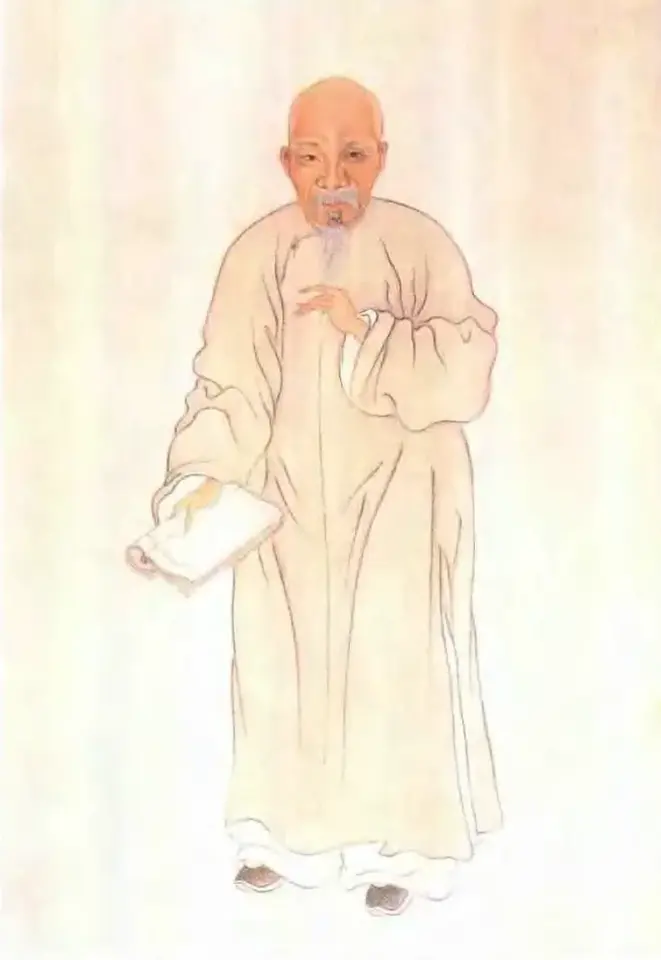
钱大昕
Qian Daxin (1728–1804), courtesy names Xiaozheng and Zhuting, art name Qianyan Laoren, was a native of Jiading, Jiangsu. He was the central luminary and encyclopedic polymath of the Qianjia Evidential School (Qianjia Kaojuxue), paired with Ji Yun as the "Southern Qian and Northern Ji." Early renowned as a child prodigy, he attained the jinshi degree in 1754 during the Qianlong reign and served as Reader-in-Waiting of the…
Qian Daxin (1728–1804), courtesy names Xiaozheng and Zhuting, art name Qianyan Laoren, was a native of Jiading, Jiangsu. He was the central luminary and encyclopedic polymath of the Qianjia Evidential School (Qianjia Kaojuxue), paired with Ji Yun as the "Southern Qian and Northern Ji." Early renowned as a child prodigy, he attained the jinshi degree in 1754 during the Qianlong reign and served as Reader-in-Waiting of the Hanlin Academy, Junior Supervisor of the Household Administration, and Education Intendant of Guangdong, participating deeply in the imperial compilation of the Rehe Gazetteer, Imperial Continuation of the Comprehensive Examination of Literature, and Comprehensive Gazetteer of the Great Qing. In 1775, following the death of his father, he retired on grounds of illness and permanently withdrew from officialdom. Over the three decades following his retirement, Qian Daxin presided over Zhongshan Academy, Loudong Academy, and Ziyang Academy, teaching more than two thousand disciples and reigning as the preeminent academic titan of the Jiangnan scholarly community. Master of both classics and history, he made monumental contributions to historical phonology, philological exegesis, epigraphy, institutional administration, historical geography, genealogy, and traditional astronomy and mathematics. His hundred-volume masterwork Critical Examination of the Twenty-Two Histories (Nian'ershi Kaoyi) established the definitive paradigm of dynastic historical criticism; his scholarly notebook Record of Cultivating the New in the Ten-Yoke Studio (Shi Jia Zhai Yang Xin Lu) represents the peak of Qianjia evidential inquiry; and his pioneering phonological laws—that ancient Chinese lacked light labials and retroflex stops—stand as permanent foundation stones of modern Chinese linguistics.
Born on February 16 into a scholarly family in Wangxianqiao, Jiading County, Jiangsu.
Placed sixth in the county preliminary examination at age thirteen, astonishing local examiners.
Passed the civil service licentiate examination, studying under Cao Guifang and befriending Wang Mingsheng.
Admitted to Suzhou Ziyang Academy upon the special recommendation of Wang Jun and Wang Mingsheng.
Summoned to Jiangning during the Qianlong Emperor's southern tour; ranked second in the imperial examination and appointed Secretary in the Grand Secretariat.
Passed the metropolitan and palace examinations, entering the Hanlin Academy as a bachelor and compiler.
Ranked first in the second class in the Hanlin triennial evaluation, appointed Right Assistant and official historiographer.
Ranked third in the first class in the grand imperial examination, promoted to Reader-in-Waiting and imperial diarist.
Appointed instructor to imperial princes in the Shangshufang; promoted to Junior Supervisor of the Household Administration.
Assigned as Education Intendant of Guangdong, reforming local examination discipline and nurturing southern talent.
Retired permanently to his native village following his father's death, declining further bureaucratic posts.
Accepted the invitation of Liangjiang Viceroy Gao Jin to serve as principal instructor at Zhongshan Academy in Jiangning.
Completed the monumental hundred-volume Critical Examination of the Twenty-Two Histories after decades of research.
Appointed director of Suzhou Ziyang Academy, presiding over its lectures for sixteen years until his death.
Died peacefully at Ziyang Academy on November 21 at the age of seventy-six.
Qian Daxin was born on February 16, 1728, in Wangxianqiao, a market town forty li west of Jiading County seat in Jiangsu. The Qian family originally hailed from Changshu; during the Zhengde era of the Ming dynasty, his seventh-generation ancestor Qian Zi married into the Guan family of Jiading and settled there. His grandfather Qian Wangjiong was a reclusive Confucian physician well-versed in medicine, poetry, and classical literature, who supervised Qian Daxin's earliest education. Under his grandfather's rigorous instruction, Qian memorized classical texts, historical genealogies, and the basics of celestial movements while still in early childhood.
In 1740, thirteen-year-old Qian Daxin took the preliminary county examination, achieving sixth place and earning immense admiration from the magistrate. In 1742, at fifteen, he moved to the county seat to study under his grandfather's disciple Cao Guifang. That same year he attained his licentiate degree, making the acquaintance of Wang Mingsheng. In 1749, on the strong recommendation of Wang Mingsheng and Academy Director Wang Jun, Qian Daxin was admitted to the prestigious Ziyang Academy in Suzhou. The academy had shifted from Neo-Confucian moral introspection toward philological rigor, providing Qian an ideal environment for evidentiary training.
In May 1750, Qian Daxin, Wang Mingsheng, Cao Renhu, and Wang Chang toured the region following the renowned poet-scholar Shen Deqian. Shen compiled their poetic works into the Anthology of Seven Masters, through which Qian's literary and classical fame spread throughout southeastern scholarly circles.
In spring 1751, the Qianlong Emperor embarked on his first southern inspection tour. Qian Daxin submitted a grand rhapsody that delighted the emperor, who summoned him to Jiangning for a special re-examination. Ranking second in the first class, Qian was granted the rank of Secretary in the Grand Secretariat and ordered to report to Beijing. In 1753, he arrived in the capital to serve in the Cabinet Drafting Office, commencing a twenty-three-year residence in Beijing. This urban scholarly milieu allowed him to forge intimate intellectual connections with eminent capital scholars, discussing astronomical mathematics with Chu Yinliang and epigraphic rubbings with He Guozong.
In 1754, Qian Daxin passed the metropolitan examination and attained the jinshi degree, being selected as a Hanlin Bachelor and subsequently appointed Hanlin Compiler. In 1756, he joined the editorial board compiling the Rehe Gazetteer, working alongside Ji Yun and establishing their joint renown as the "Southern Qian and Northern Ji." In 1758, he placed first in the second class in the grand imperial examination, advancing to Right Assistant in the Right Secretariat of the Heir Apparent and serving as compiler in the Imperial Printing Office and Meritorious Officials Bureau.
Over the subsequent decade, Qian served as Chief Examiner for provincial examinations in Shandong, Hunan, Zhejiang, and Henan, as well as Associate Examiner for metropolitan examinations. He was repeatedly promoted to Reader-in-Waiting and imperial diarist, frequently lecturing before the emperor and demonstrating impeccable philological mastery across imperial historiographical bureaus.
In 1767, Qian Daxin's wife Wang Shunying passed away. Afflicted with chronic insomnia and deteriorating health, he requested medical leave. Grand Secretary Liu Lun urged him to remain, but Qian firmly declined and departed the capital. In late 1769, his father urged him to resume his duties to avoid abandoning his imperial career, prompting Qian's reluctant return to Beijing. During this second Beijing stay, he immersed himself in the deep study of the ancient lexicon Shuowen Jiezi, compiling ten volumes of his collected poetry and serving on the editorial board of the Comprehensive Gazetteer of the Great Qing.
In 1772, Qian was reinstated as Reader-in-Waiting and worked as editor for the Three Comprehensive Histories Bureau (Santong Guan). In 1773, he received an imperial decree to instruct the twelfth imperial prince Yongji in calligraphy and classical texts, and in November of that year he was promoted to Junior Supervisor of the Household Administration. In 1774, he was dispatched as Education Intendant of Guangdong, where he spent a year reforming examination ethics, suppressing regional corruption, and mentoring local candidates.
In May 1775, Qian Daxin received news of his father's death. He immediately resigned his post and returned to Jiading to observe the mourning rituals, resolving to permanently abandon bureaucratic office due to chronic illness. Despite financial strain following his retirement, he adamantly declined repeated summons from capital grandees. In 1778, invited by Liangjiang Viceroy Gao Jin, Qian assumed the presidency of Zhongshan Academy in Jiangning, teaching advanced evidential techniques to talented scholars.
In 1782, after more than twenty years of painstaking labor, he brought his hundred-volume magnum opus Critical Examination of the Twenty-Two Histories to completion. In 1785, he accepted an invitation from Governor Zhang Pangui to lead Loudong Academy in Taicang. In 1788, he was appointed Director of Suzhou Ziyang Academy, where he taught for sixteen continuous years. More than two thousand students studied under him, including eminent disciples such as Shao Jinhan and Ruan Yuan. When the Jiaqing Emperor assumed direct rule in 1799, courtiers repeatedly petitioned for Qian's recall, but he politely declined. He died peacefully at Ziyang Academy on November 21, 1804, at the age of seventy-six.
Qian Daxin pioneered the revolutionary scholarly methodology of placing history on an equal footing with the Confucian classics, applying the exacting evidentiary standards of classical exegesis directly to official dynastic histories. He transformed subsidiary fields such as philology, astronomy, historical geography, administrative institutions, and epigraphy into foundational evidentiary instruments of historical inquiry.
Through exhaustive research, Qian perfected diverse historical critical techniques, including text-comparative collation, etymological tracing, textual recovery from disparate anthologies, and systematic thematic induction. In his hundred-volume Critical Examination of the Twenty-Two Histories, he insisted on objective factual verification: "Record facts straightforwardly, and truth will naturally reveal itself." He scrutinized discrepancies in official dynastic histories, particularly exposing the structural disorder of the History of Song and the pervasive textual errors of the History of Yuan, using private diaries and regional records to rectify official oversights.
Qian formulated specialized expertise across three core historical domains: historical geography, administrative bureaucracy, and clan genealogy. He meticulously traced shifts in county boundaries, analyzed bureaucratic evolution across successive dynasties, and compiled comprehensive tables such as the Genealogical Tables of the Yuan Dynasty and Bibliographical Treatise on the Yuan Dynasty. His recovery and evaluation of the Secret History of the Mongols rescued indispensable primary documents of the Chinggisid era from scholarly neglect.
In classical studies, Qian Daxin championed Eastern Han scholarship represented by Xu Shen, Zheng Xuan, Ma Rong, and Lu Zhi. He valued Han commentators because their glosses were rooted in linguistic proximity to antiquity and supported by verifiable textual proof, avoiding subjective ideological fabrication.
While honoring Eastern Han Old Text exegetes, Qian maintained an enlightened tolerance toward Western Han New Text traditions, arguing that differing regional lineages naturally preserved distinct phonetic variants. He firmly discarded the metaphysical speculations of Song and Ming Neo-Confucians, asserting that true moral philosophy must emanate directly from accurate philological commentary.
In works such as Record of Cultivating the New in the Ten-Yoke Studio, Qian demonstrated that the Great Learning was an organic chapter of the Book of Rites, interpreting self-cultivation as a practical civic duty rather than abstract quietism. In Mencian studies, he corrected chronological errors regarding Qi's conquest of Yan, while in Classic of Poetry studies, he championed Mengzi's principle of "apprehending intent through empathetic resonance" (yi yi ni zhi), dividing post-classical poetry literature into citations and analytical commentaries. In ritual studies, he demonstrated that the Ritual Records of the Elder Dai and Junior Dai represented parallel compilations rather than successive abridgments.
Qian Daxin mounted a rigorous critique of Song and Ming Neo-Confucianism, systematically exposing the intellectual hazards of abstract moral philosophy divorced from empirical reality. He attacked the Neo-Confucian methodology of deriving cosmic truths from subjective meditation, arguing that speculative introspection bypassed genuine classical scholarship and encouraged intellectual indolence.
On a philosophical level, Qian rejected Song-Ming dichotomies between "nature as principle" and physical investigation. He observed that late Ming intellectual decay and the collapse of the Ming dynasty were accelerated by scholars who engaged in hollow moral posturing while remaining utterly ignorant of taxation, border defense, and civil administration.
Qian particularly censured Neo-Confucians for introducing Buddhist and Daoist quietism into orthodox Confucianism while falsely claiming classical antiquity. Under his grandfather's guidance, he maintained that true Confucian learning required "seeking truth from facts" (shishi qiushi), anchoring statecraft and ethical integrity firmly in verified textual and historical realities.
In poetic theory, Qian Daxin formulated his celebrated doctrine of the "Four Virtues of Poetry" in his preface to the Chunxing Caotang Poetry Collection. He declared: "Ancient critics maintained that historians require three masteries; I submit that poets require four virtues: talent, learning, discernment, and genuine emotion."
Qian emphasized that natural poetic talent must be disciplined through broad scholarship, and that poetic discernment (shi zhi shi) derived from learning widely from diverse masters to purge vulgarity and imitation. Distinctively, he elevated "genuine emotion" (qing) to the soul of poetry, asserting that verse devoid of authentic human experience descended into hollow mechanical rhetoric.
His own poetic output was vast, comprising over 1,600 poems across the Qianyan Tang Poetry Collection and its continuation. His poetry spanned six decades and incorporated historical anecdotes, bureaucratic regulations, astronomical observations, botanical classifications, and agrarian labor, reflecting profound erudition and social engagement. In prose, he integrated pure literature with scholarly treatises, advocating that prose must convey practical utility and moral truth without extraneous ornamentation.
Qian Daxin was an accomplished calligrapher renowned primarily for his mastery of Han clerical script (lishu). His calligraphic compositions frequently took the form of self-composed couplets characterized by archaic gravity, unadorned strength, and refined scholarly elegance.
His clerical script drew direct inspiration from Han stone steles, particularly the Yiying Stele. Using centered-brush technique (zhongfeng), he executed firm, weighted strokes without superficial decorative flourishes. In seal script (zhuanshu), he analyzed the distinction between the sharp ends of large seal script and the uniform symmetry of small seal script. His running script and personal letters exhibited balanced refinement, reflecting the deep aesthetic restraint of an evidential scholar.
Qian Daxin devoted substantial energy to modernizing educational practice across Jiangnan academies and provincial examinations. At Zhongshan and Ziyang Academies, he inculcated the ethos of "seeking truth from facts," fiercely discouraging superficial memorization designed merely for examination success.
Having presided over provincial examinations across Shandong, Hunan, Zhejiang, and Henan, Qian carried out his supervisory duties with scrupulous integrity. He instituted strict anti-plagiarism mechanisms, condemning candidates who stitched together pre-fabricated essays. He championed the selection of examiners with deep classical grounding and advocated testing genuine statecraft knowledge rather than formulaic prose styling.
Qian recorded and promoted numerous regional initiatives establishing charitable schools and academies. His inscriptions, such as the Record of Chongshi Academy, documented efforts to educate impoverished youths, emphasizing that widespread public education constituted the supreme pillar of social stability.
Qian's profound mastery of traditional philology provided an unrivaled foundation for his textual exegesis. In Record of Cultivating the New in the Ten-Yoke Studio, he applied the principle of "seeking meaning through sound, and uncovering ancient glosses through ancient phonetics," operating in complete harmony with contemporary philologists Duan Yucai and Wang Niansun.
In his groundbreaking work Record of Constant Words (Hengyan Lu), Qian pioneered the systematic academic study of vernacular and colloquial expressions. He correlated popular contemporary idioms with classical texts, citing historical precedents and ancient commentaries to demonstrate that colloquial idioms frequently preserved authentic linguistic usages of high antiquity.
Furthermore, Qian conducted groundbreaking research on ancient clan surnames and taboo names (bihui). He analyzed the historical differentiation and integration of surnames prior to the Qin dynasty, elucidating how ancient lineages functioned to govern marriage boundaries and aristocratic ranks.
Qian Daxin's most revolutionary scholarly contributions lie in Chinese historical phonology. He formulated two foundational phonological laws that transformed the study of ancient Chinese pronunciation: "ancient Chinese lacked light labial initials" (gu wu qingchun yin) and "ancient Chinese lacked retroflex stop initials" (gu wu sheshang yin).
His discovery that the thirty-six initials of Middle Chinese light labials (fei, fu, feng, wei) did not exist in Old Chinese, but were all pronounced as heavy bilabials (bang, pang, bing, ming), resolved thousands of perplexing phonetic discrepancies in the Classic of Poetry and ancient rhymes. Similarly, his law that retroflex stops (zhi, che, cheng) merged into dental stops (duan, tou, ding) in antiquity established a rigorous empirical scientific basis for phonological reconstruction.
In addition, Qian observed that ancient Chinese had a preponderance of lingual sounds, noted the close historical affinity between guttural and glottal initials, and traced the historical development of the four tones and the origins of fanqie phonetic spelling. These discoveries remain celebrated as monumental milestones in world historical linguistics.
Qian Daxin was one of the greatest epigraphers of the Qing dynasty, assembling an extraordinary personal collection exceeding two thousand stone and metal rubbings. His epigraphic scholarship is preserved in the twenty-five-volume Postscripts to Epigraphic Inscriptions of Qianyan Tang (Qianyan Tang Jinshiwen Bawei).
Qian maintained that "epigraphic inquiry and classical historiography are inner and outer aspects of the same endeavor." He pioneered the method of mutual verification between stone inscriptions and transmitted paper texts, using newly discovered stele rubbings to rectify corrupt characters and omissions in official histories.
He paid meticulous attention to vernacular and variant characters on local gravestones and temple inscriptions, establishing that regional orthography provided crucial clues for linguistic evolution. Moreover, he formulated systematic classification rules for epigraphic formats across dynasties, revolutionizing epigraphic science.
Qian Daxin was an ardent bibliophile whose private library at Qianyan Tang housed tens of thousands of rare Song, Yuan, and Ming woodblock imprints. His passion for rare texts was matched by his extraordinary zeal for ancient stone rubbings, earning him the affectionate moniker "epigraphic fanatic."
In 1770, when workmen discovered an ancient tomb with an inscribed stele at the imperial kiln works in Beijing, Qian immediately rushed to the site, climbed into the subterranean chamber, and transcribed the eroded characters. His library served as an intellectual sanctuary for leading evidential scholars across the empire, fostering collaborative collation projects that preserved fragile cultural treasures for posterity.
FIGURES ASSOCIATED WITH THIS DYNASTY