Maritime Security
Led his private merchant fleet to crush coastal pirates, receiving official rank from the Southern Song court.
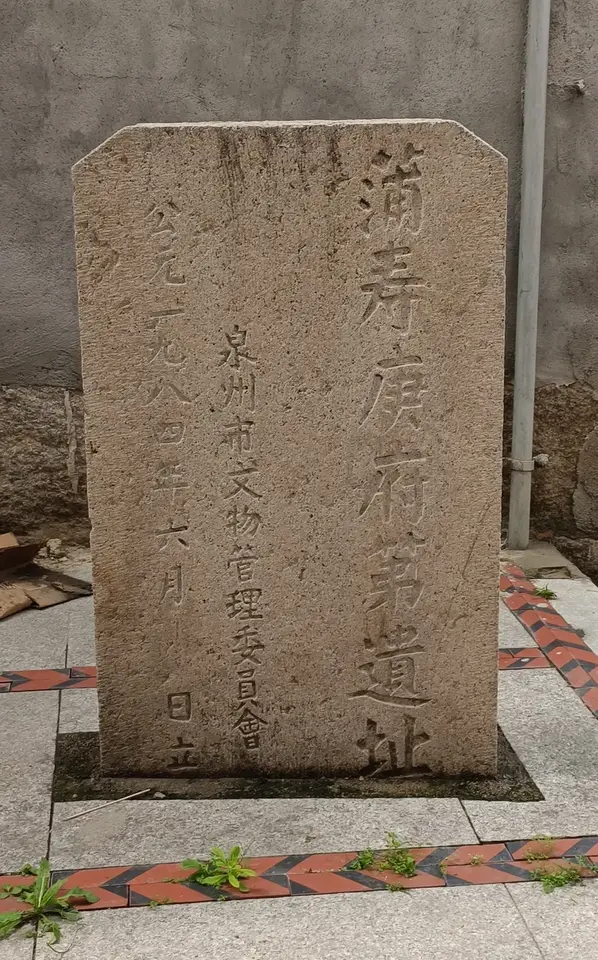
蒲寿庚
Pu Shougeng (蒲寿庚) was an immensely influential maritime merchant magnate, official trade monopolist, and provincial statesman during the Song-Yuan transition, hailing from Quanzhou, Fujian. His family was of Arab or Champa Muslim merchant origin, having relocated from Guangzhou to Quanzhou during the late Southern Song. Operating an enormous fleet of ocean-going merchant vessels and commanding extensive trade networks…
Pu Shougeng (蒲寿庚) was an immensely influential maritime merchant magnate, official trade monopolist, and provincial statesman during the Song-Yuan transition, hailing from Quanzhou, Fujian. His family was of Arab or Champa Muslim merchant origin, having relocated from Guangzhou to Quanzhou during the late Southern Song. Operating an enormous fleet of ocean-going merchant vessels and commanding extensive trade networks spanning the Indian Ocean, the family accumulated vast wealth. During the reigns of emperors Lizong and Duzong, Pu led his armed merchant fleet to destroy coastal pirate confederacies, winning imperial favor and securing appointment as Superintendent of Maritime Trade (Tiju Shibosi) in Quanzhou for three decades, eventually rising to Coastal Pacification Commissioner. In 1276, following the surrender of Lin'an, the young Song emperor Zhao Shi and his brother Zhao Bing fled south by sea to Quanzhou, seeking to establish a coastal base. Judging that the Southern Song was doomed, Pu refused them entry and denied them naval transports. As the royal retinue was forced to withdraw toward Guangdong, Song general Zhang Shijie confiscated over a hundred merchant ships belonging to Pu in the harbor. Enraged, Pu staged a coup in Quanzhou, executing thousands of resident Song imperial clan members and loyalist scholar-officials, before formally surrendering the city, harbor, and fleet to Mongol general Bayan. Kublai Khan rewarded him lavishly, appointing him Grand General of Inspiring Bravery, Pacification Commissioner of Fujian and Guangdong, and ultimately Left Vice Chancellor of the Fujian Branch Secretariat. Pu's surrender transformed Quanzhou into the preeminent maritime emporium of the Mongol Empire, making him a central figure in medieval world trade and geopolitical transition.
Led his private merchant fleet to crush coastal pirates, receiving official rank from the Southern Song court.
Appointed Superintendent of Maritime Trade in Quanzhou, beginning a thirty-year trade monopoly.
Promoted to Coastal Pacification Commissioner of Fujian, commanding vast maritime wealth and ships.
Barred the Song court from Quanzhou, slaughtered imperial clan members, and surrendered the port to Mongol forces.
Repelled a three-month siege by Song loyalist commander Zhang Shijie, receiving high military titles from Kublai Khan.
Elevated to Assistant Administrator of the Fujian Branch Secretariat, restoring trade with overseas kingdoms.
Supervised the construction of warships and supplies in Quanzhou for Mongol expeditions against Champa and Japan.
Elevated to Left Vice Chancellor of the Fujian Branch Secretariat, the supreme authority along the southeast coast.
Passed away in Quanzhou; given an honorable state funeral and buried on Mount Dongping.
The ancestors of Pu Shougeng were Arab merchants who traded via Champa (modern central Vietnam) before settling in Guangzhou, eventually moving to Quanzhou during the Southern Song. As the eastern terminus of the Maritime Silk Road, Quanzhou teemed with international shipping. Drawing upon extensive Muslim diaspora connections across the Indian Ocean, the Pu family conducted wholesale trade in frankincense, spices, silks, pearls, and porcelain, amassing colossal private fortunes.
In the mid-thirteenth century, pirate fleets plagued the Fujian coast. Pu Shougeng and his elder brother Pu Shoucheng mobilized their wealth, hiring veteran mariners and deploying armed multi-decked merchantmen to destroy pirate strongholds. Impressed by their naval prowess, the Song court appointed Pu Shougeng Superintendent of Maritime Trade in Quanzhou. Over thirty years in office, Pu merged state customs authority with his family shipping empire, controlling import tariffs, foreign ship clearances, and export permits, amassing wealth exceeding that of provincial treasuries.
In early 1276, Mongol forces captured Lin'an and Empress Dowager Xie surrendered. Loyalist ministers escorted the young royal princes Zhao Shi and Zhao Bing south to Fuzhou, proclaiming an imperial court. In late 1276, under Mongol pressure, Zhang Shijie and Lu Xiufu evacuated the court southward to Quanzhou by sea, intending to utilize the deep-water harbor and Pu's fleet to mount a prolonged resistance.
Pu Shougeng astutely recognized that the Song Dynasty was finished and that resistance against Mongol armies would bring total destruction to his commercial empire. He ordered Quanzhou's gates sealed, denying the emperor entry and refusing to surrender merchant vessels. Furiously, Zhang Shijie seized over a hundred merchantmen belonging to the Pu clan anchored in the bay, confiscating their cargo before sailing south.
Retaliating with ruthless savagery in December 1276, Pu orchestrated a massacre in Quanzhou, executing thousands of resident Song imperial clan members and loyalist scholar-officials. He then opened the gates and surrendered the port, its warehouses, and hundreds of ocean-going vessels to Mongol commander Bayan.
Pu's defection delivered a fatal strategic blow to the Southern Song loyalists. Denied their last maritime supply base and fleet, the Song court was forced into the sea off Guangdong, culminating three years later in the annihilation at the Battle of Yamen. Kublai Khan was ecstatic at securing the port and named Pu Grand General of Inspiring Bravery, Pacification Commissioner of Fujian and Guangdong, and Superintendent of Maritime Trade.
In 1277, Zhang Shijie led surviving Song forces in a three-month siege of Quanzhou. Pu commanded Mongol garrisons and private levies to hold the walls until Mongol reinforcements lifted the siege. Grateful for his defense, Kublai promoted him to Assistant Administrator of the Fujian Branch Secretariat and later to Left Vice Chancellor.
In power, Pu dispatched envoys across Southeast Asia and the Indian Ocean, offering tax exemptions to lure foreign merchants back to Quanzhou. The port rapidly recovered, surpassing Guangzhou and Alexandria to become the world's busiest medieval maritime emporium.
Pu enjoyed supreme honor until his passing in 1290, with his sons holding high military and civil posts. During Kublai's overseas campaigns against Champa and Java, Pu mobilized Quanzhou's shipyards to build transport fleets, providing navigators versed in monsoon currents.
Pu passed away peacefully in 1290 and was buried on Mount Dongping. While the family flourished for nearly a century under Yuan rule, their fortunes ended catastrophically in the late Yuan following the Ispah Rebellion, when local warlords and the founding Ming government carried out sweeping retribution against the Pu clan.
Pu Shougeng was the quintessential merchant-official in medieval world history. Governing the Quanzhou Maritime Trade Bureau for three decades, he established an international trade network stretching to the Persian Gulf, the Red Sea, India, the Indonesian archipelago, and Japan.
He expanded foreign settlements (fanfang) and mosques in Quanzhou, creating a cosmopolitan trading haven. His maritime trade protocols and customs tariffs provided critical revenue for the late Song and were subsequently adopted by Kublai Khan as the standard foreign trade policy of the Yuan Dynasty.
Pu's defection altered the strategic balance of the Mongol conquest of Southern Song. The Song court had planned to sustain resistance along the southern coast using superior naval power.
By delivering Quanzhou and its mariners to the Mongols, Pu stripped the loyalists of their logistical base while equipping the Mongols with naval fleets and experienced seafaring crews. This enabled the Yuan to assemble an armada that surrounded and destroyed the Song navy at the Battle of Yamen.
Under the Yuan, Pu directed maritime strategy across the South China Sea. During preparations for expeditions against Champa and Java, he utilized Quanzhou's master shipwrights to build sturdy ocean-going Fuchuan vessels equipped with watertight bulkheads.
He also mediated diplomatic exchanges with Southeast Asian polities, persuading kingdoms such as Srivijaya, Champa, and Java to dispatch tribute embassies to Dadu.
FIGURES ASSOCIATED WITH THIS DYNASTY