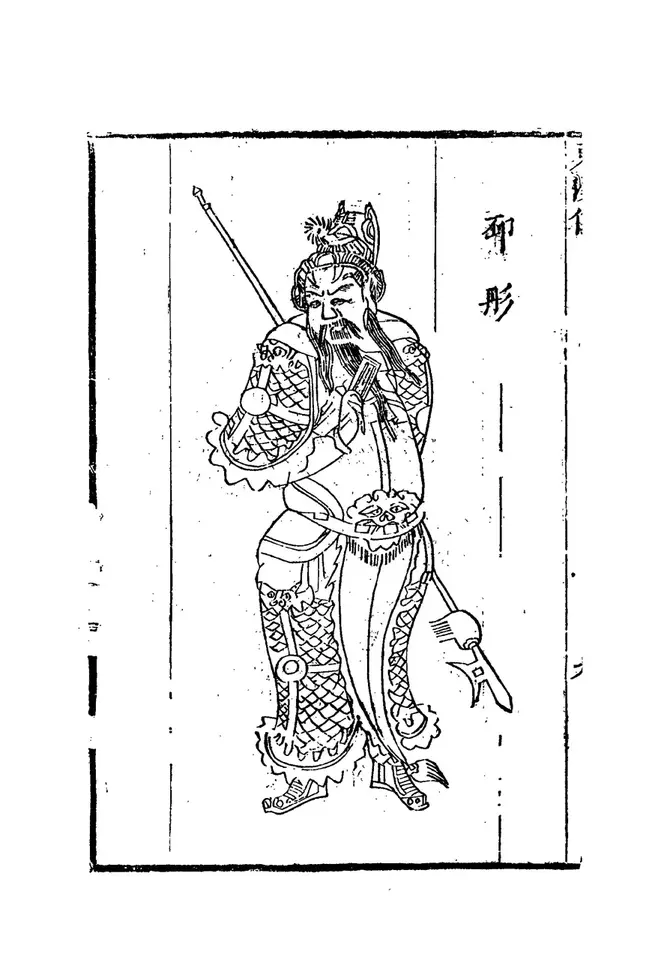
Biography
Illustrious Lineage and Submission to the Han
Pi Tong hailed from an established bureaucratic family. His father, Pi Ji, served as the Grand Administrator of Liaoxi in the late Western Han, gaining a reputation for integrity on the northern frontier. Nurtured by family traditions, Pi Tong studied classical canons and showed a keen interest in pharmacology and medical arts. When Wang Mang established the Xin dynasty, parts of Julu were reorganised into Hecheng Commandery, where Pi Tong was appointed Magistrate.
In the autumn of 23, the Gengshi Emperor dispatched Liu Xiu as Grand Minister of War to pacify the commanderies north of the Yellow River. When Liu Xiu reached Xiacquyang, the seat of Hecheng, Pi Tong recognized Liu Xiu's regal virtue and promptly led the officials and populace to welcome him. Pleased by his loyalty, Liu Xiu confirmed Pi Tong as Grand Administrator of Hecheng and stayed for several days to soothe the locals before proceeding north to Ji.
Defending the Isolated Bastion and Dispatching Relief
The political landscape soon shifted dramatically. In Handan, the diviner Wang Lang claimed to be Liu Ziyu, a son of Emperor Cheng of Han, and proclaimed himself emperor with the support of regional princes and local gentry. He issued proclamations demanding Liu Xiu's head, and most local officials capitulated in haste.
Amid this crisis, only Ren Guang in Xindu, Li Zhong, and Pi Tong in Hecheng stood firm, closing their gates and resisting Wang Lang's summons. In the spring of 24, after Liu Xiu escaped a deadly ambush in Ji, he fled southward with barely twenty riders and reached Xindu. Upon hearing that Liu Xiu had arrived safely but lacked an army, Pi Tong selected two thousand elite cavalry under Zhang Wan and Yin Sui to rush to his aid. When they passed Tangyang, which had defected to Wang Lang, Pi Tong warned the county magistrates of the imperial authority, forcing them to open the roads and enabling a swift rendezvous with Liu Xiu.
Persuasive Counsel Against Retreat
With Wang Lang commanding massive rebel coalitions, Liu Xiu's subordinates were gripped by fear and argued that the expedition should be abandoned in favor of retreating across the Yellow River to Chang'an. At this decisive council, Pi Tong stepped forward and forcefully spoke against the retreat.
Pi Tong analyzed the situation with razor-sharp insight, stating that Wang Lang was merely an impostor exploiting rumors without genuine public support. He argued that the people of Hebei yearned for Han restoration, and that withdrawing to Chang'an would not only forfeit the northern territory but also shatter Liu Xiu's prestige in the imperial capital. Deeply moved, Liu Xiu adopted his strategy and appointed Pi Tong as Rear General and Grand Administrator of Hecheng to lead the vanguard.
Victories Across Hebei and Loyalty Above Family
Under Pi Tong's leadership, the vanguard quickly secured Tangyang and routed the Baishe insurgent forces in Zhongshan. While the main Han army advanced toward Handan, Wang Lang's detached forces staged a surprise raid on Xindu, capturing Pi Tong's father Pi Ji, his younger brother, wife, and children. The rebels forced his family to write letters urging Pi Tong to surrender under threat of extermination.
Pi Tong wept bitterly upon receiving the message, yet replied steadfastly that one serving the sovereign cannot place domestic interests first, refusing to abandon the imperial cause. Fortunately, Gengshi reinforcements soon recaptured Xindu, rescuing his family. In the fifth month of 24, Handan fell and Wang Lang was slain. Liu Xiu rewarded Pi Tong by enfeoffing him as the Marquis of Wuyi.
Eradication of Insurgents and High Imperial Office
Following Wang Lang's defeat, massive insurgent bands such as the Youlai, Daqiang, and Wufan still plagued Hebei. In 25, Liu Xiu and thirteen generals, including Pi Tong, Geng Yan, Wu Han, and Ma Wu, pursued the remnants through Ludong and Pinggu, slaying more than 13,000 enemy troops and driving them past Youbeiping.
In the sixth month of 25, Liu Xiu ascended the throne as Emperor Guangwu. He altered Pi Tong's fief to Marquis of Lingshou. Since Grand Minister of Works Wang Liang was frequently engaged on the battlefield, the emperor assigned Pi Tong to act as Grand Minister of Works, overseeing public works and bureaucratic performance.
Ministerial Governance and Return to Fief
When the imperial capital moved to Luoyang in 26, Pi Tong was appointed Grand Master of Ceremonies, directing ancestral temple rituals and state sacrifices. A month later, he was transferred to Chamberlain for the Palace Revenues, and subsequently served as Palace Attendant, advising the emperor on military and state policies.
In 30, due to failing health, Pi Tong retired to his fiefdom, where he passed away in the same year. His son Pi Tang inherited the title, and was later transferred to the Marquisate of Leling.
Medical Benevolence and the Revered King of Medicine
Beyond his military and administrative achievements, Pi Tong made lasting contributions to traditional Chinese medicine. Well-versed in herbal lore and acupuncture, he frequently tended to impoverished villagers during epidemics while governing Xindu and Hecheng. During military expeditions, he formulated remedies for cold and battle trauma, earning immense gratitude from soldiers.
After his death, the people of Dingzhou, Anguo, and Jinzhou commemorated his virtue by erecting temples in his honor. During the Song, Yuan, Ming, and Qing dynasties, successive imperial courts conferred noble titles upon him, establishing him as the patron deity of medicine. The Yaowang Temple in Anguo remains one of the largest shrine complexes dedicated to medicine in China.
High Integrity and Cloud Terrace Honor
Pi Tong was celebrated for his frugality and unyielding loyalty. His historic refusal to sacrifice state duties for family safety during the siege of Xindu became an enduring symbol of upright character. In 60, Emperor Ming of Han commissioned portraits of the twenty-eight founding generals to be hung in the Yuntai Gallery of the Southern Palace in Luoyang, where Pi Tong was ranked twenty-seventh.