Birth
Born into the prestigious Hedong Pei lineage.
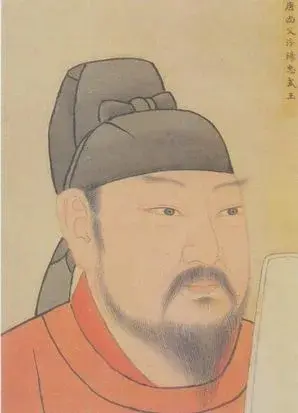
裴叔业
Pei Shuye (裴叔业, 438–500), courtesy name Shuye (叔业), was a native of Wenxi in Hedong (modern Wenxi, Shanxi Province). He was an outstanding military commander of the Southern Qi dynasty who later defected to Northern Wei during the Northern and Southern dynasties period. Descended from the celebrated Hedong Pei clan, Pei Shuye was renowned for his horsemanship, archery, and operational command. He began his military…
Pei Shuye (裴叔业, 438–500), courtesy name Shuye (叔业), was a native of Wenxi in Hedong (modern Wenxi, Shanxi Province). He was an outstanding military commander of the Southern Qi dynasty who later defected to Northern Wei during the Northern and Southern dynasties period. Descended from the celebrated Hedong Pei clan, Pei Shuye was renowned for his horsemanship, archery, and operational command. He began his military service under Liu Song and served Xiao Daocheng (Emperor Gao of Southern Qi) upon the founding of Southern Qi. In 493, he orchestrated a swift coup in Xiangyang to execute the rebellious governor Wang Huan. In 494, as a trusted instrument of Xiao Luan (Emperor Ming), he led expeditions that eliminated several southern royal princes across Jiangzhou and Xiangzhou, receiving the peerage Count of Wuchang. During Emperor Xiaowen's massive northern invasions between 495 and 498, Pei Shuye commanded southern defenses along the Huai River, securing stunning victories at Shaoyangzhou and the siege of Guoyang, where he routed the Prince of Guangling Yuan Yu. In 499, terrorized by the reckless purges of the young tyrant Xiao Baojuan, Pei Shuye surrendered the vital fortress of Shouyang to Northern Wei in 500. Created Duke of Lanling, he died of illness shortly thereafter at the age of sixty-three, posthumously honored as Opening Office Equal to the Three Authorities with the title "Zhongwu".
Born into the prestigious Hedong Pei lineage.
Entered the staff of Xiao Daocheng as Commander of the Forest of Plumes.
Submitted a strategic memorial on governing the Sichuan frontier, earning appointment as General of Pacifying the North.
Led the intra-city assault in Xiangyang to execute the rebellious governor Wang Huan.
Executed royal princes Xiao Zimao, Xiao Rui, and Xiao Qiu on behalf of the ascending Xiao Luan.
Captured twin bridgehead fortifications built by Northern Wei along the Huai River during Emperor Xiaowen's invasion.
Appointed Champion General and Governor of Yu Prefecture, garrisoning the northern bastion of Shouyang.
Besieged Guoyang and routed Northern Wei relief forces under Yuan Yu, seizing the northern prince's command staff.
Placed under lethal suspicion following the execution of senior ministers in Jiankang.
Surrendered Shouyang to Northern Wei; died of illness at the age of sixty-three, posthumously honored as Zhongwu.
Pei Shuye was physically robust, masterful in mounted archery, and ambitious from his youth. In the twilight of the Liu Song dynasty, he joined the headquarters of Xiao Daocheng as an officer of the imperial guard.
Following the establishment of Southern Qi in 479, Northern Wei raiding parties attacked border garrisons in Si and Yu prefectures. In 480, Pei submitted a comprehensive memorial to Emperor Gao analyzing southwestern geography. He argued that the fertile basin of Sichuan was surrounded by four natural ramparts and had historically given rise to separatist warlords unless held by trusted imperial princes backed by ten thousand elite infantry. Impressed by his strategic depth, Emperor Gao adopted his proposals and promoted him to General of Pacifying the North. By 487, he served as Commander of Garrison Cavalry and Assistant to the Governor of Yu Prefecture, developing intimate familiarity with Huainan border geography.
In 493, Wang Huan, Governor of Yongzhou, murdered his administrative assistant Liu Xingzu and rebelled against the court. Emperor Wu dispatched imperial troops, but Wang Huan resisted fiercely. Serving as advisor in Xiangyang, Pei Shuye coordinated secretly with military aide Huang Yao to launch an internal assault on the provincial headquarters, slaying Wang Huan and restoring order.
In 494, Xiao Luan (Emperor Ming) prepared to usurp the throne. Viewing Pei Shuye as an indispensable sword, Xiao Luan dispatched him to eliminate potential resistance among provincial princes. Pei Shuye led a lightning raid on Xunyang, breaching the citadel at night to execute the Prince of Jin'an, Xiao Zimao. He then swept south into Xiangzhou to execute the Prince of Nanping, Xiao Rui, followed by further purges in Yingzhou. For these ruthless services, Xiao Luan created him Count of Wuchang and appointed him Governor of Xu Prefecture.
Between 495 and 498, Northern Wei Emperor Xiaowen launched repeated massive invasions against Southern Qi. In 495, when Xiaowen besieged Zhongli with three hundred thousand troops and built twin bridgehead fortresses across Shaoyangzhou, Pei Shuye and Cui Huijing led counterattacks that stormed both forts, compelling Northern Wei to retreat.
In 497, when Northern Wei armies besieged Nanyang and Xinye, Pei Shuye executed an inspired diversionary maneuver. Reasoning that northern invaders preferred border pillaging to prolonged campaigns, he struck at Hongcheng, capturing four thousand enemy soldiers. In 498, he besieged the northern bastion of Guoyang. When Northern Wei dispatched the Prince of Guangling Yuan Yu with twenty-five thousand troops to relieve the city, Pei Shuye executed a coordinated assault before the northern cavalry could deploy, utterly routing Yuan Yu and capturing his imperial standards. He subsequently ambushed northern relief forces under Fu Yong and Liu Zao, beheading ten thousand northern soldiers and capturing immense war matériel. Only when northern generals Yang Dayan and Xi Kangsheng arrived with one hundred and eighty thousand reinforcements did Pei withdraw in good order to Guokou.
In 499, Emperor Ming died, and the young Marquess of Donghun (Xiao Baojuan) unleashed a bloody purge against senior military commanders. Following the executions of Xiao Chen and general Cui Huijing, panic swept the border garrisons. Pei Shuye, holding the massive citadel of Shouyang, found himself surrounded by hostile imperial maneuvers. He dispatched his son Pei Qian to Jiankang to assess the court's intentions, only to discover that the emperor was secretly gathering armies to besiege Shouyang.
To avoid execution, Pei Shuye dispatched his nephew Pei Zhi to Luoyang in early 500, offering to surrender Shouyang to Northern Wei. Emperor Xuanwu of Northern Wei joyfully accepted the surrender, appointing Pei Shuye General of Subduing the South, Governor of Yu Prefecture, and Duke of Lanling with a fief of three thousand households. Northern armies under Xi Kangsheng quickly entered Shouyang.
However, decades of warfare and immense psychological strain had shattered Pei Shuye's health. In the third month of 500, he died of illness in Shouyang at the age of sixty-three. Emperor Xuanwu expressed deep mourning, bestowing upon him the posthumous title Opening Office Equal to the Three Authorities and the honorable title "Zhongwu".
Pei Shuye was one of the most brilliant tactical commanders in Southern Dynasties history. His defensive actions along the Huai River demonstrated a sophisticated integration of amphibious assaults, rapid entrenchment, and classic diversionary tactics ("relieving the state of Zhao by besieging the state of Wei"). His victories over Northern Wei's imperial princes at Shaoyangzhou and Guoyang protected the southern frontier for over a decade.
His surrender of Shouyang in 500 altered the geopolitical balance between northern and southern dynasties. By placing the impregnable citadel of Shouyang into Northern Wei hands, his defection exposed the lower Huai basin and directly precipitated the rapid collapse of the Southern Qi regime.
FIGURES ASSOCIATED WITH THIS DYNASTY