Birth of Pantoja
Born in Valdemoro near Madrid, receiving rigorous classical education in grammar, logic, and philosophy.
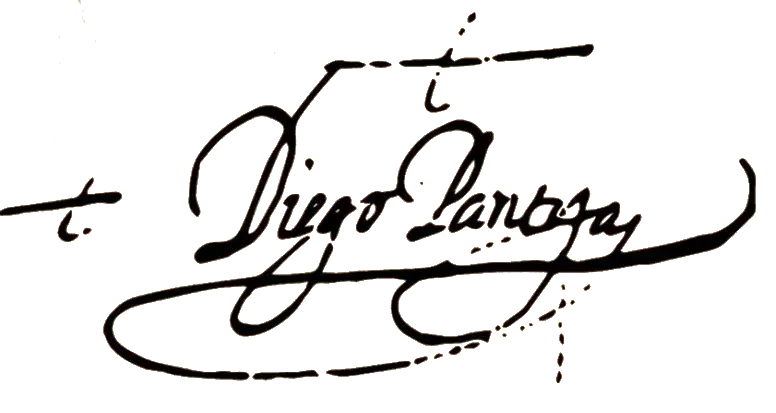
庞迪我
Diego de Pantoja (April 1571 – July 9, 1618), known in Chinese as Pang Diwo, courtesy name Shunyang, native of Valdemoro, Spain, was an eminent Jesuit missionary, polymath, astronomer, and pioneering bridge between early modern European and Chinese civilizations. Arriving in Macau in 1599, he accompanied Matteo Ricci as chief deputy from Nanjing to Beijing in 1600. Granted imperial audience by the Wanli Emperor in 1601,…
Diego de Pantoja (April 1571 – July 9, 1618), known in Chinese as Pang Diwo, courtesy name Shunyang, native of Valdemoro, Spain, was an eminent Jesuit missionary, polymath, astronomer, and pioneering bridge between early modern European and Chinese civilizations. Arriving in Macau in 1599, he accompanied Matteo Ricci as chief deputy from Nanjing to Beijing in 1600. Granted imperial audience by the Wanli Emperor in 1601, Pantoja became the first Spaniard to enter the Forbidden City and secure legal residence in the imperial capital. Highly accomplished in keyboard music and mechanics, he taught imperial eunuchs to play the clavichord, calibrated palace chiming clocks, and executed large-scale colored maps of the four continents for the court. Following Ricci's death in 1610, Pantoja's passionate memorial persuaded the emperor to grant the historic Zhalan Cemetery grounds in Beijing. In 1611, he was commissioned alongside Sabatino de Ursis to reform the imperial calendar. His seminal Chinese philosophical work, Qi Ke Daquan (The Seven Overcomings, 1614), polished by Xu Guangqi, synthesized Catholic moral theology with Confucian self-cultivation; it was subsequently anthologized in the Qing Siku Quanshu. His detailed 1602 missive to the Archbishop of Toledo was translated into multiple European languages, becoming a foundational window into Ming society. Banished to Macau during the Nanjing Religious Persecution of 1616, he died there in 1618.
Born in Valdemoro near Madrid, receiving rigorous classical education in grammar, logic, and philosophy.
Entered the Society of Jesus in Toledo, completing advanced studies in scholastic theology, astronomy, and mathematics.
Travelled across the Atlantic and Indian Oceans to Macau, studying spoken Chinese and the Confucian Four Books at St. Paul's College.
Joined Matteo Ricci in Nanjing, escorting Western gifts including clavichords, clocks, and European maps northward to the capital.
Entered the Forbidden City to present imperial tributes, granted official residence in Beijing and commissioned to teach music to court eunuchs.
Penned a comprehensive descriptive report to the Jesuit Provincial of Toledo detailing Ming political systems and scholarly customs.
Following Ricci's death, successfully memorialized the Wanli Emperor to grant the Tenggong Zhalan Cemetery, securing the mission's legal status.
Commissioned with Sabatino de Ursis, Xu Guangqi, and Li Zhizao to recalculate solar and lunar eclipses using Western mathematical methods.
Published Qi Ke Daquan in seven volumes, integrating the Seven Cardinal Virtues with Confucian ethics, with prefaces by Ming ministers.
Arrested during the anti-Christian campaigns initiated by Vice Minister of Rites Shen Que; drafted the Bian Jie before expulsion.
Died in St. Paul's College in Macau at the age of forty-seven, suffering from physical exhaustion endured during his overland deportation.
Diego de Pantoja was born into a pious Spanish family in Valdemoro, a historic town near Madrid. Demonstrating early precocity in linguistics, classical rhetoric, and music, he joined the Society of Jesus in 1589 at the age of eighteen. Over the next seven years, he completed advanced curricula in scholastic theology and natural philosophy at the University of Alcalá and the Jesuit Seminary of Toledo. Inspired by reports of Far Eastern missions, Pantoja volunteered for overseas service, setting sail from Lisbon in 1596. After traversing the Cape of Good Hope and Goa, he landed in Portuguese Macau in 1599.
At St. Paul's College in Macau, Pantoja embraced the accommodation strategy formulated by Visitor Alessandro Valignano. Donning the formal silk robes of a Confucian scholar (rufu), Pantoja committed himself to the exhaustive study of classical Chinese and court Mandarin. Within a remarkably brief period, he mastered the Analects, Mencius, and Book of Documents, acquiring the refined etiquette and rhetorical elegance required to engage with Ming scholar-officials on equal intellectual terms.
In the spring of 1600, Matteo Ricci determined to launch a formal mission to the imperial court in Beijing. Recognizing Pantoja's fluent Mandarin, musical expertise, and technical aptitude, Ricci chose the young Spaniard as his primary companion. Traveling northward along the Grand Canal, the mission paused in Jining, where Pantoja met the iconoclastic philosopher Li Zhi, discussing cross-cultural perspectives on human nature and moral self-cultivation. In January 1601, the delegation arrived in Beijing.
Escorted into the Forbidden City, Pantoja and Ricci presented tribute to the Wanli Emperor, including European mechanical clocks, prisms, celestial globes, and a Western clavichord (an early keyboard instrument). Fascinated by the instruments, the emperor issued an extraordinary edict permitting the missionaries to reside permanently near the Xuanwumen gate. The emperor dispatched four senior court eunuchs to learn keyboard performance under Pantoja's direction. Within months, Pantoja transcribed European melodies into traditional Chinese musical notation (gongchepu), successfully training the court musicians. Concurrently, he supervised the repair and maintenance of palace horological mechanisms and drafted a monumental, gold-leafed four-continent world map detailing the political geography and trade commodities of European nations for imperial inspection.
When Matteo Ricci died in Beijing in May 1610, foreign residents were legally mandated to be repatriated to Macau. Determined that Ricci should be granted a perpetual resting place in China, Pantoja took leadership of the mission and submitted an eloquent memorial to the Wanli Emperor. He highlighted Ricci's thirty years of loyal devotion to classical scholarship and imperial service, pleading for imperial grace. Deeply moved, Wanli broke all precedent by granting the mission the Zhalan estate outside Fuchengmen, providing foreign missionaries with their first legal institutional sanctuary within the empire.
In May 1611, the Directorate of Astronomy (Qintianjian) made a catastrophic calculation error predicting a solar eclipse using the Song dynasty Shoushi system, whereas calculations submitted by Pantoja and Sabatino de Ursis matched astronomical reality with absolute precision. Impressed by this empirical demonstration, the court appointed Pantoja, Ursis, Xu Guangqi, and Li Zhizao to translate European astronomical treatises and revise the national calendar. Pantoja introduced European methods of spherical trigonometry and eclipse trajectory calculation, laying the scientific foundations for the monumental Chongzhen Lishu (Chongzhen Calendar Compendium).
Between his official duties, Pantoja dedicated himself to moral philosophy. In 1614, he published the seven-volume treatise Qi Ke Daquan (The Seven Overcomings). Written in polished classical Chinese, the book counterposed the Seven Deadly Sins of Catholic theology against the Seven Christian Virtues, systematically weaving in Confucian aphorisms regarding the rectification of the mind and the restraint of desire. Leading statesmen, including Xu Guangqi, Zheng Yiwei, and Cao Yubian, contributed glowing prefaces, transforming Qi Ke into one of the most widely read Western books among the late Ming elite.
However, political reaction gathered force. In 1616, Shen Que, Vice Minister of Rites in Nanjing, submitted xenophobic memorials accusing the Jesuits of subverting ancestral rites, hoarding silver, and serving as spies for Macanese merchants. In the ensuing "Nanjing Religious Persecution," Pantoja was arrested in Beijing. Refusing to flee, he composed the Bian Jie (In Defense of the Mission), systematically refuting each fabricated accusation. Despite his brilliant defense, the court ordered all foreign priests banished. Enduring harsh treatment and winter overland transit under armed guard, Pantoja reached Macau in 1617. Suffering from exhaustion, tuberculosis, and malaria contracted during the journey, he passed away peacefully at St. Paul's College on July 9, 1618, at the age of forty-seven.
Diego de Pantoja was instrumental in defining and sustaining the "Ricci Rule" of cultural accommodation. Recognizing that Christianity could never take root in China through force or theological dogmatism, Pantoja committed himself to genuine intellectual parity with Confucian civilization.
He engaged scholars not as barbarians requiring conversion, but as sophisticated peers possessing profound ethical traditions. By adopting literati dress, observing civil rituals, and interpreting Christian theology through Confucian philosophical categories, Pantoja established a model of reciprocal cultural exchange that won the admiration of late Ming scholar-officials.
Pantoja's magnum opus, Qi Ke Daquan, represents a milestone in the history of East-West philosophical synthesis. The work systematically analyzed human moral frailty, demonstrating that vices such as pride, wrath, and greed could be subdued through rigorous personal discipline, humility, and universal charity.
Because Pantoja employed impeccable classical Chinese prose that echoed the cadence of ancient canonical commentaries, the work transcended sectarian boundaries. In the late eighteenth century, when Emperor Qianlong ordered the compilation of the imperial Siku Quanshu, the editorial board excluded nearly all Western theological works while celebrating Qi Ke, noting that its prose was lucid, elegant, and entirely consistent with Confucian moral rectitude.
In the history of science and technology, Pantoja achieved several historic firsts. He was the first European musician to instruct Chinese court performers in keyboard instruments, pioneering the adaptation of Western polyphonic structures into Chinese modal systems decades before the arrival of Tomás Pereira.
In astronomical science, his precise calculations alongside Sabatino de Ursis during the 1611 eclipse broke the monopoly of archaic computational methods within the Ming court. His translations of Ptolemaic and Tychonic celestial models laid the essential groundwork for modern mathematical astronomy in early modern China.
Pantoja was equally significant as an early European sinologist who shattered fantastical Western misconceptions about China. His 1602 comprehensive report, composed in Beijing and addressed to the Archbishop of Toledo, delivered an empirical, highly sophisticated overview of Ming administrative structures, civil service examinations, tax registers, and social mores.
Published in Seville in 1605 and rapidly translated into French, German, Latin, and English, Pantoja's letter became an international bestseller across European universities. It furnished early modern thinkers with their first authentic, detailed depiction of a highly literate, stable, non-Christian continental empire, directly nourishing the Enlightenment's philosophical fascination with Chinese governance.
FIGURES ASSOCIATED WITH THIS DYNASTY