Devotion of Mother
Bereaved of father in infancy, instructed by mother Lady Xu through original manuscripts, practicing tirelessly.
欧阳通
Ouyang Tong (欧阳通) (?–691), courtesy name Tongshi (通师), was a native of Linxiang in Tanzhou (present-day Wangcheng District, Changsha, Hunan). He was an eminent statesman, regular script master, and Chancellor of the Mid-Tang period, as well as the fourth son of Ouyang Xun, the founding master of Tang regular script. Following his father's early death during his infancy, Ouyang Tong was reared with devotion and strict…
Ouyang Tong (欧阳通) (?–691), courtesy name Tongshi (通师), was a native of Linxiang in Tanzhou (present-day Wangcheng District, Changsha, Hunan). He was an eminent statesman, regular script master, and Chancellor of the Mid-Tang period, as well as the fourth son of Ouyang Xun, the founding master of Tang regular script. Following his father's early death during his infancy, Ouyang Tong was reared with devotion and strict discipline by his mother, Lady Xu. Determined that her son should perpetuate his father's cultural legacy, Lady Xu expended considerable household wealth to buy back original calligraphic manuscripts left across the realm. Ouyang Tong practiced day and night with tireless dedication, absorbing the structural essence of his father's style, earning the father and son pair the collective designation "Senior and Junior Ouyang." Entering civil service through family erudition, he was appointed Gentleman of the Orchid Table and Secretariat Drafter. Following his mother's death, Ouyang Tong observed mourning rites with profound filial grief, strictly adhering to classical rituals for three years without wine or meat, universally lauded across the capital as the most rigorously filial courtier during the first sixty years of the Tang dynasty. Following his return to officialdom, he served as Prefect of Huazhou, Chief Minister of the Court of the Imperial Insignia, Director of the Palace Administration, Vice Minister of Justice, Minister of War, and Chief Minister of the Court of Imperial Sacrifices, being ennobled as Viscount of Bohai County and granted the rank of Grand Master of Splendid Happiness with Gold Seal and Purple Ribbon. In 690, during the inception of Wu Zetian's Zhou dynasty, he was elevated to Chief Minister of the Court of Ceremonies in Charge of Chancellery Affairs, entering the Chancellorate. When Wu Zetian contemplated deposing the legitimate Tang dynastic succession to install her nephew Wu Chengsi as Crown Prince, Ouyang Tong joined chancellors Cen Changqian and Ge Fuyuan in weeping and remonstrating courageously before the throne, insisting that Li Dan, Prince of Xiang, be preserved as imperial heir and tenaciously resisting the usurpation. His unyielding opposition profoundly offended Wu Zetian and the Wu clan. In 691, the sadistic inquisitor Lai Junchen framed him for treason and subjected him to agonizing torture; Ouyang Tong remained unbroken, refusing to offer false confession until his execution. Following the Tang restoration in 705, Emperor Zhongzong issued an edict clearing his name, posthumously restoring his offices, returning his confiscated estates, erecting an ancestral temple for state sacrifices, and granting hereditary office to his son. Ouyang Tong's calligraphy is characterized by angular bone strength, dynamic flared strokes, and clerical resonance, with masterpieces such as the Stele of Master Daoyin and the Epitaph of Quan Nansheng revered by subsequent generations of calligraphers.
Bereaved of father in infancy, instructed by mother Lady Xu through original manuscripts, practicing tirelessly.
Appointed Gentleman of the Orchid Table and Secretariat Drafter, drafting imperial edicts in the central government.
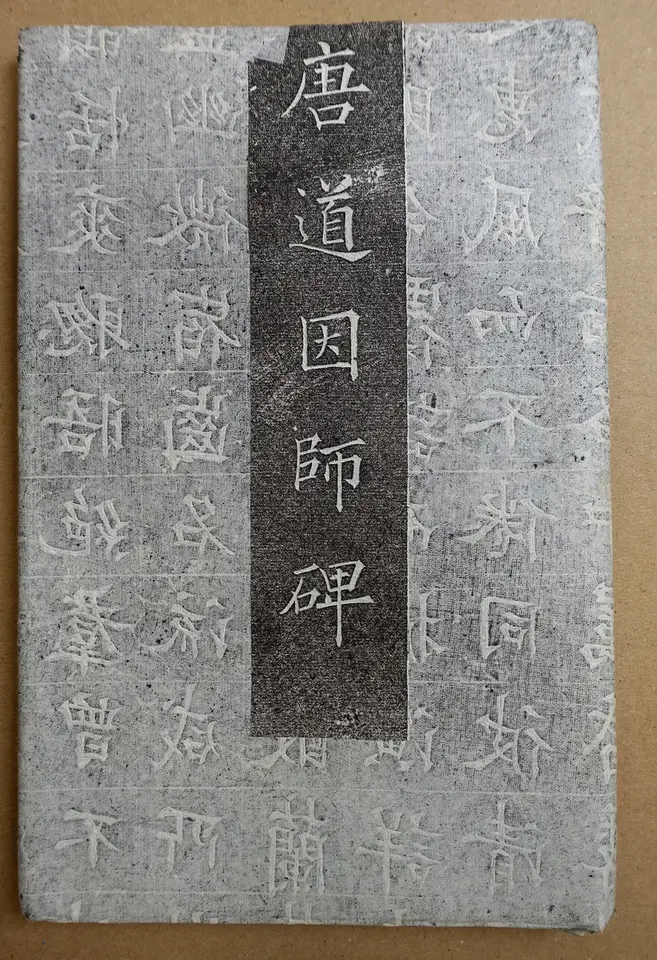
Penned the celebrated Stele of Master Daoyin, exhibiting sharp clerical resonance that astonished Chang'an.
Observed strict three-year mourning upon mother's death, hailed as the finest model of filial piety in the realm.
Served as Prefect of Huazhou, Director of Palace Administration, and Minister of War, ennobled as Viscount of Bohai.
Elevated to Chancellor; wept and vigorously remonstrated against Wu Chengsi's succession scheme before Wu Zetian.
Falsely framed by Lai Junchen, withstood brutal interrogation without yielding, martyred for dynastic integrity.
Fully rehabilitated by Emperor Zhongzong, titles restored, confiscated estate returned, ancestral temple erected.
Ouyang Tong belonged to the prominent Ouyang clan of Changsha in Jiangnan. His father Ouyang Xun stood as the foremost calligraphic master of the early Tang, honored alongside Yu Shinan, Chu Suiliang, and Xue Ji as one of the Four Masters of the Early Tang. Ouyang Tong was the fourth son of Ouyang Xun. In 641, when Ouyang Xun passed away, Ouyang Tong was still an infant, lacking memory of his father's instruction. Most of Ouyang Xun's original handscrolls had dispersed throughout the provinces, leaving few scrolls at home. His mother, Lady Xu, was a woman of deep moral fortitude and vision. Dedicated to ensuring that her young son perpetuate his father's artistic heritage, she exhausted the family's assets to purchase back scattered original manuscripts of Ouyang Xun from across the capital.
To inspire her young son to master calligraphy, Lady Xu gave him small stipends of pocket money, playfully telling him: "This money was paid by people who purchased your father's writing." Moved by his father's illustrious reputation, Ouyang Tong resolved to practice with unyielding dedication. Regardless of winter blizzards or summer heat, he shut his doors and practiced against classical rubbings day and night. Within a few years of relentless practice, his brushwork mirrored his father's angular vigor and soaring structure. Contemporary connoisseurs marveled that his brushwork equaled his father's genius, hailing him as Junior Ouyang and celebrating their styles collectively as the "Senior and Junior Ouyang Styles."
During the Xianqing and Longshuo eras of Emperor Gaozong, Ouyang Tong entered the bureaucracy by virtue of his familial erudition, initially appointed Gentleman of the Orchid Table within the imperial secretarial bureau, compiling state chronicles. Recognizing his administrative conciseness, the throne promoted him to Secretariat Drafter, formulating imperial decrees in the Secretariat. In 663, the imperial court erected a commemorative stele at Da Jianfu Monastery in Chang'an honoring Master Daoyin, the eminent disciple of Xuanzang. Secretariat Drafter Li Yan composed the text, and an imperial decree commissioned Ouyang Tong to execute the calligraphy. Ouyang Tong inscribed over three thousand characters; when the Stele of Master Daoyin was unveiled, Chang'an scholars competed to procure ink rubbings, spreading his fame throughout the realm.
Shortly thereafter, his mother Lady Xu passed away in Chang'an. Grieving inconsolably, Ouyang Tong observed the strict three-year Confucian mourning rites. Constructing a thatched shelter beside her burial mound, he wore coarse hemp garments and subsisted solely on plain gruel, refusing wine and meat for three full years and declining all comfortable bedding. Amidst the luxurious customs of the mid-seventh century, Ouyang Tong's unyielding filial conduct astonished the imperial court. Contemporary ministers and scholars unanimously declared: "In the sixty years since the founding of the Tang dynasty, no official among the civil and military ranks has observed mourning with greater filial piety and austerity than Ouyang Tong!"
Upon completing his mourning period, Ouyang Tong was reassigned to Prefect of Huazhou, administering the commandery with pristine integrity. He was subsequently recalled to Chang'an, serving consecutively as Chief Minister of the Court of the Imperial Insignia, Director of the Palace Administration, Chief Minister of the Court of Imperial Sacrifices, Vice Minister of Justice, and Minister of War, being ennobled as Viscount of Bohai County and granted the rank of Grand Master of Splendid Happiness with Gold Seal and Purple Ribbon, exhibiting the dignified statesmanship of a seasoned minister.
In the autumn of 690, Wu Zetian proclaimed herself emperor, founding the Zhou dynasty. Seeking respected senior ministers to stabilize the new court, she elevated Ouyang Tong to Chief Minister of the Court of Ceremonies in Charge of Chancellery Affairs, confirming his position in the Chancellorate. At that moment, the political atmosphere was fraught with mortal danger. Her ambitious nephews Wu Chengsi and Wu Sansi organized political factions, aiming to eradicate the Tang imperial succession. Wu Chengsi instigated hundreds of opportunists in Luoyang to present memorials petitioning Wu Zetian to depose the Tang heir and proclaim Wu Chengsi Crown Prince.
When Wu Zetian summoned the chancellors to deliberate on altering the succession, most ministers stood paralyzed with terror, daring not speak. Ouyang Tong, along with Chancellors Cen Changqian and Ge Fuyuan, stood forward fearlessly. Confronting the throne, Ouyang Tong wept and argued passionately against the scheme, declaring: "Li Dan, Prince of Xiang, is the legitimate imperial heir. Abandoning one's own biological son to consecrate a nephew violates the cosmic order and human morality, inevitably plunging the world into civil war!" Ouyang Tong's forceful denunciation exposed the treasonous ambition of the Wu clan, compelling Wu Zetian to suspend Wu Chengsi's appointment. However, his unyielding moral stance provoked the deadly hatred of Wu Chengsi and the empress.
In the autumn of 691, Wu Chengsi directed the ruthless inquisitor Lai Junchen to fabricate charges accusing Cen Changqian, Ge Fuyuan, and Ouyang Tong of conspiring with Tang princes to launch an armed coup. Lai Junchen arrested Ouyang Tong and cast him into the subterranean cells of Wannian County. Inside the dungeon, Lai Junchen applied extreme forms of torture, subjecting Ouyang Tong to savage physical torments.
Enduring excruciating pain and mutilation, Ouyang Tong displayed the indomitable courage of an authentic Confucian statesman. Throughout the ordeal, he remained calm and serene, steadfastly refusing to sign a false confession or implicate innocent colleagues. Frustrated by Ouyang Tong's unbending resistance, Lai Junchen turned his torture onto Cen Changqian's eldest son Cen Lingyuan, torturing him until the youth broke down and signed a fabricated deposition implicating Ouyang Tong and dozens of loyal ministers. In September 691, without statutory trial, Ouyang Tong and Cen Changqian were executed in the public marketplace of Luoyang, their family estates confiscated by the state.
In 705, following the Shenlong Coup and Emperor Zhongzong's restoration of the Tang dynasty, the court issued edicts vindicating persecuted loyalists. Commending Ouyang Tong's unyielding martyrdom and loyalty to the Tang house, Emperor Zhongzong posthumously restored his noble titles and administrative offices, returned all confiscated lands and properties to his descendants, ordered the erection of a dedicated ancestral temple for state sacrifices, and granted civil office to his surviving son to perpetuate his ancestral line.
Mastering the structural principles of his father Ouyang Xun, Ouyang Tong introduced greater angular tension and dynamic flair to regular script. Historical critics celebrate them jointly as "Senior and Junior Ouyang," representing one of the most brilliant father-and-son achievements in Chinese art history.
Executed in 663, the Stele of Master Daoyin stands as Ouyang Tong's most celebrated masterpiece. Incorporating seal and clerical brushwork into regular script, the steles feature upturned stroke terminals resembling bird wings, displaying razor-sharp bone strength and stone-chiselled authority that remains a textbook model of Tang stele art.
Inscribing the Epitaph of Quan Nansheng, Ouyang Tong created an invaluable cultural monument combining Northern Wei angularity with mature Tang discipline, serving as an indispensable primary artifact for studying Tang-Goguryeo diplomacy and calligraphic evolution.
Observing three years of austere hermit-like mourning at his mother's gravesite without wine, meat, or luxury, Ouyang Tong was acclaimed across the court as the foremost exemplar of filial piety in the first six decades of the Tang empire.
Assuming the Chancellorship in 690, Ouyang Tong openly confronted Wu Zetian to denounce Wu Chengsi's succession conspiracy, weeping before the throne to protect the Tang dynastic line and risking death to defend Confucian political morality.
Confronted with Lai Junchen's horrific instruments of torture, Ouyang Tong endured savage interrogations without fabricating evidence against his peers, sacrificing his life to preserve the unbending dignity of Confucian statesmanship.
FIGURES ASSOCIATED WITH THIS DYNASTY