Birth in Liaoyang
Born into a Chinese frontier household in Liaoyang, Liaodong.
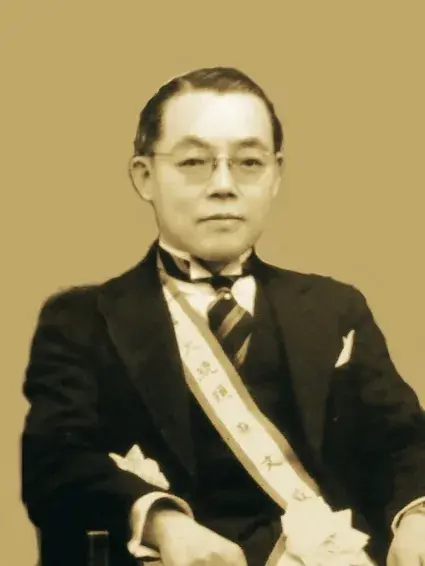
宁完我
Ning Wanwo (宁完我, 1593–1665), courtesy name Gongfu (公甫), posthumous name Wenyi (文毅), was a native of Liaoyang, Liaodong (modern Liaoyang, Liaoning Province). He was an influential founding statesman of the Later Jin and early Qing dynasties, enrolled in the Plain Red Banner of the Chinese Martial (Hanjun). Captured during the Tianming reign of Nurhaci, he became a bondservant (booi) under Prince Sahaliyan. Recognizing his…
Ning Wanwo (宁完我, 1593–1665), courtesy name Gongfu (公甫), posthumous name Wenyi (文毅), was a native of Liaoyang, Liaodong (modern Liaoyang, Liaoning Province). He was an influential founding statesman of the Later Jin and early Qing dynasties, enrolled in the Plain Red Banner of the Chinese Martial (Hanjun). Captured during the Tianming reign of Nurhaci, he became a bondservant (booi) under Prince Sahaliyan. Recognizing his erudition in Confucian history and administrative strategy, Hong Taiji summoned him to the Literary Institute in 1629, promoting him to participate in vital state affairs. During the Tiancong reign, Ning distinguished himself as an outspoken remonstrator, submitting memorial after memorial urging the establishment of the Six Ministries, the creation of surveillance offices, the regulation of bureaucratic costumes, and the translation of Chinese classics. His statecraft laid fundamental administrative cornerstones for the transition of the Later Jin from a tribal confederacy to a centralized imperial state. Dismissed and returned to servitude in 1636 due to gambling infractions, he was reinstated following the Qing conquest of Beijing in 1644. He subsequently served as Grand Secretary of the Hongwen Academy and National Historiography Academy, supervisor of the History of Ming and Veritable Records of Taizong, and Deliberative Minister. In 1654, he spearheaded the impeachment of Grand Secretary Chen Mingxia for political factionalism. Retiring with top ministerial honors, he passed away in 1665.
Born into a Chinese frontier household in Liaoyang, Liaodong.
Captured during the Later Jin conquest of Liaoyang and assigned as a bondservant to Prince Sahaliyan.
Recruited into the imperial Literary Institute by Hong Taiji to advise on civil and military affairs.
Dispatched with Dahai to pacify the civilian populace of captured Yongping.
Memorialized on establishing the Six Ministries, surveillance sections, and differentiating bureaucratic ranks and apparel.
Dismissed from all hereditary titles and remanded to Prince Sahaliyan's household as a servant due to gambling.
Re-employed as an Academician following the Qing conquest and relocation of the capital to Beijing.
Appointed Grand Secretary of the Hongwen Academy and chief compiler of the History of Ming.
Transferred to the National Historiography Academy and named Deliberative Minister, equal in rank to Manchu Grand Secretaries.
Exposed seven major crimes of factionalism committed by Grand Secretary Chen Mingxia, securing imperial favor.
Permitted to retire with the distinguished titles of Junior Preceptor and Grand Tutor to the Crown Prince.
Passed away at age seventy-three; granted state funeral rites and the posthumous name Wenyi.
Ning Wanwo was born in Liaoyang during the late Ming period. When Nurhaci's Later Jin army overran Liaoyang and Shenyang in 1621, Ning was taken captive during the chaotic warfare. He was distributed as a bondservant (booi) to Sahaliyan, the second son of Prince Daishan, and later enrolled in the Plain Red Banner of the Chinese Martial (Hanjun). Despite his status as an enslaved servant, Ning continued to read widely, mastering administrative precedents, military geography, and historical strategy.
In 1629, Hong Taiji ascended the throne and sought to recruit talented scholars to assist in institutional modernization, creating the Literary Institute (Wenguan). Learning that Ning Wanwo was exceptionally versed in Chinese classics and statecraft, Hong Taiji summoned him to the inner court. Ning immediately recommended able former Ming commanders and scholars, including Bao Chengxian. Promoted to assistant brigade commander, Ning accompanied Dahai to pacify Yongping in 1630, protecting local residents, and later participated in the siege of Dalinghe and the pacification of the Chahar Mongols.
In 1631, the Later Jin established six administrative boards. Ning submitted an elaborate memorial arguing that administrative structures were essential for systemic discipline rather than mere display. He recommended creating six supervising offices (liuke) to audit each ministry, a Transmission Office (Tongzheng Si) to convey public memorials, and remonstrance officials (yanguan) to check the ruler's lapses.
Addressing the cultural friction between Manchu and Chinese officials, Ning urged the codification of standardized bureaucratic dress to ensure dignity and prevent discrimination against Chinese officials who could not speak Manchu. He proposed assigning dedicated interpreters to Chinese board vice-presidents and stationing translators beside the monarch. Hong Taiji fully endorsed and implemented these recommendations. In 1635, to eliminate corrupt recommendations that caused hundreds of unqualified candidates to flood ministries, Ning instituted a strict mutual-guarantee system: recommenders shared both the honors and the criminal liability of their nominees. Within three days, fraudulent candidates withdrew en masse, restoring integrity to civil appointments.
In military campaigns against the Ming, Ning advocated strategic prudence. During Hong Taiji's 1632 expedition across the Greater Khingan Mountains against Ligdan Khan, Ning, Fan Wencheng, and Ma Guozhu petitioned the monarch to avoid exhausting the army in distant plains. He famously warned that long marches without disciplined governance would tempt troops into looting or breed mutinous weariness. He urged strict bans on plunder and slaughter, emphasizing that true conquest required winning hearts through benevolence (zhongde shuren). Hong Taiji summoned Ning to his tent at Guihua and incorporated his counsel into strict military edicts.
In 1633, Ning presented another profound discourse, invoking ancient dynastic paradigms: Liu Bang had founded an empire despite repeated defeats, whereas Xiang Yu collapsed despite martial prowess. He cautioned: "The empire is a sacred vessel, won by wisdom rather than sheer brute force. Like a game of chess, one must master attack and defense in advance. How can seizing all under Heaven be left to reckless chance?" He bluntly criticized senior ministers for sycophancy, urging the ruler to galvanize court morale. Concurrently, he initiated the translation of the Classic of Filial Piety, the Four Books, the Comprehensive Mirror in Aid of Governance, and the History of Jin, advocating that examinations evaluate ethical conduct alongside literary composition.
Although honored with hereditary noble ranks up to second-class Jala-i Janggin and endowed with vast manors and servants, Ning was notoriously fond of heavy drinking and gambling. Having received a mild reprimand for gambling at Yongping in 1630, he committed a fatal violation in 1636 by engaging in high-stakes gambling with surrendered general Liu Shiying. Denounced by Liu's household slave, Hong Taiji stripped Ning of all noble ranks, confiscated his property, and remanded him back to Sahaliyan's household as an enslaved bondservant. When Hong Taiji proclaimed the Qing Empire and created the Three Inner Academies later that year, colleagues such as Hife and Fan Wencheng became Grand Secretaries, while Ning remained disgraced for nearly a decade.
Following the Qing conquest of Beijing in 1644, Prince Regent Dorgon and the young Shunzhi Emperor urgently required seasoned statesmen to manage central civil bureaucracy. Ning was summoned back to service as an Academician. In 1645, he was elevated to Grand Secretary of the Hongwen Academy, directed the compilation of the History of Ming, presided over three metropolitan civil service examinations, and supervised translations of the Romance of the Three Kingdoms and the Imperial Precepts of the Hongwu Emperor.
In 1651, following Shunzhi's assumption of direct personal rule, Ning was investigated for having known about Dorgon's alterations to royal records without disclosing them, but Prince Jirgalang cleared him of wrongdoing. He was named Grand Secretary of the National Historiography Academy and Deliberative Minister, enjoying identical privileges and rank as Manchu Grand Secretaries.
In the turbulent factional politics of the early Shunzhi court, Ning remained vigilant. In March 1654, Ning submitted a famous seven-point memorial impeaching Chief Grand Secretary Chen Mingxia for forming illicit cliques, altering draft imperial rescripts, and harboring corrupt relatives.
Ning incisively analyzed the nature of factionalism: "Throughout history, treacherous ministers cannot execute their schemes without factions. Lacking genuine competence and true merit, they conspire to fabricate hollow fame; they shield their associates regardless of evil, while attacking opponents regardless of virtue. I would rather die than join a partisan cabal!" Ning's outspoken bravery prompted the Shunzhi Emperor to execute Chen Mingxia, curbing late Ming factional legacies. Ning was subsequently honored as Junior Preceptor and Grand Tutor to the Crown Prince. In 1658, citing failing health, Ning retired with full honors. He died in Beijing in 1665 at age seventy-three and was granted the posthumous name Wenyi.
Ning played an indispensable role during the critical transitional phase from a tribal military coalition to an autocratic empire. By adapting Ming bureaucratic institutions, establishing the Six Ministries, creating the six surveillance sections, and designing protocol apparel, he dismantled primitive tribal oligarchies and erected a durable imperial governing machinery for the early Qing Dynasty.
As a bilingual statesman, Ning supervised major translation initiatives. He directed the translation of fundamental Confucian texts, historical chronicles, and Ming administrative codes into the Manchu language. In addition, his leadership over the compilation of the History of Ming and the Veritable Records of Taizong contributed significantly to the sinicization and cultural cohesion of the early Qing governing elite.
In the early Shunzhi era, when former Ming officials formed divisive factions in the central ministries, Ning leveraged his moral authority as Deliberative Minister to expose and dismantle Chen Mingxia's political syndicate. His intervention restored regulatory integrity to cabinet procedures, reinforcing royal prerogative and institutional discipline during a fragile era of dynastic consolidation.
FIGURES ASSOCIATED WITH THIS DYNASTY