Aristocratic Birth
Born into a wealthy patrician clan in Wuxi enjoying imperial tax exemptions through Quanzhen Daoist patronage.
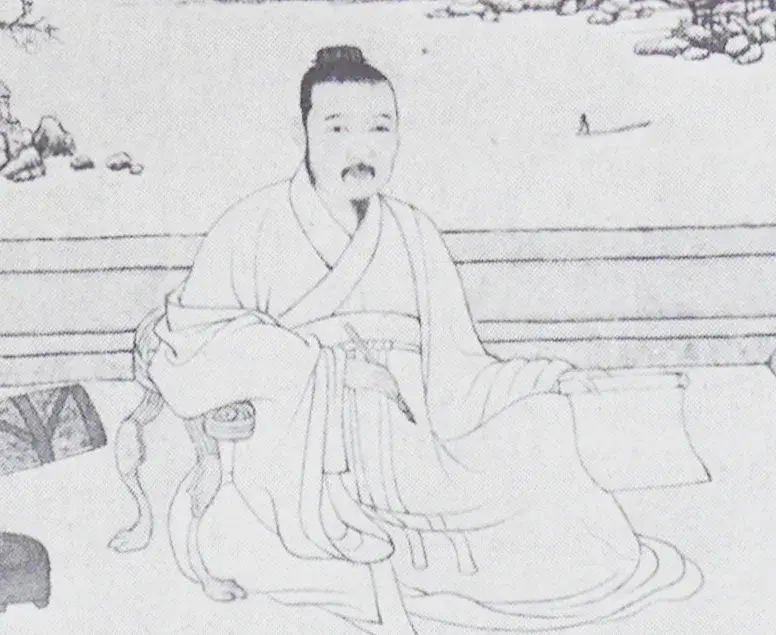
倪瓒
Ni Zan (倪瓒, 1301–1374), courtesy name Yuanzhen, literary names Master Yunlin, Huanxiasheng, and Jingmanmin, was a native of Wuxi in Changzhou (modern Wuxi, Jiangsu). He was an illustrious painter, poet, and calligrapher of the late Yuan and early Ming dynasties. Alongside Huang Gongwang, Wang Meng, and Wu Zhen, he is revered as one of the "Four Masters of the Yuan Dynasty," holding a preeminent position in the history of…
Ni Zan (倪瓒, 1301–1374), courtesy name Yuanzhen, literary names Master Yunlin, Huanxiasheng, and Jingmanmin, was a native of Wuxi in Changzhou (modern Wuxi, Jiangsu). He was an illustrious painter, poet, and calligrapher of the late Yuan and early Ming dynasties. Alongside Huang Gongwang, Wang Meng, and Wu Zhen, he is revered as one of the "Four Masters of the Yuan Dynasty," holding a preeminent position in the history of traditional Chinese literati landscape painting. Born into an immensely wealthy patrician family in Wuxi, Ni was raised in luxury. Fascinated by classical antiquity, he erected the Qingbi Pavilion and the Yunlin Hall, gathering vast collections of ancient bronzes, rare manuscripts, and masterpiece paintings from the Jin, Tang, and Song dynasties. In the early Zhizheng era, recognizing that socioeconomic oppression and peasant rebellions would soon engulf the empire in total chaos, Ni performed an extraordinary act: he liquidated his vast agricultural estates and distributed his fortunes to impoverished relatives and peasant tenants. Gathering his family, he abandoned his estate to live aboard a simple houseboat, drifting across Lake Tai and the river channels of Jiangnan for over two decades. This extended period of displacement transformed his art. Rejecting the dense, ornamental styles of Song academic painting, Ni pioneered the sparse "one river, two banks" flat-distance landscape composition. Using dry brushwork and sparse ink strokes, he introduced his signature "folded ribbon texture strokes" (zhedai cun), creating desolate, serene, and unpeopled landscapes that conveyed total detachment from worldly dust. Declaring that his paintings were merely careless sketches designed to express inner feeling without seeking external verisimilitude, he elevated Chinese literati ink painting to the summit of the untrammeled style (yipin). His extant masterpieces include Six Gentlemen, Rongxi Studio, Autumn Colors at the Fishing Village, and Anchu Studio, alongside his collected literary writings in the Collected Works of Qingbi Pavilion.
Born into a wealthy patrician clan in Wuxi enjoying imperial tax exemptions through Quanzhen Daoist patronage.
Constructed the Qingbi Pavilion, accumulating ancient ritual bronzes and classical paintings while refining his calligraphy and verse.
Renowned across Jiangnan for his painting and poetry, associating with cultural luminaries including Huang Gongwang and Yang Weizhen.
Anticipating dynastic collapse, distributed his family fortunes, burned debt registers, and retreated to a houseboat on Lake Tai.
Lived as an itinerant recluse across Suzhou, Songjiang, and Yixing, rejecting patronage from warlord Zhang Shicheng.
Painted his immortal landscape masterpiece Rongxi Studio, embodying the pinnacle of austere literati aesthetic purity.
Passed away from dysentery at a friend's country villa at age seventy-four, buried at Mount Furong in Wuxi.
Ni Zan was born in 1301 into a prestigious gentry family in Wuxi. His eldest brother, Ni Zhaokui, served as a high-ranking cleric in the southern Quanzhen Daoist administration, granting the Ni clan extensive tax exemptions and imperial favors. The family possessed thousands of acres of fertile farmland, real estate, and shipping interests.
Delicate in health from childhood, Ni possessed an exceptionally acute mind. Indifferent to civil examinations, he immersed himself in elite cultural pastimes. On his family estate, he built the Qingbi Pavilion and the Yunlin Hall, surrounded by bamboo groves and tranquil streams. Within this two-story library, he accumulated tens of thousands of rare volumes alongside Zhou dynasty bronze vessels and masterpieces by Gu Kaizhi, Wu Daozi, Wang Wei, Dong Yuan, Juran, and Mi Fu.
Living amidst this refined splendor, Ni developed an extreme obsession with cleanliness. He instructed servants to wash his studio tables multiple times daily and even had the leaves of courtyard paulownia trees scrubbed clean of dust. This intense pursuit of physical and spiritual purity directly informed the pristine, uncorrupted atmosphere of his later artistic works.
By the 1340s, the Mongol Yuan government had descended into systemic decay. The Yellow River broke its dykes, and the Red Turban rebellions erupted across the Huai River and Central Plains. Following the deaths of his elder brother and mother, the Ni family lost their tax-exempt status, becoming vulnerable to extortion by corrupt officials.
Observing the escalating unrest, Ni demonstrated astonishing prescience. While neighboring landowners hoarded land and wealth—only to be slaughtered when rebel armies arrived—Ni resolved to divest himself of all worldly possessions. Around 1350, he systematically sold his estates, distributing the proceeds and food stocks to impoverished clan members and tenant farmers, while burning loan contracts and land deeds.
Packing only his painting brushes, zither, and a selection of books, he boarded a small wooden boat with his wife and servants, setting out into the expansive waters of Lake Tai to escape impending destruction.
For the next twenty-four years, Ni lived an itinerant life aboard houseboats, finding temporary shelter in lakeside Buddhist monasteries, Daoist hermitages, or water pavilions owned by sympathetic literati friends across Lake Tai, Suzhou, Songjiang, and Yixing.
During this era, warlord Zhang Shicheng established an independent regime in Suzhou. Zhang and his brother Zhang Shixin repeatedly sought Ni's services, sending emissaries laden with silver and silks to solicit paintings. Despising their coarse militarism, Ni adamantly refused their patronage, once tearing up silk presented for a commission and declaring, "Ni Zan cannot be a court artisan for warlords!" In retaliation, Zhang Shixin once cornered and beat Ni on Lake Tai. Ni endured the blows in total silence; when asked why he uttered no cry, he replied coldly, "To cry out would have compromised my refined dignity."
This proud defiance and rootless existence distilled Ni's artistic vision into its ultimate form. He abandoned color washes, working exclusively in monochrome ink. He devised his classic "one river, two banks" structural formula: in the foreground stand several bare trees beside an empty thatched pavilion; in the middle extends a vast, unpainted expanse of tranquil water; and in the distance float distant, low-lying hills. Human figures and boats are entirely absent, leaving only silence, cold austerity, and transcendent solitude.
Following the foundation of the Ming dynasty by Zhu Yuanzhang in 1368, peace returned to Jiangnan, though the imperial court imposed harsh tax quotas on former southern gentry.
In his final years, bereaved of his wife and weakened by chronic illness, Ni drifted between Changzhou and Jiangyin, lodging at the rural villa of his close friend, the physician Zou Fu. During this period, he painted his crowning masterwork, Rongxi Studio, characterized by ethereal brushwork that captured the utmost essence of unworldly elegance.
In December 1374, Ni Zan died of a sudden dysentery infection at the Zou estate at the age of seventy-four. His remains were transported back to Wuxi and interred on the slopes of Mount Furong.
Anticipated the catastrophic peasant wars of the late Yuan around 1350, distributing vast family assets to relatives and living on houseboats to safeguard his moral integrity.
Refused all civil invitations and commissions from warlord Zhang Shicheng, enduring harassment rather than degrading his art for political favor.
Created the sparse "one river, two banks" landscape structure and pioneered the "folded ribbon texture stroke," establishing an austere aesthetic that transformed Chinese landscape painting.
Articulated the foundational theory of painting to please one's own spirit without seeking physical likeness, securing his rank among the "Four Masters of the Yuan Dynasty."
FIGURES ASSOCIATED WITH THIS DYNASTY