Noble Birth
Born into the preeminent Niohuru clan of the Bordered Yellow Banner.
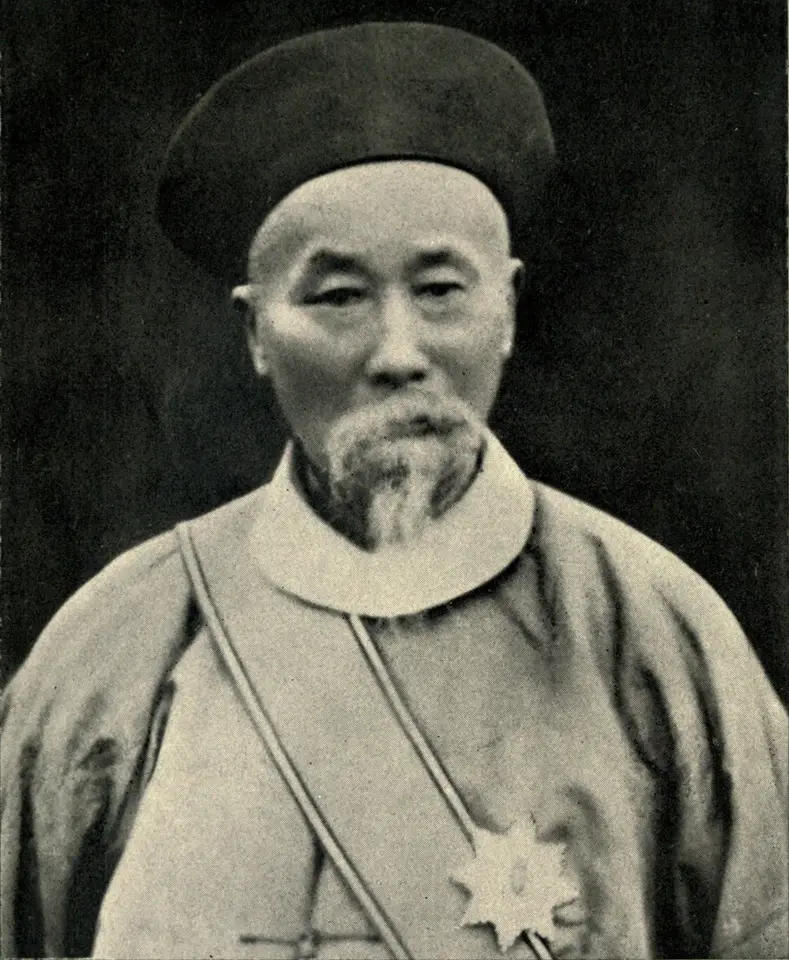
讷亲
Niohuru Ne Qin (1708–1749) was a member of the Manchu Bordered Yellow Banner. He was the great-grandson of Eidu, one of the five founding grandees of the Qing dynasty; grandson of Ebilun, one of the four regents of the Kangxi reign; second son of Grand Chamberlain Yinde; and nephew of Empress Xiaozhaoren. He was one of the most prominent noble statesmen of the Yongzheng and Qianlong eras. In 1727, Ne Qin inherited the family…
Niohuru Ne Qin (1708–1749) was a member of the Manchu Bordered Yellow Banner. He was the great-grandson of Eidu, one of the five founding grandees of the Qing dynasty; grandson of Ebilun, one of the four regents of the Kangxi reign; second son of Grand Chamberlain Yinde; and nephew of Empress Xiaozhaoren. He was one of the most prominent noble statesmen of the Yongzheng and Qianlong eras. In 1727, Ne Qin inherited the family dukedom of the first class and served as a junior chamberlain. In 1733, he was selected to serve in the newly established Grand Council. In 1735, as Emperor Yongzheng lay dying, Ne Qin was summoned alongside Ortai and Zhang Tingyu to receive the imperial deathbed decree, assisting the succession of Emperor Qianlong. The young monarch placed immense confidence in Ne Qin, elevating him to Minister of War and Deliberative Minister. To curb factional tensions between Ortai and Zhang Tingyu, Emperor Qianlong fostered Ne Qin as a key independent pillar of the throne. Following Ortai's death in 1745, Ne Qin was promoted to Grand Secretary of the Baohe Hall, Chamberlain of the Imperial Bodyguard, and Chief Grand Councilor, exercising preeminent control over state affairs with incorruptible austerity. In 1748, during the First Jinchuan War against the Tibetan chieftain Slob Dpon, Emperor Qianlong appointed Ne Qin as Supreme Commander (Jinglue) and presented him with Ebilun's ancestral execution blade. Unversed in practical military tactics and confronting formidable stone fortifications, Ne Qin suffered severe tactical reverses and subsequently advocated passive withdrawal. Enraged by his military incompetence, Emperor Qianlong stripped him of all ranks and ordered his execution with his grandfather's blade in 1749.
Born into the preeminent Niohuru clan of the Bordered Yellow Banner.
Succeeded to the First-Class Duke of Resolute Bravery and entered palace bodyguard service.
Appointed to serve in the Grand Council, gaining direct experience in top-level statecraft.
Received the deathbed testament of Emperor Yongzheng to guide Emperor Qianlong's accession.
Promoted to Minister of War and Deliberative Minister, assisting in restructuring the Grand Council.
Dispatched to inspect military readiness in Henan and water conservancy works in Jiangsu and Zhejiang.
Promoted to Grand Secretary of the Baohe Hall and Chief Grand Councilor following Ortai's death.
Commissioned as Supreme Commander to direct the campaign against Jinchuan stone fortresses.
Suffered heavy casualties assaulting fortified towers, retreating into defensive paralysis.
Stripped of rank and executed by imperial order with Ebilun's ancestral sword at Liangxiang.
Ne Qin was born in 1708 into the prominent Niohuru noble lineage. His great-grandfather Eidu was an architect of the Manchu empire, while his grandfather Ebilun served as regent to the young Kangxi Emperor. In 1727, Ne Qin succeeded his father Yinde as Duke of the First Class and was appointed Junior Chamberlain.
Unlike many aristocratic peers, Ne Qin was austere, disciplined, and diligent. In December 1733, Emperor Yongzheng ordered him to serve as a junior minister in the Grand Council. In August 1735, Emperor Yongzheng summoned Ne Qin into his bedchamber alongside Ortai and Zhang Tingyu to receive the testamentary edict appointing Hongli as the Qianlong Emperor.
Upon ascending the throne, Emperor Qianlong sought to consolidate personal monarchical power by reducing reliance on older bureaucratic factions. Ne Qin, unattached to partisan networks, became the Emperor's most reliable confidant. In 1737, he was made Minister of War and Deliberative Minister.
In 1744, Ne Qin was dispatched to inspect provincial garrisons in Henan and sea seawall construction in Jiangsu and Zhejiang. Rejecting lavish entertainment and local flattery, he conducted rigorous inspections and reported irregularities, solidifying the Emperor's admiration.
In April 1745, Grand Secretary Ortai passed away. Emperor Qianlong appointed Ne Qin as Grand Secretary of the Baohe Hall and Chief Grand Councilor. Despite Zhang Tingyu's greater seniority, the Emperor deliberately ranked Ne Qin ahead of Zhang in state rituals.
As Chief Minister, Ne Qin directed both the Ministry of Personnel and the Ministry of Revenue. Known as the "Cold-Faced Chancellor," he maintained strict integrity, refusing private gifts and enforcing rigorous bureaucratic discipline across the empire.
In 1747, the First Jinchuan War erupted in western Sichuan when native chieftain Slob Dpon revolted. Initial campaigns under Sichuan Governor-General Zhang Guangsi stalled before mountainous stone towers. In April 1748, Emperor Qianlong appointed Ne Qin as Supreme Commander (Jinglue) over Sichuan and Shaanxi forces, presenting him with his grandfather Ebilun's historic imperial sword.
Arriving at the front, Ne Qin lacked operational knowledge of mountain siege warfare. Disregarding advice to encircle food supplies, he ordered frontal infantry charges against stone redoubts. Heavy casualties ensued, including the death of key field commanders. Shocked by the disaster, Ne Qin fell into despondency, halted offensive operations, and memorialized recommending military withdrawal.
Emperor Qianlong viewed Ne Qin's proposals as cowardice that damaged imperial prestige. In September 1748, Fuheng was appointed to replace him, while Ne Qin was arrested. Subsequent court inquiries revealed deep animosity and lack of coordination between Ne Qin and Zhang Guangsi.
In January 1749, as Ne Qin was escorted to Liangxiang, Emperor Qianlong issued a stern decree condemning his military paralysis. An imperial envoy arrived with Ebilun's sword, ordering Ne Qin to take his own life. Ne Qin obeyed the mandate, concluding his political career at the age of 42.
FIGURES ASSOCIATED WITH THIS DYNASTY