Biography
Dynastic Lineage and Princely Succession
Nayan traced his noble lineage directly to Temüge Otchigin, the beloved youngest brother of Genghis Khan. During the initial partition of the Mongol Empire, Genghis Khan granted Temüge an extensive appanage east of the Greater Khingan Mountains stretching along the Liao and Songhua river valleys. Known historically as the Otchigin Ulus, it constituted the most formidable and populous territorial domain among the three eastern princely houses. Nayan's grandfather, Prince Taghachar, had served as an indispensable kingmaker during Kublai Khan's ascension against Ariq Böke, earning immense imperial favor and expanded appanages.
Nayan spent his formative years in the Manchurian steppes, receiving thorough training in nomadic cavalry tactics and adhering to Nestorian Christianity. In 1270, he participated in Yuan expeditions against Goryeo under Commander Tounian'ge. Around 1283, he formally inherited the rulership of the Otchigin Ulus from his grand-uncle Ashuru. Presiding over hundreds of thousands of nomadic pastoralists, hunters, and armed horsemen between the Hailar and Nen rivers, Nayan commanded sovereign authority across northeastern Eurasia.
Grievances Against Bureaucratic Centralization
Following the formal establishment of the Yuan Dynasty and the construction of the imperial capital of Dadu, Kublai Khan systematically implemented administrative institutions based on traditional Chinese statecraft. The court dispatched imperial governors (Darughachi) and civil bureaucrats to regional appanages, registered nomadic households, regularized taxation, and restricted the princes' rights to dispense private justice or levy arbitrary trade tariffs. These centralization measures aroused fierce resentment among conservative Mongol princes, who viewed bureaucratic intervention as an existential threat to nomadic feudalism.
Concurrently, Prince Qaidu in Central Asia led prolonged military resistance against Kublai's court, advocating the preservation of nomadic traditions. Qaidu dispatched envoys across the steppes to coordinate with Nayan, proposing a two-front offensive against Dadu. Convinced that Kublai was incapacitated by advanced age and gout, and believing the bulk of Yuan imperial armies was bogged down in maritime expeditions in Southeast Asia, Nayan resolved to launch a general uprising. He forged an alliance with princes of the eastern lines, including Qada'an (descendant of Qachi'un), Shiktur (descendant of Qasar), and Jao'urchi (descendant of Belgutei), agreeing to march on Dadu simultaneously.
The Outbreak of Revolt in Liaodong
In the fourth month of 1287, Nayan openly raised the standard of rebellion. He detained imperial officials stationed in Liaodong, severed communication along the imperial postal routes, and assembled several hundred thousand cavalry across the Hulunbuir steppes. Marching under military banners emblazoned with Christian crosses, Nayan deployed two tactical wings: Qada'an led screening units along the Liao River to pin down frontier garrisons, while Nayan personally spearheaded the primary host southwestward along the Shara Mörön River, intending to seize Gubeikou and storm Dadu.
The coordinated rebellion posed an unprecedented existential crisis to the Yuan Dynasty, as Qaidu prepared to strike eastward toward Karakorum. Kublai Khan responded with extraordinary strategic resolve. He ordered Grand Councilor Bayan to garrison Karakorum with elite northern defense forces to seal off Qaidu's advance. For the primary eastern campaign against Nayan, the seventy-two-year-old sovereign resolved to assume personal supreme command despite severe gout, mobilizing imperial guards and regional troops in Dadu.
The Elephant Chariot Campaign and the Shara Mörön Battle
In the fifth month of 1287, Kublai Khan departed Dadu, enforcing strict operational secrecy. To maintain maximum mobility, the imperial column covered over thirty miles per day. Because Kublai was unable to ride horseback, he commanded from an elevated wooden tower mounted atop four war elephants, surrounded by elite kheshig bodyguards. In early June, the imperial forces navigated the southern slopes of the Greater Khingan range, arriving undetected near Nayan's encampment along the Shara Mörön River.
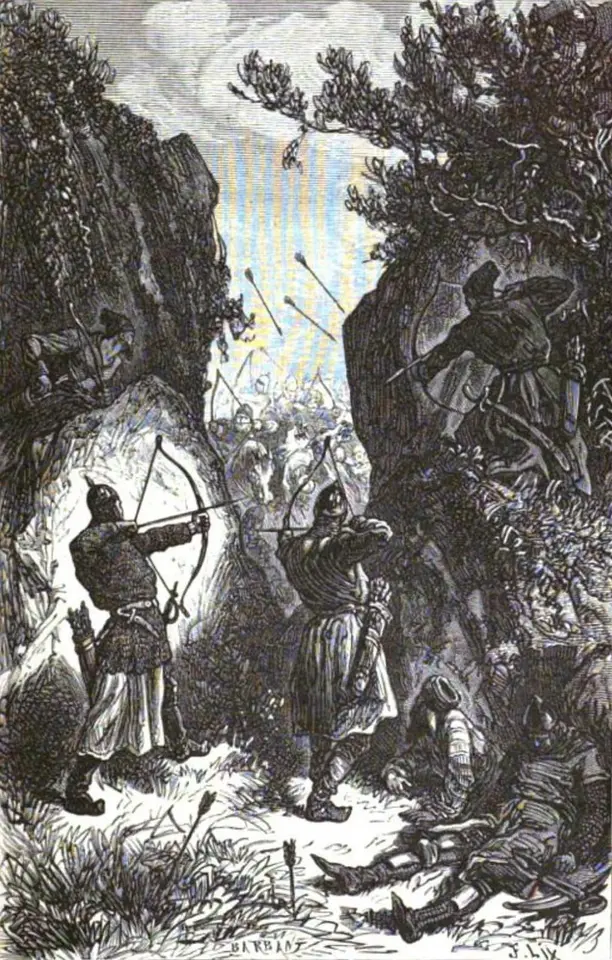
At dawn, cloaked by heavy river mist, imperial vanguards under generals Aibuqa and Dong Wenzhong launched a devastating surprise assault. Caught completely off guard, Nayan hastily formed defensive lines, surrounding his camp with linked carts. Directing operations from his elephant tower, Kublai ordered waves of crossbow fire, incendiary artillery, and armored lancers into the rebel ranks. The battle raged fiercely from dawn until mid-afternoon, until imperial shock cavalry ruptured Nayan's lines. As his army disintegrated, Nayan attempted to flee on fresh horses but was intercepted and captured by pursuit cavalry.
Execution and Reorganization of the Northeast
Escorted before Kublai Khan's elephant chariot, Nayan knelt in surrender. While military commanders demanded public decapitation, Kublai respected the sacred decree of Genghis Khan forbidding the shedding of royal Chinggisid blood upon the earth. He ordered Nayan wrapped securely in thick wool carpets; imperial guards tossed and shook the carpet violently until Nayan suffocated to death.
Following Nayan's demise, imperial commanders mopped up remnant insurgent groups led by Qada'an, fully pacifying the eastern steppes by 1288. Nayan's defeat marked a watershed in Yuan imperial governance. Kublai dismantled the hereditary autonomy of the Otchigin Ulus, establishing the Liaoyang Branch Secretariat (Liaoyang Xing Sheng) to administer the entire northeast through appointed civil magistrates, permanently integrating Manchuria and the Amur basin into the unified administrative structure of China.
Major Achievements
Consolidation of the Otchigin Ulus Nomadic Domain
As hereditary sovereign of the Otchigin appanage, Nayan effectively governed expansive territories along the Greater Khingan Mountains. He integrated disparate Mongol, Jurchen, and Khitan communities into disciplined cavalry units, sustaining stability across northeastern frontiers prior to his rebellion.
Organizing the Aristocratic League Against Centralization
Nayan served as the preeminent political rallying figure for conservative Mongol aristocracy resisting Sinicized bureaucratic transformation. His achievement in coordinating the eastern princes while synchronizing strategy with Qaidu in Central Asia underscored his exceptional organizing capabilities.
Catalyzing a Historic Imperial Mobilization
The Nayan Rebellion represented the most dangerous internal military challenge confronted by the early Yuan dynasty. His swift mobilization forced the septuagenarian Kublai Khan to take the field personally upon an elephant chariot, resulting in one of the most celebrated tactical campaigns in imperial military annals.
Fostering the Administrative Integration of the Northeast
The crushing of Nayan's revolt provided the historical impetus for the permanent abolition of semi-autonomous princely fiefdoms in the northeast. The subsequent creation of the Liaoyang Branch Secretariat established direct bureaucratic rule over Manchuria, providing the institutional foundation for regional governance under subsequent dynasties.