Birth into Military Nobility
Born in Beijing into the household of Grand Secretary Agui.
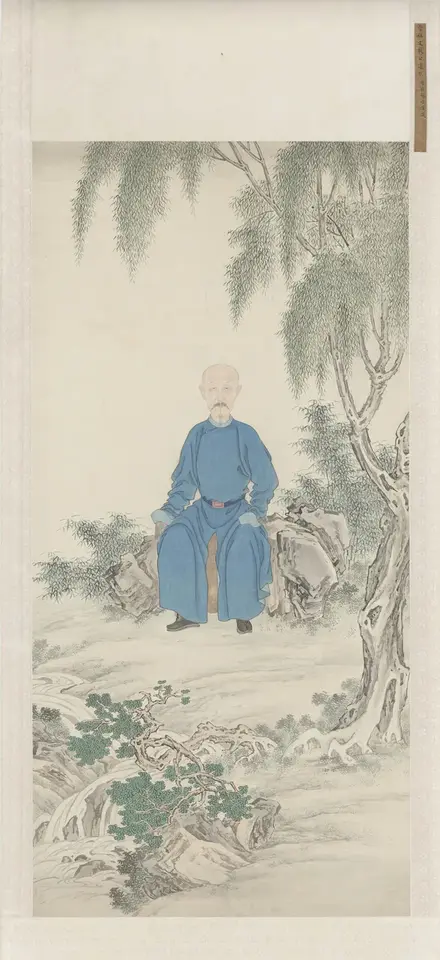
那彦成
Janggiya Nayancheng (1763–1833), courtesy name Yitang, pseudonyms Shaojiu and Dongfu, was a member of the Manchu Plain White Banner. He was the grandson of General Agui, Grand Secretary of the Baohe Hall, and the second son of Vice Minister Abida. He was a distinguished civil minister, military commander, and regional viceroy during the Qianlong, Jiaqing, and Daoguang reigns. In 1789, Nayancheng passed the metropolitan…
Janggiya Nayancheng (1763–1833), courtesy name Yitang, pseudonyms Shaojiu and Dongfu, was a member of the Manchu Plain White Banner. He was the grandson of General Agui, Grand Secretary of the Baohe Hall, and the second son of Vice Minister Abida. He was a distinguished civil minister, military commander, and regional viceroy during the Qianlong, Jiaqing, and Daoguang reigns. In 1789, Nayancheng passed the metropolitan examinations and was inducted into the Hanlin Academy. Known for his keen intellect and mastery of geography and military tactics inherited from his grandfather, he rose rapidly to Sub-Chancellor of the Grand Secretariat and Vice Minister of Works. During the White Lotus Rebellion under the Jiaqing Emperor, Nayancheng was dispatched as an imperial assistant commander to the Shaanxi front, successfully capturing enemy strongholds in the Qinling Mountains. In 1805, Nayancheng was promoted to Viceroy of Shaan-Gan, actively restoring agricultural irrigation and stabilizing border communities. Following the 1813 Eight Trigrams Uprising, he was named Viceroy of Zhili and Grand Councilor, securing the capital region and suppressing rebel forces in Henan. During the Daoguang era, following the defeat of Jahangir Khoja's rebellion in Xinjiang, Nayancheng was appointed Imperial Commissioner in Kashgar in 1827. He formulated the Eight Measures on Muslim Frontier Rehabilitation, fortified city walls, expelled Kokand invaders, reorganized the Pul currency, and reformed commercial taxation. He was made Grand Secretary of the Wuying Hall in his later years and died in 1833, receiving the posthumous name Wenyi.
Born in Beijing into the household of Grand Secretary Agui.
Passed the civil service examinations as Jinshi, inducted as Hanlin Bachelor.
Promoted to Sub-Chancellor of the Grand Secretariat and Vice Minister of Works.
Dispatched as Imperial Assistant Commander to crush insurgent forces in Shaanxi.
Appointed Viceroy of Shaan-Gan, promoting water conservancy and frontier military colonies.
Elevated to Viceroy of Zhili and Grand Councilor during the Eight Trigrams crisis.
Appointed Imperial Commissioner at Kashgar to coordinate southwestern Xinjiang rehabilitation.
Implemented frontier defense statutes and repelled Kokand invaders from southern Xinjiang.
Promoted to Grand Secretary of the Wuying Hall; passed away at 70, honored as Wenyi.
Nayancheng was born in 1763 into the prominent Janggiya lineage. His grandfather Agui had served as Chief Grand Councilor and commanding general of the Jinchuan and Muslim frontier campaigns. Despite his noble heritage, Nayancheng applied himself to rigorous classical learning.
In 1789, Nayancheng passed the Metropolitan Examinations, entering the Hanlin Academy as a Bachelor and subsequent Compiler. In 1794, at thirty-one, he was appointed Sub-Chancellor of the Grand Secretariat, followed by service as Vice Minister of Works and Vice Minister of Revenue, earning Emperor Qianlong's personal commendation.
Following Emperor Jiaqing's assumption of personal rule in 1799, the White Lotus Rebellion posed a grave challenge in Shaanxi, Hubei, and Sichuan. Nayancheng was commissioned as Assistant Commander to direct forces in Shaanxi. He adapted tactical doctrine to the rough terrain of the Qinling Mountains, constructing defensive stockades to sever insurgent food supplies and defeating rebel detachments at Shangzhou and Xunyang.
In 1800, observing that the insurgents were entrenched in inaccessible forests, Nayancheng submitted an candid memorial warning that the campaign would require prolonged perseverance, using the phrase "fated tribulations of heaven." Emperor Jiaqing took offense at his somber prognosis and demoted him. However, Nayancheng continued serving on the front lines with distinction, earning imperial pardon and promotion to Viceroy of Shaan-Gan in 1805. In Shaan-Gan, he fostered military settlements and pacified minority tribes.
In autumn 1813, the Eight Trigrams (Tianlijiao) sect launched an insurrection, breaching the Forbidden City in Beijing. Emperor Jiaqing immediately recalled Nayancheng, appointing him Viceroy of Zhili and Grand Councilor.
Arriving in the capital, Nayancheng deployed elite cavalry to seal off escape routes, eliminating underground sectarian elements across Zhili. He subsequently coordinated the siege of rebel strongholds at Huaxian in Henan, crushing the rebellion. He served as Viceroy of Zhili for many years, managing river conservancy on the Yongding River and establishing grain reserves.
In 1826, Jahangir Khoja invaded southern Xinjiang with Kokand support, capturing Kashgar, Yarkand, and Khotan. Although Qing armies captured Jahangir in 1827, southern Xinjiang remained volatile due to Kokand incursions. Emperor Daoguang appointed Nayancheng as Imperial Commissioner stationed at Kashgar.
Arriving in the Tarim Basin, Nayancheng enacted his Eight Measures on Muslim Frontier Rehabilitation. He constructed new fortified citadels for Manchu and Chinese garrisons, severed trade with Kokand to force the extradition of fugitives, recalled debased local bronze coins to mint standard imperial Pul coinage, and abolished illicit exactions levied by local banyans on Uighur farmers. In 1830, when Kokand launched a renewed incursion under Jahangir's brother, Nayancheng's fortified garrisons repelled the assault, stabilizing Xinjiang's southern frontier.
In 1831, Nayancheng returned to Beijing due to advancing age, receiving appointment as Grand Secretary of the Wuying Hall. Emperor Daoguang repeatedly consulted him on northwestern defense and administrative reforms.
Nayancheng died in Beijing in 1833 at the age of 70. Emperor Daoguang issued an imperial eulogy praising him as a veteran of four reigns who served with literary and military distinction, posthumously awarding him the title of Grand Guardian, state burial honors, the posthumous name Wenyi, and enshrinement in the Temple of Eminent Statesmen.
FIGURES ASSOCIATED WITH THIS DYNASTY