Birth in Jicheng
Born in Liaodong as the third son of the Xianbei chieftain Murong Hui.
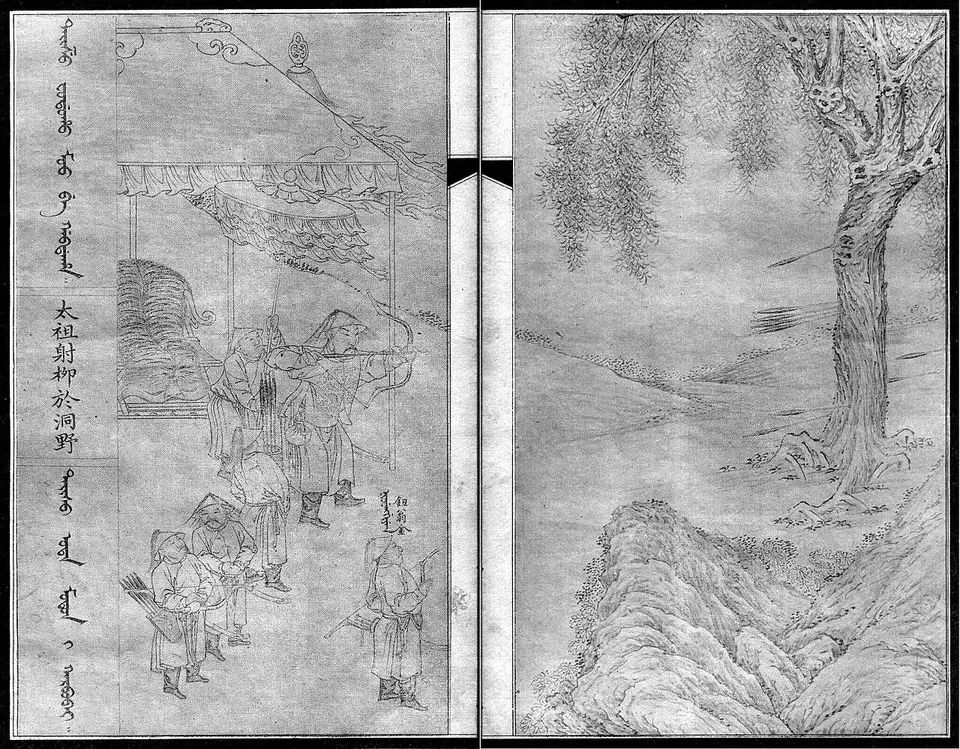
333 CE–348 CE
慕容皝
Emperor Wenming of Former Yan (前燕文明帝, 297 – October 25, 348), personal name Murong Huang (慕容皝), courtesy name Yuanzhen (元真), was the founding sovereign of the Former Yan dynasty during the Sixteen Kingdoms period, reigning from 337 to 348. Born as the third son of Murong Hui, he was endowed with imposing stature, profound political acumen, and an enduring devotion to classical Confucian scholarship and astronomy. Upon…
Emperor Wenming of Former Yan (前燕文明帝, 297 – October 25, 348), personal name Murong Huang (慕容皝), courtesy name Yuanzhen (元真), was the founding sovereign of the Former Yan dynasty during the Sixteen Kingdoms period, reigning from 337 to 348. Born as the third son of Murong Hui, he was endowed with imposing stature, profound political acumen, and an enduring devotion to classical Confucian scholarship and astronomy. Upon succeeding his father in 333 as Duke of Liaodong and Inspector of Pingzhou, he swiftly and ruthlessly crushed a perilous internal rebellion organized by his younger brothers Murong Ren and Murong Zhao. In 337, he formally proclaimed himself King of Yan, instituting court ministries and founding the administrative architecture of Former Yan. Throughout his twelve-year reign, Murong Huang proved himself an exceptional strategist. He allied with Later Zhao to annihilate the hostile Duan Xianbei, and subsequently orchestrated a legendary counter-offensive at the Siege of Jicheng, where his small force routed a Later Zhao invasion host numbering several hundred thousand. He relocated his capital to Longcheng in 342, shattered the kingdom of Goguryeo by sacking its mountain citadel of Hwando, absorbed the Yuwen Xianbei into his realm, and subdued the Buyeo kingdom. In 345, he renounced Eastern Jin era designations to assert imperial autonomy. Murong Huang established the Dongxiang academy to educate elite youth, reformed agrarian tenancy, and laid the unassailable groundwork for Former Yan's subsequent conquest of northern China. He died from injuries sustained in a hunting accident in 348 at age fifty-two.
Born in Liaodong as the third son of the Xianbei chieftain Murong Hui.
Invested as Champion General, Left Worthy Prince, and Marquis of Wangping.
Promoted to General Pacifying the North and confirmed as heir apparent.
Succeeds his father; suppresses Murong Zhao's conspiracy while Murong Ren revolts.
Marshals forces to eliminate hostile chieftains; receives Jin commissions as Grand Shanyu.
Marches across three hundred miles of frozen ocean to seize Pingguo and execute Murong Ren.
Proclaims himself King of Yan, establishing civil ministries and royal palaces.
Defeats Duan Liao; repulses Shi Hu's colossal siege army with a devastating dawn counter-attack.
Receives formal royal investiture from Eastern Jin; commences construction of Longcheng.
Moves the capital to Longcheng; executes a pincer invasion that sacks Hwando.
Commands the decisive expedition that destroys the Yuwen tribe, annexing their lands.
Discontinues Eastern Jin calendar; erects the Dongxiang Academy for Confucian statecraft.
Dispatches Murong Jun and Murong Ke to seize the Buyeo capital and capture its royal court.
Injured in a horse fall during a western hunt; passes away in Longcheng at age fifty-two.
Murong Huang was born in 297 during the reign of Emperor Hui of Western Jin. He was the third son of Murong Hui, the visionary leader who transformed the Murong Xianbei from nomadic marauders into a civilized frontier power, and his mother was Lady Duan. Ancient annals recorded that Murong Huang possessed an extraordinary physical presence, characterized by prominent brow ridges and broad, even teeth, attaining an adult height of seven feet eight inches (approximately 191 centimeters). From his youth, he demonstrated an austere temperament, boundless military ambition, and an unusual passion for Central Plains Confucian texts, alongside profound expertise in astronomy and celestial divination. Recognized for his rare combination of martial vigor and cultural literacy, Murong Hui designated him heir apparent to the Liaodong dukedom.
In 317, the newly established court of Emperor Yuan of Jin conferred upon Murong Huang the ranks of Champion General and Left Worthy Prince, enfeoffing him as Marquis of Wangping. Accompanying his father on extensive military campaigns across the northeastern borderlands, he repeatedly repulsed predatory incursions from rival nomadic confederacies. In 322, he spearheaded a punitive assault into the Duan Xianbei stronghold of Lingzhi, capturing enemy supplies through swift mobile warfare. Toward the end of the Taining era, Emperor Ming of Jin promoted him to General Pacifying the North and Duke of Chaoxian. These foundational experiences provided Murong Huang with intimate mastery of the harsh regional topography and ethnic alliances, establishing the bedrock for his future imperial enterprise.
In the fifth month of 333, Murong Hui passed away. Murong Huang formally succeeded to his father's titles as Inspector of Pingzhou and leader of the Xianbei confederation. However, his succession triggered an explosive crisis within the royal clan. His elder half-brother Murong Han, an exceptionally gifted military commander revered by the rank and file, had long been viewed by Murong Huang with intense jealousy. Simultaneously, his full younger brothers Murong Ren and Murong Zhao, who had enjoyed excessive indulgence from their late father, fiercely contested Murong Huang's legitimacy. Following the funeral, Murong Han fled into exile to the Duan tribe, while Murong Ren and Murong Zhao conspired to launch an armed coup to depose the new sovereign.
Murong Huang responded with ruthless speed. He executed Murong Zhao in the capital before sending envoys to investigate Murong Ren at Xiandu. Realizing that the plot was unmasked, Murong Ren slaughtered the emissaries, seized Pingguo, and mobilized the garrison towns of southern Liaodong. Murong Huang dispatched an expedition under Murong You and Tong Shou, but the column was ambushed and obliterated by Murong Ren's elite cavalry. Numerous frontier governors, including Wang Bing and Sun Ji, betrayed Murong Huang and surrendered, while the royal inspector Feng Chou fled back to Jicheng. With Murong Ren establishing himself as Duke of Liaodong and securing military pacts with the Yuwen and Duan tribes, the fledgling Murong regime was pushed to the brink of ruin.
Faced with existential danger, Murong Huang devised a brilliant operational gamble. In the first month of 336, during an unusually bitter winter, the Gulf of Liaodong froze solid. Defying unanimous opposition from his senior staff, who dreaded the unpredictability of sea ice, Murong Huang resolved to bypass the heavily fortified land passes and lead his army across the frozen sea. Invoking the legendary miracle of Emperor Guangwu crossing the frozen Hutu River, he proclaimed that anyone hesitating would be summarily beheaded. His army traversed three hundred miles over jagged ice floes in absolute secrecy, arriving within seven miles of Pingguo before the defenders noticed. Murong Ren rushed out in total disarray, was captured alive, and executed on the spot, restoring unified authority over the entire Liaodong region.
With domestic pacification achieved, Former Yan's geopolitical stature expanded dramatically. In 337, senior minister Feng Yi and other advisors urged Murong Huang to assume royal dignities, arguing that holding mere provincial offices under Jin diminished his authority over northern warlords. Murong Huang assented, inaugurating complete ministerial administrative bureaus that autumn. He elevated Feng Yi to State Chancellor, Han Shou to Marshal, Pei Kai to Minister of Ceremonies, Yang Wu to Metropolitan Intendant, and Feng Yu to Supervisor of the Bureau of Records. On the dingmao day of the tenth month, he proclaimed himself King of Yan, issued a general amnesty, posthumously honored his father as King Wuxuan, and formally established the Former Yan dynasty.
The emerging state immediately confronted an apocalyptic threat from Later Zhao under the tyrant Shi Hu. To eliminate the persistent predatory raids of the Duan tribe along his western flank, Murong Huang conducted pragmatic diplomacy, paying nominal court homage to Shi Hu and coordinating a joint punitive offensive against Duan Liao. In 338, allied columns converged on Duan territory, with Yan forces overrunning the northern fortifications of Lingzhi. However, after annihilating the Duan realm, Shi Hu grew fearful of Former Yan's rising prowess and abruptly turned his massive invasion host of several hundred thousand troops against Jicheng. Thirty-six border towns surrendered to Later Zhao, and Jicheng was enveloped in a suffocating siege, prompting frantic calls for surrender within the Yan court.
Murong Huang displayed legendary resilience, declaring that prospective conquerors of the realm would never bow to subjugation. Entrusting direct citadel defense to veteran general Shi Cong, he endured weeks of relentless subterranean sapping and siege tower assaults. When the siege stalled and Later Zhao supply lines disintegrated, Murong Huang launched an audacious counterstroke. At dawn, under cover of heavy morning mist, he dispatched his fourteen-year-old son Murong Ke with two thousand elite shock cavalry through the city gates into the center of the enemy encampments. The colossal Zhao army collapsed into unmitigated panic, suffering over thirty thousand casualties as Yan cavalry harried their retreat. This stunning victory solidified Former Yan's position as an unshakeable powerhouse.
Having broken Later Zhao's siege, Murong Huang sought diplomatic prestige to legitimize his royal mandate. In 339, he dispatched emissaries across the Yangtze River to Jiankang to present battlefield trophies and petition for royal investiture. Following protracted parliamentary deliberation and an uncompromising letter from Murong Huang castigating Prime Minister Yu Bing, Eastern Jin conceded in 341, dispatching imperial envoys to commission him as Commander-in-Chief of Hebei Military Affairs, Governor of Youzhou, Grand Shanyu, and King of Yan. Recognizing that Jicheng was geographically eccentric and inadequate for continental rule, Murong Huang commissioned Yang Yu to build a grand fortified capital at Longcheng, officially relocating the royal seat there in 342.
From Longcheng, Murong Huang launched wide-ranging campaigns to pacify neighboring kingdoms. Reconciled with his exiled brother Murong Han, who had smuggled himself back into Yan territory, Murong Huang entrusted him with vanguard command and adopted his strategy to strike Goguryeo before confronting the Yuwen confederacy. In the winter of 342, Murong Huang led forty thousand elite troops through the treacherous southern mountain defiles, sending a secondary diversionary force of fifteen thousand along the northern road. King Sayu of Goguryeo concentrated his main army in the north, leaving the southern approaches lightly defended. Yan forces stormed into the mountain citadel of Hwando, putting the fortress to the torch, exhuming the remains of Sayu's royal father, and capturing the queen mother and fifty thousand prisoners, compelling Goguryeo to become a vassal state.
Turning next toward the formidable Yuwen Xianbei along the northern frontier, Murong Huang marched twenty thousand elite cavalry into the Zhimeng River valley in 344. Murong Han led the vanguard cavalry in an overwhelming frontal charge that decapitated the enemy line, killing Yuwen warlord She Yiyu. Chieftain Yuwen Yidougui abandoned his tribesmen and fled into the northern wilderness, dissolving the Yuwen state forever and incorporating over five thousand tribal tents into Yan taxation rolls. In 346, Murong Huang directed Crown Prince Murong Jun and Murong Ke to execute a long-range cavalry sweep against the Buyeo kingdom, capturing King Xuan and fifty thousand subjects. By the mid-340s, Former Yan reigned supreme across the entirety of Northeast Asia.
Having pacified the northeastern quadrant of the continent, Murong Huang instituted profound political and ceremonial transformations. In 345, contending that ancient sovereign princes had universally dated their reigns from their own accession, he definitively abandoned Eastern Jin era names. He retroactively declared the year of his accession (333) as Year One of Yan, designating 345 as Year Twelve of Yan. This monumental decision signaled Former Yan's formal transition from a tributary frontier client into a fully sovereign regional empire. Within Longcheng, he balanced military preparedness with civil rehabilitation, founding state academies, cultivating royal agricultural plots, and integrating hundreds of thousands of displaced Han emigrants into a prosperous economic order.
In the autumn of 348, Murong Huang conducted a royal hunt along the western frontier prairies. Folklore recorded that as he prepared to ford a river, an elderly hermit robed in scarlet and riding a white horse waved his hand to warn against intrusion, an omen Murong Huang dismissed. While chasing a galloping white hare over rugged terrain, his warhorse suddenly stumbled and pitched violently forward, inflicting catastrophic internal trauma upon the king. Carried back to the palace in Longcheng, he summoned Crown Prince Murong Jun to his bedside, entrusting him with the stewardship of the dynasty and counseling him to rely unconditionally upon faithful ministers such as Feng Yi and Yang Wu. On October 25, 348, Murong Huang passed away at the age of fifty-two. He was interred at Longping Mausoleum and bestowed the posthumous title King Wenming, which his successor subsequently elevated to Emperor Wenming with the temple name Taizu.
Murong Huang was an enlightened patron of classical scholarship whose policies fundamentally reshaped the intellectual character of the Murong Xianbei. Deeply educated in the Han and Wei classics, he lamented the devastation of traditional learning caused by the chaotic upheaval of the Sixteen Kingdoms. Near the old palace grounds in Longcheng, he established the renowned Dongxiang Academy, selecting prominent sons of civil and military grandees to study under state masters, conferring upon them the prestigious designation of Gaomensheng (Elite Scholars). The king personally attended monthly examinations to evaluate their literary dissertations and classical interpretations, elevating top scholars directly into high executive positions.
To replace archaic, rudimentary primers such as the Jijiu Chapter, Murong Huang personally authored the Taishang Zhang (Supreme Stanzas) for foundational literacy education and composed the Dianjie (Fifteen Canons of Precepts) to instill behavioral ethics, loyalty, and filial piety among royal and aristocratic scions. He instituted standard bureaucratic bureaus modeled after Han-Wei administrative prototypes, introducing elaborate court etiquette and musical ceremonies. Furthermore, he erected the Wood of Remonstrance and the Drum of Critique outside his palace gates, actively encouraging uninhibited political critique. This remarkable intellectual openness attracted vast numbers of displaced scholars from the Central Plains, transforming Former Yan into a vibrant bastion of Classical Chinese civilization.
Recognizing that stable food supplies constituted the cornerstone of national survival in an era of constant warfare, Murong Huang implemented sweeping agricultural and economic initiatives. In 338, he organized extensive military farming colonies across the commanderies surrounding Longcheng. East of the Chaoyang Gate, he established the imperial sacred field (Jitian), where he personally guided the ritual plow each spring to celebrate farming. To accommodate the massive influx of Han refugees who lacked draught animals and plows, he opened royal hunting preserves and state pastures to peasant reclamation, providing state oxen and implements under an equitable grain-sharing tenancy system that incentivized frontier cultivation.
In fiscal management, Murong Huang initially maintained elevated grain levies to finance rapid military expansion, but when trusted councilor Yang Wu submitted an urgent memorial detailing rural exhaustion, the king promptly rescinded burdensome taxes. He replaced ad hoc requisitions with transparent, predictable agrarian levies. During recurrent regional droughts or early frosts in Liaoxi, he issued royal decrees exempting afflicted counties from annual grain tributes and distributed grain reserves to support widows, orphans, and the destitute. These farsighted economic measures generated sustained agrarian surpluses that financed colossal multi-theater military operations without bankrupting the state.
Murong Huang was a master of grand strategy and lightning field maneuver. In defensive warfare, he utilized rugged mountain topography, deceptive deployments, and impregnable fortifications at Jicheng to withstand and rout siege forces ten times his own numbers. In offensive warfare, he prized psychological surprise and rapid operational movement. Whether commanding his cavalry across hundreds of miles of frozen coastal ice to crush Murong Ren, negotiating alpine defiles to sack Hwando, or executing concentric envelopments in the Zhimeng valley, his tactical masterpieces reflected an extraordinary capacity to achieve decisive local superiority.
To safeguard his expanded borders, Murong Huang established an integrated defense network anchored by the colossal bastions of Longcheng and supplemented by interlocking outposts at Fancheng, Anjin, and Haocheng. These strongholds dominated the choke points between the Liaoxi corridor and the Eurasian steppe. Murong Huang placed immense emphasis on horse breeding and cavalry procurement, creating specialized administrative bureaus to oversee royal studs. As a result, the Yan cataphract shock cavalry became the most devastating armored force of fourth-century China, providing the military instrument that his sons Murong Ke and Murong Chui later utilized to subjugate the North China plain.
Murong Huang's governance was characterized by exceptional meritocracy and ethnic inclusivity. He systematically dismantled tribal parochialism by appointing eminent Han gentry leaders to the highest positions of civil and military command. Figures such as Feng Yi served as State Chancellor, Han Shou as Marshal, Pei Kai as Master of Ceremonies, and Yang Wu as Metropolitan Intendant. When his gifted elder brother Murong Han returned from perilous exile in Yuwen territory, Murong Huang overlooked past jealousies, tested his loyalty through secret emissaries, and immediately restored him to vanguard field command, demonstrating rare magnanimity and pragmatic statecraft.
Within the royal house, Murong Huang personally supervised the education and battlefield training of his sons, instilling iron discipline in Crown Prince Murong Jun while exposing Murong Ke and Murong Chui to the realities of combat from early adolescence. Murong Ke's brilliant tactical leadership during the defense of Jicheng and Murong Chui's audacious exploits against Goguryeo were direct products of their father's mentorship. The robust administrative machinery, balanced ethnic synthesis, and incomparable military leadership established by Murong Huang provided the essential foundation for Former Yan's swift conquest of Yecheng, Luoyang, and the Central Plains following his death.
FIGURES ASSOCIATED WITH THIS DYNASTY