Birth in the Steppe
Born into a scholarly family of the Mongol Plain White Banner, demonstrating early intellectual talent.
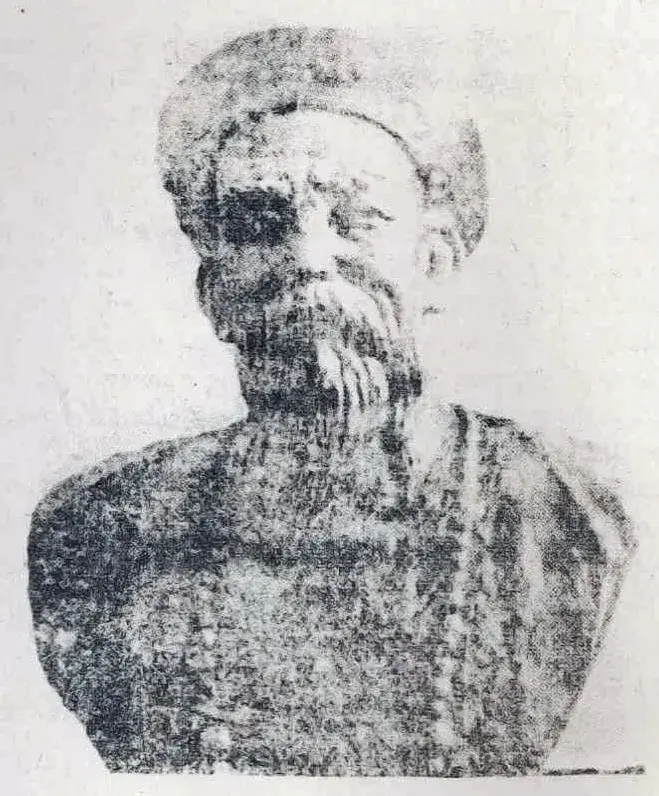
明安图
Ming Antu (明安图, 1692–1765), courtesy name Jing'an (静庵), was a native of the Mongol Plain White Banner (modern Zhengxiangbai Banner, Inner Mongolia) and an eminent mathematician, astronomer, and cartographer of the Qing dynasty. Selected as an imperial student at the Directorate of Astronomy in his youth, he received personal mathematical instruction from the Kangxi Emperor and served the imperial court across the Kangxi,…
Ming Antu (明安图, 1692–1765), courtesy name Jing'an (静庵), was a native of the Mongol Plain White Banner (modern Zhengxiangbai Banner, Inner Mongolia) and an eminent mathematician, astronomer, and cartographer of the Qing dynasty. Selected as an imperial student at the Directorate of Astronomy in his youth, he received personal mathematical instruction from the Kangxi Emperor and served the imperial court across the Kangxi, Yongzheng, and Qianlong reigns for over fifty years, eventually rising to Director of the Directorate of Astronomy. In mathematics, through more than three decades of solitary research, Ming Antu pioneered the continued proportion method of circle division, independently discovered the Catalan numbers nearly a century before Eugène Charles Catalan, and derived infinite series expansions for pi and trigonometric functions known as the Nine Methods and Thirteen Methods, authoring the seminal treatise Geyuan Milv Jiefa (Quick Method for Determining the Precise Ratio of Circle Segmentation) which inaugurated analytical mathematics and infinite series in China. In astronomy and cartography, he directed the compilation of the imperial calendar for decades, led the editorial production of Lixiang Kaocheng Houbian (Later Volumes of the Compendium of Calendrical Astronomy) which incorporated Kepler's laws of planetary motion into the official state calendar, supervised the cataloging of over three thousand stars in Yixiang Kaocheng, and led two major scientific expeditions in 1756 and 1759 across Xinjiang, providing foundational geodetic coordinates for the Qianlong Neifu Yutu (Qianlong Imperial Household Map) and Huangyu Xiyu Tuzhi (Imperial Illustrated Gazetteer of the Western Regions).
Born into a scholarly family of the Mongol Plain White Banner, demonstrating early intellectual talent.
Passed rigorous examinations to enter the Directorate of Astronomy as an imperial student, receiving direct instruction from the Kangxi Emperor.
Accompanied the Kangxi Emperor to the Rehe Summer Resort, participating in the preliminary planning of Lvli Yuanyuan.
Appointed Five Officials President in the Calendrical Department of the Directorate of Astronomy upon completion of Lvli Yuanyuan.
Appointed to compile Lixiang Kaocheng Houbian, integrating Keplerian elliptical planetary theory into official imperial astronomical calculations.
Led calculations for the thirty-volume Yixiang Kaocheng, determining precise celestial coordinates for over three thousand stars.
Granted the special status of Metropolitan Graduate in Translation by the Qianlong Emperor for outstanding Mongol translations of the calendar.
Dispatched as chief scientist on the first Xinjiang survey expedition, measuring latitudes and longitudes across the northern slopes of the Tianshan mountains.
Promoted to Director of the Directorate of Astronomy and served as chief commander of the second Xinjiang survey, mapping the Tarim Basin and Pamir plateau.
Formulated the final draft of Geyuan Milv Jiefa in four volumes after thirty-six years of rigorous analytical deductions.
Died in office in Beijing at the age of seventy-three; his posthumous manuscripts were edited and published by his son Ming Xin and disciple Chen Jixin.
Ming Antu was born in the thirty-first year of the Kangxi reign (1692) into an educated family belonging to the Plain White Banner of the Mongol Eight Banners. While young Mongol nobles typically pursued equestrian archery and military careers, Ming Antu exhibited an intense curiosity for classical literature, mathematics, astronomy, and calendrical science. During his teenage years, he achieved high distinction in banner civil examinations, passing the county licensing examinations and being selected as a tribute student. In 1709, the Directorate of Astronomy recruited gifted students from banner academies; Ming Antu passed the rigorous examinations and was officially enrolled as an imperial student.
The Kangxi Emperor was passionately devoted to Western natural sciences, regularly inviting French Jesuit scientists to the palace to lecture on Euclidean geometry and astronomy, while establishing the Mengyangzhai Mathematical Academy at the Changchun Garden. Top-ranking students from the Directorate were periodically summoned to the inner palace to attend imperial lectures. Ming Antu distinguished himself by verifying theoretical texts against practical celestial observations on the imperial observatory. His profound diligence earned the personal admiration of the Kangxi Emperor, who personally instructed him in mathematical calculations. Ming Antu's disciple Chen Jixin recorded that Master Ming Antu received mathematical instruction from the Holy Ancestor (the Kangxi Emperor) from his youth and remained an indefatigable scholar until old age. This unique royal training laid the groundwork for his scientific career.
During his studies at the Directorate, students systematically investigated Chinese traditional mathematical treatises such as Tongdao Suanfa and Tianwen Dacheng Guanxiang Tongkao, as well as Chinese translations of Western treatises including Jihe Yuanben (Elements of Geometry) and Tongwen Suanzhi. Ming Antu pursued these studies not only through Chinese texts but also by consulting Manchu and Mongolian translations. This trilingual and multicultural orientation enabled him to absorb diverse scientific frameworks without intellectual friction.
In 1712, when the Kangxi Emperor escorted the Empress Dowager to the Rehe Summer Resort, he summoned renowned mathematicians including Mei Juecheng (grandson of Mei Wending) and Chen Houyao to plan a monumental official compendium on mathematical astronomy. The young Ming Antu was selected to join the imperial retinue. In 1713, the court officially established the Mengyangzhai Academy to compile the hundred-volume encyclopedia Lvli Yuanyuan (Origins of Mathematical Astronomy and Pitchpipes). The massive compilation was supervised by Prince Yunlu and Prince Yunzhi, with He Guozong and Mei Juecheng directing compilation, while Fang Bao and Wei Tingzhen supervised collation.
Ming Antu was assigned the pivotal responsibility of astronomical testing and field observation alongside senior officers. Throughout eleven years of demanding editorial labor, Ming Antu maintained constant watch at the Beijing Ancient Observatory, employing gnomons, sextants, and quadrant instruments to measure the length of solar shadows and altitude during equinoxes and solstices. In compiling the astronomical section Lixiang Kaocheng, Ming Antu conducted exhaustive observational measurements, correcting the outdated obliquity of the ecliptic derived by Danish astronomer Tycho Brahe (23 degrees, 31 minutes, 30 seconds) to the empirically accurate value of 23 degrees, 29 minutes, 30 seconds. In 1723, upon the completion of Lvli Yuanyuan, Ming Antu was officially appointed Five Officials President in the Calendrical Department of the Directorate of Astronomy, formally assuming permanent charge of calculating the movements of the sun, moon, and five planets.
The Calendrical Department of the Directorate of Astronomy held paramount responsibility for formulating the annual imperial calendar, Shixianli (Calendar of Seasonal Timing). Every year, the astronomical draft compiled by the Directorate required imperial inspection and approval before being printed and distributed nationwide to regulate agricultural cycles, seasonal ceremonies, and civil governance. Historical archives record that Ming Antu's signature first appeared on the official calendar of the sixty-first year of the Kangxi reign (1722), bearing the title Five Officials President Ming Antu Receiving Vice Director Stipend. His signature continued to appear on nearly every annual edition for over four decades, concluding with the calendar of 1764.
Beyond calculating solar terms, Ming Antu was responsible for drafting official memorials predicting solar and lunar eclipses, which detailed the exact minute of first contact, totality, and final recovery, alongside graphical representations of eclipse orientations. In an autocratic imperial context, eclipse forecasts carried supreme political weight, as inaccurate predictions could invite severe punishment. Drawing upon sophisticated spherical trigonometry and rigorous calculations, Ming Antu submitted hundreds of celestial prediction memorials over several decades without a single significant discrepancy.
During the lunar eclipse of February 14, 1729 (the seventeenth day of the first month of the seventh year of the Yongzheng reign), Ming Antu supervised preliminary calculations and submitted two successive memorials to the throne. His forecasts specified the minutes of initial darkening and recovery for Beijing, while calculating exact local times for provincial capitals across Jiangnan, Shaanxi, and Guangdong based on geographic longitudes. Furthermore, because the Qing empire governed vast Mongolian pastoral territories, the court required annual Mongolian translations of the state calendar. Relying on his mastery of Mongolian, Manchu, and Chinese astronomical terminology, Ming Antu oversaw the translation and publication of Mongolian editions of Shixianli, for which the Qianlong Emperor awarded him the honorary degree of Metropolitan Graduate in Translation in 1751.
During the transition from the Yongzheng to early Qianlong reigns, Chinese astronomers recognized that the geocentric circular epicycle models inherited from Ptolemy and Tycho Brahe in Lixiang Kaocheng were inadequate for calculating the non-uniform velocities of planetary motion. In 1737, the Qianlong Emperor ordered the creation of an editorial bureau to compile Lixiang Kaocheng Houbian in ten volumes. Ming Antu served as a central technical coordinator alongside Gu Cong, Mei Juecheng, and European court astronomers including Ignatius Kögler (Dai Jinxian) and Andrew Pereira (Bao Youguan).
Rejecting obsolete geometric epicycles, Ming Antu and his colleagues integrated Johannes Kepler's first law (elliptical orbits) and second law (equal area in equal time), incorporating early Newtonian gravitational principles into Chinese mathematical astronomy. Ming Antu converted the variable velocity of an elliptical orbit into practical tables of solar equation of the center, substantially reducing seasonal calculation errors. To assist court calendrical officers in understanding Kepler's second law—which dictates that planets accelerate near perihelion and decelerate near aphelion—Ming Antu formulated geometric diagrams and interpolation tables, harmonizing European mathematical rigor with traditional Chinese computational practices. The work was completed in 1742 as a landmark in Qing astronomical literature.
Between 1744 and 1752, the Qianlong Emperor commissioned the compilation of Yixiang Kaocheng in thirty-two volumes to update celestial star charts. Ming Antu directed the technical calculations, leading a team of Chinese and Western astronomers in observing the heavens using bronze instruments such as the Equatorial Armillary Sphere and Quadrant at the Beijing Ancient Observatory. Over eight years of observations, Ming Antu corrected centuries of accumulated precession and atmospheric refraction errors, measuring the equatorial and ecliptic coordinates of 3,083 stars to produce the most comprehensive stellar catalogue of the Qing dynasty.
In 1755, Qing armies pacified internal unrest among the Dzungar Mongols in the western regions. To determine the geographical contours and territorial boundaries of Xinjiang, the Qianlong Emperor organized a state survey expedition to carry out on-site geodetic measurements. In the spring of 1756, Ming Antu was appointed chief technical scientist alongside Vice Minister of Rites He Guozong. The expedition was escorted by military commanders Nu San and Fu De, equipped with quadrants, surveying transits, telescopes, and chronometers.
Arriving at Barkol, the expedition divided into southern and northern wings. While He Guozong crossed the Toksun ridge into the Turpan Basin, Nu San and Ming Antu led the northern detachment along the northern slopes of the Tianshan mountains into the Ili River valley, traversing thousands of kilometers. Ming Antu recorded precise latitudes, longitudes, and seasonal solar shadows, returning to Beijing in early 1757.
In 1759, following the suppression of the revolt of the Khoja brothers, the Qianlong Emperor ordered a second expedition to survey the vast Tarim Basin. Because He Guozong was implicated in an administrative inquiry, the Qianlong Emperor promoted Ming Antu to Director of the Directorate of Astronomy and designated him chief commander of the western survey. Ming Antu was accompanied by Vice Director Fu Zuolin, Jesuit astronomer Félix da Rocha (Gao Shensi), and imperial bodyguards. Over more than a year of travel, Ming Antu led the expedition along the northern, western, and southern fringes of the Taklamakan Desert, surveying Karasahr, Kuqa, Aksu, Kashgar, Yarkand, and Hotan, while extending observations westward into the Pamir mountains. The geographical coordinates gathered during these two expeditions provided empirical foundations for the cartographic masterpiece Qianlong Neifu Yutu and the monumental gazetteer Huangyu Xiyu Tuzhi, making the Qing dynasty one of the first states in the world to complete empire-wide latitude and longitude surveys.
Throughout decades of administrative duties and arduous desert journeys, Ming Antu remained dedicated to pure mathematical research. In the late Kangxi era, French Jesuit Pierre Jartoux introduced three infinite series formulas for determining pi and trigonometric functions, yet concealed the underlying mathematical deductions, presenting only the final algebraic results. This secrecy spurred Chinese mathematicians to discover the underlying mathematical principles. In 1727, Ming Antu resolved to independently construct a rigorous geometric and algebraic demonstration of these series.
Over thirty-six years of solitary labor, whether in the official offices of the Directorate or in transit camps across Central Asian deserts, Ming Antu persevered in calculating complex expansions. He invented the continued proportion method of circle division, employing limits and geometric relations between chords and sagittal heights in inscribed isosceles triangles. Through this framework, he proved Jartoux's three formulas and derived six new series expansions, establishing the Nine Methods and subsequently the Thirteen Methods of circle segmentation. In calculating the recursive coefficients for these series, he discovered the Catalan numbers. In 1763, Ming Antu completed the primary manuscript of Geyuan Milv Jiefa. In 1765, he passed away in Beijing at the age of seventy-three. His unfinished manuscripts were edited and published in four volumes by his son Ming Xin and his foremost disciple Chen Jixin.
Ming Antu's paramount contribution to global mathematics was his continued proportion method of circle division and the four-volume treatise Geyuan Milv Jiefa. Relying on geometric visualization and algebraic recursion, Ming Antu established a path to infinite series and calculus that operated independently of European infinitesimal notations.
Confronting Jartoux's unexplained series, Ming Antu inscribed chains of similar isosceles triangles within circular arcs, dividing the primary arc into two, four, eight, sixteen, and infinitely fine subdivisions. He established continuous proportional equations linking chord lengths and sagittal heights. Operating without formal limit symbols, Ming Antu employed the concept of infinite division, establishing that as subdivisions approach infinity, arc lengths and straight chord lengths converge.
In Geyuan Milv Jiefa, Ming Antu proved Jartoux's three formulas (diameter to circumference, arc to sine, and arc to versine) and derived six new infinite series expansions: arc to chord, arc to sagitta, chord to arc, sine to arc, versine to arc, and sagitta to arc, collectively known as the Nine Methods. Applying trigonometric identities, he derived four supplementary formulas relating complementary arcs and chords, completing the Thirteen Methods. This unified mathematical architecture emancipated Chinese mathematics from traditional finite polynomial computations, establishing analytical series expansions in early modern Chinese scholarship.
In modern combinatorics and discrete mathematics, the Catalan sequence—1, 2, 5, 14, 42, 132, 429—plays an essential structural role in tree enumerations, polygon triangulations, and path calculations. International histories of mathematics traditionally credited Swiss mathematician Leonhard Euler with discovering this sequence in 1751, while attributing its systematic formalization to Belgian mathematician Eugène Charles Catalan in 1838. However, historical documentation demonstrates that Ming Antu discovered and deployed this sequence during the 1730s while deriving series expansion coefficients for Geyuan Milv Jiefa.
In expanding high-order continued proportion equations into infinite recursive series, Ming Antu solved for recurring coefficient ratios within the binomial expansions of sine and versine. Using inductive algebraic reductions, he derived the precise recurrence relations governing the denominators and numerators, which correspond exactly to the Catalan numbers. Ming Antu tabulated initial terms and formulated their recursive generation rules, anticipating Euler's work by two decades and Catalan's by a century.
Whereas modern textbooks express Catalan numbers through combinations and factorial fractions, Ming Antu derived these values through recursive geometric proportions. This achievement demonstrates the analytical sophistication of traditional Chinese mathematical thought when applied to continuous functions.
During his service at the Directorate of Astronomy, Ming Antu directed the compilation of Lixiang Kaocheng Houbian in ten volumes, representing a transformation of Chinese court astronomy from Ptolemaic epicycles to Keplerian orbital mechanics.
Prior to this work, official Qing astronomical manuals adhered to Tychonic geocentric models that resolved planetary velocities into uniform circular epicycles, causing cumulative errors in planetary ephemerides. Ming Antu and his colleagues adopted Kepler's first law of elliptical orbits and second law of equal areas. By translating Keplerian orbital geometry into empirical tables of solar and lunar equations of the center, they reconciled Western analytical mechanics with Chinese computational formats.
Ming Antu's models reduced seasonal equinox calculation errors to mere seconds and integrated lunar evection corrections to enhance eclipse forecasts. Furthermore, the bureau incorporated early perturbation models for Jupiter and Saturn. Ming Antu's localization of Keplerian mechanics aligned Qing state astronomy with contemporary scientific standards.
Between 1744 and 1752, Ming Antu supervised the technical execution of Yixiang Kaocheng in thirty-two volumes, establishing a standardized celestial reference frame for the Qing empire.
Ming Antu personally calibrated major observational instruments at the Beijing Ancient Observatory, including the Equatorial Armillary Sphere, Ecliptic Armillary Sphere, and Quadrant. He instituted rigorous observational protocols, directing astronomers in systematic sky surveys. Accounting for precession, atmospheric refraction, and instrumental axial errors, he converted raw sightings into equatorial and ecliptic coordinates.
Over eight years of systematic observation, the team updated the traditional Chinese stellar system of Three Enclosures and Twenty-Eight Mansions, cataloging 3,083 stars with precise coordinates benchmarked to the year 1744. This work corrected errors found in seventeenth-century Jesuit star tables and incorporated faint telescopic stars, serving as the official astronomical coordinate reference for navigation, cartography, and calendar compilation throughout the remainder of the Qing dynasty.
In 1756 and 1759, Ming Antu undertook two major scientific expeditions to Xinjiang, conducting the first systematic geodetic survey of Central Asian terrain in Chinese history.
Ming Antu implemented modern triangulation and astronomical positioning methods. By day, surveying teams measured baselines and horizontal azimuth angles with surveying transits; by night, they positioned refracting telescopes and quadrants on the North Star and meridian transits of reference stars to determine exact latitudes and local apparent solar time, deducing relative longitudes from Beijing. The expeditions surveyed key locations including Hami, Turpan, Barkol, Urumqi, the Ili River, Kuqa, Aksu, Kashgar, Yarkand, Hotan, and the Pamir mountains.
The survey data laid the scientific foundation for the monumental Qianlong Neifu Yutu (Thirteen-Row Imperial Map) and the geographical documentation of the twenty-volume Huangyu Xiyu Tuzhi. By defining the borders of northwestern China through scientific coordinate systems, Ming Antu's expeditions provided cartographic documentation that protected Qing territorial integrity during subsequent border negotiations with neighboring empires.
Ming Antu's fifty-year career at the Directorate of Astronomy made him one of the longest-serving and most effective directors in Qing history. He maintained the daily operations of the imperial observatory and directed the annual production of state ephemerides.
In an empire dependent on agriculture and pastoralism, provincial authorities relied upon astronomical calendars to coordinate planting seasons, irrigation projects, and pasture rotations. Ming Antu verified planetary ephemerides and solar term calculations each year, ensuring that astronomical prediction memorials remained accurate within a demanding court environment.
Utilizing his fluency in Mongolian, Manchu, and Chinese, Ming Antu supervised the translation of the state calendar into Mongolian, ensuring pastoral communities in northern and western Mongolia received seasonal astronomical guidance. Within the Directorate, he instructed younger scholars including his son Ming Xin and his disciple Chen Jixin, fostering a cohort of multilingual scientists who advanced mathematical and astronomical learning in eighteenth-century China.
Ming Antu's continued proportion methods inspired a major renaissance in Chinese mathematical research during the mid-to-late Qing dynasty.
Prior to Ming Antu, Chinese mathematicians relied on finite polynomial methods such as the traditional circle-cutting technique of Liu Hui and Zu Chongzhi, which approximated pi through inscribed polygons but lacked analytical functional relationships. Geyuan Milv Jiefa united geometric deduction with infinite algebraic expansions, providing an indigenous entry into mathematical analysis.
During the Jiaqing and Daoguang eras, Ming Antu's posthumous work gained wide acclaim in Jiangnan intellectual circles. Mathematician Dong Youcheng composed Geyuan Lianbili Shu Tujie to elucidate its geometric proofs. Subsequently, scholars including Xiang Mingda, Dai Xu, and Xu Youren built upon Ming Antu's Nine Methods, creating an influential analytical school in nineteenth-century Chinese mathematics.
FIGURES ASSOCIATED WITH THIS DYNASTY