Birth in the Capital Hinterland
Born on the seventh day of the twelfth lunar month into a hereditary military officer family of the Embroidered Uniform Guard in Wanping, receiving a thorough classical Confucian education.
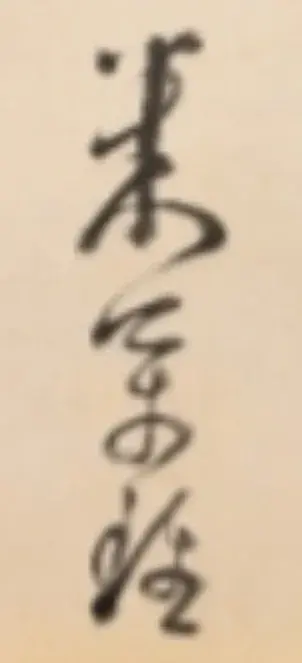
米万钟
Mi Wanzhong (January 12, 1570 – 1631), courtesy name Zhongzhao and art names Youshi and Haidian Yuzhang, was a native of Wanping County, Shuntian Prefecture (present-day Beijing), holding military registry in the Embroidered Uniform Guard, with ancestral roots in Anhua County, Qingyang Prefecture, Shaanxi (present-day Qingcheng County, Gansu Province). A descendant of the renowned Northern Song calligrapher and painter Mi Fu,…
Mi Wanzhong (January 12, 1570 – 1631), courtesy name Zhongzhao and art names Youshi and Haidian Yuzhang, was a native of Wanping County, Shuntian Prefecture (present-day Beijing), holding military registry in the Embroidered Uniform Guard, with ancestral roots in Anhua County, Qingyang Prefecture, Shaanxi (present-day Qingcheng County, Gansu Province). A descendant of the renowned Northern Song calligrapher and painter Mi Fu, he was an outstanding calligrapher, painter, writer, and landscape architect during the Wanli, Tianqi, and Chongzhen reigns of the Ming dynasty, rising to the position of Junior Minister of the Court of the Imperial Stud. Mi passed the imperial examination as a metropolitan graduate (jinshi) in 1595, serving successively as magistrate of Yongning and Liuhe. During his tenure in Liuhe, he reduced taxes and labor service, dredged waterways, and overturned judicial miscarriages, earning praise as the premier virtuous official of the capital hinterland. He later served as director in the Ministry of Works, Surveillance Commissioner of Jiangxi, and Surveillance Commissioner of Shandong, culminating in his appointment as Junior Minister of the Court of the Imperial Stud. In 1615, while managing the Shenmu Imperial Timber Yard, he contributed to compiling Gongbu Changku Xuzhi, establishing administrative regulations for imperial timber storage. In 1625, his unyielding integrity led to dismissal by the eunuch faction of Wei Zhongxian; he was rehabilitated after the accession of Emperor Chongzhen and died in office. Renowned for his refined taste and passion for collecting strange stones, he was called Master Youshi ("Friend of Stones") and designed three renowned private gardens in Beijing: Shao Garden, Man Garden, and Zhan Garden. His large-character calligraphy possessed vigorous momentum, earning him acclaim alongside Dong Qichang as "Dong of the South and Mi of the North" and membership among the Four Great Calligraphers of the Late Ming. He authored Zhuanli Kaowu and Chengdantang Ji.
Born on the seventh day of the twelfth lunar month into a hereditary military officer family of the Embroidered Uniform Guard in Wanping, receiving a thorough classical Confucian education.
Passed the provincial examination in Shuntian Prefecture as a provincial graduate (juren) and entered the Directorate of Education, studying under Director Ye Xianggao.
Passed the metropolitan civil examination in the yiwei year, entering the Ming civil service and taking office as magistrate of Yongning and subsequently Liuhe.
Equalized corvee duties, abolished illicit surcharges, and redressed wrongful convictions in Liuhe, leading grateful locals to erect an ancestral shrine honoring him as a premier virtuous official.
Constructed his famous private estate Shao Garden in scenic Haidian, channeling mountain springs into artificial lakes, which attracted poetic tributes from across the realm.
Promoted to vice director in the Ministry of Works to manage the Shenmu Timber Yard, standardizing imperial lumber storage and co-authoring Gongbu Changku Xuzhi.
Elevated to assistant surveillance commissioner and then surveillance commissioner of Jiangxi, later transferred to Shandong, conducting circuit tours with incorruptibility and vigilance.
As eunuch dictator Wei Zhongxian seized state power, Mi refused compliance and was impeached by censor Ni Wenhuan, retreating to his capital garden to appreciate stones in quiet retirement.
With Emperor Chongzhen dismantling the eunuch faction, Mi was formally exonerated and restored to office as Junior Minister of the Court of the Imperial Stud.
Passed away while serving as Junior Minister of the Court of the Imperial Stud at the age of sixty-two, leaving behind numerous stone inscriptions, paintings, calligraphy, and literary collections.
Mi Wanzhong was born on January 12, 1570 (the seventh day of the twelfth lunar month in the third year of the Longqing reign) in Wanping, Beijing. His family originated from Anhua County in Qingyang Prefecture, Shaanxi, and held hereditary military officer status in the Shuntian Embroidered Uniform Guard due to ancestral military merits, tracing their descent to the Northern Song calligrapher and painter Mi Fu. His father Mi Yu served as a company commander (baihu) in the Embroidered Uniform Guard, while his elder brother Mi Wanchun passed the military examinations to become a garrison commander at Tongzhou, endowing the family with both civil and martial distinction.
From childhood, Mi not only studied Confucian classics and standard histories, but also read broadly in Buddhist and Daoist texts and developed an early connoisseurship of epigraphy, stelae, and ancient curios. Naturally gifted and possessing strong calligraphic brushwork, he passed the Shuntian provincial examination in 1594 (the twenty-second year of the Wanli reign). He soon entered the Directorate of Education (Guozijian) in the capital, where his exceptional character and scholarly prowess earned deep admiration from Director of Studies Ye Xianggao. The following year, Mi passed the metropolitan examination in 1595 (the twenty-third year of the Wanli reign) as a jinshi at twenty-six, launching an illustrious official and artistic career.
Following his examination success, Mi was initially appointed magistrate of Yongning in Henan, where he investigated bandits and comforted displaced peasants. Soon after, he was transferred to Liuhe County in Yingtian Prefecture, South Zhili. Liuhe occupied a strategic transport choke point north of Nanjing, subject to heavy post-station corvee demands, crushing tax burdens, and accumulated bureaucratic malpractices. Upon arrival, Mi initiated decisive reforms, resurveying agricultural land, auditing household registers, and severely penalizing local bullies who cornered tax grain and corrupt clerks who embezzled public funds.
He promoted low taxes and light corvee, established price-stabilizing granaries for famine relief, and oversaw dredging of primary irrigation waterways and flood-discharge sluices, securing dependable harvests across tens of thousands of mu. Mi administered justice with incisive clarity, overturning numerous wrongful verdicts and freeing innocents from lingering incarceration. Local citizens erected living shrines and inscribed stele in his honor. Liuhe was famous for producing naturally patterned Yuhua pebbles; in his leisure hours, Mi collected and cataloged them, actively protecting local pebble-gatherers from extortion, directly fostering the regional pebble market. Nanjing officials lauded him as the premier virtuous official of the capital hinterland.
In the late Wanli reign, Mi was promoted into the Ministry of Works, serving as secretary and vice director in the Bureau of Construction, and in 1615 (the forty-third year of the Wanli reign) was tasked with overseeing the capital's Shenmu Timber Yard. The Shenmu Timber Yard managed the reception, preservation, and allocation of colossal imperial timber and precious stonework required for repairing imperial palaces and mausoleums, handling massive state expenditures. Mi inspected the warehouses in person, examined accounts, and clamped down on theft and illicit sales. Working with colleagues, he compiled the meticulous Gongbu Changku Xuzhi, standardizing operational and inventory protocols for official Ming lumber facilities.
In his hours away from public duty, Mi channeled his artistic brilliance into garden design. In the northwestern suburbs of Beijing at Haidian, a region blessed with rich spring waters, he constructed his celebrated private estate Shao Garden, borrowing its name from the idiom that all the waters of Haidian formed but a single ladle (shao). Shao Garden followed the natural contour of the watercourses, channeling springs from Yuquan Mountain into open ponds spanned by white stone bridges and water pavilions, recreating the ambiance of Jiangnan water towns. He also built Man Garden east of Jishuitan at Deshengmen and Zhan Garden along the western wall of the Imperial City. All three gardens bordered waterways and borrowed panoramic views of the Western Hills, becoming cultural sanctuaries where late Ming literati gathered to compose poetry and discuss painting.
In subsequent years, Mi was transferred to key regional administrative posts, serving as assistant surveillance commissioner and then surveillance commissioner of Jiangxi, directing provincial judicial affairs and discipline. He enforced laws with rigor tempered by mercy, eliminated corruption among prison wardens, and redressed significant judicial miscarriages, bringing disciplined order to Jiangxi. He was subsequently appointed surveillance commissioner of Shandong, supervising land and water coastal defenses and resettling displaced refugees with outstanding administrative results.
During the Tianqi reign, palace eunuch Wei Zhongxian usurped state power, organized a faction, and ruthlessly persecuted Donglin scholars and honest courtiers. Upright and uncompromising, Mi detested the corrupt eunuch dominance and refused to kowtow or build living shrines for Wei. In 1625 (the fifth year of the Tianqi reign), eunuch partisan and censor Ni Wenhuan fabricated charges regarding border defense funds to launch a malicious impeachment against Mi. Mi was stripped of his offices and reduced to commoner status. Facing adversity with composed tranquility, Mi departed office and returned to Man Garden in Beijing, passing his days caressing unique stones and wielding his calligraphy brush in artistic seclusion.
In 1628 (the first year of the Chongzhen reign), Emperor Chongzhen ascended the throne, swiftly dismantled Wei Zhongxian's eunuch clique, and ordered nationwide rehabilitation of wronged officials. Mi was officially exonerated and summoned back to court, receiving appointment as Junior Minister of the Court of the Imperial Stud, where he oversaw imperial horse breeding and military carriage manufacturing.
Though approaching sixty, Mi discharged his duties with tireless dedication, reforming abuses in pasture management and remount distribution. In 1631 (the fourth year of the Chongzhen reign), Mi fell ill while serving in office. One morning, he arose, asked his attendants for water to wash his hands and rinse his mouth, and spent considerable time gently caressing two of his favorite rocks. He then sat upright in his chair and passed away peacefully at sixty-two. His demise prompted deep mourning among court officials and literati throughout the country.
During his early career as county magistrate, Mi exhibited remarkable administrative talent. When governing Liuhe in South Zhili, he faced an area recovering from conflict where gentry monopolized land and commoners suffered under heavy extractions. Mi personally conducted land surveys and dismantled entrenched malpractices such as proxy tax burdens and fraudulent land evasions. He abolished excessive silver wastage fees and unpaid labor service, incorporating corvee duties proportionally into agricultural land levies to relieve impoverished households.
Liuhe lay in the lower reaches of the Chu River, vulnerable to summer waterlogging. Mi inspected embankments, recruited laborers to build dozens of li of stone dikes, and dredged runoff channels, transforming flood hazards into irrigation resources. In the courtroom, he investigated ambiguous cases by secretly visiting local villages, exonerating dozens of defendants convicted under torture. When his tenure concluded, thousands of tearful citizens blocked his departure route to express gratitude, founding ancestral shrines in his honor, and high provincial officials reported him as the premier virtuous official of the capital hinterland.
While serving in the Ministry of Works supervising the Shenmu Timber Yard, Mi oversaw one of the capital's most sprawling supply establishments. In the mid-to-late Ming dynasty, immense nanmu, pine, and fir trees felled in southwestern mountains were transported to Beijing, covering storage yards spanning dozens of li with tens of thousands of giant logs. Corrupt clerks routinely colluded with garrison officers to steal and substitute lower-grade wood.
Mi instituted a stringent four-phase inspection system encompassing receiving, storage, dispatch, and verification. He registered every timber according to species, origin, age, dimension, and physical properties into dedicated ledgers, implementing cradle-to-grave accounting control that eradicated embezzlement. In 1615 (the forty-third year of the Wanli reign), he coordinated the compilation of Gongbu Changku Xuzhi, documenting materials, storage safeguards, and procurement quotas across the five imperial storehouses, which became an official administrative manual for the Ministry of Works.
Mi enjoyed an exalted reputation in classical Chinese garden architecture, regarded as a supreme master of late Ming garden design. Skillfully exploiting the natural topography and abundant springs of Beijing's northwestern suburbs, he directed the construction of the renowned Shao Garden. Spanning more than one hundred mu, Shao Garden broke away from the rigid symmetry and enclosed containment of traditional northern gardens, incorporating Jiangnan design principles centered on expansive waterways and borrowed natural scenery.
He channeled waters from the Wanquan River into a broad lake adorned with covered bridges, lakeside galleries, waterside pavilions, and carefully stacked rockeries, planting thousands of lotus blossoms and willow trees. Visitors inside the pavilions could view reflections of the Western Hills and the pagoda of Yuquan Mountain mirrored in the waters. Mi composed Shaoyuan Ji and painted Shaoyuan Xiu Tu, inspiring poetic endorsements from literary luminaries like Li Rihua, Yuan Hongdao, and Jiao Hong. The original grounds of Shao Garden now form a core section of Peking University campus, occupying a pivotal transitional place in Chinese landscape design.
Possessing an obsessive passion for stones, Mi called himself Master Youshi ("Friend of Stones"), trekking across mountains throughout his life to collect remarkable natural rocks, amassing a private collection unmatched in northern China. During his magistrate tenure in Liuhe, he collected and documented smooth and colorful Yuhua pebbles, penning poetic encomiums and creating illustrated catalogs that elevated pebble collecting into a mainstream scholar's pursuit.
In the mountains of Fangshan near Beijing, Mi discovered a colossal natural grey stalagmite eight meters long, two meters wide, four meters high, and weighing tens of tons, resembling a giant lingzhi mushroom with intricate surface fissures. Overjoyed, he inscribed the name "Qingzhixiu" ("Crest of Azure Ganoderma") upon it. He spent massive private funds hiring hundreds of laborers, oxen, and horses, constructing iced winter sledways to haul the monolith toward the capital. However, the crushing transport expenses exhausted his household fortune, leaving the stone stranded along the public highway at Liangxiang in Fangshan, where contemporaries humorously dubbed it the "Fortune-Wasting Stone." During the Qianlong reign of the Qing dynasty, the Qianlong Emperor marveled at this masterpiece of nature and ordered it transported into the Qingyi Garden (present-day Summer Palace) before the Hall of Joyful Longevity, where it remains one of the palace's most celebrated treasures.
Mi achieved distinguished renown in calligraphy, celebrated alongside Dong Qichang as "Dong of the South and Mi of the North," and ranked with Dong Qichang, Xing Tong, and Zhang Ruitu among the Four Great Calligraphers of the Late Ming. His calligraphy inherited the running and cursive traditions of his Northern Song ancestor Mi Fu, characterized by vigorous brushwork, resolute energy, and dramatic modulation, especially excelling in large-scale architectural signboard characters.
He crafted specialized brushes blending white goat hair with coarse hemp fibers, executing broad signboard script with sweeping power and majestic grandeur that projected an aura of unconstrained heroism. His small regular script and draft cursive possessed mature classical elegance steeped in Wei and Jin traditions. The Palace Museum, the National Museum of China, and the Suzhou Museum preserve his genuine masterpieces, including his Poem on Liu Jingmeng's Eightieth Birthday Scroll, Poem on Ascending Mount Tai Scroll, and Cursive Verse Scroll. Mi authored Zhuanli Kaowu, Chengdantang Wenji, and Shishi, contributing substantial treatises to epigraphy and calligraphic theory.
FIGURES ASSOCIATED WITH THIS DYNASTY