Birth into Theatrical Lineage
Born in Beijing into an elite theatrical family; grandson of Mei Qiaoling, one of the "Thirteen Icons of the Tongzhi and Guangxu Reigns."
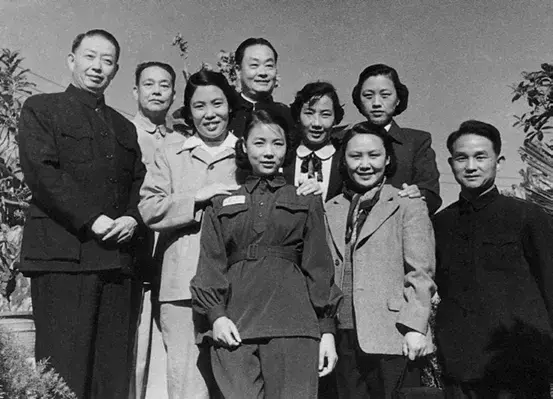
梅兰芳
Mei Lanfang (梅兰芳, 1894–1961), original name Mei Lan and courtesy name Wanhua, was an ancestral native of Taizhou, Jiangsu Province, born in Beijing. He was the most celebrated performing artist in the history of Peking Opera, founder of the classical Mei School of female impersonation (Dan role), and the acknowledged leader of the legendary "Four Great Dan." Born into an illustrious theatrical lineage, Mei began his formal…
Mei Lanfang (梅兰芳, 1894–1961), original name Mei Lan and courtesy name Wanhua, was an ancestral native of Taizhou, Jiangsu Province, born in Beijing. He was the most celebrated performing artist in the history of Peking Opera, founder of the classical Mei School of female impersonation (Dan role), and the acknowledged leader of the legendary "Four Great Dan." Born into an illustrious theatrical lineage, Mei began his formal apprenticeship at eight under masters such as Wu Lingxian and Qin Zhifen, making his stage debut at ten. Synthesizing the refined elegance of Kunqu opera with the dramatic vigor of Peking Opera, he revolutionized singing, enunciation, stage choreography, costuming, and facial makeup. Elevating female roles from supporting status to the centerpiece of Chinese theatrical drama, he refined and performed classical masterpieces including Farewell My Concubine, The Drunken Concubine, The Heavenly Maiden Scatters Blossoms, and Mu Guiying Takes Command, creating the harmonious, dignified, and serene aesthetic of the Mei School. Mei rendered historic contributions to introducing traditional Chinese dramatic art to global audiences. During the Republican era, he led celebrated performance tours to Japan, the United States, and the Soviet Union, captivating international audiences and leading theorists such as Konstantin Stanislavski and Bertolt Brecht. His stagecraft became recognized globally alongside Stanislavski's realism and Brecht's epic theater as one of the world's three premier dramatic performance systems. During the Second Sino-Japanese War, he resided in seclusion in Hong Kong and Shanghai, growing a mustache and refusing to perform for Japanese occupation forces, preserving unblemished patriotic integrity. Following the founding of the People's Republic of China, Mei served as founding director of the National Peking Opera Company and the Chinese National Academy of Traditional Arts. His artistic mastery and moral character cemented his stature as a cultural icon of modern China.
Born in Beijing into an elite theatrical family; grandson of Mei Qiaoling, one of the "Thirteen Icons of the Tongzhi and Guangxu Reigns."
Made his formal stage debut at age ten at the Guanghe Pavilion in Beijing, performing as the Weaver Girl in The Heavenly Couple.
Performed for the first time at Shanghai's Dangui Theater, achieving national acclaim and elevating the Dan role to parity with male roles.
Created and staged innovative historical and contemporary plays including Chang'e Flies to the Moon and Lin Daiyu Buries Flowers.
Led a theatrical troupe to perform at the Imperial Theatre in Tokyo, inaugurating international tours of Peking Opera.
Voted premier of the "Four Great Dan" in a nationwide Beijing press poll, securing undisputed supremacy on the theatrical stage.
Toured San Francisco, Chicago, Washington, and New York for six months, receiving honorary doctorates from Pomona College and USC.
Performed in Moscow and Leningrad, engaging with Stanislavski and Brecht and establishing the Mei Lanfang System in world theater theory.
Lived in seclusion in Hong Kong and Shanghai following the Pacific War outbreak, growing a mustache and refusing to perform for occupation authorities.
Attended the First Plenary Session of the CPPCC; appointed President of the Academy of Traditional Arts and National Peking Opera Company.
Passed away in Beijing at the age of sixty-six; honored with a state funeral led by Premier Zhou Enlai and interred at Mount Wanhua.
Mei Lanfang was born on October 22, 1894 (the twenty-fourth day of the ninth month in the twentieth year of the Guangxu reign) in a courtyard residence along Li Tieguai Slanted Street outside Qianmen in Beijing. His family had practiced traditional theater for four generations: his grandfather Mei Qiaoling was a premier Dan actor immortalized among the "Thirteen Icons of the Tongzhi and Guangxu Reigns"; his uncle Mei Yutian was chief jinghu accompanist to Tan Xinpei; and his father Mei Zhufen was a respected female impersonator. Orphaned of his father at four and his mother at fourteen, Mei endured a youth marked by poverty.
At eight, Mei began traditional apprenticeship. His opening tutor, Zhu Xiaoxia, initially dismissed him as possessing dull eyes and clumsy speech, questioning whether he was suited for the stage. Determined to succeed, Mei undertook rigorous self-discipline. To overcome eye dullness, he trained his vision for years by following the soaring flight of pigeons across the sky, tracking the darting movements of goldfish in garden ponds, and watching flickering candlelight in darkness, ultimately developing luminous, expressive eyes capable of conveying exquisite emotion.
At nine, Mei apprenticed under the celebrated Qingyi master Wu Lingxian, memorizing foundational classical pieces such as The Second Entrance to the Palace and Three Mother's Lessons. Enduring winter frost and summer heat, he mastered enunciation, footwork, and flowing stage deportment. In August 1904, the ten-year-old Mei debuted at the Guanghe Pavilion in Beijing, performing the Kunqu piece The Heavenly Couple as the Weaver Girl alongside Tian Quankui, earning immediate professional acclaim.
In subsequent years, Mei studied under master actors Qin Zhifen and Hu Ergeng to master Huadan techniques, and trained under Ru Laiqing in martial acrobatics. This comprehensive training allowed him to synthesize the vocal gravity of Qingyi with the expressive vivacity of Huadan and the dynamic athleticism of Daomadan, preparing the technical ground for his creation of the versatile Huashan role type.
In his teens, Mei joined the famed Xiliancheng training troupe, broadening his repertoire through daily performance. In the autumn of 1913, the nineteen-year-old Mei traveled south to Shanghai to perform at the Dangui Theater in the International Settlement, marking a historic turning point in his career and modern Peking Opera.
In northern playhouses, the stage was dominated by elderly male roles (Laosheng) led by Tan Xinpei, with female roles confined to rigid conventions. In cosmopolitan Shanghai, influenced by modern visual arts, audiences demanded dynamic staging and compelling drama. In Shanghai, while performing traditional pieces like The Gathering at the Tower, Mei incorporated modern electric lighting and stage design, concluding his engagement with a performance of Muke Fortress that captivated the city, earning him acclaim as the premier star of the Shanghai stage.
The Shanghai experience broadened Mei's artistic vision. Returning north, supported by dramatist Qi Rushan and patron Feng Gengguang, Mei launched a comprehensive reform of female stagecraft. Transcending the rigid standing posture of conventional Qingyi, he integrated expressive choreographic movements with classical singing, creating the versatile "Huashan" role type. Within a decade, he premiered modern and costume plays including Chang'e Flies to the Moon, Lin Daiyu Buries Flowers, A Strand of Hemp, and The Heavenly Maiden Scatters Blossoms, elevating the female role to the pinnacle of Chinese theater.
In producing these new works, Mei revolutionized stage aesthetics. Examining classical paintings with Qi Rushan, he reformed traditional hairstyles, creating graceful historical coiffures. Collaborating with jinghu master Xu Lanyuan and Wang Shaoqing, he introduced the erhu into the accompaniment orchestra, enriching melodic warmth and captivating audiences across China.
In the spring of 1919, Mei led his company to Japan, staging historic performances at Tokyo's Imperial Theatre. Japanese theatrical critics and the public were enchanted, with renowned theorist Tsubouchi Shoyo praising Mei's art as the ultimate embodiment of Oriental beauty. This tour marked the first time Chinese theatrical drama was presented abroad as a sophisticated classical art form.
In 1927, in a nationwide public press poll organized by Beijing's Shuntian Times, Mei received the highest vote count, being proclaimed foremost of the "Four Great Dan" alongside Shang Xiaoyun, Cheng Yanqiu, and Xun Huisheng. During these years, Mei perfected masterpieces including Farewell My Concubine, The Drunken Concubine, The Cosmic Sword, Xi Shi, and The Goddess of the Luo River, establishing the mature Mei School defined by balanced serenity and graceful dignity.
In 1930, Mei embarked on a six-month tour of the United States, performing in San Francisco, Chicago, Washington, and on Broadway in New York. Transcending linguistic barriers through expressive dance and symbolic gesture, Mei enchanted American audiences and critics. Pomona College and the University of Southern California conferred honorary Doctor of Letters degrees upon him. In 1935, Mei toured the Soviet Union, performing in Moscow and Leningrad. During dialogues with Konstantin Stanislavski and Bertolt Brecht, international critics recognized the "Mei Lanfang Theatrical System" alongside Stanislavski's and Brecht's models as the world's three great dramatic performance systems.
During his tours of America and the Soviet Union, Mei brought not merely performance fragments, but a comprehensive introduction to Chinese aesthetics. Transporting crates of opera masks, costume models, and multilingual program brochures, he delivered lectures demonstrating the symbolic principles of Chinese theater, dispelling Western preconceptions of Chinese backwardness.
Following the outbreak of the Second Sino-Japanese War in 1937, Beijing and Shanghai fell to Japanese forces. Resisting collaborationist overtures, Mei displayed steadfast patriotism. In 1938, he moved his family into quiet seclusion in Hong Kong, withdrawing entirely from public life.
When Japanese forces captured Hong Kong in December 1941, military commanders repeatedly pressured Mei to perform in support of occupation rule. Demonstrating unyielding resolve, Mei grew a mustache, declaring that advanced age and declining vocal strength prevented him from performing. In 1942, to escape Japanese custody, he secretly returned to Shanghai, secluding himself in his residence on Masenet Road.
During eight years of wartime occupation, cut off from stage income, Mei endured financial hardship with a large household. Refusing to compromise, he sold his Beijing residence and pawned family jewels and costumes, supporting his family by selling his traditional landscape paintings. When puppet intelligence officers demanded his appearance at celebratory assemblies, Mei deliberately had himself injected with typhoid vaccine, producing incapacitating fevers that forced Japanese officers to withdraw. His moral resolve during wartime occupation stands as a glorious chapter in modern Chinese cultural history.
While living in Shanghai, Mei secretly aided impoverished actors and anti-Japanese patriots. Having his wife pawn family valuables, he sent food and medicine to destitute performers, encouraging colleagues to maintain moral dignity until national liberation arrived.
Following the victory over Japan in August 1945, jubilant crowds celebrated in Shanghai. Weeping with joy, Mei shaved his mustache and returned to the stage at the Majestic Theatre. When the master reappeared under theatrical spotlights after eight years of silence, capacity crowds cheered with thunderous ovations.
On the eve of the founding of the People's Republic of China in 1949, Mei was invited to attend the First Plenary Session of the Chinese People's Political Consultative Conference, joining state leaders atop Tiananmen Gate for the proclamation of the Republic. The state honored him with premier leadership posts, appointing him founding President of the Chinese National Academy of Traditional Arts, Director of the National Peking Opera Company, and Vice Chairman of the Chinese Theater Association.
In his final decade, Mei dedicated his energies to socialist cultural development. In 1952, he led delegations to the World Peace Congress in Vienna; in 1953, he performed for Chinese volunteers in Korean front-line shelters; and he toured nationwide industrial centers. In 1959, at sixty-five, Mei joined the Chinese Communist Party, premiering his final grand masterpiece, Mu Guiying Takes Command. On August 8, 1961, Mei passed away from a heart attack in Beijing at sixty-six. Premier Zhou Enlai chaired his state funeral committee, and tens of thousands of citizens escorted the master to his final resting place on Mount Wanhua in the Western Hills.
Mei Lanfang's foremost artistic accomplishment was founding the classical Mei School of Peking Opera.
Prior to his innovations, female roles were largely confined to singing while standing motionless with folded hands. Synthesizing the vocal depth of Qingyi with the physical agility of Huadan and martial Dan roles, Mei created the versatile "Huashan" role type, achieving a harmonious synthesis of singing, dancing, acting, and mime. Mei School vocal delivery was defined by balanced poise and resonant sweetness, avoiding exaggerated vocal acrobatics in favor of serene perfection. The Mei School became the most influential tradition in Peking Opera history, establishing a timeless benchmark of Chinese aesthetic expression.
In performance technique, Mei systematized resonance and enunciation. He developed effortless vocal production, insisting on crisp articulation and unhurried delivery so that lyrics conveyed literary nuance alongside vocal beauty. His floor-reclining drunken movements in The Drunken Concubine and sword dance in Farewell My Concubine became canonical paradigms for subsequent generations.
Amid early twentieth-century cultural modernization, Mei was the foremost innovator of traditional theatrical staging.
Collaborating with dramatist Qi Rushan, he expanded dramatic themes beyond conventional romance to stage patriotic epics like The Battle Against Jin Troops, Everlasting Sorrow, and Mu Guiying Takes Command. He introduced modern lighting and decorative backdrops to traditional stages, redesigned classical hairstyles, and integrated ancient Chinese dances using ribbons, swords, and horsehair whisks into opera choreography, transforming Chinese performance into an expressive visual spectacle.
In musical orchestration, Mei broke past the thin texture of traditional accompaniment. Introducing the two-stringed erhu into the operatic ensemble with melodies arranged by Xu Lanyuan and Wang Shaoqing, he enriched vocal resonance. This innovation was adopted across major Peking Opera schools, becoming standard instrumentation in modern performance.
In modern cultural diplomacy, Mei was the pioneering ambassador who elevated Chinese theater onto premier world stages.
Through his tours to Japan in 1919, North America in 1930, and the Soviet Union in 1935, Mei meticulously prepared international presentations. Accompanied by multilingual program notes and stagecraft exhibitions, he presented Farewell My Concubine and The Drunken Concubine to global audiences, elucidating the symbolic principles of Chinese theater and transforming international perceptions of Chinese culture.
In his American tour, tickets sold out across Broadway, and Hollywood celebrities flocked to his performances. Beyond physical artistry, he delivered academic lectures at American universities on stylized staging, prompting Western scholars to examine Chinese theater as a sophisticated classical philosophy.
In twentieth-century dramatic theory, Mei's artistry established the foundational Asian paradigm of world theatrical practice.
During his 1935 Moscow performances, Konstantin Stanislavski and Bertolt Brecht were captivated by Mei's rhythmic precision and stylized abstraction. Stanislavski praised his synthesis of emotional truth and formal grace, while Brecht drew inspiration to formulate his famous concept of the "alienation effect" (Verfremdungseffekt). The symbolic conventions of Chinese theater were codified by international scholarship as the "Mei Lanfang Performance System," standing alongside the Stanislavski and Brechtian systems as the three pillars of modern dramatic theory.
The core of this system dispensed with realistic scenery, conjuring vast armies and distant rivers through stylized gestures and vocal conventions upon an empty stage. Mei demonstrated to global theater the transcendent imaginative freedom of Chinese performance.
In constructing his comprehensive performance system, Mei Lanfang passionately advocated integrating opera with other classical Chinese artistic disciplines.
From his youth, Mei perceived that stage postures and physical compositions were inextricably linked to the aesthetics of traditional Chinese calligraphy and brush painting. He studied under masters Qi Baishi and Chen Banding, meticulously practicing floral subjects and fine-brush paintings of classical beauties (gongbi shinü), absorbing the balance of ink tones and linear rhythms to inform his stage framing. Mei translated the graceful poise of painted maidens into walking steps and expressive glances on stage, undertaking a rigorous systematic refinement of dan hand gestures.
Collaborating with scholar Qi Rushan, Mei Lanfang codified fifty-three distinct and nuanced dan hand gestures—ranging from holding flowers and shielding from sunlight to delicate finger pointing and cloud-turning motions—imbuing the performer's hands with rich emotional vocabulary. Through this aesthetic breakthrough, the physical vocabulary of the dan role transcended rigid formulas, transforming every gesture into a flowing scroll of Chinese fine-brush art and elevating Peking Opera's cultural refinement and visual depth.
Beyond his theatrical genius, Mei was revered as a model of unyielding national patriotism.
Following the outbreak of the war of resistance against Japan, Mei grew a mustache and withdrew from the stage. Enduring economic hardship, utility cutoffs, and death threats, he supported his household by painting rather than submitting to occupation demands, even deliberately inducing fevers through medical injections to evade collaborationist galas. His courageous resistance granted actors elevated societal respect, providing an enduring symbol of defiance for the nation during wartime occupation.
His stance became a national symbol of cultural defiance. Following national victory, his declaration that an artist must never compromise artistic conscience during national crisis became a timeless moral maxim for Chinese cultural circles.
Playwright Tian Han penned in In Memory of Comrade Mei Lanfang: "In Western lands, distinguished men removed their hats in reverence to the master. Weeping tears in A Strand of Hemp, embodying heroism in Mulan Goes to the War. Growing a mustache in wartime resistance to preserve honor, creating new art in the Republic as Mu Guiying took command. An epochal artist opened new paths, and ten thousand weep before his monument."
Konstantin Stanislavski remarked: "Every gesture and every glance of Mei Lanfang upon the stage is a distillation of precise action and rhythmic grace. He transformed ancient traditions into the most exquisite theatrical reality, creating a miracle in the history of world performance."
Theatrical scholar Gong Hede of the Chinese Academy of Traditional Arts observed: "Mei Lanfang is an insurmountable peak in modern Chinese cultural history. He not only elevated female roles to supreme leadership on the theatrical stage through his consummate art, but with inclusive vision and noble patriotism established an Eastern theatrical system standing alongside Stanislavski and Brecht, elevating Chinese Peking Opera into the supreme pantheon of global civilization."
FIGURES ASSOCIATED WITH THIS DYNASTY