Birth of Mao Xiang
Born into a distinguished bureaucratic family in Rugao, Jiangsu, displaying precocious literary memory from childhood.
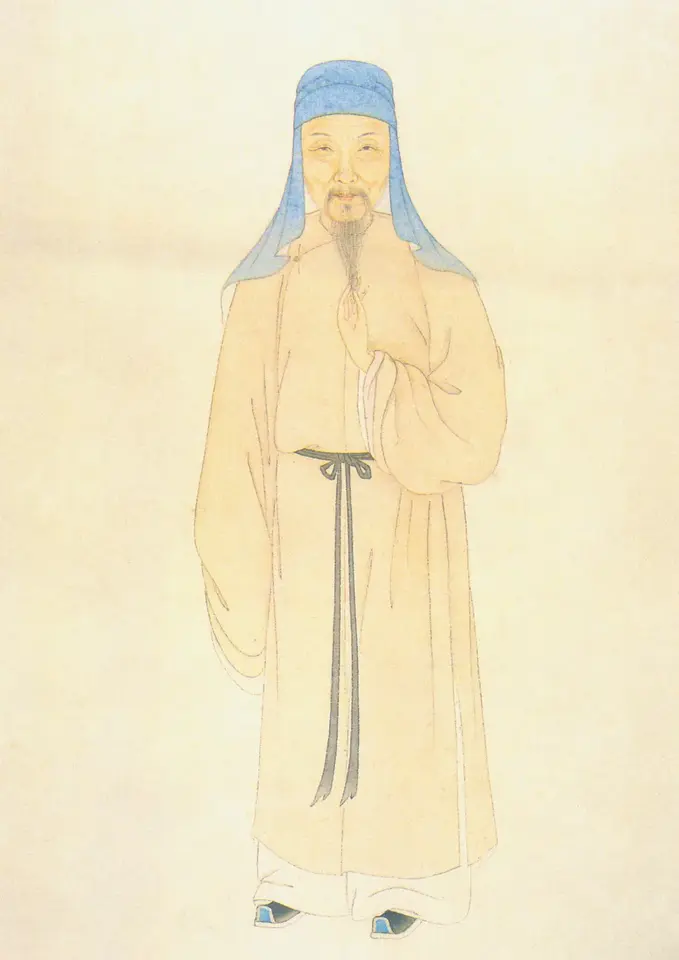
冒襄
Mao Xiang (April 27, 1611 – 1693), courtesy name Pijiang, art name Chaomin (and later Puchao), native of Rugao, Jiangsu, was a celebrated essayist, calligrapher, cultural patron, and loyalist recluse of the Ming-Qing transition. Son of the Ming vice judicial commissioner Mao Qizong, Mao was celebrated alongside Fang Yizhi, Chen Zhenhui, and Hou Fangyu as one of the renowned "Four Young Gentlemen of the Late Ming" (*Mingmo Si…
Mao Xiang (April 27, 1611 – 1693), courtesy name Pijiang, art name Chaomin (and later Puchao), native of Rugao, Jiangsu, was a celebrated essayist, calligrapher, cultural patron, and loyalist recluse of the Ming-Qing transition. Son of the Ming vice judicial commissioner Mao Qizong, Mao was celebrated alongside Fang Yizhi, Chen Zhenhui, and Hou Fangyu as one of the renowned "Four Young Gentlemen of the Late Ming" (Mingmo Si Gongzi). A literary prodigy praised in childhood by Dong Qichang as a reincarnation of the Tang genius Wang Bo, Mao became a central organizer of the Restoration Society (Fu She), directing public debate against corrupt cliques and signing the famous Manifesto Against Disorder in the Secondary Capital (Liudu Fangluan Gongjie) in 1639. Following the Manchu conquest of 1644, Mao withdrew into deep seclusion at his ancestral estate, Shuihui Garden (Shuihui Yuan), providing sanctuary to impoverished scholars and loyalist orphans while spurning repeated imperial summonses from the Qing dynasty. His celebrated autobiographical memoir, Reminiscences of the Plum Shadow Nunnery (Yingmei'an Yiyu), established the elegiac memoir genre in classical Chinese prose, while his collected works include Puchao Shiwen Ji and Jiecha Huichao.
Born into a distinguished bureaucratic family in Rugao, Jiangsu, displaying precocious literary memory from childhood.
Published his first poetry collection Xiangliyuan Oucun at age fourteen, earning lavish praise and a personal preface from Dong Qichang.
Formed a pact with Zhang Mingbi and organized the Fu Society gathering at Peach Leaf Ferry in Nanjing to denounce eunuch cliques.
Jointly endorsed the Liudu Fangluan Gongjie drafted by Wu Yingji, mobilizing public condemnation against Ruan Dacheng.
Redeemed and married the celebrated Qinhuai artist Dong Xiaowan, bringing her to live in literary companionship at Shuihui Garden.
Following the fall of Beijing and persecution by Ruan Dacheng under Southern Ming rule, fled southward into Zhejiang amidst catastrophic war.
Mourned the early death of Dong Xiaowan, channeling his sorrow into the immortal four-thousand-word memoir Yingmei'an Yiyu.
Rejected lucrative bureaucratic appointments forwarded by former colleagues such as Chen Mingsha, choosing loyalist seclusion.
Formally declined nomination to the prestigious Boxue Hongci examination and secluded scholar categories under Emperor Kangxi.
Died in serene poverty in his rural studio in Rugao at the age of eighty-three, remembered as a model of cultural fidelity.
Mao Xiang was born into an illustrious bureaucratic lineage in Rugao, southern Zhili, which had produced distinguished scholar-officials for centuries. His grandfather Mao Mengling served as Junior Transmission Commissioner, while his father Mao Qizong passed the metropolitan examinations and rose to Vice Judicial Commissioner of Huguang. Endowed with extraordinary literary memory, Mao was composing polished classical verse by age ten. At fourteen, he published Xiangliyuan Oucun, an anthology of poems written during his travels with his grandfather. The preeminent master Dong Qichang was so awed by the collection that he penned a commendatory preface comparing Mao to Wang Bo, prophesying that the youth would become the poetic leader of the Ming empire.
During his early adulthood, Mao embodied the romantic, chivalric spirit of late Ming literati culture. Endowed with striking good looks and charismatic wit, he was acclaimed across the Yangtze delta as the "Eminent Shadow of the Southeast." Immersing himself in philosophical debate, landscape travel, and equestrian arts, he lived the lavish life of an aristocratic scion. However, the Ming dynasty was sliding toward systemic collapse, with Jurchen armies breaching the northern frontier and peasant insurgencies erupting across the Central Plains. Compounding his anxieties, Mao suffered repeated setbacks in the civil examinations: between 1627 and 1642, he sat for the provincial trials in Nanjing six times without attaining the juren degree, fueling his bitter disappointment with the corrupt examination administration.
His lack of civil degrees did nothing to diminish Mao's immense moral authority among scholars. In 1636, Mao entered into an alliance with Zhang Mingbi and assumed a core leadership role in the Fu Society (Fu She), the premier intellectual league of late Ming scholar-officials. Forging intimate friendships with Fang Yizhi, Chen Zhenhui, and Hou Fangyu, the four were celebrated across the realm as the "Four Young Gentlemen of the Late Ming." In the summer of 1636, as surviving henchmen of the executed eunuch dictator Wei Zhongxian plotted to regain power in Nanjing, Mao convened the historic "Peach Leaf Ferry Assembly" at his rented residence in Jinling. Gathering descendants of nine noble families victimized during the eunuch purges, Mao and over a hundred scholars openly denounced the eunuch partisans, sending shockwaves through the southern capital.
In 1639, when the disgraced courtier Ruan Dacheng attempted to infiltrate metropolitan circles, the Fu Society leader Wu Yingji drafted the celebrated Manifesto Against Disorder in the Secondary Capital (Liudu Fangluan Gongjie). Mao signed and actively circulated the petition alongside Huang Zongxi and Fang Yizhi, posting it publicly at the Confucian Temple in Nanjing. The manifesto permanently discredited Ruan Dacheng in polite society, turning him into a social outcast who nursed a venomous grudge against the society's members. Mao's courageous activism established the Fu Society as a formidable extra-bureaucratic force defending public rectitude against tyrannical cliques.
In the twilight of the Chongzhen era, Mao encountered Dong Xiaowan, a Qinhuai courtesan celebrated for her refined aesthetic sensibilities, calligraphic talent, and culinary expertise. Desiring an escape from the entertainment quarters, Xiaowan dedicated herself exclusively to Mao. With the generous financial assistance of patrons Qian Qianyi and Liu Rushi, Mao redeemed Xiaowan in 1642 and brought her to Shuihui Garden in Rugao. There, beside tranquil pavilions and reflection ponds, the couple spent years curating rare chrysanthemums, concocting botanical fragrances, and collating ancient poetry in deep marital harmony.
This serene domestic idyll was shattered by the cataclysms of 1644. In March, Beijing fell and Chongzhen hanged himself; in May, the Southern Ming regime was established in Nanjing, where the opportunistic Ma Shiying appointed Ruan Dacheng as Minister of War. Ruan immediately launched vicious reprisals against Fu Society leaders, dispatching imperial guards to arrest Mao. Escaping through the protection of General Shi Kefa, Mao faced further terror when the Qing army crossed the Yangtze in 1645. Fleeing with his elderly mother and family toward Yanguan in Zhejiang, his entourage was ambushed by marauding soldiers, losing over twenty servants and the entirety of their ancestral heirlooms. During the ordeal, Mao fell gravely ill with dysentery; Dong Xiaowan nursed him selflessly day and night, saving his life at the expense of her own frail health. In the spring of 1651, Xiaowan died of exhaustion and consumption at age twenty-seven. Devastated, Mao authored the monumental four-thousand-word elegiac masterpiece Reminiscences of the Plum Shadow Nunnery (Yingmei'an Yiyu), transforming his personal grief into an enduring monument of late Ming lyricism.
Following the establishment of Qing rule, imperial ministers sought to legitimize the new regime by coopting celebrated southern intellectuals. Chen Mingsha, a former Fu Society associate who had defected to the Qing and risen to Grand Secretary, wrote to Mao from Beijing, relaying the Prince Regent Dorgon's high regard and urging him to accept high ministerial rank. Mao rejected the offer with cold disdain, citing chronic illness and the duty of filial devotion to his aged parents, and permanently severed ties with the collaborator. Over subsequent decades, regional viceroys repeatedly memorialized the throne recommending Mao as a military advisor and civil expert, but he consistently rebuffed their overtures.
In 1679, Emperor Kangxi inaugurated the prestigious Boxue Hongci (Eminent Scholars of Broad Learning) examination and issued edicts summoning retired mountain hermits to Beijing. Ranking at the top of the regional recommendation rolls, Mao faced intense pressure from the governor of Jiangsu to travel north. Mao refused to rise from his bed, feigning severe debility and choosing near-starvation over treason to the fallen dynasty.
In his final decades, Mao suffered severe financial hardship. Having depleted his wealth through famine relief and having lost ancestral estates to local bullies, he resided in a dilapidated cottage adjacent to Shuihui Garden. When famine struck Rugao, he sold his remaining heirlooms and calligraphy to operate public porridge kitchens for starving peasants. At age eighty, he spent his nights under oil lamps copying classical texts in minute regular script, selling his calligraphy at market the following morning to buy wine and rice. In 1693, Mao passed away peacefully at the age of eighty-three, universally revered as a paragon of scholarly rectitude.
Mao Xiang served as the intellectual architect and dynamic field organizer of the Restoration Society during the final decade of the Ming dynasty. Unlike contemporary literati who treated literary societies merely as clubs for examination preparation, Mao transformed the Fu Society into an ethical vanguard dedicated to reforming statecraft and checking bureaucratic predation.
His coordination of the Peach Leaf Ferry gathering and his leadership in publishing the Manifesto Against Disorder in the Secondary Capital pioneered the mobilization of public scholarly opinion in pre-modern China. By utilizing printed manifestos and mass assemblies, Mao demonstrated that civilian intellectuals could effectively check tyrannical factionalism, bequeathing a powerful legacy of principled civic courage that resonated deeply across subsequent centuries.
In classical Chinese literature, Mao Xiang's most celebrated achievement is Reminiscences of the Plum Shadow Nunnery (Yingmei'an Yiyu). This four-thousand-word masterpiece fundamentally redefined the boundaries of traditional autobiographical prose, establishing the canonical "memoir style" (yiyuti) of commemorative narrative.
Departing from the rigid formalism of funerary biographies (muzhi ming), Mao wrote with unflinching emotional authenticity, weaving intimate sensory memories of tea preparation, incense blending, and lute performance together with harrowing accounts of military flight and moral desolation. The work's profound synthesis of private erotic love and grand historical trauma directly inspired later Qing classics, notably Shen Fu's Six Records of a Floating Life (Fusheng Liuji).
Shuihui Garden, designed and expanded under Mao's direction, represents the sole surviving masterpiece of Huizhou-style water garden architecture in southeastern China. Rejecting ostentatious artificial ornamentation, Mao utilized meandering natural waterways, rustic bamboo groves, and understated whitewashed pavilions to create an environment of transcendent tranquility.
During the bloody transition between the Ming and Qing dynasties, Shuihui Garden functioned as an indispensable sanctuary for displaced loyalist scholars and political refugees. Mao constructed the "Biluo Cottage" within the grounds to enshrine his friend Dai Jian, who had starved himself to death in protest against the conquest. He also provided lifelong financial and emotional shelter for the orphaned children of fallen Donglin and Fu Society martyrs. Scholars and poets including Huang Zongxi, Qian Qianyi, Wu Weiye, and Wang Shizhen regularly assembled at the garden, transforming it into a vital redoubt that preserved Han classical scholarship during an era of ideological devastation.
Beyond his literary renown and political integrity, Mao Xiang was a devoted community philanthropist of profound compassion. During the chaotic Ming-Qing transition, devastating droughts and floods repeatedly ravaged the Jianghuai region, driving local populations into catastrophic famine. Mao repeatedly sacrificed his ancestral fortune to establish permanent porridge kitchens feeding thousands of displaced refugees daily. He financed dispensaries providing free medical consultations and herbal medicine to the impoverished, and manufactured warm winter clothing while organizing burials for exposed corpses.
Even in his impoverished twilight years after his estates were exhausted, Mao maintained an unyielding devotion to public relief. During early Kangxi famines, at over eighty years of age, he exerted himself day and night producing monumental calligraphic scrolls, exchanging all proceeds for grain to stock communal granaries. Generations of Rugao citizens revered his memory with the proverb "Master Mao preserved countless lives," setting a supreme moral benchmark for the traditional Chinese scholar-gentry.
Mao was an encyclopedic scholar whose writings traversed poetics, horticulture, zither performance, and material culture. His treatise Jiecha Huichao remains an indispensable primary source for the cultivation and brewing techniques of Yixing mountain tea, while his Xuanlu Gezhu provided the definitive stylistic classification and metallurgical analysis of Ming dynasty Xuande incense burners. In his monumental twelve-volume anthology, Collected Works of Sixty Years of Mentors and Friends (Liushinian Shiyou Shiwen Tongren Ji), he gathered the verses of over 450 contemporary scholars, creating an irreplaceable biographical archive of the seventeenth-century intellectual world.
As a calligrapher, Mao synthesized the fluid elegance of Dong Qichang with the vigorous structural discipline of Yan Zhenqing and Mi Fu. His late running-cursive and minute regular scripts discarded youthful ornamentation, achieving a lean, archaic, and austere visual power that mirrored his unyielding moral stance.
FIGURES ASSOCIATED WITH THIS DYNASTY