Birth in Xiaoshan
Born into a scholarly family in Xiaoshan County, Shaoxing Prefecture, Zhejiang, demonstrating extraordinary memorization skills under maternal guidance.
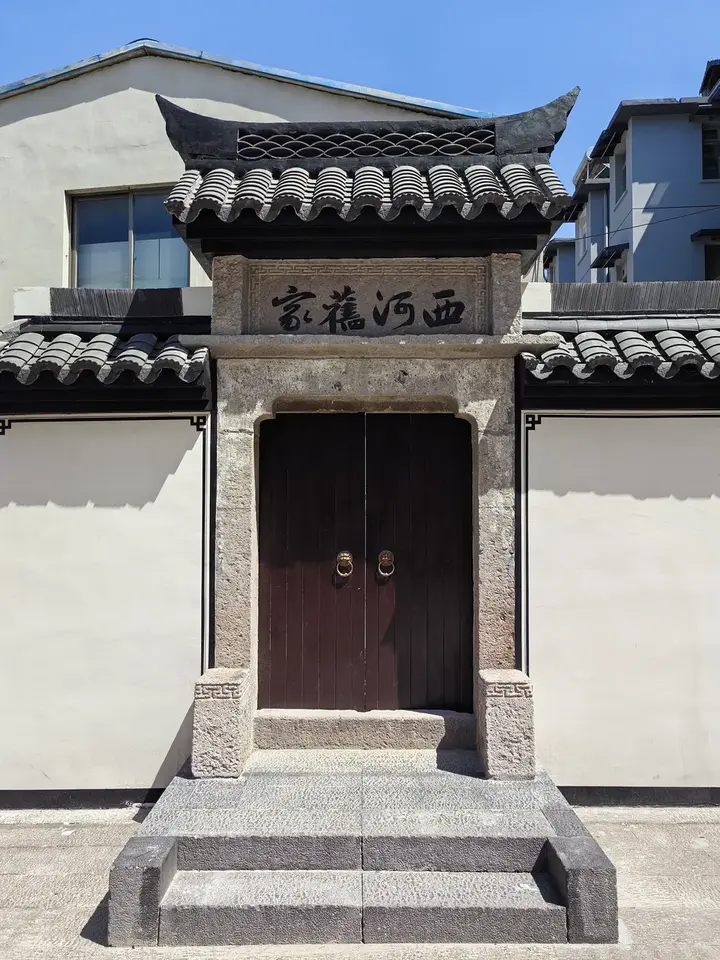
毛奇龄
Mao Qiling (1623–1716), originally named Mao Shen, courtesy name Dake, art names Xihe, Chuqing, and Wanqing, was a native of Xiaoshan County, Shaoxing Prefecture, Zhejiang. He was a celebrated classical philologist, historian, and man of letters during the early Qing dynasty, widely honored as a pioneering forerunner of evidential scholarship. Displaying extraordinary precocity in early childhood, Mao mastered the Great…
Mao Qiling (1623–1716), originally named Mao Shen, courtesy name Dake, art names Xihe, Chuqing, and Wanqing, was a native of Xiaoshan County, Shaoxing Prefecture, Zhejiang. He was a celebrated classical philologist, historian, and man of letters during the early Qing dynasty, widely honored as a pioneering forerunner of evidential scholarship. Displaying extraordinary precocity in early childhood, Mao mastered the Great Learning at age four and was recognized as an intellectual prodigy by chief examiner Chen Zilong. During the cataclysmic transition from the Ming to the Qing, he actively participated in the armed resistance of Southern Ming Prince of Lu. Following their defeat, he adopted the pseudonym Wang Yan, wandering through the wilderness for over a decade before retreating to an earthen hut in the southern hills of Xiaoshan with scholars like Shen Yuxi to immerse himself in deep study. In 1679, Emperor Kangxi summoned scholars for the Boxue Hongci special imperial examination; Mao placed in the upper second tier and was appointed Hanlin Sub-Examiner, taking up an imperial appointment to compile the History of Ming, and later served as Associate Examiner in the Metropolitan Examination. In his twilight years he retired to his native region, instructing disciples and drafting his own epitaph at age seventy. In classical studies, he fiercely rejected Song Neo-Confucian metaphysics, advocating empirical verification based on Han and Tang commentaries. His landmark treatise Sishu Gaicuo launched a devastating assault on Zhu Xi's orthodox commentaries, while his Guwen Shangshu Yuanci contributed greatly to classical textual debates. His voluminous writings were compiled into the four-hundred-volume Xihe Heji, establishing his enduring prominence in Chinese intellectual history.
Born into a scholarly family in Xiaoshan County, Shaoxing Prefecture, Zhejiang, demonstrating extraordinary memorization skills under maternal guidance.
Ranks first in the county-level juvenile examination at age thirteen; chief examiner Chen Zilong praises him as an exceptional talent.
Mourns for three days at the county Confucian temple upon the fall of Beijing, subsequently joining Southern Ming anti-Qing resistance forces.
Adopts the pseudonym Wang Yan following the collapse of Prince of Lu's regime, eventually concealing himself in an earthen mountain hut in Xiaoshan.
Recommended for the special imperial examination, placing in the second tier; receives Hanlin Sub-Examiner appointment to compile the History of Ming.
Appointed associate examiner for the imperial metropolitan examination, selecting prominent classical scholars for civil office.
Obtains imperial approval to retire due to foot ailments; settles near West Lake and Xiaoshan, building Bingxiang Library to write.
Dies at his ancestral home in Xiaoshan at the age of ninety-four; buried at Houputan on Mount Beigan.
Mao Qiling was born in the town of Chengxiang, Xiaoshan County, Shaoxing Prefecture, Zhejiang, in the third year of the Tianqi reign (1623). Endowed with extraordinary innate intelligence, he could recite the entire Great Learning by heart at the age of four after oral instruction from his mother.
During the early Chongzhen period, Mao studied the Confucian classics under his elder brother and regional scholars, demonstrating total recall and exceptional poetic composition skills. In 1635, at age thirteen, he took the juvenile qualifying examination and ranked first in the county. Seeing how young he was, chief examiner Chen Zilong bantered with an impromptu couplet; Mao responded with immediate wit and eloquence, earning Chen's enthusiastic admiration as an outstanding prodigy. As the Ming dynasty deteriorated into border conflicts and peasant uprisings, Beijing fell in 1644 and the Chongzhen Emperor committed suicide. Overcome with grief, Mao wept for three days in the Confucian temple. When Qing forces marched south and toppled the Hongguang court, Mao joined the loyalist military camp of Zhu Yihai, Prince of Lu, in eastern Zhejiang.
Following the military defeat and dispersal of Prince of Lu's regime, Qing authorities instituted rigorous sweeps against anti-Qing resistance members. Mao Qiling changed his name to Wang Yan and lived as a fugitive across southeastern China for more than a decade.
Facing perilous circumstances and narrowly escaping arrest on several occasions, Mao drifted through Zhejiang, Jiangsu, Fujian, and Guangdong. During this harrowing period he composed five-character quatrains reflecting upon his tribulations, lamenting that in a desolate world only his own reflection in the mirror kept him company, capturing the profound tragedies of dynastic upheaval. By the mid-Shunzhi period, as local tensions stabilized, Mao returned secretly to Xiaoshan and retreated into the southern mountains with close intellectual companions including Shen Yuxi,Cai Zhongguang, and Bao Bingde. They constructed a humble earthen hut deep in the wilderness, shutting their doors against worldly distractions. In this rustic retreat, Mao immersed himself day and night in the Nine Classics, dynastic histories, Pre-Qin masters, and ancient musical acoustics. He collected numerous rare Song and Yuan block-printed volumes, establishing his private libraries Bingxiang Lou and Youhan Ju, amassing tens of thousands of volumes that formed the documentary bedrock for his future evidential scholarship.
In the eighteenth year of the Kangxi reign (1679), Emperor Kangxi instituted the Boxue Hongci special examination to recruit elite Han scholars and conciliate Ming loyalist intellectuals.
Strongly recommended by provincial governors, Mao Qiling was summoned to Beijing after decades of reclusion. In the Baohe Palace examination hall, Mao stood out among hundreds of scholars through his encyclopedic knowledge of classical antiquity and vigorous prose style, ranking in the second tier. Emperor Kangxi appointed him Sub-Examiner in the Hanlin Academy. Shortly thereafter, the Qing government formally inaugurated the grand compilation of the official History of Ming (Mingshi). Mao was appointed an imperial compiler at the National History Bureau, working alongside contemporary intellectual figures such as Xu Yuanwen, Zhu Yizun, and Wang Wan. In 1685, Mao was selected as Associate Examiner for the Metropolitan Examination, recruiting several distinguished scholars into public service. Throughout his service, he worked diligently on imperial institutional treatises and biographical records, winning widespread acclaim across the imperial bureaucracy.
After eight years of official service in the capital, Mao's unbending temperament and combative scholarship led to sharp disagreements with conservative Neo-Confucian officials regarding classical interpretations and historical editorial policies.
In 1687, citing severe foot ailments that hindered official attendance, Mao submitted an imperial memorial requesting retirement, which the Kangxi Emperor granted. Returning south, he resided near West Lake before returning to Xiaoshan. In his later years, Mao's scholarly reputation reached its zenith; students and literati from all quarters travelled long distances to seek his instruction. At age seventy, he composed an extensive autobiographical epitaph detailing his lifelong scholarship and ethical choices, decreeing that upon death he should wear neither official cap nor shoes, receive no changes of attire, and accept no mourning visitors, reflecting his fiercely independent spirit. In 1716, this literary titan who had lived through the Ming-Qing transition passed away at his Xiaoshan home at the venerable age of ninety-four, mourned deeply by disciples, and was buried at Houputan on Mount Beigan.
Mao Qiling's most illustrious contribution to Chinese intellectual history was his decisive and systematic critique of the Cheng-Zhu Neo-Confucian orthodoxy that had dominated Chinese thought for centuries.
Ever since the Song dynasty, Zhu Xi's Collected Commentaries on the Four Books had been decreed the sole orthodox canon for civil service examinations under the Yuan, Ming, and Qing dynasties, elevated to sacred authority. Relying on an extraordinary textual memory and profound mastery of philological phonology, Mao authored the monumental twenty-two-volume treatise Sishu Gaicuo (Corrections of Errors in the Four Books). Citing Pre-Qin original scriptures, Han dynasty commentaries, and ancient musical treatises, he scrutinized every line in the Great Learning, Doctrine of the Mean, Analects, and Mencius. Across historical institutions, astronomy, geography, and bureaucratic terminology, he exposed more than four hundred and fifty substantial errors in Zhu Xi's commentaries. Mao argued that Zhu Xi had contaminated Confucian scriptures with Buddhist and Daoist metaphysical speculations. The publication of this work created immense reverberations across Qing scholarly circles, shattering uncritical veneration of Song orthodoxy and establishing Mao as a pioneering founder of Qianlong-Jiaqing evidential scholarship.
Within the sphere of classical textual criticism, Mao Qiling boldly entered the contentious debate surrounding the authenticity of the Old Text Book of Documents (Guwen Shangshu).
Celebrated scholar Yan Ruoju spent decades producing Shangshu Guwen Shuzheng, demonstrating through rigorous philological proof that the twenty-five chapters of the Old Text Shangshu transmitted by Mei Ze in the Eastern Jin dynasty were later fabrications, sparking shock in intellectual circles. Refusing to adopt Yan's conclusions uncritically and seeking to preserve the historical continuity of ancient scriptural transmission, Mao composed the famous Guwen Shangshu Yuanci. In this work, Mao combed through Han dynasty philosophical writings, Wei-Jin historical records, and Confucian transmission lineages, rebutting Yan's arguments point by point to demonstrate that the institutional texts contained in the Old Text version possessed authentic Pre-Qin origins. While later philologists predominantly endorsed Yan's forgery thesis, Mao's sophisticated cross-referencing techniques and formidable polemical vigor significantly enriched the methodology and critical depth of Chinese classical bibliography.
During his tenure at the National History Bureau, Mao Qiling made vital structural and empirical contributions to the compilation of the official History of Ming.
Faced with vast, contradictory Ming historical sources where private memoirs clashed with imperial archives, the compilers frequently found themselves at an impasse. Utilizing his comprehensive historiographical erudition, Mao took charge of institutional treatises and chronological tables. Grounding his research in the Veritable Records of each Ming reign and original cabinet archives, he carefully authenticated Ming military systems, penal codes, fiscal policies, and imperial consort lineages, excising numerous fabricated anecdotes based on private animosities. Furthermore, in compiling the Treatise on Music (Yue Zhi), Mao leveraged his rare mastery of ancient pitch-pipes and musical theory, authoring historical treatises including Jingshan Yuelu. He clarified the evolution of imperial ritual music and corrected longstanding errors in acoustic calculations made by earlier historiographers, instilling genuine philological rigor into the imperial history.
Beyond his towering standing in classical scholarship, Mao Qiling was a distinctive literary master and bibliophile in early Qing literary history.
In poetic theory, Mao passionately championed the virtue of implicit subtlety (hanyun). Initially inspired by Chen Zilong, his verse absorbed the vigor of the High Tang and the elegance of the Qi and Liang dynasties, achieving an antique, resonant cadence. His lyric poetry (ci) inherited the delicate grace of the Five Dynasties Huajian collection and Southern Dynasties Yuefu, characterized by enchanting musicality. His parallel prose and essays displayed boundless rhetorical power, thoroughly casting off the rigid sterility of late Ming examination prose. Throughout his life, Mao built the Bingxiang Library to collect rare works, collating dozens of unique Song and Yuan editions. Prolific across the Book of Changes, Book of Documents, Book of Songs, Book of Rites, Spring and Autumn Annals, musicology, and dynastic history, he compiled his lifetime writings into the monumental four-hundred-volume Xihe Heji. This vast corpus serves as an indispensable primary treasury for studying the intellectual transformations of the early Qing era.
Beyond his accomplishments in poetry and prose, Mao Qiling demonstrated refined mastery in calligraphy and painting. His running and cursive calligraphy exhibited transcendent elegance and archaic strength, seamlessly harmonizing Jin-Tang structural discipline with literati aesthetic spontaneity. In painting, he was particularly noted for expressive bird-and-flower compositions, exemplified by his celebrated Cat and Butterfly painting, which captured kinetic vitality with effortless brushwork. Mao infused the dynamic rhythms of calligraphy and painting into his philological essays, endowing his evidential arguments with exceptional literary vitality. Furthermore, he devoted deep attention to ancient musicology, authoring specialized treatises such as Yueben Jieshuo to elucidate ancient pitch generation and acoustic theory, resolving long-standing ambiguities among Ming literati who memorized lyric melodies but neglected classical pitch intervals, exemplifying his encyclopedic intellectual reach.
The Draft History of Qing recorded: "Mao Qiling possessed superior talent and encyclopedic learning, steeping himself in the classics and histories, reading every text. When discoursing upon ancient and modern affairs, his arguments were so vast and incisive that none could confound him. Although his attacks upon Song scholars were sometimes vehement, his evidential deductions were often so rigorous and solid that they cannot be overturned."
Qianlong-era scholar Ruan Yuan commented: "Master Xihe dissected the Four Books and refuted Zhu Xi's commentaries with unprecedented courage, unveiling obscured truths; he was truly the towering founding pioneer of Qianlong-Jiaqing evidential Han scholarship."
The Siku Quanshu Zongmu Tiyao remarked: "Mao's writings were exceptionally abundant, his citations of classics and histories boundless in their breadth. In dissecting ancient terminology and institutions, he investigated down to the finest detail. Though his combative temperament never fully abated, his empirical learning remains immortal, establishing a unique banner among early Qing scholars."
Modern scholars regard Mao Qiling as an encyclopedic scholar of extraordinary intellectual vigor during the Ming-Qing transition. He boldly challenged the dogmatic hegemony of Song-Ming Neo-Confucianism, reinterpreting Confucian classics through empirical philology and textual evidence, thereby laying the methodological foundations for the Qianlong-Jiaqing evidential movement. His vast output across classics, history, and literature marks a seminal milestone in China's transition toward empirical inquiry.
FIGURES ASSOCIATED WITH THIS DYNASTY