Birth in Jiangshan
Born into a distinguished scholarly official family in Jiangshan, Quzhou, immersing himself from boyhood in the Classics and lyric verse.
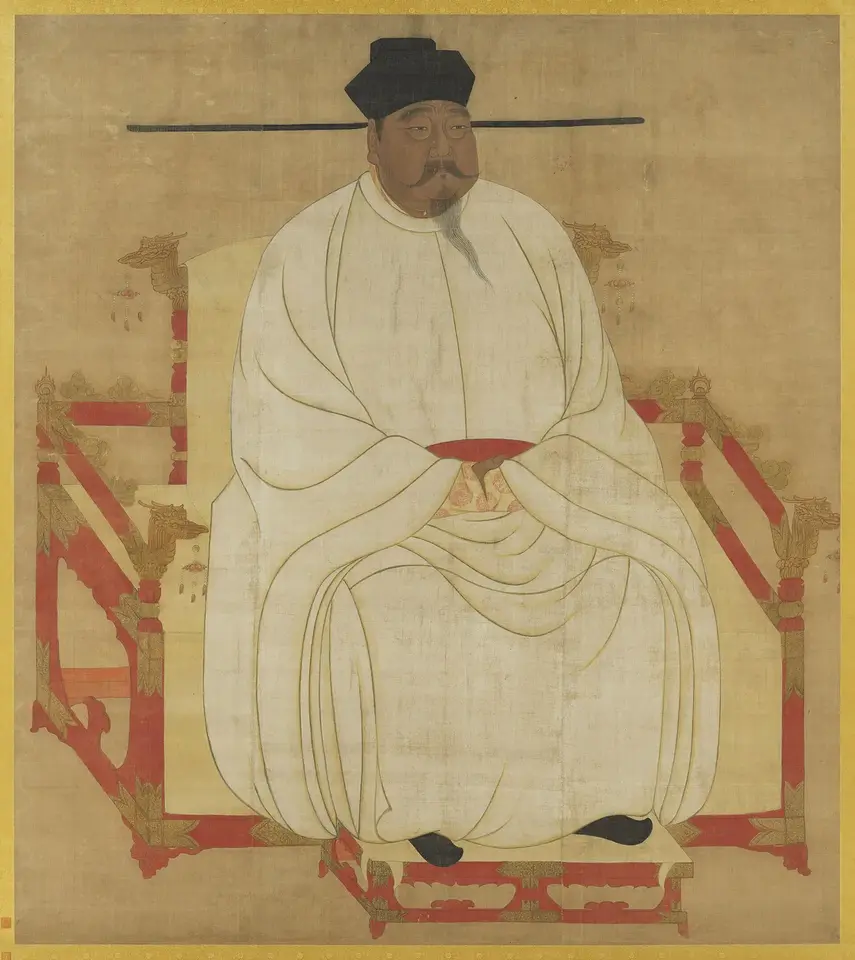
毛滂
Mao Pang (毛滂, ca. 1061–1124), courtesy name Zemin and art name Dongtang Jushi, was a native of Jiangshan in Quzhou (present-day Jiangshan, Zhejiang). He was a renowned late Northern Song ci lyricist, prose stylist, and administrative official. In his youth, he accompanied his father Mao Weizhan to Junzhou, where he forged a close relationship with the exiled master Su Zhe and received thorough grounding in classical ancient…
Mao Pang (毛滂, ca. 1061–1124), courtesy name Zemin and art name Dongtang Jushi, was a native of Jiangshan in Quzhou (present-day Jiangshan, Zhejiang). He was a renowned late Northern Song ci lyricist, prose stylist, and administrative official. In his youth, he accompanied his father Mao Weizhan to Junzhou, where he forged a close relationship with the exiled master Su Zhe and received thorough grounding in classical ancient prose. During the Yuanyou era, while serving as Administrator of the Law Section in Hangzhou, Prefect Su Shi was deeply impressed by his writings, officially recommending him to the imperial throne as possessing elegant and vigorous prose endowed with an extraordinary transcendent cadence. In 1098, he was appointed Magistrate of Wukang County, where he governed with benevolence and frugality. In 1102, on the recommendation of Chancellor Zeng Bu, Mao was summoned to Kaifeng as Legal Code Reviser. However, when Zeng Bu was abruptly ousted from the chancellorship, Mao was arrested, imprisoned, and stripped of his official posts as part of factional purges, subsequently living in rural seclusion at Xianju Temple. During the Daguan era, after presenting song lyrics to Chancellor Cai Jing, he was restored to office as Controller of the Dengwen Drum Court, subsequently rising to Vice Director in the Bureau of Sacrifices and Prefect of Xiuzhou (modern Jiaxing, Zhejiang). Although his official career was fraught with factional turbulence, Mao achieved immortal renown in the history of Song literature. His ci poetry was celebrated for limpid clarity, effortless elegance, and deep emotional resonance, bridging the heroic breadth of Su Shi with the melodic intimacy of Liu Yong. He self-composed melodies such as Xi fenfei and exerted a lasting influence on subsequent masters such as Chen Yuyi, Zhu Dunru, Jiang Kui, and Zhang Yan. His collected works are preserved in Dongtang ji and Dongtang ci.
Born into a distinguished scholarly official family in Jiangshan, Quzhou, immersing himself from boyhood in the Classics and lyric verse.
Accompanied his father to Junzhou, forming a mentorship with the exiled Su Zhe and studying classical prose techniques.
Commissioned as Sheriff of Yingzhou, personally directing patrols against banditry and displaying administrative competence.
Appointed Administrator of the Law Section in Hangzhou, earning profound acclaim and high recommendations from Prefect Su Shi.
Governed Wukang County with leniency and fiscal restraint, building his Dongtang study to compose verses and host literary peers.
Appointed Legal Code Reviser by Zeng Bu, but soon arrested, imprisoned, and dismissed following Zeng Bu's sudden political fall.
Presented lyrics to Grand Councilor Cai Jing in Kaifeng and was restored to office as Controller of the Dengwen Drum Court.
Elevated to Vice Director in the Bureau of Sacrifices, overseeing imperial court rites, ancestral registers, and Daoist temples.
Appointed Prefect of Xiuzhou, adjudicating disputed court trials, dredging irrigation canals, and promoting local sericulture.
Retired to rural seclusion at Xianju Temple, passing away from illness at age sixty-four, mourned across literary circles.
Mao Pang was born in the sixth year of the Jiayou era (1061) into an illustrious literati household in Jiangshan, Quzhou. His father, Mao Weizhan, was a respected prefectural administrator who maintained broad friendships with prominent Northern Song scholars. Blessed with intuitive literary brilliance from childhood, Mao Pang mastered canonical texts and poetic meters in early youth. In 1080, during the third year of the Yuanfeng era, the twenty-year-old Mao accompanied his father to his official posting in Junzhou (modern Gao'an, Jiangxi). At that time, literary master Su Zhe was living in political exile in Junzhou following the Crow Terrace Poetry Trial. Mao Weizhan maintained close ties with Su Zhe, allowing Mao Pang to study under Su Zhe daily, absorbing his expansive and grounded prose style.
In 1084, Mao entered imperial service as Sheriff of Yingzhou, presiding over law enforcement and judicial arrests with notable fairness. During the early Yuanyou era under Emperor Zhezong, Mao was appointed Administrator of the Law Section in Hangzhou. Famed writer Su Shi was then serving as Prefect of Hangzhou. Upon reading Mao's literary essays and song lyrics, Su Shi was deeply moved by their structural vigor, submitting an imperial recommendation praising his writing as possessing elegant, robust diction and a transcendent cadence that stood above ordinary contemporaries. Under Su Shi's personal guidance, Mao's poetic voice matured, integrating Su Shi's philosophical detachment with refined musical precision.
In 1098, the first year of the Yuanfu era, Mao was promoted to Magistrate of Wukang County in Huzhou. Situated amidst the tranquil hills of northern Zhejiang, Wukang provided an ideal setting for literary contemplation. Mao governed with moderation, reducing tax surcharges and granting remissions during lean harvests. Adjacent to the county offices, he constructed a study named Dongtang (Eastern Hall) after Bai Juyi's poetic verses, adopting the sobriquet Dongtang Jushi. His first wife, Zhao Ying, was the granddaughter of the upright censor Zhao Bian; intelligent, graceful, and deeply cultured, she shared his literary passions, inspiring a remarkable sequence of poignant love lyrics celebrating domestic harmony.
In 1102, during the first year of the Chongning era, Grand Councilor Zeng Bu recognized Mao's administrative clarity and legal acumen, recommending him to Kaifeng as Legal Code Reviser to participate in compiling state statutes. However, factional warfare between Zeng Bu and Cai Jing erupted shortly thereafter, resulting in Zeng Bu's sudden ouster. Targeted as Zeng Bu's client, Mao was arrested by the Censorate and cast into the imperial prison. After enduring months of harsh interrogation and psychological trauma, he was stripped of all titles and expelled from bureaucratic ranks. Disgraced and destitute, Mao found shelter at Xianju Temple, spending years in philosophical seclusion.
Following years of rustic isolation, Mao traveled to the capital Kaifeng in search of livelihood. In the early Daguan era, he presented his exquisite lyrics to the reigning chancellor Cai Jing. Enamored with Mao's lyrical refinement and musical grace, Cai Jing obtained an imperial pardon and appointed Mao Controller of the Dengwen Drum Court. In this capacity, Mao handled appeals from commoners and military personnel, processing petitions with diligence and fairness.
In 1111, Mao was elevated to Vice Director in the Bureau of Sacrifices, managing dynastic sacrifices, monastic registers, and ancestral liturgies. In 1114, he was dispatched as Prefect of Xiuzhou (modern Jiaxing, Zhejiang). As prefect, he governed with compassion, overturning questionable verdicts, funding public granaries, and repairing hydraulic networks along the Grand Canal. However, the political blacklisting of his early career and his later compromise in seeking Cai Jing's patronage attracted criticism from strict moralists, preventing further advancement. In 1124, Mao passed away in rural retirement at the age of sixty-four. His collected writings were compiled into the ten-volume Dongtang ji and the one-volume Dongtang ci, both enshrined in the Siku quanshu.
Mao Pang holds a pivotal place in the evolution of the Song ci genre. While literary historians have historically divided Song lyricism into the heroic school of Su Shi and the delicate school of Liu Yong and Qin Guan, Mao forged an innovative third path characterized by limpid clarity, musical elegance, and philosophical poise. Synthesizing the rhythmic intimacy of Liu Yong with the expansive moral dignity of Su Shi, he purged song lyrics of frivolous vulgarity without descending into pedantic obscurity.
In Qingbo zazhi, Southern Song scholar Zhou Hui celebrated his masterpiece Xi fenfei (Parting Sorrows at Fuyang Monastery), observing that its concluding couplet—sending one's shattered soul with the receding tide—achieved the highest pinnacle of expressive art where words end but meaning endures infinitely. Modern scholars have acclaimed him as the founding patriarch of the untrammeled school (xiaosa pai), whose aesthetic breakthrough directly inspired the later masterpieces of Chen Yuyi, Zhu Dunru, Jiang Kui, and Zhang Yan.
In the realm of Song descriptive lyrics, particularly on plums and the autumn moon, Mao achieved monumental aesthetic innovations. While Southern Song poets frequently turned to plum blossoms as moral emblems, Mao stood as the premier plum lyricist of the Northern Song, leaving behind eleven celebrated poems dedicated to the winter flower.
His plum lyrics avoided conventional ornamental diction, emphasizing resilient purity amidst frost and snow. Similarly, his moon lyrics, such as Nantangzi, captured nocturnal cloudscapes with luminous stillness, comparing the crescent moon to an arched eyebrow. Through these allegories of natural beauty, Mao articulated his detachment from worldly factionalism, elevating song lyrics from casual entertainment into profound vehicles for ethical reflection.
Unlike literati who merely filled words into pre-existing meters, Mao Pang was a consummate musical theorist and composer capable of self-composing entirely new melodies (ziduqu). Numerous celebrated tunes in the Song corpus, including Xi fenfei, Wulingchun, Zuihuayin, and Fendie'er, were originally invented by Mao or popularized through his metric refinements.
Furthermore, his structural innovations—such as the expansive linked-stanza Diaoxiao zhuanta and the level-rhyme Yiqin'e—diverged sharply from conventional songbooks, providing later musicologists and literary historians with irreplaceable primary documentation for the development of Northern Song musical banqueting performance.
At a time when Song lyric poetry dealt almost exclusively with courtesans, banquets, and transient romances, Mao made a groundbreaking moral and literary departure. Of the approximately forty love lyrics surviving in Dongtang ci, the vast majority were composed for his wedded wife, Zhao Ying.
Mao eschewed shallow eroticism, articulating authentic marital affection, parting sorrows, and shared domestic joys with heartfelt tenderness. By transforming legitimate familial devotion into an independent poetic theme, Mao expanded the emotional boundaries of Song lyricism, elevating the genre toward authentic human compassion.
Mao Pang held an enduring passion for tea connoisseurship, exploring the aesthetic dimensions of the Northern Song tea ceremony. In classical tea literature, scholars universally recognize Mao as the leading pioneer of the tea lyric genre.
Integrating tea banquets with literati reclusion, his celebrated verses captured the frothing of imperial tribute cakes and the aroma of roasted tea leaves with evocative precision. He transformed the physical ritual of tea drinking into an emblem of moral detachment, establishing an enduring benchmark for literati tea culture.
Mao made another major breakthrough by poetically transforming the seasonal festivals and everyday customs of Song society. Prior to his work, depictions of annual festivals were largely scattered and marginal. Mao methodically incorporated every major traditional observance—drinking spiced wine on New Year's Day, lantern viewings on the Lantern Festival, dragon boat races on the Double Fifth, stargazing on the Double Seventh, and chrysanthemum banquets on the Double Ninth—into his lyrics.
His works vividly recorded ancient domestic celebrations where families gathered to toast longevity, marked by lively vernacular rhythms and joyful domestic warmth. In the Southern Song, Chen Yuanliang's Suishi guangji cited Mao's works as foundational models of seasonal festive poetry, providing later historians with a panoramic record of Northern Song social life.
In Song literati society, poetic exchanges and matching rhymes (heyun) served as vital channels of intellectual fellowship. Composing lyrics to matching rhymes was notoriously difficult, often resulting in forced syntax and disrupted emotional logic. Mao mastered this restrictive craft, achieving natural grace even under strict rhyme constraints.
During his provincial service in Quzhou and Wukang, Mao reached artistic maturity. His exchange lyrics with local literati like Jia Yunlao and Sun Gongsu preserved the original rhyme schemes while developing fresh conceptual departures. He wove description, narrative, and philosophical reflection into harmonized lyrics, elevating social correspondence into enduring literature.
Mao spent decades wandering across Jiangnan prefectures, living the typical itinerant life of a mid-level Song civil official. Facing repeated factional setbacks and imprisonment, he cultivated an inner sanctuary of tranquil reclusion, finding solace in nature and convivial literary gatherings. From Jiangshan and Gao'an to Hangzhou and Xiuzhou, his travels left behind an expansive corpus of reflective verses.
In his Dongtang study, he hosted banquets beneath flowering trees, composing verses amidst wine and flute music. Ming scholar Lou Sijing praised his works for revealing genuine spiritual freedom within spontaneous drunken banter. By balancing administrative diligence with detached equanimity, Mao established a compelling model of the philosophical scholar-official who remained unbowed by political adversity.
Modern literary historian Xue Liruo grouped the Northern Song lyric tradition into five supreme masters—Liu Yong, Su Shi, Qin Guan, He Zhu, and Mao Pang—designating Mao as the Patriarch of the Untrammeled School. Raised amidst the waterways of Jiangnan, his aesthetic sensibilities blended the lush vegetation and misty rains of the south with serene contemplative restraint.
Mao's versatile style synthesized diverse aesthetic currents: he matched the melodic charm of Liu Yong without his vulgarity, shared the soaring breadth of Su Shi with added delicate grace, and contrasted with He Zhu's dense melancholy through crystalline transparency. By integrating robust syntactic vitality with refined musical prosody, Mao overcame the rigid dichotomy between heroic and delicate modes, securing his stature as a towering master of Song poetry.
The celebrated lyric Xi fenfei (Parting Sorrows at Fuyang Monastery), which established Mao's empire-wide fame, was historically surrounded by scholarly misconceptions. Early anthologies like Hua'an cixuan mistakenly framed the poem as a romantic farewell to a courtesan. Modern textual scholarship has demonstrated that Mao composed the work in 1089 while en route to take up his post in Hangzhou, expressing profound sorrow at bidding farewell to his newlywed wife Zhao Ying.
The verse depicting one's soul being carried away by the river tide articulated the anguish of marital separation rather than casual flirtation. By centering sacred marital affection in public literature, Mao challenged contemporary conventions, pioneering a noble and emotionally authentic direction for classical Chinese poetry.
In addition to his poetic eminence, Mao Pang was an accomplished prose master whose essays inherited the vitality of the Su school. His ten-volume Dongtang ji preserves nearly a hundred memorials, prefaces, inscriptions, and treatises. Contemporaries lauded his prose for expansive vigor and natural rhythm, observing that he had absorbed the core eloquence of the Su brothers.
In his private correspondence and prefaces, Mao championed unadorned sincerity, arguing that literature must emerge directly from authentic emotion rather than mechanical imitation. His prose writings circulated widely throughout the Song dynasty, confirming his stature as a consummate master of poetry, lyrics, and classical prose.
FIGURES ASSOCIATED WITH THIS DYNASTY