Born in Western Zhejiang
Born in Gui'an, Huzhou; exceptionally intelligent from childhood, capable of reciting thousands of words daily.
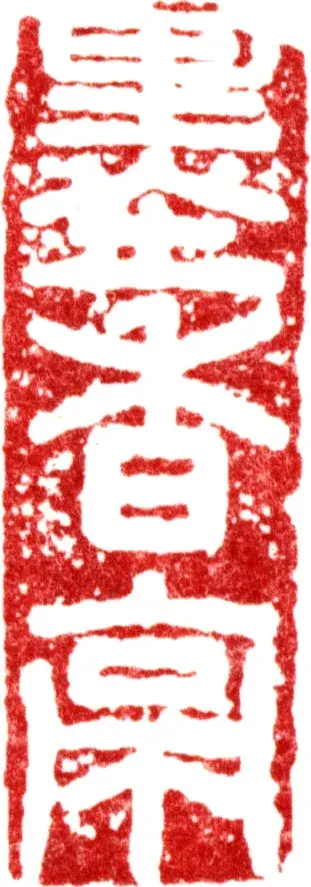
茅坤
Mao Kun (茅坤, August 31, 1512 – December 22, 1601), courtesy name Shunfu and art name Lument, was a native of Gui'an County, Huzhou Prefecture, Zhejiang Province (present-day Huzhou, Zhejiang). He was a distinguished Ming dynasty prose essayist, literary theorist, bibliophile, and military strategist, honored as the "Master of Lument" and recognized as a leading figure of the "Tang-Song School" in Ming literature. In 1538, he…
Mao Kun (茅坤, August 31, 1512 – December 22, 1601), courtesy name Shunfu and art name Lument, was a native of Gui'an County, Huzhou Prefecture, Zhejiang Province (present-day Huzhou, Zhejiang). He was a distinguished Ming dynasty prose essayist, literary theorist, bibliophile, and military strategist, honored as the "Master of Lument" and recognized as a leading figure of the "Tang-Song School" in Ming literature. In 1538, he passed the metropolitan and palace examinations as a Jinshi degree-holder. Mao held successive appointments as magistrate of Qingyang and Dantu counties, director in the Ministry of Rites and Ministry of Personnel, vice prefect of Guangping, assistant surveillance commissioner of Guangxi, and vice surveillance commissioner in charge of the Daming Military Defense Circuit. Renowned for his uncompromising character, he adamantly refused to ghostwrite Daoist sacrificial prayers (qingci) for the powerful grand secretary Yan Song, enduring repeated demotions and slanders. In Guangxi, he devised surgical strike tactics ("diaoxiao") to suppress the Yao uprisings, and in Daming, he constructed five hundred modified war wagons to fortify northern border defenses, winning high praise from commanders Ying Jia and Yang Bo. In later years, he served as a senior military advisor in the headquarters of Supreme Commander Hu Zongxian combating coastal wokou pirates. Following his retirement, he built the "Baihua Lou" library in Lianhu, amassing one of the premier private book collections in China and devoting over four decades to writing. In literary theory, Mao championed the classical prose tradition of Sima Qian, Han Yu, and Ouyang Xiu, asserting that "literature rises and falls in accordance with the moral Way." He actively combated the archaist imitation trends propagated by the Earlier and Later Seven Masters. His landmark compilation, the 164-volume Anthology of Prose by Eight Great Masters of the Tang and Song Dynasties (Tang Song Ba Da Jia Wen Chao), definitively established the historical canon of the "Eight Great Masters," becoming the most widely circulated and influential classical prose anthology in later imperial China. He passed away in 1601 at the age of ninety.
Born in Gui'an, Huzhou; exceptionally intelligent from childhood, capable of reciting thousands of words daily.
Passed the Zhejiang provincial examination, winning widespread literary fame across the Jiangnan region.
Earned the Jinshi degree; refused to ghostwrite Daoist prayers for powerful courtiers and was appointed magistrate of Qingyang.
Following mourning for his father, reassigned as magistrate of Dantu, establishing clean governance and repairing schools.
Promoted to director in the Ministry of Rites and later Ministry of Personnel; subsequently demoted to vice prefect of Guangping due to political implication.
Promoted to assistant surveillance commissioner of Guangxi; pacified Yao insurgencies, prompting grateful locals to erect a shrine.
Appointed vice surveillance commissioner of Daming; built 500 mobile war wagons; dismissed due to false accusations.
Invited by Supreme Commander Hu Zongxian to join the regional headquarters staff, directing military strategy against coastal pirates.
Published the 164-volume Anthology of Prose by Eight Great Masters of the Tang and Song Dynasties, gaining renown throughout the empire.
Passed away at his home in Gui'an in November at the age of ninety.
Mao Kun was born on August 31, 1512, in Gui'an County, Huzhou Prefecture, Zhejiang Province, into an illustrious book-collecting family. Striking in appearance, perceptive, and quick-witted, he possessed an astounding memory and could memorize thousands of words a day. From his youth, he immersed himself in classical philosophy, historical chronicles, and ancient military treatises. In 1534, he passed the Zhejiang provincial examination as a provincial graduate (Juren).
In the spring of 1538, Mao traveled to Beijing and passed the metropolitan and palace examinations, earning the Jinshi degree. At that time, Emperor Shizong was infatuated with Daoist rituals, and entrenched grand secretaries vied to recruit talented writers to ghostwrite celestial Daoist prayers (qingci). Recognizing Mao's powerful prose style, high ministers attempted to enlist him as a private ghostwriter, dangling prestigious promotions in the Hanlin Academy. Mao indignantly refused: "How can I, a dignified Jinshi, debase my three-inch writing brush to become the private minion of a prime minister?" Enraged by his refusal, the grand secretaries dispatched him to the remote post of magistrate of Qingyang County in Southern Zhili.
As magistrate of Qingyang, Mao investigated local grievances, suppressed corrupt clerks and predatory landowners, and achieved remarkable administrative success. Shortly afterward, his father Mao Qian passed away, and he retired to observe three years of mourning rites. Following the completion of mourning, the court reassigned him as magistrate of Dantu County. Guarding a strategic crossing along the Yangtze River, Dantu was burdened with demanding postal relay services. Mao adjudicated disputes with fairness, refurbished hydraulic irrigation channels, and restored local schools, earning widespread respect for integrity and efficiency. When his mother passed away, he resigned once more to observe mourning.
Upon returning to court, Mao was appointed director in the Ministry of Rites and soon transferred to the Ministry of Personnel. Within the ministry, he evaluated civil officials strictly on merit and resisted external interventions from powerful households. Later, implicated in a case involving an administrative colleague, he was demoted to vice prefect of Guangping Prefecture. In Guangping, Mao refused to be discouraged by his subordinate position, suppressing local bandits and rectifying judicial injustices, rapidly restoring his administrative reputation.
In 1548, Mao was promoted to director in the Nanjing Ministry of War and later the Nanjing Ministry of Rites. Soon after, the court promoted him to assistant surveillance commissioner of Guangxi in charge of the Fujiang Military Defense Circuit. At that time, Yao tribesmen occupied dozens of mountain redoubts, killed the magistrate of Yangshuo, and severed strategic river transit routes. When court officials debated mobilizing a massive army of one hundred thousand troops, Supreme Commander Ying Jia consulted Mao. Mao stated: "Mobilizing a massive army cannot be achieved swiftly, and mountainous defiles will exhaust supplies; it is far better to employ surgical strikes ('diaoxiao')—infiltrating elite shock troops directly to destroy rebel leadership, causing the other forts to disperse." Ying Jia entrusted him with military operations. Mao personally directed operations, smashing seventeen mountain forts and capturing the rebel leaders, reopening the river routes and inspiring local commoners to erect a shrine in his honor.
In 1553, Mao was promoted to vice surveillance commissioner of Daming to superintend regional border defenses. Facing Mongol cavalry raids, Mao researched ancient battle formations and supervised the manufacture of five hundred modified war wagons ("pianxiangche"), deploying them across frontier defiles to neutralize enemy cavalry charges. Supreme Commander Yang Bo inspected the formations and praised Mao as a rare military genius, recommending him for promotion. However, jealous courtiers slandered him with fabricated embezzlement charges from his Guangxi tenure, resulting in his dismissal from office and return to Zhejiang.
Following his dismissal, coastal wokou piracy exploded across southeast China. In 1556, Supreme Commander Hu Zongxian invited Mao to join his regional military headquarters. Mao accepted the summons, collaborating closely with fellow strategist Xu Wei to draft military campaigns that successfully induced pirate chieftains Wang Zhi and Xu Hai to surrender. Hu Zongxian submitted a memorial recommending Mao for appointment as vice surveillance commissioner of Fujian, but hostile officials blocked the appointment.
Subsequently, due to misconduct by household subordinates, Mao was impeached by a censor and stripped of his gentry status. Abandoning all remaining aspirations for public office, Mao retired to Lianhu in Gui'an. He constructed the "Baihua Lou" library, containing dozens of spacious halls housing hundreds of thousands of rare book scrolls, making it the most celebrated private library in Jiangnan. Mao spent the rest of his life among his books, writing and editing continuously. On December 22, 1601, he passed away peacefully at his home in Gui'an at the age of ninety.
Mao's most enduring contribution to Chinese literary history was his compilation of the 164-volume Anthology of Prose by Eight Great Masters of the Tang and Song Dynasties (Tang Song Ba Da Jia Wen Chao). In the mid-Ming era, the Earlier and Later Seven Masters promoted the dogma that "prose must emulate the Qin and Han," filling the literary world with superficial imitation devoid of vitality. Mao rejected this trend, championing the authentic classical prose style of Han Yu and Liu Zongyuan from the Tang, alongside Ouyang Xiu, Su Xun, Su Shi, Su Zhe, Zeng Gong, and Wang Anshi from the Song.
Drawing upon selections initiated by Tang Shunzhi, Mao spent years compiling this master anthology, formally establishing the title Tang Song Ba Da Jia Wen Chao. Beyond assembling their finest works, Mao appended incisive critical commentaries to each volume and essay, analyzing structural development, thematic cadence, and stylistic spirit. The work enjoyed immense popularity across the empire, becoming the premier textbook for classical prose composition and permanently cementing the "Eight Great Masters of Tang and Song" as the supreme aesthetic standard of Chinese prose.
Together with Tang Shunzhi, Wang Shenzhong, and Gui Youguang, Mao founded the prominent "Tang-Song School" of Ming literature. Mao advanced the famous theoretical proposition that "literature rises and falls in accordance with the moral Way, which has nothing to do with chronological eras," shattering the Seven Masters' rigid temporal dogma that privileged pre-Qin and Western Han texts above all else.
He demonstrated that the Han, Tang, and Song dynasties all produced masterpieces, and that literary excellence depended on the profound moral substance (Dao) and authentic sincerity of the author. He advocated that prose must convey genuine human sentiment and practical utility, synthesizing the dramatic dynamism of Sima Qian with the expressive clarity of Tang and Song masters. Mao's theoretical insights liberated literary creation, paving the way for the late-Ming Gong'an and Jingling schools and the Qing dynasty Tongcheng school of prose.
Mao possessed both literary brilliance and military acumen, representing a rare dual talent in Ming statecraft. His innovation of surgical strike warfare ("diaoxiao") in Guangxi established an effective model for mountain counter-insurgency warfare in southwestern borderlands throughout the Ming and Qing dynasties; his war wagon tactics in Daming provided a cost-effective, mobile fortification method against nomadic cavalry forces.
During the anti-pirate campaigns, he served in Hu Zongxian's headquarters alongside Xu Wei, playing a crucial role in planning the pacification of the pirate lord Xu Hai and demonstrating strategic insight in defensive layout and tactical deception. His military philosophy profoundly influenced his grandson Mao Yuanyi, who compiled the Treatise on Military Preparedness (Wubei Zhi), the most comprehensive military encyclopedia in imperial Chinese history, directly inheriting Mao Kun's tactical legacy.
Mao was an ardent bibliophile who devoted his official stipends and family wealth to collecting rare woodblock editions and manuscripts. His Baihua Lou library complex in Lianhu, Huzhou, encompassed dozens of halls housing hundreds of thousands of volumes organized across nine academic divisions and ten categories. In the mid-Ming era, its scale rivaled the Tianyi Ge in Ningbo and the Jiangyun Lou in Changshu.
Beyond collecting, Mao collated, edited, and published extensive textual materials. In addition to the Anthology of Prose by Eight Great Masters, he published his own literary and historical collections, including Extant Manuscripts from the Baihua Lou, Drafts from the Yuzhi Mountain Study, and Writings in Advanced Age, making an indelible contribution to preserving Ming political, historical, military, and literary heritage.
FIGURES ASSOCIATED WITH THIS DYNASTY