Birth in Ye County
Born on August 1 into a distinguished scholar family, displaying remarkable memory in youth.
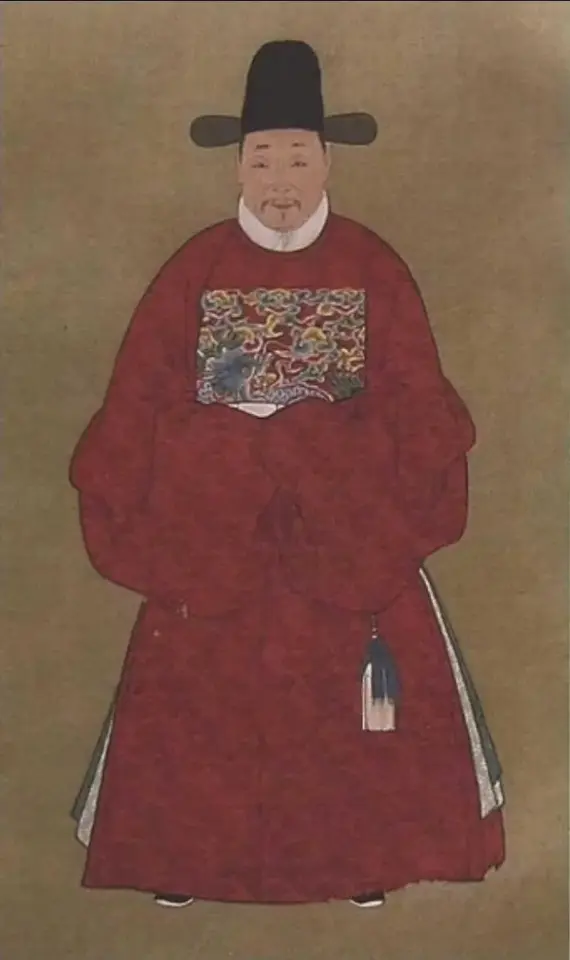
毛纪
Mao Ji (毛纪, 1463–1545), courtesy name Weizhi (维之), pseudonym Aofeng (鳌峰), posthumously honored as Wenjian (文简), was a venerable statesman across four imperial reigns (Chenghua, Hongzhi, Zhengde, and Jiajing) and Senior Grand Secretary of the Cabinet, originating from Ye County, Laizhou Prefecture, Shandong. Ranking first in the Shandong provincial examinations (jieyuan) in 1486 and passing the metropolitan examination in…
Mao Ji (毛纪, 1463–1545), courtesy name Weizhi (维之), pseudonym Aofeng (鳌峰), posthumously honored as Wenjian (文简), was a venerable statesman across four imperial reigns (Chenghua, Hongzhi, Zhengde, and Jiajing) and Senior Grand Secretary of the Cabinet, originating from Ye County, Laizhou Prefecture, Shandong. Ranking first in the Shandong provincial examinations (jieyuan) in 1486 and passing the metropolitan examination in 1487, Mao entered the Hanlin Academy as a Bachelor. During the Hongzhi and Zhengde eras, he served as tutor to the Crown Prince, contributed to the compilation of the Collected Statutes of the Ming Dynasty, and advanced to Minister of Rites, where he boldly remonstrated against Emperor Zhengde's extravagant imperial reception of Tibetan lamas. In 1517, Mao was elevated to Grand Secretary of the Eastern Pavilion. Confronting Emperor Zhengde's frequent incognito escapades, favoritism toward Jiang Bin, and self-designation as a generalissimo, Mao led cabinet colleagues in removing their caps and prostrating in tears before the palace gates to halt imperial misconduct. Following the unexpected death of Emperor Zhengde without an heir in 1521, Mao collaborated with Senior Grand Secretary Yang Tinghe to draft the dynastic succession edicts, orchestrating the enthronement of Emperor Jiajing and the swift arrest of the treacherous commander Jiang Bin. In 1524, Mao succeeded Jiang Mian as Senior Grand Secretary. During the turbulent Great Ritual Controversy (Daliyi), Mao stood unyieldingly for ancestral ritual propriety, opposing the imperial decree erasing the "biological" designation from the emperor's birth parents and drafting earnest petitions to protect hundreds of protesting officials beaten outside the Zuoshun Gate. Facing imperial displeasure, Mao resigned to live in rural retirement in Shandong for over two decades. Passing away in 1545 at age eighty-three, he was posthumously awarded the rank of Grand Preceptor with the posthumous name Wenjian.
Born on August 1 into a distinguished scholar family, displaying remarkable memory in youth.
Placed first in the Shandong provincial examinations (jieyuan).
Succeeded in the metropolitan examination; selected as a Hanlin Bachelor.
Appointed Senior Compiler and Imperial Lecturer, tutoring Crown Prince Zhu Houzhao.
Elevated to Minister of Rites; submitted strong remonstrances against imperial patronage of Tibetan monks.
Appointed Grand Secretary of the Eastern Pavilion, advancing to Grand Secretary of the Wenyuan Hall.
Orchestrated the succession of Emperor Jiajing and neutralized Jiang Bin's military clique; declined an earldom.
Succeeded Jiang Mian as Senior Grand Secretary; stood firm in the Great Ritual Controversy; resigned following the Zuoshun Gate incident.
Reached eighty years of age in retirement; Emperor Jiajing dispatched provincial officials with gifts of wine, mutton, and grain.
Passed away at his residence on July 14 at age eighty-three; posthumously honored as Grand Preceptor and titled Wenjian.
Mao Ji was born on August 1, 1463, in Ye County, Shandong. From his earliest years, he exhibited prodigious intellectual gifts, reciting classical texts upon a single reading. In 1479, when his father Mao Min was appointed an instructor at the Hangzhou Prefectural School, Mao accompanied him to Zhejiang, studying history under You Yu while maintaining rigorous nocturnal reading habits. In 1486, Mao secured first place in the Shandong provincial examinations (jieyuan), and in the following year, he passed the metropolitan examinations of 1487, being selected as a Bachelor in the Hanlin Academy.
In November 1489, Mao was appointed Hanlin Compiler. In August 1499, he was promoted to Senior Compiler and Imperial Lecturer, being selected to tutor Crown Prince Zhu Houzhao (the future Zhengde Emperor). In 1503, for his contributions to the Collected Statutes of the Ming Dynasty, he was made Reader-in-Waiting. Following Emperor Zhengde's accession in 1505, Mao was elevated to Left Mentor in the Left Spring Brigade. In 1509, upon the completion of the Veritable Records of Emperor Xiaozong, he was promoted to Academician of the Hanlin Academy. He served as Vice Minister of Revenue, Vice Minister of Rites, and Left Vice Minister of Personnel between 1510 and 1515, observing maternal mourning from 1512 to 1515.
In August 1515, Mao was appointed Minister of Rites and concurrently supervised the Household of the Heir Apparent. At this time, envoys from Tibet asserted that a living Buddha possessed prophetic powers to forecast blessings and disasters. Emperor Zhengde dispatched thousands of imperial guards with millions of taels of state silver to escort the lama to Beijing.
Mao submitted an outspoken memorial protesting the reception: "The Karmapa Lama is merely a foreign monk. Why should the Son of Heaven lavish such extraordinary imperial honors upon him? The distance between Beijing and Tibet exceeds thirty thousand li, requiring three to five years for a round trip at unimaginable expense to border populations. Sichuan has suffered continuous warfare and famine; to impose this crushing burden upon local commands will inevitably ignite rebellion!" Although Emperor Zhengde failed to respond, senior ministers Liang Chu and Yang Yiqing supported Mao's petition. In 1516, Mao petitioned the emperor to maintain regular court audiences and attend daily classical lectures in the Wenhua Hall, urging early designation of an imperial heir.
In May 1517, Emperor Zhengde appointed Mao Grand Secretary of the Eastern Pavilion, advancing him to Grand Secretary of the Wenyuan Hall with the title of Grand Guardian of the Heir Apparent.
When palace favorites led by Qian Ning encouraged the emperor's military tours and Prince Zhu Chenhao rebelled in Jiangxi, Emperor Zhengde summoned cabinet and ministry officials to the Zuoshun Gate, ordering them to draft an edict for an imperial military expedition under his self-proclaimed title of Generalissimo. Mao Ji and his colleagues fell to the ground, removing their official caps and weeping aloud in protest. When the emperor subsequently departed on southern campaigns, Mao remained in Beijing, submitting dozens of urgent memorials urging the monarch's return to the capital to stabilize imperial governance.
Following Emperor Zhengde's sudden demise in April 1521 without an heir, Mao Ji and Senior Grand Secretary Yang Tinghe drafted secret memorials to Empress Dowager Zhang. Recognizing that the traitorous general Jiang Bin commanded thousands of frontier troops in the capital, Mao orchestrated the swift arrest and execution of Jiang Bin's conspirators, ensuring the peaceful enthronement of Emperor Jiajing. In recognition of his decisive role in stabilizing the dynasty, Emperor Jiajing offered Mao an hereditary earldom. Mao adamantly refused noble ennoblement, requesting that honors be limited to civil rank.
In 1524, following the resignations of Yang Tinghe and Jiang Mian amidst the intensifying Great Ritual Controversy, Mao Ji assumed the mantle of Senior Grand Secretary. Emperor Jiajing sought to eliminate the designation "biological" (bensheng) from the honorific titles of his biological parents. Mao Ji and Shi Bao presented vigorous memorials insisting upon ancestral dynastic precedent. When the emperor summoned Mao to the imperial terrace to persuade him privately, Mao refused to bend his principles. In July 1524, when hundreds of court officials prostrated outside the Zuoshun Gate weeping in protest, the emperor arrested and flogged them. Mao immediately submitted comprehensive petitions pleading for the release and pardon of the censors, drawing the monarch's furious rebuke for factional obstruction.
Recognizing that his counsel was rejected, Mao submitted his resignation: "Ancient ministers served to correct the ruler's errors; to draw imperial salary without guiding the throne is mere self-enrichment. Slandering me as factional is something I abhor. I beg to retire to preserve my life and integrity." Emperor Jiajing permitted his departure. In 1528, with the promulgation of the Minglun Dadian, Mao was posthumously stripped of official rank alongside other ritual dissenters, but his titles were fully restored when the emperor's anger abated.
Mao Ji retired to his estate in Ye County, Shandong, living in peaceful seclusion for more than twenty years. He refused gifts from regional officials and engaged in classical literature and compiling the local gazetteer of Laizhou. In 1542, when Mao reached the age of eighty, Shandong provincial officials reported his longevity to Beijing. Emperor Jiajing issued an edict praising Mao as an elder statesman of exceptional virtue and longevity, dispatching provincial inspectors to deliver royal gifts of wine, mutton, four piculs of monthly grain, and six corvée servants.
On July 14, 1545, Mao Ji passed away at his residence at the venerable age of eighty-three. Emperor Jiajing was deeply moved, suspending court audience for a day, conferring upon him the posthumous title of Grand Preceptor, and granting the posthumous name "Wenjian." Senior Grand Secretary Yan Song composed his funerary spirit way stele, commemorating his steadfast ministerial career.
Mao Ji served across four reigns, standing as an exemplar of classical ministerial dignity, incorruptibility, and unbending moral courage.
"Mao Ji was pure, loyal, and outspoken, fully possessing the noble stature of the ancient great ministers. In learning he was profound; in office, he was tranquil, modest, and dignified. Standing upright alongside Yang Tinghe and Jiang Mian, he was revered and relied upon by the scholar-officials of the entire realm." — History of Ming (Ming Shi), Scroll 190, "Biographies"
"On the shores of the Eastern Sea and the heights of Mount Tai, the spirits concentrated their finest essence to give birth to a premier minister. Lord Mao of Donglai achieved soaring renown in the high cabinet, stabilizing the dynastic succession, upholding rectitude, and guarding the imperial altar from beginning to end." — Yan Song, Spirit Way Stele of Lord Mao Wenjian
FIGURES ASSOCIATED WITH THIS DYNASTY