Biography
Early Monastic Training in Sichuan and Journey to Mount Heng
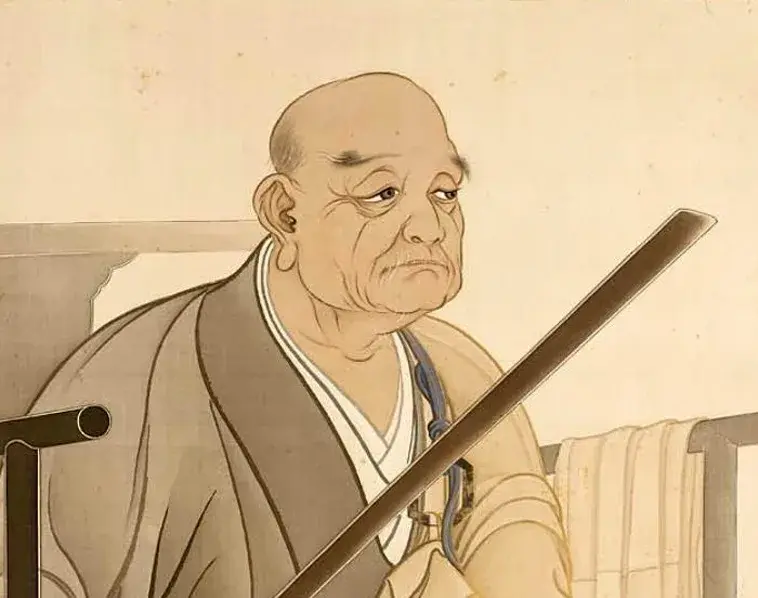
Mazu Daoyi was born in 709 in Shifang County, Hanzhou (modern Shifang, Sichuan), bearing the family name Ma. Traditional Buddhist records describe his physical appearance as majestic and striking, noting that he "walked like a bull, glared like a tiger, could extend his tongue past his nose, and bore twin wheel-shaped marks upon the soles of his feet." Manifesting deep spiritual inclinations from early childhood, he renounced secular life at local Luohan Temple under Master Chuji of Dechun Temple in Zizhou.
Around the age of twenty, Daoyi traveled to Yuzhou (modern Chongqing) to receive the full monastic precepts from Vinaya master Yuan, grounding himself in monastic discipline. He subsequently studied in Chengdu under Master Wuxiang (Kim Gyo-gak), a former prince of the Korean Silla Kingdom residing at Jingzhong Temple, assimilating the Northern Chan meditative currents deriving from Fifth Patriarch Hongren. Seeking direct illumination beyond scholastic exegesis, Daoyi traveled out of the Sichuan basin in 733 to Mount Heng in Hunan. Erecting a simple thatched hermitage near the Prajna Temple (modern Fuyan Temple), he spent his days engaged in relentless seated meditation.
Polishing the Brick and Mind-to-Mind Transmission
At that time, Nanyue Huairang, the foremost dharma heir of Sixth Patriarch Huineng, was residing at Prajna Temple. Recognizing Daoyi's extraordinary spiritual potential, Huairang visited the hermitage to test the young ascetic. Finding Daoyi completely absorbed in silent meditation, Huairang picked up a paving brick outside the hut and began rubbing it vigorously against a large flat stone day after day, producing an irritating scraping noise.
Exasperated by the disturbance, Daoyi finally opened his door and asked: "Master, what are you doing by polishing that brick?" Huairang replied calmly: "I am polishing it to make a mirror." Astonished, Daoyi inquired: "How can one make a mirror by polishing a brick?" Huairang immediately retorted: "If polishing a brick cannot make a mirror, how can sitting in meditation make a Buddha?" Daoyi was shaken and asked: "How then does one achieve Buddhahood?" Huairang instructed: "It is like an ox hitched to a cart: if the cart does not move, do you strike the cart or strike the ox? Are you learning seated meditation, or are you learning to be a sitting Buddha? If you learn to sit as a Buddha, the Buddha has no fixed form. In the dharma of non-abiding, one should neither grasp nor reject. If you cling to the sitting posture, you will never master the truth." Daoyi experienced an instantaneous, profound awakening. He remained at Mount Heng under Huairang's personal guidance for nine years, emerging as the sole disciple among Huairang's six inner initiates to receive the transmission of the mind-seal.
Establishing Sanctuaries in Southern Lands
In 742, Daoyi departed Mount Heng to propagate the dharma southward. His initial independent center was founded at Mount Foji in Jianyang, northern Fujian, where he erected a lecture hall and gathered his first circle of disciples. When the cataclysmic An Lushan Rebellion erupted across northern China, forcing vast waves of literati and commoners across the Yangtze, Daoyi shifted his ministry to Jiangxi. He settled first in Linchuan in Fuzhou before moving deeper into southern Jiangxi to Mount Gonggong in Nankang.
During his decade on Mount Gonggong, Mazu excavated stone shelters and constructed monastic dwellings. His reputation spread rapidly across southern China, drawing hundreds of wandering monks to his remote mountain retreat. It was during this period that Mazu articulated his foundational teaching of "The Mind Itself Is Buddha," discarding scholastic commentaries and rigid meditation schedules in favor of spontaneous, mind-shattering dialogues that dismantled conventional conceptual reasoning, rapidly transforming Jiangxi into a vibrant epicenter of southern Chan Buddhism.
The Kaiyuan Monastery Seat and Hongzhou Hegemony
In 769, Jiangxi Regional Surveillance Commissioner Lu Sigong, deeply revering Mazu's spiritual stature, dispatched formal invitations and lavish gifts urging the master to relocate to the provincial administrative capital of Hongzhou (modern Nanchang). Mazu accepted and took up residence at Kaiyuan Temple (modern Youmin Temple), which served as the primary patriarchal see of the Hongzhou School and the premier Buddhist academy of south China for the next two decades.
At Kaiyuan Temple, Mazu enjoyed the enthusiastic patronage of successive civil commissioners, military governors, and scholar-gentry. He established the archetype of the independent Chan monastery, attracting an unprecedented gathering of brilliant disciples from all quarters of the Tang empire. Luminaries including Baizhang Huaihai, Nanquan Puyan, Xitang Zhizang, Dazhu Huihai, and Magu Baoche studied under his roof. Mazu fully articulated the doctrine of "Ordinary Mind Is the Dao," proclaiming that enlightened reality resides in every spontaneous daily action—walking, standing, sitting, or resting. Embodying dynamic instructional methods using loud shouts, staff blows, and enigmatic physical gestures, Mazu revolutionized Tang Buddhist practice. Operating in tandem with Master Shitou Xiqian in Hunan, the two masters established an unchallenged duopoly across the Buddhist world, captured in the popular saying: "Jiangxi is governed by Mazu, Hunan is governed by Shitou; he who wanders between them without greeting both masters is truly ignorant."
Final Prophecy and Passing at Mount Shimen
In the first month of 788, the eighty-year-old patriarch walked through Mount Shimen in Jianchang (modern Jing'an, Jiangxi). Observing the tranquil, expansive valley nestled amid bamboo groves, he turned to his attendant monks and remarked: "Next month, my aging bones shall be returned to rest in this auspicious earth."
Upon returning to Kaiyuan Temple, Mazu manifested symptoms of physical illness. When the monastery director entered his quarters to ask after his physical comfort, Mazu uttered his famous final koan: "Sun-Faced Buddha, Moon-Faced Buddha"—referencing the Buddhist sutra where the Sun-Faced Buddha lives for 1,800 years while the Moon-Faced Buddha lives only a single day and night, pointing to the unchanging, transcendent nature of the Buddha-nature beyond the duality of longevity and mortality. On the first day of the second month of 788, Mazu sat upright in calm meditation and entered final parinirvana at the age of eighty, having spent sixty years as an ordained monk. Mourning disciples and lay devotees conveyed his relics to Mount Shimen, enshrining them within a stupa at Letan Temple. In 811, Emperor Xianzong conferred the posthumous title Great Serenity Chan Master and named his reliquary the Stupa of Great Treasure Victorious Light; in 1735, the Yongzheng Emperor of the Qing dynasty added the title Universal Illumination Great Serenity Chan Master.
Major Achievements
The Theological Revolution of "Ordinary Mind Is the Dao"
Mazu Daoyi spearheaded a profound conceptual transformation within Chinese intellectual history. Overturning early Chan quietism and Indian ascetic disciplines, he proclaimed that "The Dao requires no cultivation; merely avoid defilement," and asserted that "Ordinary Mind Is the Dao." He taught that intrinsic nature is inherently complete within all beings without need for outward striving. This "ordinary mind" is devoid of artificial fabrication, right or wrong, grasping or rejecting, permanence or annihilation. Eating when hungry, sleeping when weary, carrying water, and chopping wood are direct manifestations of ultimate Buddha-nature. This teaching secularized Buddhist transcendence, establishing the philosophical bedrock for an indigenous, life-affirming Chinese Chan tradition.
Invention of Dynamic Shouting and Beating Pedagogies
Mazu completely transformed Chan instructional methodology by creating dynamic pedagogies known as "verbal thrusts" (jifeng) and "shouts and blows" (banghe). Rejecting scriptural exposition and fixed formulae, Mazu used abrupt, disruptive shocks to shatter his students' intellectual habits. When questioned on the essence of Buddhism, he would roar with sudden shouts that left students deaf for three days (as experienced by Baizhang Huaihai), kick a student to the ground to trigger joyful awakening (as with monk Shuiliao), or twist a student's nose. These non-discursive interventions were designed to dismantle intellectual dualism and force the practitioner to confront their unmediated intrinsic nature.
Establishing the Monastic Complex and the Five Houses
Prior to Mazu, Chan monks had lived as guests within Vinaya monasteries, constrained by disciplinary regulations designed for passive scholastic study. Mazu established the concept of independent Chan monastic communities (chanlin) designed for communal labor and meditation. Building directly upon this foundation, his chief disciple Baizhang Huaihai codified the legendary Baizhang Pure Rules, establishing the monastic agrarian rule: "A day without work is a day without food." Mazu's lineage produced eighty-eight recognized spiritual masters; through Baizhang, his line branched into the Linji and Weiyang schools, meaning that the overwhelming majority of the "Five Houses and Seven Schools" of later Chinese Chan traced their lineage directly back to Mazu's Hongzhou see.
Dialectical Formulation of Mind and Buddha
Mazu utilized a sophisticated three-stage dialectical method to guide practitioners through conceptual traps. To counteract the error of seeking Buddhahood outside oneself, he proclaimed "The Mind Itself Is Buddha," equating immediate conscious awareness with ultimate truth. When students attached themselves to that slogan and mistook wandering mental states for enlightenment, he immediately reversed his formulation to "Neither Mind Nor Buddha," obliterating all conceptual notions of "mind" and "Buddha." Finally, when dualistic grasping was completely extinguished, he returned to "Ordinary Mind Is the Dao," establishing a flawless pedagogical model for transcending all metaphysical traps.