马希广
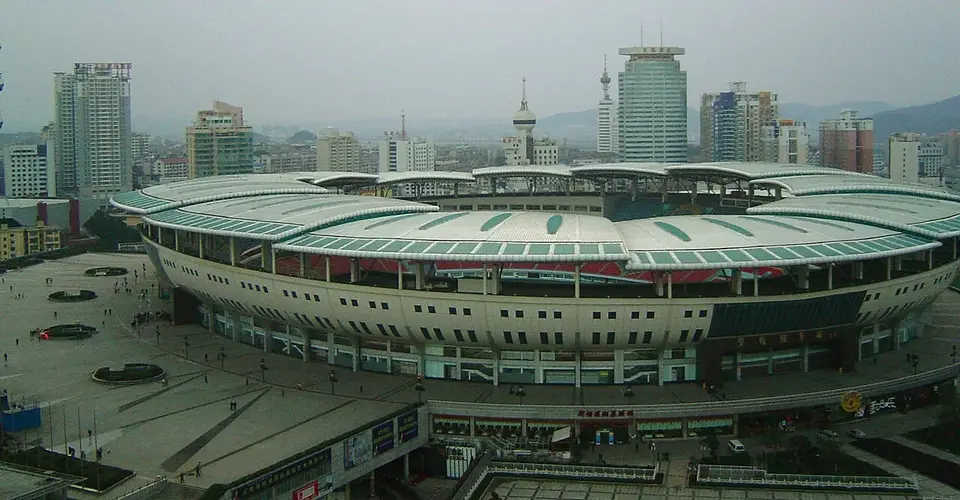
Related historical visual for Ma Xiguang
Image creditsCalton · CC BY-SA 3.0Image source

Historical figure

Ma Xiguang (马希广)

马希广

Ma Xiguang (马希广, ?–951), courtesy name Depi, ancestral home in Guangzhou, Henan (present-day Huangchuan, Henan), was born in Changsha. He was the fourth monarch of the Southern Chu regime during the Five Dynasties and Ten Kingdoms period, known historically as the Deposed King of Chu. The thirty-fifth son of the founding King Wumu (Ma Yin) and the full younger brother of King Wenzhao (Ma Xifan), he was noted for his gentle…

Era not stated

PROFILE

Ma Xiguang (马希广, ?–951), courtesy name Depi, ancestral home in Guangzhou, Henan (present-day Huangchuan, Henan), was born in Changsha. He was the fourth monarch of the Southern Chu regime during the Five Dynasties and Ten Kingdoms period, known historically as the Deposed King of Chu. The thirty-fifth son of the founding King Wumu (Ma Yin) and the full younger brother of King Wenzhao (Ma Xifan), he was noted for his gentle and deferential demeanor, scholarly learning, and devout Buddhist piety. In his early years, Ma Xiguang enjoyed the affection and trust of his elder brother Ma Xifan, holding appointments as Vice Military Commissioner of Wu'an Army, Commandant of the Tiance Mansion, and titular Military Commissioner of Zhennan Army, playing an active role in central policy-making in Changsha. In 947, Ma Xifan died without surviving male heirs. According to the foundational iron tablet decree established by Ma Yin, royal succession was strictly mandated to pass among brothers by seniority, which dictated that Ma Xie, the elder brother governing Langzhou, should ascend the throne. However, senior court ministers Li Honggao and Deng Yi, who harbored bitter enmity toward Ma Xie, breached the decree and enthroned the compliant Ma Xiguang, obtaining imperial investiture as Prince of Chu from the Later Han court. Ma Xiguang's succession provoked fury from Ma Xie, igniting years of bloody civil war known historically as the "Brothers' Contention for the Realm." Although naturally tender-hearted, Ma Xiguang repeatedly dispatched armies to repel Langzhou forces, yet strictly forbade his generals from harming his elder brother, causing the conflict to drag on indefinitely. In the winter of 950, Ma Xie enlisted ferocious Meishan tribal warriors and allied with Southern Tang to besiege Changsha. A treacherous commander opened the gates, and the capital fell. Ma Xiguang fled to the Cihua Temple, where he was captured and strangled on Ma Xie's orders. Facing death, he remained serene, chanting Buddhist sutras until he expired. His demise exhausted Southern Chu, hastening its conquest by Southern Tang.

Courtesy Name
Depi
Native Place
Guangzhou, Henan (present-day Huangchuan, Henan)
Date of Death
951 (Fifteenth day of the twelfth month, third year of the Qianyou era, Later Han)
Highest and Primary Offices
Military Commissioner of Wu'an Army, Acting Grand Defender, Concurrently Secretariat Director, Prince of Chu, historically known as Deposed King of Chu
Accurate Identity Orientation
Fourth sovereign of Southern Chu during the Five Dynasties and Ten Kingdoms; thirty-fifth son of King Wumu (Ma Yin); tragic monarch whose accession ignited fratricidal succession wars

LIFE TIMELINE

Relationship graph

BIOGRAPHY

Chronology

  • ca. 922 (Later Liang era) | Birth in Changsha | Born in the Chu royal residence in Changsha, showing early filial gentleness and devotion to Confucian and Buddhist texts.
  • 939 (Fourth year of the Tianfu era, Later Jin) | Tiance Office Appointment | Appointed Commandant of the Tiance Mansion and Vice Military Commissioner of Wu'an Army under Ma Xifan.
  • 947 (Twelfth year of the Tianfu era, Later Han) | Accession against Decrees | Enthroned as Prince of Chu by ministers Li Honggao and Deng Yi following Ma Xifan's death, bypassing his elder brother Ma Xie.
  • 949 (Second year of the Qianyou era, Later Han) | Langzhou Revolt | Ma Xie launched a rebellion from Langzhou; Ma Xiguang defeated the rebel forces but refused to pursue or crush them.
  • 950 (Ninth month, third year of the Qianyou era) | Tribal Coalition Assault | Ma Xie allied with Meishan tribes and Southern Tang to launch an all-out siege against Changsha amidst harsh winter blizzards.
  • 950 (Eleventh month, third year of the Qianyou era) | Fall of Changsha | Gate commander Peng Tinghui defected and admitted the rebels; Ma Xiguang fled to Cihua Temple and was captured while meditating.
  • 951 (Twelfth month, third year of the Qianyou era) | Strangled in Custody | Strangled to death on Ma Xie's orders; accepted execution calmly with hands folded in prayer while reciting sutras.

Life and Career

Devotion to Buddhist Scriptures and Tiance Office

Ma Xiguang was born in the royal palace in Changsha as one of the younger sons of Ma Yin, the warlord who carved out the kingdom of Chu in Hunan during the late Tang. His full elder brother, Ma Xifan, ruled Southern Chu from 932 onward. Ma Xiguang shared a deep bond with Ma Xifan, exhibiting modest habits and quiet rectitude. Unlike the boisterous generals who indulged in drinking and gambling, he spent his leisure time studying Confucian histories and Mahayana Buddhist texts, harboring deep faith in karmic retribution.

In 939, after the Later Jin court invested Ma Xifan as King of Chu, the Chu ruler established the Tiance Mansion after the prestigious precedent of Tang Taizong. Ma Xifan appointed Ma Xiguang as Commandant of the Tiance Mansion, Vice Military Commissioner of Wu'an Army, and titular commissioner of Zhennan Army.

As Ma Xifan grew increasingly extravagant and absorbed in banquet festivities, routine administrative filings and edicts were entrusted to the meticulous Ma Xiguang. Gentle and considerate toward civil officials, he refrained from abusing power, earning broad respect among the scholar-gentry of Changsha.

Violation of Ancestral Decrees and Accession

In the fifth month of 947, King Wenzhao (Ma Xifan) died suddenly after prolonged alcoholism, leaving no surviving sons. Dynastic succession was abruptly cast into turmoil.

In 907, founding sovereign Ma Yin had created an iron decree declaring that upon a ruler's death, succession must pass from elder brother to younger brother in strict sequence of age, engraving this command on stone to forestall civil war among his offspring. By this seniority rule, Ma Yin's thirtieth son, Ma Xie, who held the military commission of Wuping at Langzhou (present-day Changde, Hunan), was the rightful heir to the throne.

However, senior ministers Li Honggao, Deng Yi, and Tuoba Heng had long clashed with the abrasive and authoritarian Ma Xie. Fearing retribution if Ma Xie came to power, Li Honggao and his faction resolved to disregard the ancestral decree. Believing the compliant Ma Xiguang would be amenable to ministerial influence, they convened the garrison commanders in Changsha and proclaimed Ma Xiguang Military Commissioner of Wu'an Army and sovereign of Chu.

Upon ascending the throne, Ma Xiguang dispatched tribute envoys to the central plains. Emperor Gaozu of Later Han (Liu Zhiyuan) officially invested him as Military Commissioner of Wu'an Army, Chancellor, and Prince of Chu.

Fratricidal Strife and Paralysis of Resolve

Stationed in Langzhou, Ma Xie erupted in fury upon learning that his younger brother had usurped the throne in violation of ancestral law. Refusing to recognize Changsha's authority, he proclaimed Li Honggao a traitor and mobilized troops in Langzhou, vowing to march on Changsha and reclaim his rightful inheritance, opening the tragic chapter of fratricidal war.

In the spring of 949, Ma Xie dispatched naval fleets down the Yuan River toward Changsha. Alarmed, Ma Xiguang dispatched commander Cui Honglian with the Yuezhou fleet to block the river mouth. Cui Honglian scored a decisive victory, capturing several enemy commanders. Following the triumph, generals urged Ma Xiguang to advance on Langzhou and eliminate the rebellion.

However, Ma Xiguang hesitated, weeping before his ministers: "Ma Xie is my elder brother by blood. Clashing with weapons was an agonizing necessity. If I advance and murder my brother, how can I face our late father in the underworld?" He ordered his generals to maintain defensive positions and forbade offensive pursuit, allowing Ma Xie to withdraw to Langzhou and regroup. This fatal vacillation extinguished the best opportunity to end the civil war.

Meishan Coalition and Fall of Changsha

Having retreated to Langzhou, Ma Xie recognized that his single prefecture could not overpower Changsha alone. Abandoning dynastic restraint, he reached an alliance with Peng Shigao, chieftain of the fierce Meishan tribal people, enlisting ten thousand mountain warriors as his vanguard. Simultaneously, he declared vassalage to Southern Tang in Jinling, requesting military intervention from the east.

In the ninth month of 950, Ma Xie converged on Changsha with land and water forces. Ma Xiguang appointed Liu Yantao to command defenses outside the walls, but Liu fell into an ambush along the Xiang River, resulting in the annihilation of Chu's elite troops. Changsha was encircled. Amid freezing blizzards, food supplies ran out, and starving citizens died in the streets.

Seeing the city was doomed, defensive commander Peng Tinghui struck a secret pact with Ma Xie and flung open the northern gates. Rebel soldiers and Meishan warriors poured in, burning districts and plundering the treasury. Li Honggao and other court officials were butchered on the avenues.

As the defenses fell, Ma Xiguang discarded his royal robes, put on coarse Buddhist robes, and fled to Cihua Temple outside the city. Sitting cross-legged before a statue of the Buddha, he clutched prayer beads and quietly recited the Diamond Sutra. Ma Xie's soldiers battered down the doors and dragged him back to the palace.

Confronting Ma Xiguang from the throne, Ma Xie demanded: "Why did you betray our father's decree and usurp my kingdom?" Ma Xiguang lowered his head: "The commanders forced the crown upon me; it was never my desire. I beg Your Majesty to spare our fraternal bond and permit me to live as a monk in the mountains." Reluctant to leave a rival alive, Ma Xie refused.

On the fifteenth day of the twelfth month of the third year of Qianyou (January 25, 951), Ma Xie ordered Ma Xiguang strangled to death in prison. At the execution ground, Ma Xiguang remained calm, closing his eyes and softly murmuring sutras with folded palms until he died. Following the murder, Ma Xie proclaimed himself Prince of Chu, but the kingdom's foundations were shattered. Months later, Southern Tang general Bian Hao captured Changsha and took Ma Xie prisoner, extinguishing the Southern Chu kingdom.
Key Achievements

Assisting King Wenzhao in Inner Court Administration

Appointed Commandant of the Tiance Mansion and Vice Military Commissioner of Wu'an Army during Ma Xifan's reign, managing court documentation and gaining widespread esteem for his mild temperament and scholarship.

Accession Violating Decrees and Igniting Dynastic Civil War

Enthroned as sovereign of Chu in 947 through the maneuvers of Li Honggao, violating Ma Yin's succession code of fraternal seniority. This usurpation prompted Ma Xie's revolt at Langzhou, plunging Southern Chu into catastrophic internal warfare.

Indecision and Forfeiting Strategic Windows

Repeatedly defeated rebel assaults but refused offensive operations out of familial sentiment, allowing the opposition to ally with Meishan tribes and Southern Tang, sealing the fate of his capital.

Composed Martyrdom in Temple upon Fall of Changsha

Sought sanctuary in Cihua Temple as Changsha fell in late 950. When condemned to death by Ma Xie, he faced execution with tranquil dignity, reciting Buddhist sutras with folded palms as he perished.

Personal Relationships

  • Founding Father: Ma Yin (King Wumu of Southern Chu, who established the fraternal seniority succession rule).
  • Preceding Full Brother: Ma Xifan (King Wenzhao of Southern Chu, Ma Xiguang's full elder brother, who entrusted him with high court responsibilities).
  • Fratricidal Rival Brother: Ma Xie (King Gongxiao of Southern Chu, elder brother who launched the civil war and ordered Ma Xiguang strangled).
  • Kingmaking Ministers: Li Honggao and Deng Yi (Administrative judges of Chu, who violated the ancestral decree to install Ma Xiguang and died when Changsha fell).
  • Treacherous Defector: Peng Tinghui (Garrison commander of Changsha, who opened the gates to admit the Langzhou forces).

Historical Appraisals

  • Xue Juzheng in Old History of the Five Dynasties: "Xiguang possessed an abundance of benevolence, but lacked courage and decisiveness. Petty ministers seized authority, violating dynastic compacts and driving brothers to war. Though he chanted scriptures seeking self-preservation, how could he escape the destruction of the overturned nest?"
  • Ouyang Xiu in New History of the Five Dynasties: "The fall of the Ma house arose not from external foes, but from self-destruction. Xifan was extravagant, Xiguang was feeble, and Xie was brutal. Xiguang was gentle and fond of literature, yet foolishly heeded slanders to usurp his elder brother, leaving his body rotting in the wilderness—a lamentable fate indeed!"
  • Wu Renchen in Spring and Autumn Annals of the Ten Kingdoms: "The Deposed King was benevolent, filial, and skilled in letters, showing no intrinsic signs of a doomed monarch. Yet misled by Li and Deng, he was entangled in ruinous conflict. Facing execution, he serenely chanted scriptures, meeting death with dignified calm, leaving behind a profoundly tragic memory."

Related Entries

  • [[Ma Yin]]
  • [[Ma Xifan]]
  • [[Ma Xie]]
  • [[Li Honggao]]
  • [[Brothers' Contention for the Realm]]
  • [[Spring and Autumn Annals of the Ten Kingdoms: Hereditary House of Chu]]

FIGURES ASSOCIATED WITH THIS DYNASTY

Bibliography

  • Spring and Autumn Annals of the Ten Kingdoms, Volume 68, "Hereditary House of Chu 4: House of the Deposed King"
  • New History of the Five Dynasties, Volume 66, "Hereditary House of Chu 6"
  • Old History of the Five Dynasties, Volume 133, "Hereditary Biographies 2: Biography of Ma Yin"
  • Comprehensive Mirror for Aid in Government (Zizhi Tongjian), Volume 287, "Later Han Chronicle 2"
  • Comprehensive Mirror for Aid in Government (Zizhi Tongjian), Volume 289, "Later Han Chronicle 3"
  • Omissions in the History of the Five Dynasties (Wudai Shi Que Wen), by Wang Yucheng