Born in Junzhou
Born into a scholarly family in Junzhou, Henan, demonstrating early talent and a lifelong aptitude for military strategy.
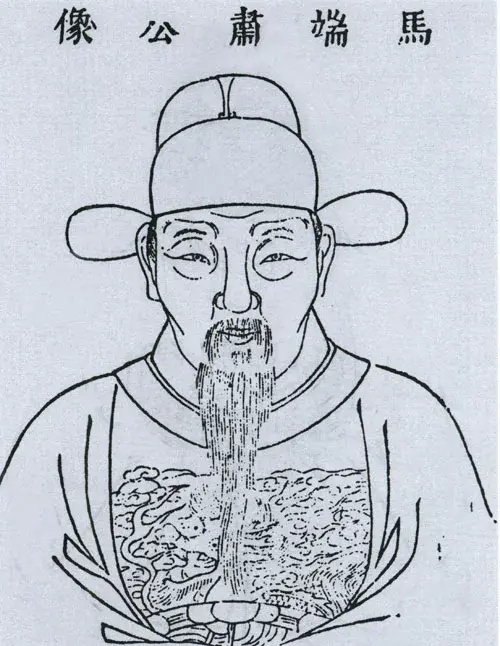
马文升
Ma Wensheng (马文升; 1426–1510), courtesy name Futu and art names Yuezhai and Sanfeng Jushi, was a native of Junzhou (present-day Yuzhou, Henan). He was a preeminent statesman, strategist, and literary scholar of the Ming Dynasty, serving across five successive imperial reigns: Jingtai, Tianshun, Chenghua, Hongzhi, and Zhengde. He was one of the foremost architects of imperial defense and internal civil administration during…
Ma Wensheng (马文升; 1426–1510), courtesy name Futu and art names Yuezhai and Sanfeng Jushi, was a native of Junzhou (present-day Yuzhou, Henan). He was a preeminent statesman, strategist, and literary scholar of the Ming Dynasty, serving across five successive imperial reigns: Jingtai, Tianshun, Chenghua, Hongzhi, and Zhengde. He was one of the foremost architects of imperial defense and internal civil administration during the celebrated Hongzhi Restoration. Obtaining his jinshi degree in 1451, he was initially appointed Investigating Censor, earning high renown for rooting out corruption in Shanxi and Huguang, where grateful locals lauded him as a divine magistrate. During the Chenghua era, Ma served as Grand Coordinator of Shaanxi, assisting in suppressing the indigenous rebellion of Man Si at Shicheng, taking command of the Three Frontiers, and routing Tatar incursions at Heishuikou and Tangyangling. When dispatched to pacify the Jurchens in Liaodong, he was framed by the powerful eunuch Wang Zhi for defending administrative propriety, enduring imprisonment and four years of penal banishment to Chongqing. Following the fall of Wang Zhi, he was restored to office. In the late Chenghua reign, he briefly served as Minister of War before being sidelined to Nanjing by the occultist court favorite Li Zisheng. With the accession of the Hongzhi Emperor (Zhu Youtang), Ma was recalled as Left Censor-in-Chief, expelling fraudulent Daoist sorcerers from the capital. He was then reappointed Minister of War, heading the ministry for over a decade. He rigorously overhauled the Twelve Regimental Camps, purged incompetent officers, and orchestrated the recapture of Hami from the Turpan Sultanate. Later appointed Minister of Personnel with the honorary rank of Grand Preceptor, he combated nepotism, abolishing 762 irregular royal appointments (Chuanfeng officials) and disciplining over two thousand officials. Following the accession of the Zhengde Emperor, he retired amidst factional tension. He died in 1510 at the age of eighty-five, posthumously honored as Grand Preceptor and canonized as "Duansu."
Born into a scholarly family in Junzhou, Henan, demonstrating early talent and a lifelong aptitude for military strategy.
Succeeded in the metropolitan examinations; appointed Investigating Censor the following year to inspect Shanxi and Huguang.
Promoted to Right Vice Censor-in-Chief and Grand Coordinator of Shaanxi, cutting off water supplies to help crush Man Si's rebellion.
Ambushed and shattered Tatar invading cavalry at Heishuikou and Tangyangling, capturing regional commanders.
Pacified Jurchen tribes in Liaodong; resisted eunuch Wang Zhi's overreach, resulting in arrest and four years of exile in Chongqing.
Cleared after Wang Zhi's downfall; reappointed Grand Coordinator of Liaodong to the jubilant acclaim of frontier soldiers.
Named Minister of War, directing the Twelve Regimental Camps, restructuring defensive garrisons, and enforcing strict military reviews.
Mobilized frontier allied units to execute a night assault on Hami, driving out Turpan invaders and reestablishing the garrison.
Transferred to lead the Ministry of Personnel, purging over 760 irregular appointments and disciplining the bureaucracy.
Resigned from court amidst political shifts and censorial criticism, retiring to his native Junzhou after submitting twenty-one memorials.
Passed away at home on July 13 at age eighty-five; granted posthumous honors as Grand Preceptor and canonized as Duansu.
Ma Wensheng hailed from Junzhou in Kaifeng Prefecture. From youth, he displayed a commanding presence and intense interest in statecraft and defensive strategy, organizing mock battles with local peers where none could match his tactical skill. In 1451, during the second year of the Jingtai reign, he earned his jinshi degree in the same cohort as distinguished statesmen Wang Yue, Yu Zijun, and Qin Hong, taking up his first appointment as an Investigating Censor the following year.
In this censorial capacity, Ma was dispatched on inspection circuits across Shanxi and Huguang. He meticulously investigated peasant grievances, fearlessly impeaching oppressive magnates and corrupt officials. His penetrating judicial scrutiny cleared numerous wrongful convictions and established exemplary order across local jurisdictions, leading admiring commoners to revere him as a "divine magistrate." After observing ritual mourning for his mother, he was promoted to Surveillance Commissioner of Fujian.
In Fujian, Ma cracked down ruthlessly on extortionate local despots and reformed military post tax abuses. When he concluded his tenure, grateful Fujian locals composed folk ballads celebrating his rectitude and praising Heaven for sending him to protect the innocent. In 1465, he advanced to Minister of the Court of Judicial Review in Nanjing before resigning to observe mourning for his father.
In 1468, indigenous chieftain Man Si initiated an armed rebellion based at Shicheng, a mountain fortress situated a thousand li from Pingliang in the northwest. The rebellion spread rapidly, inflicting severe defeats upon provincial garrisons and alarming the imperial court. The Ming government mobilized fifty thousand troops from the Three Frontiers and Beijing imperial brigades, naming Xiang Zhong as Supreme Commander and appointing Ma Wensheng as Right Vice Censor-in-Chief and Grand Coordinator of Shaanxi to assist him.
Surveying the terrain, Ma astutely observed that Shicheng was precipitously perched on mountain crags but lacked internal wells, relying completely on external mountain streams for its water supply. Ma counseled Xiang Zhong: "The rebels rely on mountainous crags. A headlong assault would produce immense casualties. If we sever their external water conduits, the fish in the cauldron will perish of their own exhaustion." Xiang Zhong followed this advice, stationing elite troops to cut off all water routes. Besieged and dehydrated, the rebels disintegrated, allowing imperial forces to seize the fortress and capture Man Si. Ma subsequently oversaw the complete demolition of Shicheng’s stone defenses to prevent future uprisings.
During his seven years coordinating Shaanxi governance, Ma revitalized the tea-horse trade, procuring more than eight thousand superior steeds for Ming border cavalry. His accomplishments earned him steady promotions to Left Vice Censor-in-Chief and Right Vice Minister of War, endowing him with vast operational experience in border security.
During the early Chenghua era, steppe leaders Bolohu, Mandulu, and Beg-Arslan repeatedly invaded the northern frontier, placing immense strain on defensive garrisons. In 1472, Ma took up position at Weizhou, deploying concealed ambush detachments along mountain gorges. In a fierce engagement at Heishuikou, he decisively routed the Tatar vanguard, capturing their regional commander Deliesun. He then pursued retreating enemy horsemen to Tangyangling, decapitating over two hundred hostile cavalry.
Although Ma achieved successive victories, he reported military achievements with uncompromising realism, refusing to inflate enemy body counts. Lacking factional patronage at court, he received modest recognition. In 1475, he replaced Wang Yue as Supreme Commander of the armed forces coordinating Yanrui, Ningxia, and Gansu, before receiving a summons to Beijing as Right Vice Minister of War.
In 1476, Ma was tasked with inspecting defensive fortifications from Jimen to Liaodong, subsequently rising to Left Vice Minister of War. During his Liaodong mission, Ma vigorously rectified garrison vacancies and illicit land seizures, clashing sharply with Grand Coordinator Chen Yue, who maintained close ties with the ascendant palace eunuch Wang Zhi.
In 1478, Chen Yue provoked widespread uprisings among the Jianzhou and Haixi Jurchens by wrongfully executing Jurchen tribute envoys. Wang Zhi planned to lead an army to exploit the unrest for personal glory, but Senior Eunuch Huai En insisted on sending civil ministers to achieve peaceful pacification. Ma took on the assignment, marching into frontier garrisons to reassure tribal leaders and defusing the rebellion through equitable trade and diplomacy. When Ma rebuffed Wang Zhi’s attempts to install personal retainers into his mission, Wang Zhi harbored deep resentment.
Upon his return, Wang Zhi falsely accused Ma of provoking border turmoil by restricting the frontier sale of iron agricultural implements. Despite Ma's lucid self-defense, the Chenghua Emperor imprisoned him in the Imperial Guard prison (Zhaoyu) and banished him to penal military service at Chongqing Guard. Ma endured four years of frontier exile with philosophical equanimity. Following Wang Zhi's disgrace, Ma was fully exonerated and reappointed in 1484 as Left Vice Censor-in-Chief and Grand Coordinator of Liaodong, where garrison troops celebrated his return with triumphant cheers.
In 1485, Ma advanced to Right Censor-in-Chief and Director General of Water Transport and Grand Coordinator of Fengyang. Facing severe famine across Huai'an and Xuzhou, he rerouted one hundred thousand shi of tribute grain and fifty thousand taels of salt funds to relieve starving populaces. Late that year, he was appointed Minister of War. However, court alchemist Li Zisheng manipulated appointments, shunting Ma to Minister of War in Nanjing.
When the Hongzhi Emperor ascended the throne in 1487, he recalled Ma as Left Censor-in-Chief. Ma immediately memorialized to purge corrupt sorcerers and fraudulent alchemists from Beijing, giving them one month to vacate the capital. In 1489, he was reappointed Minister of War, leading the national military administration for more than a decade.
At the War Ministry, Ma instituted rigorous drills in the Twelve Regimental Camps, establishing strict evaluations that cashiered more than thirty corrupt hereditary officers. In strategic governance, he favored calculated deterrence while acting with decisive force when indispensable. When Turpan forces captured Hami, murdered its Ming-invested ruler, and disrupted Silk Road trade, Ma spearheaded the campaign for its recovery. In 1495, he coordinated with allied border garrisons to execute a daring night assault, driving out Turpan forces and restoring the Hami outpost. In 1498, he was granted the honorary titles of Junior Preceptor and Grand Tutor to the Heir Apparent.
In 1501, Ma was transferred to Minister of Personnel, receiving the pinnacle rank of Grand Preceptor. In this pivotal office, he combated systemic bureaucratic corruption, strictly evaluating inner and outer officials. He took direct aim at "Chuanfeng officials"—individuals appointed directly through imperial favors without civil examination or personnel evaluation. Upon the Hongzhi Emperor’s passing, Ma carried out his testamentary decrees, abolishing 762 such appointments and dismissing more than two thousand incompetent officials.
His unyielding administrative rigor provoked intense pushback from entrenched aristocratic families and court factions. Political friction intensified through policy disputes with fellow minister Liu Daxia over regional commander selections, drawing in Grand Secretary Li Dongyang. In 1506, censors initiated memorials questioning his advanced age. Perceiving that the young Zhengde Emperor favored palace eunuchs over senior statesmen, Ma submitted twenty-one resignation petitions until his retirement was granted.
In retirement, Ma faced posthumous persecution from the tyrannical eunuch Liu Jin, who had him stripped of official honors in 1509. Ma passed away at his home in Junzhou on July 13, 1510, at the age of eighty-five.
Two months after his death, Liu Jin was executed. The imperial court posthumously restored all his titles, canceled morning court for one day, bestowed state funeral sacrifices, and conferred the posthumous title "Duansu." During the Jiajing reign, he was additionally granted the ranks of Left Pillar of State and Grand Preceptor.
Throughout his career, Ma Wensheng made foundational contributions to Ming civil governance and frontier security. In his early posts across Shanxi, Huguang, and Fujian, his judicial rigor cleared systemic malfeasance. Under the Chenghua Emperor, he subdued the Shicheng rebellion, checked steppe incursions, reorganized the Three Frontiers, and consolidated defense along the northeastern border with the Jurchen tribes.
Under the Hongzhi Emperor, Ma anchored the War Ministry and Personnel Ministry, elevating the administrative standards of the Hongzhi Restoration. His decisive reforms eliminated hundreds of fraudulent imperial appointments, curbed military complacency, and restored imperial authority across the western approaches to Central Asia.
Serving the empire across six decades, Ma Wensheng was a consummate civil and military leader. In frontier defense, he demonstrated flawless strategic calculation; in central governance, he preserved unbending institutional integrity. He stands as one of the most distinguished statesmen of the mid-Ming era.
"Ma Wensheng served across five imperial reigns for nearly sixty years. Functioning as both civil minister and military commander, he combined administrative depth with strategic vision. In every state council, when senior ministers hesitated, Ma stood firm, arguing with concise eloquence and undeniable clarity. Renowned among foreign nations and celebrated throughout the realm, he exercised deep caution with military force, never embarking lightly on warfare. Grave by nature and sparing with laughter, his frugality and clean fame endured from beginning to end." — Yang Tinghe, Ming Dynasty Grand Secretary, Spirit Way Stele of Duke Ma Duansu
"Wang Shu tempered moral standards, Ma Wensheng mastered administrative statecraft, and Liu Daxia commanded steadfast integrity. All possessed profound vision for governing the realm and held righteous ambitions to serve the sovereign. Serving across successive reigns into venerable old age, they enjoyed the respect of both court and populace." — Zhang Tingyu, Qing Dynasty Chief Editor, History of Ming (Ming Shi), Volume 182, Biographies 70
FIGURES ASSOCIATED WITH THIS DYNASTY