Birth in Ningxia
Born into a distinguished frontier military family; displayed mastery in equestrian archery and tactics.
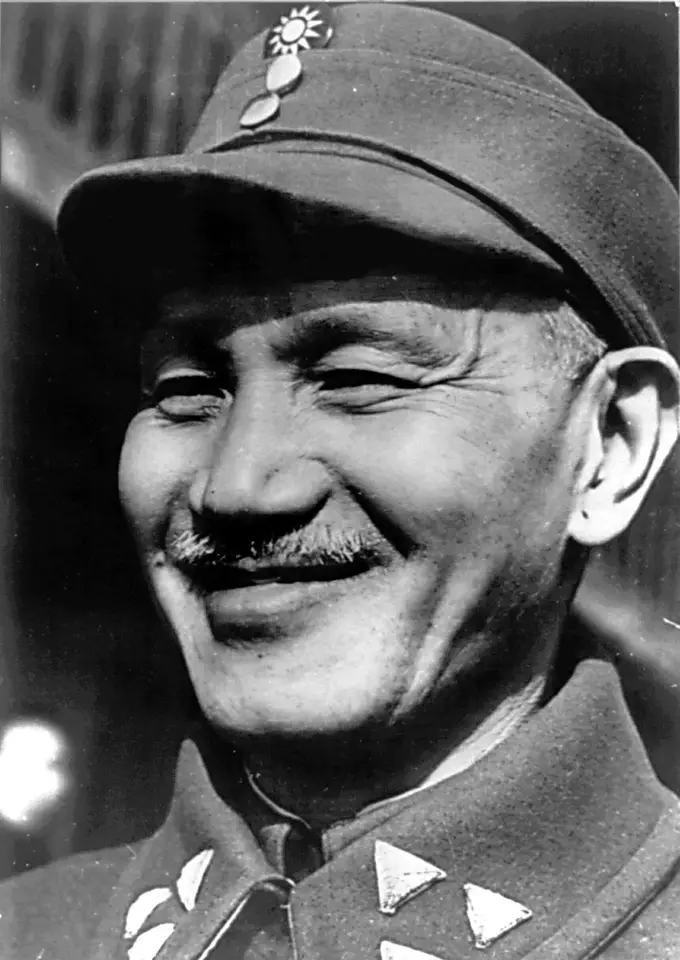
马世龙
Ma Shilong (马世龙, 1593–1634), courtesy names Cangyuan and Yuncong, pseudonyms Cangzhou and Cangyuan, native of Ningxia Guard, was an illustrious military commander and border strategist during the late Ming dynasty. Originating from a celebrated lineage of northwest frontier officers, Ma attained the military examination degree and served with distinction as major in Xuanfu. In 1622, following the disastrous collapse of…
Ma Shilong (马世龙, 1593–1634), courtesy names Cangyuan and Yuncong, pseudonyms Cangzhou and Cangyuan, native of Ningxia Guard, was an illustrious military commander and border strategist during the late Ming dynasty. Originating from a celebrated lineage of northwest frontier officers, Ma attained the military examination degree and served with distinction as major in Xuanfu. In 1622, following the disastrous collapse of Guangning, Grand Secretary and Minister of War Sun Chengzong recognized Ma's exceptional strategic talents. Sun promoted him rapidly to Assistant Regional Commander of Yongping, Commander of Santunying, and ultimately Supreme Regional Commander of Shanhaiguan, presenting him with the imperial sword of state and commissioning him to construct the strategic Liaodong defensive perimeter. In 1625, miscalculating enemy positions during the Battle of Liuhe, Ma's subordinates suffered a sharp reverse, leading to heavy political attacks by bureaucratic factions that forced his resignation. However, during the Jisi Incident of 1629 when Later Jin forces laid siege to Beijing, the Chongzhen Emperor recalled Ma, appointing him Commander-in-Chief of imperial relief armies. Coordinating with veteran generals Zu Dashou and You Shilu, Ma orchestrated a sweeping offensive that recaptured the four strategic northern cities of Luanzhou, Qian'an, Yongping, and Zunhua, for which he was elevated to Senior Commissioner-in-chief and Junior Guardian to the Crown Prince. In 1633, following the death in battle of Commander He Huchen against invading Chahar and Ordos Mongol armies under Ligdan Khan, Ma was appointed Regional Commander of Ningxia. Utilizing deep tactical knowledge of northern desert defiles, Ma ambushed and decisively routed the invading nomads in five consecutive engagements, decapitating enemy chieftains and securing the northwest frontier. He succumbed to operational exhaustion at his post in 1634 at age forty-two, and was posthumously bestowed the honor of Grand Tutor to the Crown Prince.
Born into a distinguished frontier military family; displayed mastery in equestrian archery and tactics.
Passed the metropolitan military examination, receiving appointment as Major of Xuanfu.
Discovered by imperial tutor Sun Chengzong following the collapse of Guangning; promoted to Assistant Commander.
Appointed Regional Commander of Shanhaiguan, bestowed the imperial sword to organize eastern border defences.
Coordinated with Yuan Chonghuan to survey southern Liaodong coasts; promoted to Senior Commissioner-in-chief.
Incurred battlefield defeat during a raid on Yaozhou; forced into retirement by court factional impeachments.
Reappointed Commander-in-Chief of relief armies during the Jisi Incident when Beijing was besieged.
Recaptured Luanzhou, Yongping, Qian'an, and Zunhua; rewarded with the title Junior Guardian.
Dispatched to defend his ancestral home in Ningxia against massive incursions by Ligdan Khan.
Annihilated invading nomadic armies in five major battles, killing chieftain Sa'erjia.
Died of physical exhaustion at his headquarters in Ningxia; posthumously honored as Grand Tutor to the Crown Prince.
Ma Shilong was born in 1593 in Ningxia Guard in the northwestern frontier marches. His family had served for generations as hereditary military garrison commanders. Endowed with a towering stature and an imposing bearing, Ma absorbed the arts of desert warfare, mounted archery, and siege engineering from early childhood. Passing the national military examinations, he entered imperial service as a major in the key northern garrison of Xuanfu, earning praise for his disciplined command.
In the first month of 1622, the Later Jin armies struck Liaodong, destroying imperial armies at Guangning and seizing more than forty fortified cities. The strategic gateway of Shanhaiguan was suddenly exposed to imminent capture. In Beijing, newly appointed Minister of War and Grand Secretary Sun Chengzong convened military councils to identify capable commanders. Censor Jiao Yuanpu emphatically recommended Ma Shilong. Sun summoned Ma to the capital and, after extensive dialogues on strategic border geography and tactical doctrine, was deeply struck by his capabilities. In April, Sun promoted Ma to Assistant Regional Commander of Yongping, followed in May by promotion to Regional Commander of Santunying overseeing four forward divisions.
In December 1622, Sun Chengzong took personal command of the northeastern frontier as supreme commander. Dissatisfied with the timidity of Shanhaiguan general Jiang Yingzhao, Sun dismissed Jiang and appointed Ma Shilong as Regional Commander of Shanhaiguan, investing him with the Pingliao General seal and the imperial sword of state. At a grand sacrificial terrace erected outside Shanhaiguan, Sun presided over solemn investiture ceremonies, placing command of over one hundred thousand soldiers and all logistical treasuries entirely in Ma's hands.
Ma threw himself into restructuring the border forces. He divided the regional armies into five synchronized operational commands, personally holding the central fortress at Shanhaiguan while placing seasoned generals Wang Shiqin and You Shilu to protect the southern coast and northern mountain passes. Under the combined leadership of Sun and Ma, the Ming army reconstructed fortifications at Qiantunwei, Gaodishan, and Ningyuan, regaining vast tracts of lost territory and establishing the famed Guanning-Jin defensive line. In 1624, Ma conducted extensive naval and territorial reconnaissances with inspector Yuan Chonghuan along the southern Liaodong coasts, winning promotion to Senior Commissioner-in-chief.
As Ma's military authority grew, he became the primary target of court factional politics. Sun Chengzong expended millions of silver taels annually to maintain the border armies, generating intense jealousy among civil censors in Beijing. In August 1625, defecting Later Jin officer Liu Boqiang proposed that the forward outpost of Yaozhou was lightly garrisoned and ripe for a surprise night raid. Eager for a decisive tactical triumph, Ma dispatched vanguard generals Lu Zhijia and Li Chengxian with thousands of troops across the Liuhe River.
The raid walked directly into a concealed Later Jin ambush. Outmaneuvered on the riverbanks, Lu and Li were slain in battle, and over four hundred retreaters drowned in the waters. Capitalizing on this reverse, eunuch dictator Wei Zhongxian's faction unleashed a torrent of impeachments against Ma to undermine Sun Chengzong. While the emperor refrained from severe punishment, Sun was forced into resignation. Seeing that incoming commander Gao Di was actively hostile to Sun's protégés, Ma submitted requests for medical leave and retired to Ningxia in the winter of 1625.
In the winter of 1629, Hong Taiji led the Later Jin army through the Great Wall at Da'ankou, surrounding Beijing in the Jisi Incident. With the capital terrified, the Chongzhen Emperor recalled Sun Chengzong and pardoned Ma Shilong, authorizing him to atone for past shortcomings through military service. Following the arrest of Yuan Chonghuan, General Zu Dashou led his panicked Guanning iron cavalry in a retreat back to Shanhaiguan. Ma galloped across hundreds of miles on Sun's orders, reassuring the troops and successfully persuading Zu to return to the defense of the throne. When General Man Gui was killed outside the Andingmen gate, the emperor presented Ma with the imperial sword of state, commanding him to coordinate all provincial relief armies.
In early 1630, Later Jin forces occupied the four strategic fortress cities of Luanzhou, Yongping, Qian'an, and Zunhua. Elevated to Senior Commissioner-in-chief, Ma directed coordinated counterstrokes alongside generals You Shilu, Yang Zhaoji, and Song Wei. In May, Ma's main army converged with Zu Dashou's heavy cavalry at Luanzhou, breaching the walls with heavy cannon fire. Following the recapture of Luanzhou, imperial units liberated Qian'an, Yongping, and Zunhua in swift succession, restoring control over northern Zhili after five months of enemy occupation. For these strategic achievements, Ma was granted the imperial rank of Junior Guardian to the Crown Prince.
In May 1633, Chahar Mongol forces under Ligdan Khan, pressured by Later Jin expansion in the east, migrated west and allied with Ordos nomads to invade Ningxia. Ningxia Regional Commander He Huchen was killed in action, and the regional border crumbled. Recognizing Ma's familial familiarity with the terrain, the Chongzhen Emperor appointed him Regional Commander of Ningxia. Arriving at his native post, Ma rapidly repaired defensive trenches, drilled horse archers, and reasserted operational discipline.
In January 1634, joint Chahar and Ordos forces penetrated the outer lines; Ma dispatched officer Bu Yingdi to ambush and rout the invaders, taking over two hundred enemy heads. In February, nomadic raiders struck Mount Helan; Ma dispatched undercover elite infiltrators into the enemy camp to decapitate chieftain Sa'erjia. When massive Chahar columns launched a general assault, Ma deployed five separate ambush wings along rugged canyons while holding the center himself, springing the trap to shatter the enemy and taking eight hundred heads. Subsequent incursions at Yuquanying and Zaoguobao were crushed with over a thousand enemy casualties. In the span of six months, Ma won five successive battles, restoring absolute security to the northern marches. However, continuous campaigning under harsh conditions triggered severe physical illness, and Ma passed away at his command post in late 1634 at the age of forty-two. The Chongzhen Emperor expressed deep lamentation, posthumously conferring the high rank of Grand Tutor to the Crown Prince and granting his lineage hereditary rank in the Embroidered Uniform Guard.
As Sun Chengzong's primary military implementer, Ma provided the rigorous logistical and tactical command that turned theoretical defensive doctrines into reality. His systematic organization of forward garrisons between Shanhaiguan and Ningyuan laid the physical foundation for the Guanning-Jin line, which protected Beijing from direct Manchurian conquest for over two decades.
During the aftermath of the 1629 crisis, Ma served as the pivotal supreme field commander unifying disparate provincial armies. His coordinated siege tactics and steady deployment of red-coat artillery at Luanzhou restored the strategic northern approaches to Beijing and demonstrated his capacity to conduct complex, multi-theater joint operations.
Taking command of Ningxia in its darkest hour following the death of its commander, Ma leveraged local geographical familiarity and brilliant ambush tactics to shatter the combined hosts of Ligdan Khan. His five consecutive victories neutralized the existential Mongol threat to the northwestern provinces, ensuring regional stability at a vital historical crossroads.
FIGURES ASSOCIATED WITH THIS DYNASTY