Hereditary Enlistment
Entered military service via hereditary privilege upon his father Ma Fang's death; rose to Assistant Commander.
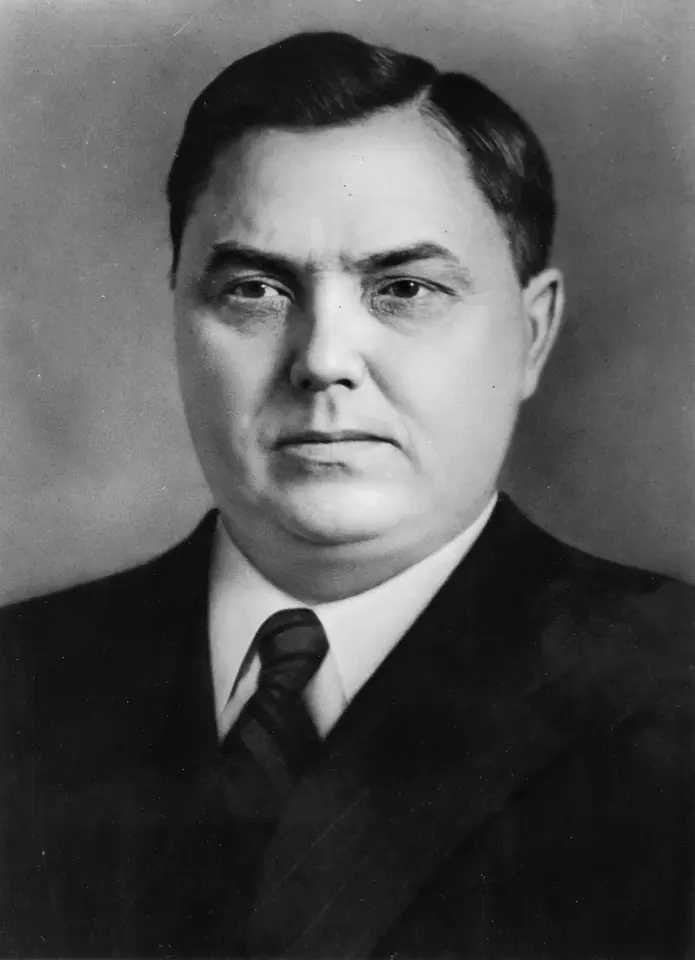
马林
Ma Lin (马林, died July 26, 1619), native of Weizhou, Shanxi, was a distinguished military commander of the middle-to-late Ming dynasty and the second son of the legendary anti-Mongol frontier marshal Ma Fang. Born into an illustrious martial household, Ma Lin was celebrated among contemporaries for his refined literary accomplishments, possessing exceptional skill in classical verse, cursive calligraphy, and intellectual…
Ma Lin (马林, died July 26, 1619), native of Weizhou, Shanxi, was a distinguished military commander of the middle-to-late Ming dynasty and the second son of the legendary anti-Mongol frontier marshal Ma Fang. Born into an illustrious martial household, Ma Lin was celebrated among contemporaries for his refined literary accomplishments, possessing exceptional skill in classical verse, cursive calligraphy, and intellectual discourse with scholar-gentry elites. Entering service through hereditary privilege, he served as assistant commander and vice regional commander in Datong. In 1599, he was elevated to Assistant Commissioner-in-chief and appointed Regional Commander of Liaodong, where he presented a visionary ten-point memorial on border military reform that was ultimately shelved by entrenched bureaucratic factions. When the rapacious imperial mining tax eunuch Gao Huai extorted Liaodong, Ma fiercely resisted his abuses, suffering retaliatory impeachment and exile to remote southern malarial borderlands before receiving an imperial pardon years later. In 1619, following the rise of the Later Jin under Nurhaci, the Ming court recalled Ma to serve as Regional Commander of Kaiyuan and northern route commander during the fateful Battle of Sarhu. Leading fifteen thousand troops and Yehe allied warriors out of Sanchakou, Ma advanced towards Hetu Ala. When the western main army under Du Song was annihilated at Mount Sarhu, Ma fortified Shangjianya with three rings of trenches and artillery. However, Nurhaci concentrated the entire Eight Banners host to overwhelm the defenses; Ma's sons Ma Ran and Ma Yi were slain in melee combat, and Ma narrowly escaped back to Kaiyuan with only a handful of horsemen. In July 1619, Nurhaci launched a surprise assault on Kaiyuan. Refusing to flee, Ma led the remaining soldiers and citizens in savage street-to-street combat, falling heroically under enemy blades as the city fell. Ming dynastic records praised the Ma family for producing three generations of generals who died in loyal defense of the realm.
Entered military service via hereditary privilege upon his father Ma Fang's death; rose to Assistant Commander.
Promoted to Vice Regional Commander following successful negotiations and security operations in Datong.
Elevated to Regional Commander of Liaodong; submitted the celebrated Ten Memorials on Frontier Defence.
Defied the corrupt tax commissioner Gao Huai; framed and sentenced to military exile in southern frontier posts.
Cleared of false charges through concerted memorials by court censors; returned to his ancestral home.
Recalled to active service as Regional Commander of Kaiyuan following the Later Jin capture of Fushun.
Appointed commander of the northern wing in the Battle of Sarhu, leading fifteen thousand soldiers.
Overwhelmed by concentrated Eight Banners shock cavalry at Shangjianya; lost two sons in combat.
Slain in hand-to-hand combat during the fall of Kaiyuan; died heroically for the dynasty.
Ma Lin was born into the preeminent military family of Weizhou in Datong Prefecture. His father, Ma Fang, was the celebrated supreme commander of the northern frontiers during the Jiajing and Longqing eras, renowned across the empire for undefeated leadership against Mongol cavalry incursions. Ma Fang had three sons: Ma Dong, Ma Lin, and Ma Chun. Distinct from common unlettered garrison officers, Ma Lin demonstrated an early passion for poetry, history, and classical calligraphy, earning a widespread reputation as a cultivated gentleman-commander who associated closely with the leading scholar-officials of his time.
Entering the imperial ranks through hereditary privilege, Ma Lin served with distinction in the northern border garrisons. Thoroughly trained in frontier cavalry warfare, he rose through the ranks from guerrilla commander to Assistant Regional Commander of Datong. In 1592, when the Righteous Prince of the Tumet Mongols apprehended and extradited rebellious tribal chieftains, Ma's diplomatic poise and tactical preparation were rewarded with promotion to Vice Regional Commander.
In 1599, as geopolitical instability deepened along the northeastern frontier, the Ming court promoted Ma Lin to Assistant Commissioner-in-chief and appointed him Regional Commander of Liaodong, investing him with the Zheng-Lu Vanguard General seal. Upon inspecting the frontier garrisons, Ma was alarmed by pervasive corruption, dilapidated armaments, and widespread falsification of military registers. He composed and submitted his celebrated Ten Memorials on Frontier Defence, urging comprehensive overhauls of border grain logistics, severe penalties for officer embezzlement, reclamation of military colony farmlands, and the construction of integrated beacon networks. However, mired in bureaucratic inertia and factional disputes, the Wanli court ignored his proposals.
Simultaneously, the Wanli Emperor dispatched palace eunuch Gao Huai to Liaodong as special commissioner for mining and transit taxes. Backed by imperial favoritism, Gao Huai unleashed hundreds of henchmen to extort merchants, seize private wealth, and interfere directly in garrison logistics. While many regional civil and military officials groveled before the powerful eunuch, Ma Lin refused to compromise his principles. He categorically prohibited Gao's tax agents from entering military camps and rejected all extortion demands. Enraged by this resistance, Gao framed Ma with fabricated charges of treasonable insubordination and financial embezzlement. The emperor favored his eunuch servant, stripping Ma of his titles and banishing him to the malarial southern frontiers. Despite impassioned memorials by Supervising Secretary Hou Xianchun and dozens of censors, Ma remained in exile for nearly eight years until an imperial pardon allowed his return to Weizhou in 1608.
In 1618, Nurhaci openly rebelled against the Ming dynasty, issuing the Seven Grievances and storming the key fortress of Fushun. In the resulting national panic, the court recalled veteran commanders, appointing Ma Lin as Regional Commander of Kaiyuan to train northern border recruits.
In early 1619, Supreme Commander Yang Hao formulated an ambitious operational plan to encircle the Later Jin capital of Hetu Ala by deploying four converging army columns. Ma was designated commander of the northern route, leading fifteen thousand Kaiyuan and Guangning infantry, supplemented by allied Yehe Jurchen cavalry. Marching out of Sanchakou, his mission was to advance south and synchronize with Du Song's western column, Liu Ting's eastern column, and Li Rubai's southern column. However, Nurhaci adopted the devastating strategy of concentrating superior numbers against each isolated column in sequence. On March 1, 1619, Du Song's vanguard was ambushed and completely annihilated at Mount Sarhu.
Advancing to Shangjianya, Ma was stunned to learn of Du Song's total destruction. Realizing that his isolated force could not withstand the Eight Banners in open combat, Ma shifted to a fortified defensive posture. He excavated three concentric trench rings, placing his firearms outside the ditches, massing infantry behind the parapets, and holding cavalry in reserve. He ordered subordinate generals Pan Zongyan and Gong Niansui to entrench at nearby Peifen Mountain and Wohun'emohu, establishing a mutual defensive triangle. On the morning of March 2, Nurhaci personally led six banners in a furious assault against Shangjianya. After neutralizing Ming firearms with feint maneuvers, the armored Manchu shock cavalry charged directly through the trenches. The outposts of Gong and Pan were rapidly overwhelmed, and the main camp collapsed under concentrated attacks. In the ferocious melee, Ma's eldest son Ma Ran and second son Ma Yi charged into the enemy ranks and were killed in action. Guarded by a small squad of household retainers, Ma hacked his way out of the perimeter and escaped back to Kaiyuan with only a few survivors.
Following the catastrophic defeat at Sarhu, the northern frontier collapsed into chaos. Yang Hao was arrested, and Ma Lin was stripped of his rank but ordered to serve in a suspended capacity to defend the crumbling fortress of Kaiyuan. Surrounded by hostile territory and short of provisions, Ma prepared for his final sacrifice. He declined all social visits, spending day and night inspecting parapets, digging inner trenches, and drilling the remaining garrison.
On July 26, 1619, Nurhaci directed thousands of elite banner cavalry in a surprise night raid against Kaiyuan, penetrating the city through a compromised northern gate. Drawing his sword and leaping onto his warhorse, Ma Lin led his remaining guards and armed townsmen in desperate hand-to-hand combat through the streets. Outnumbered and overwhelmed by heavy cavalry, the defenders fought to the last man. Refusing to yield, Ma sustained dozens of blade wounds and arrows before slitting his throat to avoid capture, dying a heroic martyr at his post. Following his death, his descendants Ma Jiong, Ma Kuang, and Ma Biao continued to serve as imperial regional commanders, sustaining the family's renowned martial tradition.
During his tenure as Regional Commander of Liaodong in 1599, Ma displayed profound administrative foresight through his Ten Memorials on Frontier Defence. His systematic diagnoses of ghost soldiers, bureaucratic interference, and artillery maintenance anticipated the fatal structural weaknesses that crippled Ming forces two decades later, proving his exceptional understanding of grand strategy.
At a historical juncture when court eunuchs exercised unchecked terror throughout the empire, Ma demonstrated extraordinary moral integrity. His principled defiance against Gao Huai's extortion in Liaodong, carried out at the cost of his rank and personal freedom, stood as an inspiring example of martial virtue and civil righteousness.
Despite bearing the psychological weight of the Sarhu disaster and the grief of losing two sons in combat, Ma remained unswervingly loyal to the dynasty. In the final siege of Kaiyuan, he refused all avenues of retreat, dying in personal combat to fulfill his ancestral oath of military loyalty.
FIGURES ASSOCIATED WITH THIS DYNASTY