Born in Fufeng
Born into impoverished circumstances in Fufeng Commandery, manifesting early mechanical genius despite a speech stammer.
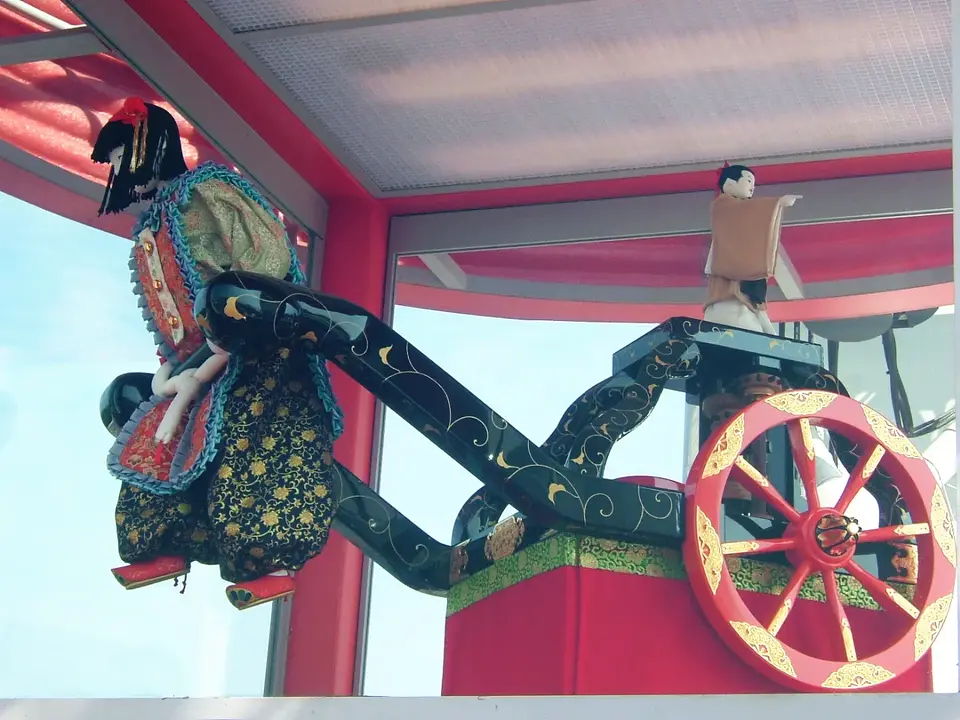
马钧
Ma Jun (马钧, c. 200 – c. 250 CE), courtesy name Deheng (德衡), was a preeminent mechanical engineer, inventor, and master of applied physics of the Cao Wei state during the Three Kingdoms period, native to Fufeng Commandery (modern Xingping, Shaanxi). Revered alongside Lu Ban, Mozi, and Zhang Heng, Ma Jun is celebrated as one of the greatest mechanical geniuses in Chinese and world technological history, extolled by…
Ma Jun (马钧, c. 200 – c. 250 CE), courtesy name Deheng (德衡), was a preeminent mechanical engineer, inventor, and master of applied physics of the Cao Wei state during the Three Kingdoms period, native to Fufeng Commandery (modern Xingping, Shaanxi). Revered alongside Lu Ban, Mozi, and Zhang Heng, Ma Jun is celebrated as one of the greatest mechanical geniuses in Chinese and world technological history, extolled by Western Jin philosopher Fu Xuan in the Biography of Master Ma (Ma Xiansheng Zhuan) as the "Supreme Craftsman under Heaven." Born into rural poverty in the war-torn Guanzhong region, Ma Jun suffered from a severe speech impediment, rendering him quiet, stammering, and unsuited for classical rhetoric or courtly debates. However, he possessed extraordinary spatial intuition, mechanical imagination, and physical acumen. Entering government service initially as an Erudite Scholar in Luoyang, he rose to the position of Supervising Secretary. During the reign of Emperor Ming of Wei (Cao Rui), when high courtiers such as Gao Tanglong and Qin Lang asserted that the ancient legendary south-pointing chariot was merely mythological fiction, Ma Jun refuted their skepticism, receiving an imperial commission to reconstruct the vehicle. Utilizing differential gear trains without magnetic components, Ma Jun built a functioning south-pointing chariot whose wooden pointer consistently pointed south regardless of the carriage's turns, astonishing the entire imperial court. Throughout his career, Ma Jun focused his engineering brilliance upon practical livelihood and national defense. He revolutionized the traditional pattern loom by replacing its cumbersome fifty to sixty treadles with a streamlined twelve-treadle mechanism, multiplying textile productivity fourfold. To resolve irrigation difficulties on high terrace fields in Luoyang and within imperial palace gardens, he designed the square-pallet chain pump (dragon-bone water pump, or fanche), an exceptionally light and efficient device operable even by children that became a foundational tool of Chinese agrarian civilization for nearly two millennia. For Emperor Ming, he engineered the miraculous "Water-Powered Puppet Theatre," using hydraulic wheels and gearboxes to animate dozens of mechanical figures in music, dance, acrobatics, and courtroom proceedings. In military technology, Ma Jun proposed redesigning the Zhuge repeating crossbow to multiply its firepower fivefold and invented the revolutionary rotary stone thrower, which utilized centrifugal flywheel inertia to hurl continuous volleys of massive stones across hundreds of paces. Although the aristocratic obsession with pure metaphysics impeded the full military adoption of his inventions, Ma Jun's pioneering contributions to gear kinematic design, hydraulic engineering, and ballistics remain monumental milestones in global technological civilization.
Born into impoverished circumstances in Fufeng Commandery, manifesting early mechanical genius despite a speech stammer.
Traveled to the Wei capital of Luoyang; appointed Erudite Scholar due to profound mastery of arithmetic and calendrical systems.
Refuted high ministers Gao Tanglong and Qin Lang regarding the feasibility of the south-pointing chariot; commissioned to construct the device.
Successfully unveiled the differential-gear south-pointing chariot, whose mechanical figure pointed south without deviation.
Streamlined cumbersome pattern looms from sixty treadles down to twelve, multiplying production speed and pattern complexity.
Invented the square-pallet chain pump to draw water from the Tianyuan Pool to high palace terraces, revolutionizing irrigation.
Created the water-powered mechanical puppet theatre, employing complex gear systems to animate lifelike moving figures.
Examined captured Shu Han repeating crossbows and formulated blueprints to enhance their firing rate and lethality fivefold.
Designed the continuous rotary stone thrower, demonstrating devastating continuous artillery volleys at test ranges outside Luoyang.
Passed away in Luoyang as Supervising Secretary, lamenting that court indifference toward applied mechanics prevented full military deployment.
Ma Jun was born in Fufeng Commandery in the Guanzhong basin during the chaotic closing years of the Eastern Han dynasty. The region had been thoroughly desolated by Dong Zhuo's atrocities and the subsequent civil strife between rival warlords Li Jue and Guo Si. Arising from a destitute household, Ma Jun experienced severe material deprivation throughout his youth. Compounding his social disadvantages, he suffered from a pronounced physiological speech impediment, speaking with an awkward stammer and struggling to articulate his thoughts in rapid conversation.
During the transition from the Han to the Wei dynasty, the intellectual elite placed paramount value upon prestigious lineage, refined eloquence, and philosophical debates on character evaluation. In this social climate, Ma Jun's verbal awkwardness and unrefined lineage invited cold condescension from aristocratic peers. Nevertheless, Ma Jun possessed a calm, introspective temperament and extraordinary analytical perception. Uninterested in chasing ephemeral social fame, he focused his intellect upon understanding the material mechanics of his physical surroundings, scrutinizing carpentry joints, well pulleys, watermills, and handlooms to grasp their underlying kinematics and force distributions.
During the Huangchu era, Ma Jun relocated to the Cao Wei capital of Luoyang. His technical mastery of mathematical astronomy and calendrical mechanics earned him an initial civil appointment as an Erudite Scholar. The post carried modest prestige and meager compensation. Living in a modest dwelling, Ma Jun dedicated his solitary leisure hours to analyzing fundamental flaws in contemporary agricultural and industrial implements, laying the groundwork for his future technological triumphs.
During the reign of Emperor Ming of Wei (Cao Rui), imperial interest turned toward ancient ritual artifacts and ceremonial regalia. According to ancient classical lore, when the Yellow Emperor fought the chieftain Chiyou in deep mists over four millennia earlier, he constructed a south-pointing chariot to navigate his armies to victory. Similarly, the Duke of Zhou was said to have presented a south-pointing chariot to southern envoys from Yuechang. However, by the Three Kingdoms period, all blueprints and physical examples had vanished, leading most scholars to dismiss the vehicle as an absurd myth.
One day, during an audience in the imperial palace, Senior Regular Attendant Gao Tanglong and Cavalry General Qin Lang asserted dismissively that ancient accounts of the south-pointing chariot were fanciful embellishments devoid of physical reality. Listening to their dogmatic pronouncements, Ma Jun stepped forward and objected: "In my humble judgment, ancient craftsmen indeed constructed the south-pointing chariot. It was merely that subsequent generations failed to study its mechanical kinematics, allowing the craft to perish. Why should we deny ancient achievements simply because contemporary men cannot fathom them?"
Gao Tanglong smirked contemptuously at the stammering scholar. Qin Lang mocked him directly: "Sir, your personal name is Jun, signifying a molding tool, and your courtesy name is Deheng, denoting a balancing scale. When you cannot even demonstrate the precise dimensions and weights of the chariot, how can you presume to mold its reality?" Ma Jun calmly responded: "Empty words and sophistry in the palace hall are mere verbal contests; why not permit me to manufacture the actual chariot, so that its practical efficacy can be proven beyond doubt?"
Impressed by his quiet conviction, Emperor Ming issued an imperial decree commissioning Ma Jun to supervise the construction of the south-pointing chariot. Working without archival drawings or surviving models, Ma Jun designed and manually carved precision wooden gears, calculating the pitch ratios and tooth geometries required for directional compensation. Within several months, he completed a magnificent wooden carriage.
On the day of inspection, Emperor Ming and the assembled civil and military aristocracy gathered at the Luoyang parade ground. As horses galloped and wheeled the vehicle through rapid figure-eights, abrupt sharp turns, and continuous rotations, the wooden figure atop the carriage remained pointing unerringly toward the true south. The ministers who had scoffed at him were left utterly speechless in admiration. Emperor Ming lauded his genius, promoting him to Supervising Secretary.
Despite his elevation to the central court, Ma Jun remained committed to elevating practical productivity for common laborers. In third-century China, intricately figured silk brocades and damasks represented vital trade goods and ceremonial currency. However, the traditional pattern drawlooms used in Wei workshops were extraordinarily clumsy and labor-intensive.
To weave complex multi-colored patterns, traditional drawlooms relied on a separate foot treadle for every individual pattern warp group. Looms producing patterns with fifty warp threads required fifty distinct treadles, while those with sixty threads required sixty treadles. A single weaver had to operate this sprawling array of fifty or sixty pedals in rapid succession, resulting in severe physical exhaustion and frequent treadle errors that ruined entire bolts of silk. Weaving a single bolt of figured damask often required nearly two months of exhausting labor.
Ma Jun conducted extensive field investigations within textile workshops across Luoyang, observing the precise mechanical interactions between treadle movement, heddle lifting, and shuttle passage. He realized that the seemingly chaotic movements of multi-thread patterns adhered to underlying geometric cycles that could be consolidated through unified mechanical linkages.
Applying camshaft mechanisms, jointed levers, and unified rocker shafts, Ma Jun overhauled the internal transmission of the drawloom. He completely eliminated the sprawling maze of pedals, consolidating the entire control interface into twelve standardized treadles. The modified loom proved remarkably light and intuitive to operate. Weavers using alternating foot strokes on the twelve treadles could produce complex motifs of mythical beasts, flora, and undulating clouds. The new loom multiplied textile productivity by four to five times, dramatically reducing physical strain and becoming a fundamental prototype for Chinese domestic textile engineering.
Emperor Ming was renowned for grand architectural projects, including the excavation of the vast Tianyuan Pool before the Chonghua Palace and the construction of artificial terrace hills. However, the gardens and terraces on the elevated slopes lacked a direct water supply. Palace attendants were forced to manually carry water buckets up the steep inclines daily, a backbreaking chore that exhausted hundreds of laborers while leaving hillside vegetation parched.
Furthermore, outside Luoyang and across central Henan, vast fertile tracts of agricultural land lay idle above riverbanks because peasant farmers lacked the mechanical capacity to raise water up steep earthen embankments. Ancient sweep wells and hand pulleys delivered water only intermittently in meager volumes, leaving crops vulnerable to recurring droughts.
Emperor Ming consulted Ma Jun, inquiring whether water could be lifted automatically to the heights of the imperial terrace gardens. Ma Jun replied with confidence: "I can cause the water to ascend from the depths to the heights."
Drawing upon and vastly refining crude wooden water-scooping contraptions attempted by Eastern Han technician Bi Lan, Ma Jun engineered the square-pallet chain pump, popularly known as the dragon-bone water pump (fanche). The pump consisted of an elongated rectangular wooden trough tilted along the embankment, with an endless loop of wooden chain links and scraper blades running around wooden sprockets at both ends.
Ma Jun's pump was engineered with such mechanical balance and minimal frictional resistance that even a ten-year-old child could effortlessly rotate its crank handle. As the sprockets spun, the wooden blades ascended continuously within the sealed trough, scooping water upward in an unbroken stream that poured into high-altitude irrigation canals. The machine possessed the dual capability of lifting water during dry spells and draining flooded fields during torrential rains. Ma Jun's dragon-bone water pump quickly spread across China, serving as the paramount irrigation instrument of Chinese agrarian society for nearly two millennia.
During the Jingchu era, an embassy from the Western Regions presented Emperor Ming with an exquisite set of carved wooden acrobatic puppets. Though carved with lifelike artistry and adorned in shimmering silks, the figures were entirely static ornaments. Emperor Ming lamented their immobility, asking Ma Jun: "These puppets are magnificent in craft, yet they remain lifeless. Can you endow them with the ability to dance and perform like living actors?"
Ma Jun accepted the challenge without hesitation. He constructed a large horizontal waterwheel concealed within the lower compartment of a massive, multi-tiered wooden cabinet, routing inflow and drainage channels to control water velocity. Inside the cabinet, he installed a sophisticated three-dimensional kinematic transmission composed of wooden reduction gears, connecting rods, eccentric cams, and ratchet escapements.
When water poured over the internal wheel, the steady hydraulic rotation was transmitted through the camshafts to the upper stage. The puppet theatre sprang into astonishing automated motion: wooden drummers beat their drums in tempo, flutists raised their instruments, and string players plucked their zithers in coordination; acrobats tumbled, balanced atop wooden poles, caught spinning balls, and vaulted upside down across ropes; while mechanical magistrates ascended the bench to conduct court, bailiffs patrolled, maids served tea, and carved birds and beasts dived and fluttered across the stage.
Known to posterity as the "Water-Powered Puppet Theatre," the installation transformed static puppet art into a dynamic, automated spectacle. The court viewed the display with awe, praising Ma Jun for possessing divine craftsmanship that harnessed the forces of nature.
Beyond civil and entertainment engineering, Ma Jun possessed profound tactical insight into military technology. During the northern campaigns of the Three Kingdoms, Chancellor Zhuge Liang of Shu Han had deployed the formidable Zhuge repeating crossbow, capable of discharging ten iron bolts in rapid succession.
After inspecting captured specimens in Luoyang, Ma Jun recognized their operational brilliance while spotting areas for mechanical enhancement: "Master Zhuge's design is exceedingly ingenious, yet from the perspective of mechanical kinetics, its force distribution has not achieved perfection. By refining the feeding mechanism and trigger escapement, its rate of discharge and destructive power can be augmented fivefold." He drew detailed structural blueprints demonstrating how continuous mechanical tensioning could multiply its volley density.
Furthermore, in ancient siege warfare, conventional counterweight traction trebuchets suffered from major tactical limitations. Deployed by Cao Cao during the Battle of Guandun, these single-lever machines required dozens of soldiers hauling ropes for each launch, resulting in slow reload times and predictable ballistic arcs. Defending garrisons could easily neutralize incoming boulders by hanging damp ox hides from the ramparts.
Ma Jun shattered these constraints by inventing the world's first rotary stone thrower. Breaking away from the single lever, he mounted a large circular wooden wheel on an elevated framework. Powered by capstans, the wheel spun at high velocity, utilizing centrifugal inertia to propel heavy stone projectiles fed through automatic guide chutes in continuous succession.
During field tests outside Luoyang, Ma Jun demonstrated the weapon by securing dozens of heavy stones to the rotary apparatus. Upon release, the machine unleashed a deafening roar as boulders were flung continuously across hundreds of paces like a devastating hailstorm, completely pulverizing defensive palisades. General Cao Xi, Marquis of Anxiang, observed the trial and was overwhelmed by its destructive potential.
However, during the late Cao Wei period, the aristocratic elite had succumbed to the esoteric metaphysics of Neo-Daoist Xuanxue, viewing practical engineering with aristocratic disdain. Regular Attendant Pei Xiu, a prominent literatus and cartographer, publicly mocked Ma Jun's artillery as "vulgar trickery of no benefit to statecraft." Due to his speech impediment, Ma Jun could not compete verbally against Pei Xiu's eloquent sophistry, enduring public humiliation in silence.
The literatus Fu Xuan vigorously defended Ma Jun, admonishing Pei Xiu for his superficiality. Fu Xuan approached Cao Xi, urging him to present the invention to his brother, the regent Cao Shuang, so that state timber and artisans could be allocated for mass production. Tragically, Cao Shuang was preoccupied with factional purges and dissipated pleasures, completely ignoring the proposal.
Ma Jun spent his final years as an underutilized Supervising Secretary, watching his revolutionary military and industrial designs gather dust in bureaucratic neglect. Around 250 CE, the peerless master passed away in Luoyang, leaving behind an immortal legacy that would inspire future generations of scientific innovators.
Ma Jun's paramount contribution to world mechanical history was his independent design and reconstruction of the south-pointing chariot using pure gear differentials, without reliance upon magnetic attraction.
According to historical and modern kinematic reconstructions, Ma Jun's vehicle incorporated an intricate planetary gear system situated between the axle shafts and the overhead pointing figure. When the carriage moved forward in a straight line, both drive wheels rotated at identical speeds, keeping the internal reverse-gear mechanism disengaged, while the wooden figure pointed steadily southward.
When the vehicle negotiated a turn, the difference in turning radii caused the outer wheel to rotate faster than the inner wheel. This wheel speed differential activated the internal bevel and spur gear trains, driving the vertical pointer shaft in an equal and opposite direction. This continuous mechanical compensation neutralized the angular displacement of the chassis, keeping the pointing arm oriented rigidly toward the south. Ma Jun's realization of differential directional compensation preceded modern automotive differential mechanisms by more than a thousand years.
Ma Jun's overhaul of the textile pattern loom represented an industrial leap from fragmented, individualized controls to unified modular mechanical automation.
By analyzing the mathematical symmetry of textile weave structures, Ma Jun recognized that complex pattern combinations could be derived from modular harmonic linkages. He redesigned the heddle harnesses, integrating cams and multi-link levers to reduce the sixty individual treadles of traditional looms to a compact set of twelve pedals.
This reduction simplified loom construction, halved production costs, and dramatically curtailed operator errors. Weavers could manipulate intricate warp sheds with effortless foot motions, accelerating fabric production by four to five times. Ma Jun's design democratized the production of luxury patterned textiles across Cao Wei, establishing mechanical principles that directly guided the development of Song and Ming dynasty drawlooms.
In agricultural and hydraulic history, Ma Jun's development of the square-pallet chain pump (fanche) ranks among the most impactful mechanical innovations of ancient civilization.
Prior to Ma Jun, water lifting was dominated by intermittent batch devices such as the swape (jiegao) and windlass (lulu). Ma Jun synthesized the principles of gear kinematics and continuous pallet transmission, constructing a lightweight wooden trough through which a closed chain of square wooden paddles cycled continuously.
The structural brilliance of the dragon-bone pump lay in its structural lightness and high mechanical advantage. By eliminating binding friction through precision mortise-and-tenon assembly, it allowed even children to lift immense volumes of water with minimal torque. Capable of drawing water from low streams to high terrace fields and draining inundated plots during rainy seasons, it served as China's primary irrigation mechanism until the widespread introduction of motorized pumps in the twentieth century.
Ma Jun's design of the rotary stone thrower demonstrated extraordinary foresight in ballistics and rotary dynamics, anticipating modern rapid-fire projectile concepts.
Recognizing that human-drawn lever trebuchets suffered from sluggish reload cycles and low volume, Ma Jun utilized a rapidly spinning wheel framework to accumulate rotational kinetic energy. By feeding stone projectiles sequentially into the spinning rim, the machine utilized centrifugal acceleration to launch volleys of boulders in uninterrupted streams.
The resulting saturation bombardment overwhelmed defensive fortifications, rendering traditional protective counter-measures useless. Although political apathy prevented its deployment on the battlefields of the Three Kingdoms, Ma Jun's rotary launcher stands as one of the most brilliant theoretical anticipations of centrifugal artillery in ancient military engineering.
The "Water-Powered Puppet Theatre" represented the pinnacle of ancient Chinese kinematic programming and hydraulic automation.
Ma Jun integrated fluid dynamics and complex gear trains to transform hydrostatic pressure and kinetic waterflow into multifaceted choreographed entertainment. Through multi-stage reduction gears and spatial camshafts, a single primary waterwheel simultaneously controlled dozens of distinct puppet movements across varying speeds, amplitudes, and rhythmic cadences.
This installation achieved automated mechanical storytelling: wooden figures performed acrobatics, played musical instruments in tempo, and carried out bureaucratic courtroom dramas without human intervention. Ma Jun's creation demonstrated that by the third century CE, Chinese mechanical engineering had mastered the core principles of automatic timing, mechanical programming, and multi-axis mechanical coordination.
Ma Jun is universally acknowledged as a titan of ancient mechanical science, whose visionary designs and practical inventions earned him the reverence of successive generations of engineers and historians.
Fu Xuan, in his foundational Biography of Master Ma (Ma Xiansheng Zhuan), praised him with profound reverence: "Master Ma was the most celebrated craftsman under heaven. In his youth, he lived in poverty and focused on intricate carving rather than idle sport. His inventive genius was unsurpassed, and his craft seemed divinely bestowed. Even the legendary Lu Ban, Mozi, or the Yellow Emperor's south-pointing chariot could not surpass him. What a profound tragedy that courtiers like Gao Tanglong and Cao Xi failed to grasp cosmic mechanics, preventing Master Ma's sublime arts from achieving full realization!"
Emperor Ming of Wei marveled at the south-pointing chariot, remarking: "Hitherto the regular attendants claimed the south-pointing chariot was mere ancient myth; today Master Ma has crafted it with his own hands, achieving craftsmanship that rivals nature and subdues all doubt under heaven!"
Western Jin poet Pan Yue, in his Rhapsody on the Imperial Plowing (Jietian Fu), celebrated Ma Jun's humanitarian engineering: "The dragon-bone pump draws forth water to nourish the fields; the wondrous mechanisms of Master Ma bestow blessings flowing through a hundred generations."
Eminent British historian of science Joseph Needham evaluated Ma Jun as one of the preeminent figures in the history of world engineering, noting that his differential south-pointing chariot, mass-produced chain pump, and centrifugal rotary artillery demonstrated a profound command of kinematic geometry that shone with brilliance across global technological history.
FIGURES ASSOCIATED WITH THIS DYNASTY