Birth in Dantu
Born on February 9 into an eminent Catholic lineage in Dantu, Zhenjiang Prefecture, Jiangsu.
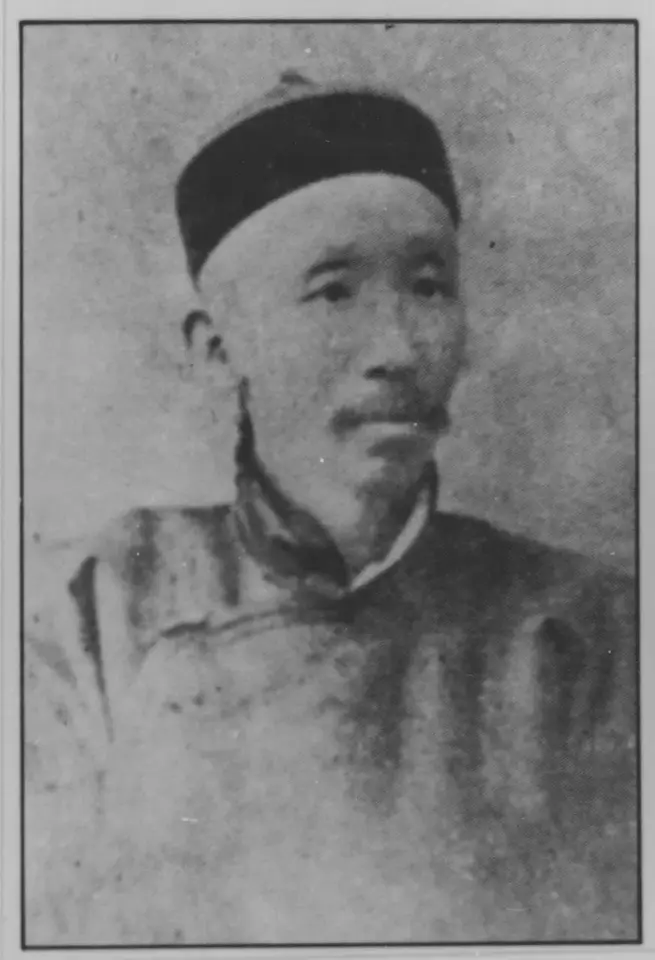
马建忠
Ma Jianzhong (马建忠, February 9, 1845 – August 14, 1900), alias Qian, academic name Sicai, courtesy name Meishu (眉叔), art name Shikezhai (适可斋), was a native of Dantu (modern Zhenjiang, Jiangsu Province). He was a twentieth-generation descendant of the Yuan dynasty historian Ma Duanlin and younger brother of the prominent educator Ma Xiangbo. Ma was an outstanding late-Qing diplomat, reformist philosopher, and pioneer of modern…
Ma Jianzhong (马建忠, February 9, 1845 – August 14, 1900), alias Qian, academic name Sicai, courtesy name Meishu (眉叔), art name Shikezhai (适可斋), was a native of Dantu (modern Zhenjiang, Jiangsu Province). He was a twentieth-generation descendant of the Yuan dynasty historian Ma Duanlin and younger brother of the prominent educator Ma Xiangbo. Ma was an outstanding late-Qing diplomat, reformist philosopher, and pioneer of modern linguistics, celebrated as the first Chinese student to obtain a doctoral degree in France and the founding father of modern Chinese grammar. In his youth, he attended St. Ignatius College (Xuhui Public School) in Shanghai, achieving proficiency in French, Latin, Greek, and English, and entered the secretariat of Governor-General Li Hongzhang in 1870. In 1876, he was sent to France on government scholarship, earning a doctorate in law from the École Libre des Sciences Politiques in Paris. Returning to China, he served as Li Hongzhang's premier diplomatic advisor. He traveled to India to negotiate opium tariffs, surveyed the Liaodong coast to select the site for the Port Arthur Naval Dry Dock, and dispatched to Joseon Korea in 1882 during the Imo Incident, where he engineered the capture of the Daewongun to quell the mutiny and suggested the adoption of the Taegukgi as Korea's national flag. During the Westernization Movement and the Sino-French War, he served as Associate Director of the China Merchants' Steam Navigation Company and Director of the Shanghai Cotton Cloth Mill, advocating foreign loans, the protection of private commerce, tariff autonomy, parliamentary representation, and the abolition of the likin tax, themes expounded in his treatises Enriching the People and Shikezhai Jiyan Jixing. In his later years, he devoted over a decade to writing Ma's Grammar (Ma Shi Wen Tong), published in 1898 as the first systematic grammatical treatise in Chinese history. During the Boxer Crisis of 1900, while assisting Li Hongzhang in Shanghai, he died of heart failure from overnight translation of urgent diplomatic telegrams at the age of fifty-five.
Born on February 9 into an eminent Catholic lineage in Dantu, Zhenjiang Prefecture, Jiangsu.
Fled to Shanghai with his family during Taiping military advances; entered St. Ignatius College (Xuhui Public School).
Introduced by his elder brother Ma Jianxun to join Li Hongzhang's secretariat, assisting in foreign affairs.
Selected on government scholarship to study international law in France, concurrently serving as diplomatic interpreter.
Obtained his doctorate in law from the École Libre des Sciences Politiques, becoming the first Chinese doctoral graduate in France.
Negotiated opium tariffs in Calcutta, India; surveyed Liaodong to select the base for the Port Arthur Dry Dock.
Assisted Korea in drafting commercial treaties, designed the Taegukgi, and captured the Daewongun to quell the Imo Mutiny.
Appointed Associate Director of China Merchants; protected merchant fleets through neutral American registry transfer during the Sino-French War.
Served as Director of the Shanghai Cotton Cloth Mill; authored Enriching the People, championing mercantilist development.
Accompanied Li Hongzhang to Japan as senior counselor during negotiations for the Treaty of Shimonoseki.
Published Ma Shi Wen Tong, the first modern systematic grammatical treatise of the Chinese language.
Assisted peace negotiations during the Boxer Crisis; died of sudden heart failure while translating urgent dispatches on August 14.
Ma Jianzhong was born into an illustrious Catholic scholar-gentry lineage in Dantu, Jiangsu. His family was descended from the Yuan dynasty historian Ma Duanlin, preserving generations of Christian devotion. In 1853, as Taiping forces seized Nanjing and threatened the lower Yangtze, his parents evacuated the family to Shanghai. Endowed with exceptional linguistic aptitude, Ma entered St. Ignatius College (Xuhui Public School), operated by French Jesuits. Under rigorous bicultural training, he mastered the classical Confucian canons while achieving fluent command of Latin, French, Greek, and English.
Deeply shaken by national humiliation following the Second Opium War, Ma abandoned traditional civil examinations to pursue Western scientific and political statecraft. In 1870, through the recommendation of his elder brother Ma Jianxun, a logistics officer for the Huai Army, the twenty-five-year-old scholar entered the secretariat of Governor-General Li Hongzhang. At the time, Li was directing the northern modernization movement and urgently needed personnel proficient in Western law and languages. Ma demonstrated acute diplomatic acumen, swiftly becoming Li's indispensable consultant for arms procurement, maritime law, and foreign negotiations.
During his service in the secretariat, Ma forged close intellectual partnerships with early reformist thinkers such as Wang Tao, Xue Fucheng, and Zheng Guanying. They collectively argued that defending China required not merely adopting Western weaponry, but also reforming political institutions, establishing national parliaments, fostering merchant commerce, and developing domestic manufacturing, shaping the earliest currents of modern Chinese bourgeois reformist thought.
In 1876, recognizing the necessity of cultivating indigenous legal experts in international law, Li Hongzhang memorialized the throne to send Ma to France on government scholarship with the bureaucratic rank of secretary, concurrently serving as French interpreter for Guo Songtao, China's first diplomatic minister to Britain and France. Arriving in Paris, Ma devoted himself to legal, diplomatic, and constitutional studies.
In 1877, Ma passed the state examination of the Paris Academy in arts and sciences, becoming the first Chinese national to obtain the French baccalaureate diploma. Subsequently, he enrolled in the premier institution for European diplomacy, the École Libre des Sciences Politiques, specializing in public international law, comparative constitutionalism, and commercial legislation.
In 1879, after three years of intensive study, Ma was awarded the doctorate of law (licence de droit) from the École Libre des Sciences Politiques. He was the first Chinese intellectual in modern history to attain a European law doctorate. Declining lucrative professional opportunities in Europe, Ma returned to China in September 1879, resuming his post in Li Hongzhang's secretariat as the premier Western legal authority of the Qing Empire.
Upon his return, Ma was immediately deployed to diplomatic crises. In 1881, amidst British opium dumping in China, Ma was dispatched to Calcutta to negotiate opium monopolies with the British colonial administration in India. In negotiations, he wielded international law and moral ethics to condemn opium trafficking, arguing for containment through taxation, winning respect from British negotiators for his fair reasoning. Later that year, he surveyed the Yellow Sea coast of Liaodong, personally selecting the geographic location for the Port Arthur Naval Dry Dock, which became the prime engineering maintenance base for the Beiyang Fleet.
In the spring of 1882, seeking to deter Japanese encroachment in Korea, the Qing court dispatched Ma to Seoul to assist the Joseon government in concluding commercial treaties with the United States, Britain, and Germany. During this mission, Korean envoys Park Yung-hyo and Kim Ok-gyun, preparing for diplomatic missions to Japan, requested permission to adopt the Qing five-clawed dragon flag. When Beijing rejected the request because vassal states could not display imperial symbols, Ma proposed designing a national banner featuring the ancient philosophical Taegi motif and eight trigrams. Korean King Gojong adopted this design, which became the historic origin of the Korean national flag.
In July 1882, the Imo Mutiny erupted in Seoul, where mutinous troops stormed the palace, expelled Queen Min, and installed the anti-Qing Regent Heungseon Daewongun. The Qing court dispatched troops under General Wu Changqing and Admiral Ding Ruchang, with Ma serving as chief diplomatic and military strategist. Ma devised an ambush strategy, inviting the Daewongun to an official banquet at the Chinese military encampment, arresting him smoothly without bloodshed, and escorting him by fast steamer to Tianjin. Ma's decisive intervention restored Qing suzerainty over the peninsula. On October 18, 1882, Li Hongzhang dispatched Ma to Tianjin to negotiate the Vietnamese border crisis with French Minister Bourée, producing a three-point draft dividing patrols along the Red River.
In 1884, Ma joined the China Merchants' Steam Navigation Company under Tang Tingshu, soon becoming Associate Director. When the Sino-French War erupted, Admiral Courbet of the French Far East Squadron instituted a naval blockade, threatening to seize all Chinese merchant shipping. Confronting the imminent destruction of China's fledgling merchant marine, Ma executed an ingenious legal maneuver under international neutrality conventions: he orchestrated the provisional sale of the entire China Merchants fleet to the American trading firm Russell and Company for five million taels, allowing the ships to navigate under the neutral American flag throughout the conflict.
This strategic transfer protected China's modern merchant shipping from capture or destruction. However, conservative court censors, ignorant of international law, accused Ma of treason and embezzlement, demanding his execution. Summoned to Beijing for judicial trial, Ma presented all secret legal agreements and accounting records before the Ministry of Justice, demonstrating that he had not diverted a single cent. He was exonerated, and the entire fleet was reacquired by the company according to the original contract following the conclusion of peace.
Subsequently, Ma served as General Manager of the Shanghai Cotton Cloth Mill. Observing bureaucratic inefficiencies in state-supervised enterprises, he authored Enriching the People and Shikezhai Jiyan Jixing, calling for the abolition of the internal likin transport tax, the promotion of joint-stock private enterprise, and the recovery of customs autonomy, establishing himself as a pioneer of modern Chinese mercantilist economics. To address military weaknesses, he formulated an advanced officer training program, proposing the integration of science, engineering, medicine, and commerce into naval academies to elevate the social and professional status of military personnel.
Following the disastrous defeat in the First Sino-Japanese War of 1894, Ma accompanied Li Hongzhang to Japan as senior diplomatic counselor during the painful negotiations for the Treaty of Shimonoseki in 1895.
Living in quiet retirement in Shanghai over the following decade, Ma reflected deeply on China's vulnerabilities, concluding that the primary obstacle to popular enlightenment was the lack of a standardized scientific grammatical system for the Chinese language, which forced students to spend decades memorizing texts blindly. He resolved to create the first comprehensive grammatical system for the Chinese written language. During this period, he proposed establishing the Translation Academy in Shanghai, personally serving as foreign language instructor to train young translators in Western law and languages.
Drawing upon authentic classical linguistic examples from pre-Qin, Han, and Wei historical texts, including the Zuo Commentary, Records of the Grand Historian, and Book of Han, and integrating the conceptual frameworks of Latin and Greek grammar, Ma laboured tirelessly for more than ten years. In 1898, the Commercial Press published his monumental ten-volume masterwork, Ma Shi Wen Tong. This pioneering treatise categorized parts of speech, syntax, and sentence components, establishing modern Chinese grammatical linguistics.
In the summer of 1900, the Boxer Calamity engulfed northern China, and allied forces occupied Beijing. Empress Dowager Cixi summoned Li Hongzhang to manage peace negotiations, and Li established his temporary headquarters in Shanghai, enlisting Ma to oversee confidential diplomatic correspondence with foreign legations. On the night of August 13, amidst intense military developments, foreign dispatches arrived continuously. Ma worked throughout the night translating lengthy French telegrams. On the morning of August 14, 1900, overcome by chronic exhaustion, Ma suffered fatal heart failure at his desk, passing away at the age of fifty-five.
Prior to the publication of Ma Shi Wen Tong, the Chinese philological tradition lacked a systematic syntax or comprehensive grammatical taxonomy, classifying words broadly into empty and full characters and relying on intuitive reading. Ma broke through two millennia of linguistic convention, adapting Latin grammatical methodologies to create the first systematic grammatical treatise for classical Chinese.
Comprising ten volumes, Ma Shi Wen Tong established formal scientific definitions for parts of speech, including nouns, pronouns, verbs, adjectives, adverbs, prepositions, conjunctions, and particles, while rigorously analyzing sentence elements such as subjects, predicates, objects, and modifying clauses. This foundational treatise transformed Chinese language study from an auxiliary branch of Confucian exegesis into an independent scientific discipline, providing an indispensable foundation for the modern vernacular language movement and foreign Chinese education.
Facing aggressive Japanese expansion toward the Korean Peninsula, Ma displayed exceptional geopolitical foresight and diplomatic skill. Breaking through traditional Qing isolationism, he facilitated the signing of modern commercial treaties between Korea and Western powers, utilizing multilateral balance-of-power diplomacy to check Japanese unilateral hegemony.
In 1882, when Korean diplomats were perplexed by national flag protocol, Ma drew upon the metaphysical principles of the Book of Changes to design a national flag featuring a white background, red and blue circular yin-yang swirl, and four primary trigrams, which King Gojong officially proclaimed as Korea's national emblem. During the subsequent Imo Mutiny, Ma led military and diplomatic maneuvers to capture Regent Daewongun at a banquet without bloodshed, swiftly ending the crisis and preserving Qing geopolitical security in Northeast Asia.
Ma was a foremost pioneer of modern Chinese economic nationalism and mercantilism. Critiquing the monopolistic abuses of early state-supervised enterprises, he published Enriching the People and Shikezhai Jiyan Jixing, advancing the guiding principle: "To pursue wealth, one must take the protection of commerce as fundamental; to pursue strength, one must take winning the hearts of the people as essential."
He advocated the establishment of private joint-stock corporations, demanded the renegotiation of unequal treaties to raise tariffs on luxury imports such as foreign tobacco and liquor to protect native manufacturing, and called for the abolition of the destructive domestic likin tax. Calculating that Britain and France generated tens of millions of taels from state tobacco duties while Western powers exempted their tobacco imports into China, he urged the establishment of a state tobacco and alcohol monopoly to generate national revenue for maritime defense, establishing crucial fiscal blueprints for early modern China.
Ma played an indispensable technical and strategic role in the creation of China's modern northern naval fleet. In 1881, Li Hongzhang appointed Ma, who was well versed in Western coastal fortification engineering, to conduct on-site marine surveys of the Liaodong Peninsula.
Traversing hundreds of kilometers along frozen shores, Ma evaluated ocean depths, tidal currents, and geological formations, persuading imperial authorities to select the natural deep-water bay of Port Arthur as the primary repair and operational harbor for the Beiyang Fleet. He oversaw the initial engineering designs for the Port Arthur Naval Dry Dock, which became the premier dry dock in East Asia capable of servicing massive ironclad warships, laying a critical engineering cornerstone for modern Chinese maritime defense.
FIGURES ASSOCIATED WITH THIS DYNASTY