Born in Luoyang
Born into a gentry family in Luoyang; suffered family discord in youth and endured severe poverty living in cave dwellings with his mother while studying diligently.
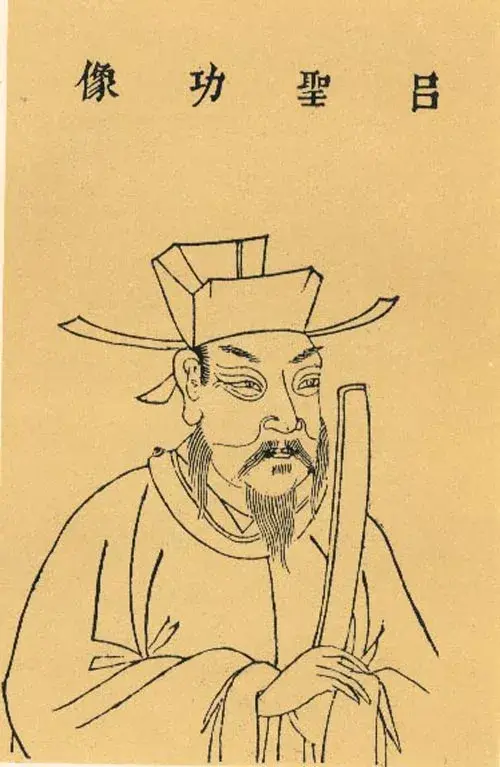
吕蒙正
Lu Mengzheng (944–1011), courtesy name Shenggong, was a native of Luoyang in Henan Prefecture with ancestral roots in Laizhou. He was an eminent Grand Councilor and statesman of the Northern Song dynasty who served as premier on three separate occasions during the reigns of Emperor Taizong and Emperor Zhenzong, standing as the very first commoner top-ranking examinee (Zhuangyuan) in Northern Song history. Passing first in…
Lu Mengzheng (944–1011), courtesy name Shenggong, was a native of Luoyang in Henan Prefecture with ancestral roots in Laizhou. He was an eminent Grand Councilor and statesman of the Northern Song dynasty who served as premier on three separate occasions during the reigns of Emperor Taizong and Emperor Zhenzong, standing as the very first commoner top-ranking examinee (Zhuangyuan) in Northern Song history. Passing first in the imperial metropolitan examination of 977, Lu Mengzheng began his civil career as Assistant in the Directorate of Construction and Controller-General of Shengzhou. He rose rapidly through the court bureaucracy as Drafter of Imperial Decrees and Hanlin Academician. In 988, he was elevated to Grand Councilor as Vice Director of the Secretariat concurrently Minister of Revenue and Joint Manager of Affairs with the Secretariat-Chancellery. He returned to the premiership in 993, and in 1001 was appointed Grand Councilor for a third time under Emperor Zhenzong, being enfeoffed successively as Duke of Lai and Duke of Xu. Renowned for his magnanimity, moral rectitude, and outspoken candor, Lu Mengzheng commanded extraordinary veneration from both sovereigns. When subordinate courtiers mocked his humble origins upon his entrance into the executive council, he strictly refused to inquire after their names, choosing reconciliation over personal grievance; Emperor Taizong famously marveled: "As for Mengzheng's breadth of magnanimity, I cannot equal him." During his premiership, Lu Mengzheng championed agrarian convalescence, opposed unnecessary frontier warmongering, and resisted exorbitant imperial extravagances. He famously warned Emperor Taizong not to conflate the festival splendor of the capital with the genuine livelihood of the realm, citing destitute peasants starving outside the city walls. Furthermore, he instituted lasting civil service reforms by curbing the hereditary privileges of executive ministers' offspring, requiring their initial official appointments to begin at the modest rank of ninth grade. Retiring to Luoyang in his later years, he passed away in 1011 at sixty-eight, posthumously honored as Director of the Secretariat with the posthumous title Wenmu. His nephew Lu Yijian and grandnephew Lu Gongzhu later ascended to the premiership, establishing the Lu family of Luoyang as one of the most prominent ministerial lineages in Song history.
Born into a gentry family in Luoyang; suffered family discord in youth and endured severe poverty living in cave dwellings with his mother while studying diligently.
Placed first overall in the imperial palace examination (Zhuangyuan); appointed Assistant in the Directorate of Construction and Controller-General of Shengzhou.
Promoted to Editorial Director, served in the Institute of Historiography, and appointed Left Rectifier of Omissions and Drafter of Imperial Decrees.
Elevated to Hanlin Academician and soon appointed Participant in Determining Governmental Matters, entering the core executive council.
Succeeded Li Fang as Grand Councilor; invested as Vice Director of the Secretariat concurrently Minister of Revenue and Joint Manager of Affairs with the Secretariat-Chancellery.
Dismissed following outspoken admonitions; dispatched to govern Henan Prefecture.
Recalled to the court as Right Grand Councilor and Vice Director of the Chancellery, stabilizing central administration and foreign policy.
Resigned due to illness and appointed Regent of the Western Capital; recommended Lu Duan as his ministerial successor.
Summoned by Emperor Zhenzong to serve as Grand Councilor for a third time; invested as Grand Minister of Works and Grand Academician of Zhaowen Institute, enfeoffed Duke of Lai.
Resigned from public service due to advanced age; retired with the honorary title Grand Preceptor to the Crown Prince to his Luoyang estate.
Passed away peacefully at his Luoyang residence at the age of sixty-eight; posthumously honored as Director of the Secretariat with the posthumous title Wenmu.
Lu Mengzheng was born in the ninth year of Tianfu (944) during the Later Jin dynasty. His father, Lu Guitu, was a court official of the Later Zhou dynasty who served as Reminder of the Left. However, severe discord among domestic concubines led his father to cast out Lu Mengzheng and his mother, Lady Liu. Reduced to utter poverty, the mother and son took refuge in an austere earthen cave dwelling beside a Buddhist temple in the Longmen Mountains near Luoyang. Rather than succumbing to despair, Lu Mengzheng endured extreme privation with resolute discipline, studying ancient Confucian classics and historical treatises by the dim light of oil lamps.
In the second year of Taiping Xingguo (977), Emperor Taizong organized a grand metropolitan examination to recruit fresh administrative talent from across the newly consolidated empire. Lu Mengzheng demonstrated dazzling literary style and astute policy comprehension, placing first in the entire empire as Zhuangyuan. He was initially appointed Assistant in the Directorate of Construction and dispatched as Controller-General of Shengzhou (modern Nanjing). In Shengzhou, he demonstrated remarkable administrative integrity, rectifying judicial abuse and providing relief to distressed commoners. In 980, he was summoned back to Kaifeng as Editorial Director and Compiler in the Institute of Historiography, soon promoted to Left Rectifier of Omissions and Drafter of Imperial Decrees.
In 983, Lu Mengzheng was appointed Hanlin Academician and subsequently elevated to Participant in Determining Governmental Matters (Canzhi Zhengshi), joining the supreme decision-making body of the realm. When he first entered the Secretariat hall, an arrogant veteran courtier gestured toward his back from behind an audience curtain, sneering disdainfully: "Can this petty youth truly participate in supreme state affairs?" Lu Mengzheng walked past steadily, pretending not to hear. When his indignant colleagues demanded to investigate the courtier's name to punish the insult, Lu Mengzheng intervened emphatically: "If I learn his name, I will never forget it, breeding lifelong rancor in my heart. Remaining ignorant costs me nothing and preserves harmony in our deliberations." The court was universally moved by his extraordinary tolerance.
In the first year of Duanhong (988), Emperor Taizong dismissed Li Fang from the premiership and, sweeping aside conservative aristocratic prejudice, appointed Lu Mengzheng as Vice Director of the Secretariat concurrently Minister of Revenue and Joint Manager of Affairs with the Secretariat-Chancellery. Lu Mengzheng became the first commoner scholar to achieve the premiership through the imperial examinations in Song history, inaugurating an era of meritocratic civil governance.
As Grand Councilor, Lu Mengzheng was renowned for fearless remonstrance and rigorous adherence to bureaucratic standards. When Emperor Taizong requested recommendations for an envoy to the Khitan Liao empire, Lu Mengzheng proposed an experienced, upright official. Taizong disliked the nominee and rejected the memorial. The following day, when the emperor repeated the query, Lu Mengzheng submitted the identical candidate. Taizong flared with rage, rebuking him: "Why are you so obstinate?" Lu Mengzheng replied with unwavering calm: "It is not that your servant is obstinate, but that Your Majesty harbors prejudice. This official is resolute, frugal, and thoroughly versed in border diplomacy, making him the only qualified envoy; the others are merely sycophants unsuitable for representing our state. Your servant dare not accommodate imperial pleasure at the expense of national interests." Reflecting on the exchange in his private quarters, Taizong remarked to his personal attendants: "In terms of breadth of spirit and steadfast character, even I cannot match Lu Mengzheng." The envoy was dispatched and accomplished the mission brilliantly.
On another occasion during the Lantern Festival, Emperor Taizong gazed out over the illuminated pavilions of Kaifeng, boasting to his assembled ministers of the boundless prosperity and peace of his reign. Lu Mengzheng stepped forward to caution him: "Your servant has witnessed destitute migrants starving and freezing to death merely a few miles outside the city gates. Living deep within the imperial palaces, Your Majesty must not assume that the entire realm enjoys tranquility simply because the capital thrives. I beseech Your Majesty to remain vigilant to the hardships of the common people and govern with restraint." Taizong was deeply sobered and praised his integrity.
During his terms in office, Lu Mengzheng paid rigorous attention to bureaucratic equity, striving to eliminate nepotism and aristocratic privilege. At that time, sons of high-ranking dignitaries routinely obtained senior administrative ranks through hereditary privilege (yin) without undergoing competitive examinations. Lu Mengzheng memorialized the throne: "Children of executive ministers are reared in sheltered luxury, having never tasted the bitter labors of scholarly discipline or local grassroots governance. Granting them immediate high rank and rich emolument undermines the cultivation of genuine talent." He formally enacted a statutory ordinance restricting the initial appointment of executive ministers' offspring to the base rank of ninth grade, requiring prolonged field evaluations before promotion. This reform curbed aristocratic entrenchment and became a foundational meritocratic principle for centuries.
In 992, Lu Mengzheng stepped down from the premiership following factional remonstrance, being appointed Prefect of Henan. Recognizing his irreplaceable loyalty and stature, Taizong recalled him to the premiership in 993 as Right Grand Councilor and Vice Director of the Chancellery. In 995, troubled by chronic illness, Lu Mengzheng voluntarily stepped aside, recommending the prudent Lu Duan to succeed him as Grand Councilor, while he took up the governorship of Henan as Regent of the Western Capital.
In 1001, Emperor Zhenzong summoned Lu Mengzheng to court for a third premiership, appointing him Joint Manager of Affairs, Grand Academician of Zhaowen Institute, and Grand Minister of Works, while enfeoffing him Duke of Lai. During this final tenure, Lu Mengzheng provided steady, moderate counsel, maintaining fiscal prudence and domestic harmony as the empire faced northern military tensions.
In the sixth year of Xianping (1003), Lu Mengzheng submitted multiple petitions requesting retirement on grounds of advanced age. Emperor Zhenzong granted his request with profound honors, conferring upon him the title Grand Preceptor to the Crown Prince and sanctioning his return to Luoyang. Zhenzong ordered the construction of a dedicated riverside villa known as the "Kaifeng Terrace" (Kaifeng Tai) beside the Yi and Luo rivers, bestowing imperial calligraphic scrolls for his enjoyment.
When Emperor Zhenzong passed through Luoyang en route to the northern border, he visited Lu Mengzheng's residence and inquired which of his descendants possessed the talent to guide the empire. Lu Mengzheng replied with candid modesty: "My own sons possess merely modest capabilities. However, my nephew Lu Yijian possesses profound wisdom, vast foresight, and supreme administrative judgment; he is a true ministerial counselor fit to govern the realm!" Lu Yijian subsequently rose to become one of the most prominent Grand Councilors of Emperor Renzong's reign. In 1011, Lu Mengzheng passed away at his home in Luoyang at the age of sixty-eight. Emperor Zhenzong suspended court audiences, posthumously elevated him to Director of the Secretariat, and bestowed the posthumous name Wenmu.
Rising from acute poverty in the caves of Longmen, Lu Mengzheng passed first in the metropolitan examinations of 977 and advanced to the premiership on three distinct occasions, pioneering the ascendancy of meritocratic examination scholars over military and aristocratic elites in the Northern Song dynasty.
He repeatedly challenged imperial complacency, boldly warning Emperor Taizong of the starving masses outside the capital walls during court festivities and insisting on qualified diplomatic appointments regardless of imperial anger, exemplifying the highest Confucian ideals of ministerial remonstrance.
Lu Mengzheng designed and codified landmark statutory regulations demoting the entry-level appointments of grand councilors' sons to ninth-grade civil ranks, instituting competitive accountability and checking aristocratic monopolization of executive offices.
Refusing to learn the names of colleagues who slurred his origins, he preserved administrative unity and eliminated personal vindictiveness from state governance. Furthermore, he correctly identified and groomed his nephew Lu Yijian for supreme statecraft, founding a generational tradition of prime ministerial governance in the Lu lineage.
FIGURES ASSOCIATED WITH THIS DYNASTY