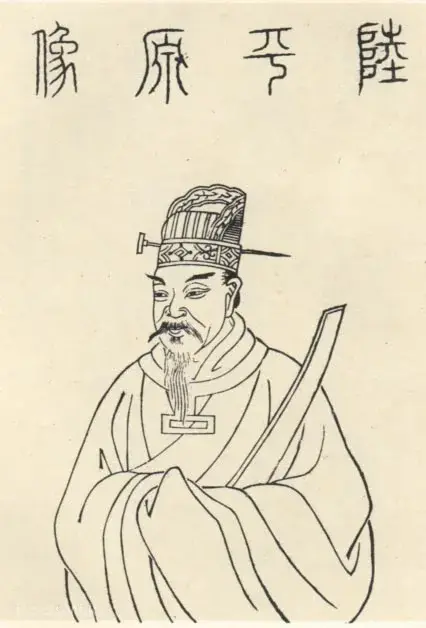
PROFILE
Lu Ji (吕纪, 1477–?), courtesy name Tingzhen (廷振) and literary names Leyu (乐愚) and Leyu (乐渔), was a native of Yin County (鄞县, present-day Ningbo, Zhejiang). He was a celebrated court painter of the Ming Dynasty who served as Painter-in-Attendance in the Hall of Benevolence and Wisdom (Renzhi Dian) during the Hongzhi reign, eventually rising to Guard Commander in the Embroidered Uniform Guard (Jinyiwei Zhihui Shiwei).
Lu Ji's artistic scope was expansive and majestic; while excelling primarily in bird-and-flower (huaniao) paintings, he was also skilled in landscape and figure genres. Initially mastering Bian Jingzhao's meticulous fine-brush heavy-color (gongbi zhongcai) technique, he subsequently integrated Lin Liang's expressive ink-wash dynamism with the structural grandeur of Southern Song academy masters, pioneering a novel synthesis of opulent decorativeness and spontaneous brushwork. His surviving masterpieces include Geese by the Autumn River, Birds and Autumn Chrysanthemums, Eagles and Herons in Withered Lotus Pond, and Snowy Landscape with Birds. Reaching parity with Lin Liang as the two monumental figures of Ming academy bird-and-flower painting, he was honored with the maxim "Lin Liang for ink-wash, Lu Ji for exquisite splendor," leaving an enduring legacy across China and the Kano School of Edo-period Japan.
- Courtesy Name
- Tingzhen (廷振)
- Literary Name
- Leyu (乐愚), Leyu (乐渔)
- Ancestral Home
- Yin County, Ningbo Prefecture, Zhejiang (浙江宁波府鄞县, present-day Ningbo, Zhejiang)
- Birth Date
- 1477 (13th year of the Chenghua era of the Ming Dynasty)
- Major Offices
- Painter-in-Attendance in the Wuying Hall (Wuyingdian Daizhao, 武英殿待诏), Guard Commander in the Embroidered Uniform Guard (Jinyiwei Zhihui Shiwei, 锦衣卫指挥侍卫)
- Historical Identity
- Famous Ming Dynasty court painter, master of court academy bird-and-flower painting
BIOGRAPHY
Chronology
- 1477 (Chenghua 13) | Birth in Yin County | Born in Ningbo Prefecture, Zhejiang, demonstrating extraordinary observational acuity and artistic talent from early boyhood.
- 1492 (Hongzhi 5) | Synthesis of Master Styles | Studied local masterworks alongside Bian Jingzhao's meticulous bird-and-flower methods and Lin Liang's expressive ink-wash style.
- 1498 (Hongzhi 11) | Imperial Court Summons | Recommended to the imperial capital for exceptional artistic skill, entering court service in the Hall of Benevolence and Wisdom.
- 1500 (Hongzhi 13) | Wuying Hall Appointment | Appointed Painter-in-Attendance in the Wuying Hall (Wuyingdian Daizhao), painting grand decorative screens for dynastic assemblies.
- 1503 (Hongzhi 16) | Admonition Through Art | Created allegorical bird-and-flower paintings embodying Confucian statecraft ethics, earning high praise from the Hongzhi Emperor.
- 1505 (Hongzhi 18) | Elevated in Imperial Guard | Promoted to Guard Commander in the Embroidered Uniform Guard (Jinyiwei Zhihui Shiwei), enjoying substantial imperial stipends and prestige.
- 1515 (Zhengde 10) | Widespread Acclaim | Enjoyed empire-wide celebrity, with court ministers and foreign embassies from East Asian neighbors avidly seeking his authentic scrolls.
Biography
Regional Origins and Integration of Traditions
Lu Ji was born in 1477 (the 13th year of the Chenghua era) in Yin County, Ningbo Prefecture, Zhejiang. As a flourishing maritime trading port with rich cultural traditions since the Song and Yuan dynasties, Ningbo fostered vibrant private collections of classical paintings. From an early age, Lu Ji exhibited exceptional observational prowess and natural drafting instincts, accurately sketching birds, waterfowl, animals, and flora with fluid brushstrokes.
During his formative training, Lu Ji closely studied local painters and painstakingly copied the works of Bian Jingzhao, the foremost court master of the early Ming. Bian had inherited the fine-line, heavy-color court traditions of the Southern Song Imperial Painting Academy, characterized by precise contours and lavish mineral pigments. Lu Ji thoroughly absorbed these techniques, developing flawless foundations in realistic draftsmanship and color application.
However, Lu Ji refused to remain confined within decorative academicism. He recognized the dynamic vitality of the emerging freehand ink-wash movement led by court master Lin Liang, and studied the vigorous ax-cut brushwork of Southern Song landscape masters Ma Yuan and Xia Gui, alongside Yuan ink painters. By fusing meticulous contour lines with expansive, mist-laden atmospheres, Lu Ji transformed traditional bird-and-flower painting into a powerful dramatic medium.
Court Summons and Service in Imperial Palaces
During the Hongzhi era, the Hongzhi Emperor actively patronized literature and fine arts, directing regional governors to recommend master painters to the Forbidden City. In his early twenties, Lu Ji's virtuosity was brought to imperial attention, and he was summoned to Beijing to serve in the Hall of Benevolence and Wisdom (Renzhi Dian).
Following institutional Ming practices, court artists were granted honorary ranks within the imperial bodyguard system. Lu was initially appointed Painter-in-Attendance in the Wuying Hall (Wuyingdian Daizhao), tasked with executing monumental silk screens and wall hangings for imperial celebrations, ancestral rites, and diplomatic receptions. Captivated by Lu's harmonious balance of precision and monumental grandeur, the Hongzhi Emperor repeatedly bestowed generous gifts upon him, subsequently elevating him to Guard Commander in the Embroidered Uniform Guard (Jinyiwei Zhihui Shiwei).
Artistic Admonition and Enduring Eminence
While in imperial service, Lu Ji embraced the classical Confucian conviction that art should serve moral and political edification. Rather than producing merely pleasing ornamental birds and flowers, he incorporated subtle political allegories into his court paintings.
When commissioned to produce large-scale palace screens, he frequently depicted birds enduring biting snowstorms on rocky bluffs, or flocks of waterfowl feeding peacefully in disciplined hierarchy, subtly reminding the monarch to maintain vigilance during times of peace, practice frugal governance, and reward worthy officials. The Hongzhi Emperor, an enlightened ruler, praised Lu's conscientiousness, remarking to his ministers: "Common artisans merely know how to paint, but Lu Ji knows how to remonstrate; he truly understands the burdens of the state!"
During the Zhengde era, Lu gradually retired from active palace painting, yet his fame continued to resonate throughout elite scholar-official circles. Ministers and grandees considered the possession of a Lu Ji hanging scroll the supreme mark of cultural prestige. Although official dynastic histories omitted his exact year of death, his artistic lineage remained an enduring fixture of Chinese art history.
Major Achievements
Synthesis of Academy Fine-Brush and Freehand Ink-Wash
Lu Ji's primary contribution to Chinese art history was pioneering a majestic synthesis between meticulous academic realism and spontaneous ink-wash expression. Prior to his career, Ming bird-and-flower painting was split between two disparate camps: Bian Jingzhao's fine-brush heavy-color school, which was extraordinarily precise but occasionally stiff, and Lin Liang's expressive ink-wash style, which was dynamic and bold but lacked courtly polish.
Lu Ji achieved an unprecedented integration by rendering birds, plumage, and floral petals with crisp, double-outlined color washes, while executing the surrounding rocks, tree trunks, and riverbanks with broad Southern Song ax-cut textures and splashing ink washes. This dual approach satisfied the imperial demand for celebratory, auspicious palace ornament while imbuing the compositions with atmospheric depth, natural wilderness, and brushwork freedom.
Masterpieces and Theatrical Dramatic Tension
Lu Ji's surviving oeuvre comprises numerous large-format hanging scrolls preserved in major world museums. In Geese by the Autumn River (Palace Museum, Beijing), several plump white geese rest near clear ripples, their snowy feathers painted with subtle white lead washes against a luminous autumn riverbank. Birds and Autumn Chrysanthemums depicts golden chrysanthemums and blossoming osmanthus with songbirds darting across gnarled branches, balancing opulent mineral pigments with airy grace.
In his celebrated Eagles and Herons in Withered Lotus Pond, Lu depicted a fierce eagle diving with razor claws toward panic-stricken white herons amid windblown, decaying lotus leaves, utilizing splashing ink to generate palpable dramatic suspense and primal kinetic power.
Cross-Cultural Dissemination and Influence on the Kano School
Lu Ji's artistic innovations exerted immense influence across the Ming and Qing dynasties. Academy painters such as Hu Huang and Jin Cheng adopted his methods as supreme models, while Jiangnan literati painters drew upon his structural dynamism.
Furthermore, through the maritime tribute and merchant trade between Ningbo and Japan, substantial numbers of authentic Lu Ji scrolls were acquired by Japanese temples, shoguns, and daimyo collectors. Leading masters of the Kano School, including Kano Tanyu, revered Lu Ji as a painting deity, meticulously copying his avian anatomy, boulder textures, and decorative palettes. Lu Ji's aesthetic profoundly shaped early modern Japanese screen and sliding-door painting (fusuma-e), cementing his historical status as a vital bridge of East Asian cultural exchange.
Personal Relationships
- Artistic Predecessor: Bian Jingzhao, early Ming court master of fine-brush heavy-color bird-and-flower painting, Lu's primary early model.
- Artistic Contemporary: Lin Liang, early Ming master of expressive ink-wash bird-and-flower painting, with whom Lu was paired in the saying "Lin Liang for ink-wash, Lu Ji for exquisite splendor."
- Imperial Patron: Zhu Youtang, enlightened Ming emperor who elevated Lu in the Imperial Guard and praised his ability to admonish the throne through art.
- Artistic Follower: Hu Huang, Ming court painter who mastered Lu's techniques so thoroughly that his works were frequently mistaken for the master's originals.
Historical Evaluation
- Zhu Mouyin, Compendium of Painting History: "Lu Ji's bird-and-flower works initially followed Bian Jingzhao and later imitated Lin Liang, synthesizing the strengths of both masters to establish his own sovereign school, crowning the contemporary era."
- Jiang Shaoshu, Silent History of Poetry: "Lu Tingzhen's bird-and-flower paintings are exquisite beyond compare; his colors are rich and vibrant, his brushwork weathered and vigorous, standing shoulder-to-shoulder with Lin Liang as the crowning glory of the academy style."
- Xu Qin, Ming Painting Records: "Lu Ji's bird-and-flower paintings are so vibrantly colored and alive that they seem real; when executing freehand works, his brush falls with immense vigor, infused with untrammeled spirit."
- Hu Jing, Investigation of Portraits in the Nanxun Hall: "Lu Tingzhen excelled at painting from life; his spatial arrangements are overlapping and intricate, glowing with vitality. Though extraordinarily meticulous, his divine spirit never falters."
Related Entries
- Court Academy Painting (Yanti Hua)
- Bian Jingzhao
- Lin Liang
- Geese by the Autumn River (Xin'e Tu)
- Eagles and Herons in Withered Lotus Pond (Canhe Yinglu Tu)
FIGURES ASSOCIATED WITH THIS DYNASTY