Birth in Nancheng
Born into a scholarly family in Nancheng, Jiangxi, showing early intellectual dedication.
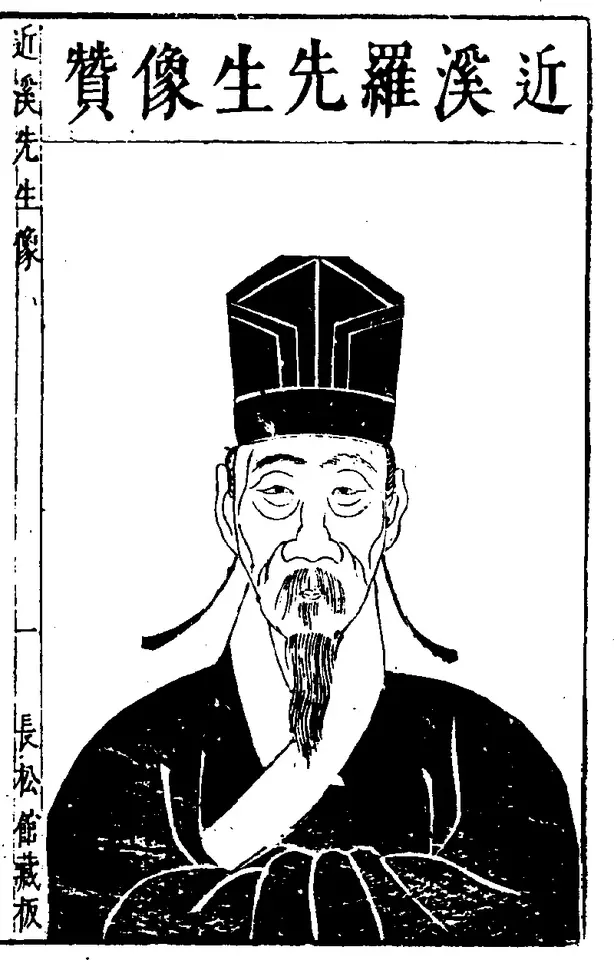
罗汝芳
Luo Rufang (罗汝芳, June 13, 1515 – October 21, 1588), courtesy name Weide, self-styled Jinxi (Master Jinxi), was a native of Nancheng, Jiangxi, and an eminent philosopher, educator, and third-generation leader of the Taizhou School of Yangming Heart-Mind Learning during the mid-to-late Ming dynasty. Highly precocious in youth, Luo passed the metropolitan examination in 1544, but declined to attend the palace examination,…
Luo Rufang (罗汝芳, June 13, 1515 – October 21, 1588), courtesy name Weide, self-styled Jinxi (Master Jinxi), was a native of Nancheng, Jiangxi, and an eminent philosopher, educator, and third-generation leader of the Taizhou School of Yangming Heart-Mind Learning during the mid-to-late Ming dynasty. Highly precocious in youth, Luo passed the metropolitan examination in 1544, but declined to attend the palace examination, choosing to retreat to Conggu Mountain for a decade of teaching and self-cultivation. After earning his presented scholar degree in 1553, he served as Magistrate of Taihu, Bureau Director in the Ministry of Justice, Prefect of Ningguo, Prefect of Dongchang, Assistant Surveillance Commissioner of Yunnan, and Right Administration Vice Commissioner of Yunnan. In philosophy, Luo studied under Yan Jun, receiving the core teachings of Wang Gen. He championed an ontology centered on the innocent newborn conscience (chizi liangxin) and spontaneous intuition devoid of artificial learning and calculating deliberation. He argued that the universal Tao is manifest in daily physical existence, including seeing, hearing, speaking, sleeping, and eating, rejecting the orthodox Song Neo-Confucian dogma of preserving heavenly principle and eliminating human desire. He criticized rigid ascetic suppression, democratizing Yangming heart-mind learning and earning Huang Zongxi's praise as the most liberated thinker of the Ming dynasty. In governance and pedagogy, Luo integrated administration with moral education under the principle that the heart-mind is governance, and governance is the heart-mind. Serving in Taihu, Ningguo, and Yunnan, he promoted community compacts, established Shuixi and Zhixue academies, and resolved civil litigations through moral persuasion from the lecture platform. In 1577, his large-scale public lectures at Guanghui Temple in Beijing attracted thousands of metropolitan officials, arousing the suspicion of Senior Grand Secretary Zhang Juzhong, who banned academies and dismissed Luo from office. In retirement, Luo traveled across southern provinces spreading egalitarian thought. His philosophy inspired his pupil, playwright Tang Xianzu, and foreshadowed early modern enlightenment thinkers such as Huang Zongxi and Gu Yanwu.
Born into a scholarly family in Nancheng, Jiangxi, showing early intellectual dedication.
Meets Taizhou School master Yan Jun in Nanchang, abandoning ascetic repression.
Passes the provincial civil service examination; passes the metropolitan examination the following year.
Declines the palace examination, retiring to Conggu Mountain to teach and study for a decade.
Earns presented scholar degree in palace examination; appointed Magistrate of Taihu County.
Appointed Prefect of Ningguo; establishes Zhixue and Shuixi academies, repairing fortifications.
Appointed Prefect of Dongchang; subsequently promoted to Assistant Surveillance Commissioner of Yunnan.
Promoted to Right Administration Vice Commissioner; dismissed following massive public lectures at Guanghui Temple.
Passes away in Nancheng on October 21 at age seventy-four, having lectured across southern China.
Luo Rufang was born into a respected scholarly household in Nancheng, Jiangxi. He was taught classical texts by his mother at age five and soon read extensively in Confucian classics and dynastic histories. In his early youth, he was influenced by the quietist Neo-Confucian teachings of Xue Xuan, believing that the constant stream of worldly thoughts had to be suppressed. In pursuit of an unperturbed mind, he secluded himself in a temple, placing a bowl of still water and a mirror on his table to force his mind into stillness. The strain of mental suppression severely damaged his health. His father intervened by presenting him with Wang Yangming's Instructions for Practical Living (Chuanxi Lu). Reading the text, Luo grasped the doctrine of extending innate knowledge, and his illness resolved.
In 1530, at the age of sixteen, Luo traveled to Nanchang, where he met Yan Jun, an influential disciple of Wang Gen and leader of the Taizhou School. Yan taught that the innate moral nature of human beings is indestructible and shared equally by all, arguing that self-cultivation should never begin with the forceful suppression of desires. Experiencing an intellectual awakening, Luo became Yan's disciple, discarding rigid Neo-Confucian moralism in favor of spontaneous naturalism.
In 1543, Luo passed the Jiangxi provincial examination, followed by the metropolitan examination in 1544. However, convinced that his personal philosophical foundation was not yet secure, he declined the final palace examination. Returning to Nancheng, he founded the Conggu Mountain Study on Mount Conggu, secluding himself for ten years to study, observe social conditions, and lecture to gathering students.
In 1553, at thirty-nine, Luo attended the palace examination, was awarded the presented scholar degree, and was appointed Magistrate of Taihu County in modern Anhui Province. Rejecting corporal punishment, Luo practiced moral governance. He instituted community compacts, repaired Confucian schools, and conducted official magistrate duties from the academic lecture platform.
When handling civil disputes, Luo prioritized moral suasion. When two brothers arrived at court litigating over family land, Luo walked down from the bench, held their hands, and wept, recounting the struggles of fraternal bonds in poverty. Moved by his tears, the brothers embraced and tore up their complaints. Luo established community gatherings and permitted minor offenders to leave their cells to attend ethical lectures. Under his tenure, crime disappeared, and doors remained unbolted at night. Two years later, he was promoted to Bureau Director in the Ministry of Justice.
In 1562, Luo was appointed Prefect of Ningguo in modern Xuancheng, Anhui. His educational governance reached its peak during this posting. Collaborating with local scholars, he founded Zhixue and Shuixi academies, gathering students, magistrates, and townsfolk for regular philosophical lectures. When hearing lawsuits, he had plaintiffs and defendants sit cross-legged beside the lecture hall to reflect on their greed and anger, settling disputes through self-examination.
Beyond civic education, Luo demonstrated administrative talent. Ningguo faced threats from piratical bands and military deserters. Luo organized resources to fortify the walls of subordinate counties, including Jingxian, Nanling, and Taiping. He built dikes and canals to control seasonal floods. In 1565, following the death of his father, Luo stepped down to observe the mandatory three-year filial mourning period.
In 1573, Luo was recalled as Prefect of Dongchang in Shandong, where his humane administration quickly won public support. He was soon promoted to Assistant Surveillance Commissioner of Yunnan, stationed in Yongchang. Arriving in the southwest frontier, sixty-year-old Luo inspected the Dianchi Lake drainage basin, organizing laborers to repair the Kunming Embankment and dredge the Dianchi outlet, turning thousands of acres of wasteland into fertile farmland.
Alongside administrative duties, Luo established the Wuhua and Chunmei academies in Kunming, delivering lectures to frontier populations. In 1577, he was elevated to Right Administration Vice Commissioner of Yunnan. That autumn, visiting Beijing on official business, officials and scholars gathered to hear him speak. Luo delivered public lectures at Guanghui Temple outside the capital walls, drawing thousands of imperial ministers, censors, and scholars.
However, Senior Grand Secretary Zhang Juzhong was enforcing administrative centralism and suppressing independent academic gatherings, banning academies nationwide. Luo's public gatherings directly provoked the court leadership. Zhang instructed censors to impeach Luo for lingering in the capital and shaking the court. Luo was stripped of his offices and sent home.
Unperturbed by his dismissal, Luo spent his remaining eleven years traveling through Nanjing, Zhejiang, Fujian, and Huguang, accompanied by disciples and delivering lectures on Taizhou philosophy. On October 21, 1588, Luo passed away peacefully at his ancestral home in Nancheng at the age of seventy-four.
Luo Rufang's foremost contribution to Chinese philosophy was his expansion of Wang Yangming's and Wang Gen's innate knowledge (liangxin) into the ontology of the newborn conscience (chizi liangxin). He discarded the dualistic dichotomy separating heavenly principle from human desire, rejecting the Song Neo-Confucian dogma of preserving principle and destroying desire, as well as rigid ascetic disciplines.
Luo maintained that the great Tao is found within daily bodily existence, including seeing, hearing, speaking, moving, drinking tea, eating rice, sleeping, and waking. He argued that innate moral goodness is like the spontaneous instinct of an infant, operating without calculating thought or acquired learning. Since all humans possess this moral nature regardless of status, becoming a sage requires only returning to one's spontaneous instinct.
By removing esoteric scholasticism from Neo-Confucianism, Luo established ordinary people as autonomous moral agents. He spoke in vernacular language, allowing uneducated laborers to grasp philosophical ideas. Ming historian Huang Zongxi hailed Luo in the Records of Ming Scholars as the preeminent master of the Taizhou School, praising his thought as vast and unmeasurable, calling him the most liberated thinker of the Ming era.
In administrative practice, Luo established an egalitarian model rooted in the principle that the heart-mind is governance, and governance is the heart-mind. He viewed public hearings not as punitive spectacles, but as educational opportunities to awaken conscience. In both Taihu and Ningguo, he converted the magistrate's hall into an open lecture platform.
He developed a method of dispute resolution where litigating parties sat cross-legged beside the lecture dais in quiet contemplation to reflect upon their anger. Luo addressed them with paternal empathy, resolving lawsuits without torture. He also provided municipal relief funds to impoverished litigants and prisoners.
This humane approach to justice stood out in imperial bureaucracy, achieving social harmony while providing an enduring historical model of judicial reform centered on human empathy.
Luo was a leader of the late Ming academy revival and popular lecture movement. He founded the Shuixi and Zhixue academies in Anhui, restored the Conggu Mountain Study in Jiangxi, and established the Wuhua and Chunmei academies in Yunnan, creating an intellectual network spanning the empire.
During Zhang Juzhong's campaign to ban academies, Luo defied political intimidation, continuing his public lectures across northern and southern provinces. His massive gatherings at Guanghui Temple in Beijing represented a historic confrontation between independent literati philosophy and authoritarian state power. While his dismissal ended his official career, his efforts fueled late Ming intellectual emancipation.
Luo's educational work nurtured outstanding figures, none more celebrated than the dramatist Tang Xianzu. Tang studied under his fellow townsman Luo from the age of thirteen, absorbing his philosophy of natural human desire and spiritual liberation. Luo's validation of authentic emotion provided the philosophical foundation for Tang's dramatic theory that genuine passion can transcend death, forming the core theme of his masterpiece The Peony Pavilion (Mudan Ting).
Furthermore, Luo's critique of Neo-Confucian dogmatism and his compassion for the common people provided early foundations for the seventeenth-century enlightenment thinkers. Masters such as Huang Zongxi, Gu Yanwu, and Wang Fuzhi drew upon Luo's democratic spirit, making him an important pioneer in China's transition toward early modern thought.
FIGURES ASSOCIATED WITH THIS DYNASTY