Born into Literati Family
Born in Taihe, Jiangxi; inherited scholarly traditions and showed remarkable solemnity.
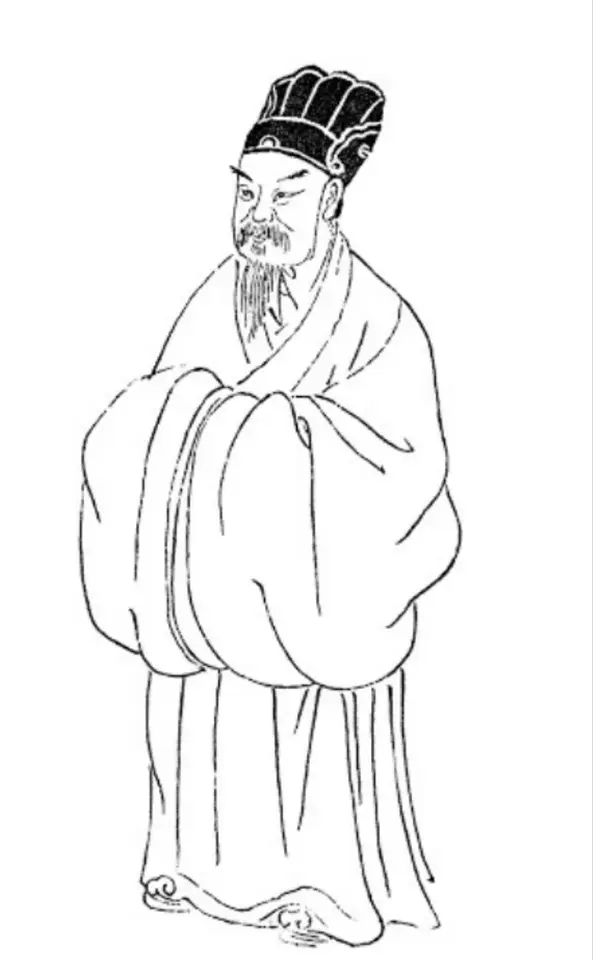
罗钦顺
Luo Qinshun (罗钦顺, December 25, 1465 – May 14, 1547), courtesy name Yunsheng and art name Zheng'an, was a native of Taihe County, Ji'an Prefecture, Jiangxi Province. He was an eminent Ming dynasty philosopher, thinker, and Neo-Confucian master, honored by contemporaries as the "Great Scholar of Jiangyou" and the "Bulwark of Zhu Xi's Learning." In 1493, he achieved third place (Tanhua) in the imperial palace examination and was…
Luo Qinshun (罗钦顺, December 25, 1465 – May 14, 1547), courtesy name Yunsheng and art name Zheng'an, was a native of Taihe County, Ji'an Prefecture, Jiangxi Province. He was an eminent Ming dynasty philosopher, thinker, and Neo-Confucian master, honored by contemporaries as the "Great Scholar of Jiangyou" and the "Bulwark of Zhu Xi's Learning." In 1493, he achieved third place (Tanhua) in the imperial palace examination and was appointed Junior Compiler in the Hanlin Academy. Luo served successively as Director of Studies in the Nanjing National University, Sub-director of the Court of Imperial Sacrifices, Right Vice Minister of Personnel in Nanjing, and Left Vice Minister of Personnel in the capital. During the Zhengde reign, he was stripped of office for defying the dictatorial eunuch Liu Jin, but was rehabilitated after Liu's execution. Under Emperor Shizong, he was promoted to Minister of Personnel in Nanjing. Scorning association with Zhang Cong and Gui E, who had risen rapidly through the Great Rites Controversy, he decisively retired in 1527. For over twenty years he resided at his Xuegu Tower in western Taihe, refusing to set foot in urban centers and devoting himself to empirical investigation. Philosophically, Luo overturned Zhu Xi's thesis of "principle prior to material force" (li xian qi hou), establishing the materialist ontology of "principle and qi are a single entity" and "principle resides within material force." He argued that the cosmos consists entirely of the ceaseless movement of a single material force (qi), with principle (li) representing the inherent order and laws of that movement. Rejecting Buddhist and Daoist nihilism, he authored Kun Zhi Ji (Knowledge Painfully Acquired) and conducted a decade-long intellectual debate with Wang Yangming and his disciples, defending objective investigation. His thought profoundly influenced practical learning in China and shaped intellectual currents in Choson Korea and Tokugawa Japan.
Born in Taihe, Jiangxi; inherited scholarly traditions and showed remarkable solemnity.
Placed first (Jieyuan) in the Jiangxi provincial examination.
Achieved third place (Tanhua) in the palace examination and was appointed Junior Compiler in the Hanlin Academy.
Appointed Director of Studies in the Nanjing National University, reforming academy discipline alongside Chancellor Zhang Mao.
Took leave to care for aging parents; stripped of official status for refusing to pay court to the eunuch Liu Jin.
Rehabilitated following Liu Jin's execution; appointed Sub-director of the Court of Imperial Sacrifices and later Right Vice Minister of Personnel in Nanjing.
Transferred to the capital as Left Vice Minister of Personnel, acting on ministerial duties.
Promoted to Minister of Personnel in Nanjing; submitted an unyielding memorial against arbitrary palace decrees and was docked salary.
Disdaining to serve alongside the rising court favorites Zhang Cong and Gui E, retired to Xuegu Tower in western Taihe.
Published Kun Zhi Ji, systematically expounding the materialist philosophy that principle and material force are one.
Authored a second extensive treatise summarizing the theoretical divide between his philosophy and the late Wang Yangming's School of Mind.
Passed away at home in April at eighty-three; posthumously granted Grand Guardian of the Heir Apparent and the title Wenzhuang.
Luo Qinshun was born on December 25, 1465, in Shangmo Village, Taihe County, Ji'an Prefecture, Jiangxi Province, into a prominent bureaucratic literati family. From early childhood, he exhibited extraordinary intellectual capacity, possessing an exceptional memory and a thoughtful, probing temperament. Unlike common students who focused merely on poetic rhetoric for examination success, Luo dedicated his youth to investigating the metaphysical foundations of human nature and cosmic order, conducting himself with the gravity of a mature scholar.
In 1492, Luo sat for the Jiangxi provincial examination and placed first as the provincial valedictorian (Jieyuan). In the spring of 1493, he passed the metropolitan examination in Beijing. During the subsequent palace examination in April, his policy essay addressed the sovereign's moral self-cultivation as the cornerstone of dynastic stability. Emperor Xiaozong was deeply impressed by his theoretical depth and rigorous style, selecting him as Tanhua (third place in the first rank) and appointing him Junior Compiler in the Hanlin Academy, inducting him into the elite inner court bureaucracy.
In 1504, Luo was promoted to Director of Studies in the Nanjing National University. Working in close harmony with the revered Chancellor Zhang Mao, he reformed university regulations, censured superficial literary embellishment, and instituted a rigorous standard of empirical investigation that revitalized the academic atmosphere of the southern capital. Shortly thereafter, on account of his parents' advanced age, he requested a leave of absence to return home and provide filial care.
During the early Zhengde reign, the powerful eunuch Liu Jin usurped court authority, building a pervasive web of cronyism as civil and military officials scrambled to bribe him. Luo, renowned for his unbending rectitude, harbored profound contempt for eunuch tyranny and flatly refused to send greetings or gifts. Harboring intense resentment, Liu Jin fabricated pretexts to strip Luo of his official status and reduce him to commoner status. Luo received the dismissal with complete equanimity, continuing his family care and scholarly lectures. Following Liu Jin's execution in 1510, Luo was reinstated as Sub-director of the Court of Imperial Sacrifices, later advancing to Right Vice Minister of Personnel in Nanjing and subsequently Left Vice Minister of Personnel in the primary capital.
In 1522, following Emperor Shizong's accession, Luo was tasked with managing ministerial affairs and was subsequently appointed Minister of Personnel in Nanjing. He discharged his duties with scrupulous fairness, selecting officials on merit and eliminating private favoritism. Observing that the inner palace increasingly issued direct imperial decrees bypassing the Grand Secretariat's drafting process, Luo submitted an unsparing memorial warning against executive irregularity: "By dynastic precedent, imperial decrees must be drafted by the Grand Secretariat; bypassing this channel invites fraudulent usurpation." His blunt remonstrance displeased the emperor, resulting in the forfeiture of his salary. Subsequent memorials urging regular classical instruction for the Crown Prince were likewise shelved without reply.
During the opening years of the Jiajing reign, the contentious "Great Rites Controversy" erupted. Officials Zhang Cong and Gui E catered to the emperor's desire to posthumously honor his biological parents, rising abruptly to high office, forming political factions, and purging upright dissenters. Luo regarded serving in the same cabinet with such unprincipled careerists as a deep dishonor. In 1527, he submitted his final request for retirement. Although the throne repeatedly appointed him Minister of Rites and Minister of Personnel to entice him to stay, Luo pleaded illness and adamantly refused, finally securing permission to retire permanently.
Upon returning home, Luo constructed a library at Xigang in Taihe County, naming it "Xuegu Tower" (Tower of Emulating Antiquity). For over twenty years, he lived in secluded contemplation, never setting foot in the urban county seat and refusing social visits, public banquets, or sectarian followings. He resided alone at Xigang, delving into the subtle principles of cosmic nature and material force. Every morning, he donned formal robes, climbed the tower to read and meditate, and contentedly partook of plain fare, penning his famous long poem Xuegu Tower to celebrate contentment in rural tranquility and metaphysical inquiry.
Within his thatched study at Xigang, Luo systematically reviewed the accomplishments and shortcomings of Song-Ming Neo-Confucianism, purging the Chan Buddhist influences that had colored his early years and dedicating over a decade to writing his masterpiece, Kun Zhi Ji. On May 14, 1547, Luo passed away peacefully at Xuegu Tower at the age of eighty-three. In recognition of his integrity and profound scholarship, the court posthumously granted him the rank of Grand Guardian of the Heir Apparent and bestowed the posthumous title Wenzhuang.
Luo's most celebrated contribution to Chinese intellectual history was his fundamental revision of the Cheng-Zhu school's dualistic premise of "principle prior to material force," establishing a materialist ontology wherein material force (qi) is the sole ultimate reality and principle (li) is inherent within it. Zhu Xi had separated principle and material force, claiming that "before heaven and earth existed, there was fundamentally only principle," reifying abstract pattern into an entity prior to matter.
Luo countered decisively: "Throughout heaven and earth, from antiquity to the present, there is nothing other than a single material force." He argued that the physical universe is an unbroken continuum of material force undergoing perpetual motion, transformation, concentration, and dispersion. There is no disembodied "principle" hovering above matter; rather, principle is simply the internal coherence, regular pattern, and inevitable order of material motion. "It is not a separate entity standing dependent on qi or hitching a ride upon qi's movement."
Luo formulated the propositions "principle resides within affairs" (li zai shi zhong) and "principle and material force are a single entity" (li qi wei yi wu), dismantling the transcendental dualism that had pushed Neo-Confucianism toward speculative mysticism. His materialist cosmology inherited Zhang Zai's Northern Song qi philosophy and laid direct theoretical foundations for the seventeenth-century materialist philosophy of Wang Fuzhi, earning Huang Zongxi's praise that his discussion of principle and material force was "the most precise in history."
During the mid-Ming era, Wang Yangming's doctrines of "mind is principle" (xin ji li) and "extending innate moral knowledge" (zhi liangzhi) spread rapidly across China. In Luo's view, this widespread enthusiasm for subjective enlightenment frequently degenerated into ungrounded, eccentric intellectual license akin to Chan Buddhism. Anchored in materialist qi philosophy, Luo authored his four-volume work Kun Zhi Ji (Knowledge Painfully Acquired), mounting a rigorous critique of the School of Mind.
Luo engaged Wang Yangming in extensive, profound epistolary debates over many years. In response to Wang's Preface to the Ancient Text of the Great Learning and Zhu Xi's Final Determinations in Late Life, Luo wrote long, detailed letters analyzing classical texts. He criticized Wang's equation of mind with principle as an idealist conflation of subjective consciousness with objective physical laws, warning that it neglected external reality and dissolved the objectivity of things. He insisted that the Confucian imperative to "investigate things" (gewu) required examining external affairs and physical reality rather than relying solely on internal mental introspection.
This prolonged exchange represented an intellectual dialogue between two paramount thinkers of the Ming dynasty. While unsparing in his theoretical critique, Luo maintained a dignified and respectful tone, and Wang Yangming held him in high esteem. Kun Zhi Ji subsequently became the premier theoretical classic for reasserting objective empirical investigation against the excesses of the School of Mind.
During his youth in the capital, Luo had associated closely with Buddhist monks and studied Chan texts. Through decades of critical reflection, however, he thoroughly dismantled Buddhist metaphysics, emerging as one of the most incisive critics of Buddhism in the Ming dynasty. He noted that the Buddhist Vijnanavada school treated the Alaya consciousness as an immutable absolute, deeming the absolute real while dismissing phenomenal reality as illusion, a fallacy that severed substance from function.
In his writings, Luo sharply distinguished the Confucian concept of "exhausting the mind to know human nature" from the Buddhist notion of "illuminating the mind to see one's nature." He demonstrated that the Buddhist realization of nature meant abandoning the cardinal human bonds of ruler, minister, father, and son, seeking passive extinction from worldly responsibilities; by contrast, Confucian cultivation demanded active moral practice within social life and civil governance. Luo's critique clarified intellectual boundaries and fostered practical Confucian statecraft.
Luo's philosophical writings exerted extensive influence across the East Asian cultural sphere. Upon its introduction to Choson Korea, Kun Zhi Ji triggered major intellectual reverberations, serving as a primary catalyst for the famous "Four-Seven Debate" between Korean masters Yi Hwang (Toegye) and Ki Tae-sung (Kobong) concerning principle and human emotions, directly shaping the intellectual divergence between the Yongnam and Kiho schools.
In Japan, Kun Zhi Ji was widely reprinted and studied during the Tokugawa (Edo) period. Prominent thinkers such as Kaibara Ekiken drew inspiration from Luo's ideas, which fueled the rise of the Japanese Ancient Learning (Kogaku) and Practical Learning (Jitsugaku) movements. Luo's emphasis on empirical investigation and the reality of physical phenomena provided an essential conceptual precursor to early modern rationalism in East Asia.
FIGURES ASSOCIATED WITH THIS DYNASTY