Birth in Yangzhou
Born into a scholar family in Jiangdu, Yangzhou, tracing ancestry to She County, Anhui; orphaned young.
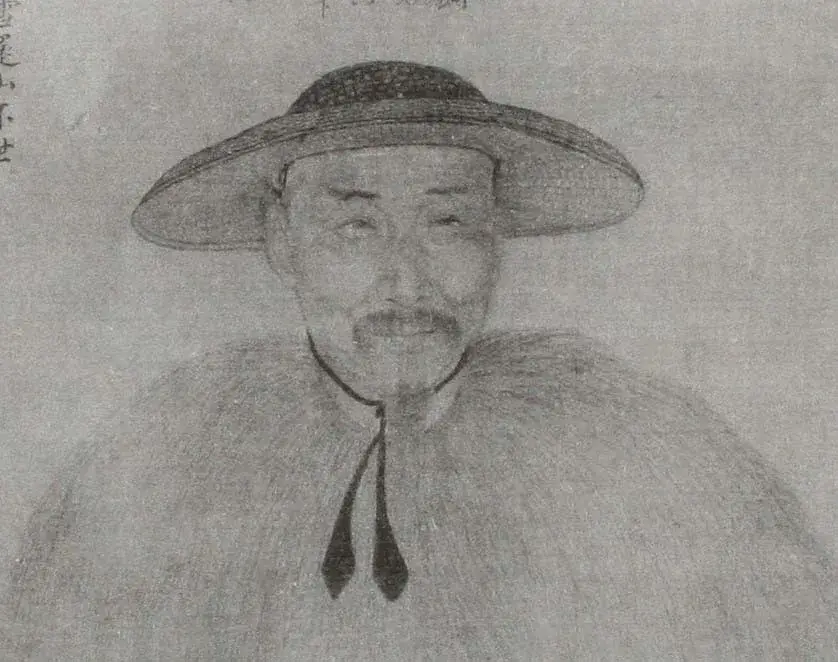
罗聘
Luo Pin was an eminent literati painter, calligrapher, and poet during the Qianlong and Jiaqing reigns of the Qing dynasty, recognized as the youngest and stylistically most versatile member among the celebrated Eight Eccentrics of Yangzhou. Tracing his ancestral lineage to Chengkan Village in She County, Anhui, his family settled in Yangzhou generations earlier. Orphaned at a tender age, he entered the studio of Yangzhou…
Luo Pin was an eminent literati painter, calligrapher, and poet during the Qianlong and Jiaqing reigns of the Qing dynasty, recognized as the youngest and stylistically most versatile member among the celebrated Eight Eccentrics of Yangzhou. Tracing his ancestral lineage to Chengkan Village in She County, Anhui, his family settled in Yangzhou generations earlier. Orphaned at a tender age, he entered the studio of Yangzhou painting patriarch Jin Nong at age twenty-five, becoming Jin's most treasured disciple. Following Jin Nong's passing, Luo performed the mourning rituals of a son, managed the funeral arrangements, and raised funds across the region to publish Dongxin Xiansheng Xuji (Sequel to the Collected Works of Master Dongxin), earning high esteem among Jiangnan literati for his filial devotion and steadfast loyalty. Luo's artistic versatility encompassed figures, Buddhist deities, landscapes, flowers, and ink plums and bamboos, displaying unconventional brushwork and archaic elegance. The Draft History of Qing praised him, noting that "there was nothing in painting at which he did not excel." He achieved particular renown for his depictions of specters and supernatural beings. His monumental eight-leaf handscroll Ghost Amusements (Gui Qu Tu) utilized grotesque caricature to satirize bureaucratic corruption and hypocrisy, standing as an unprecedented masterpiece of social satire in pre-modern Chinese painting. Luo made three journeys to Beijing, where his works were lauded by ministers Ji Xiaolan and Weng Fanggang and eagerly acquired for substantial sums by Korean tributary envoys. Luo's wife, Fang Wanyi, and his sons, Luo Yunshao and Luo Yunzuan, were all accomplished painters of ink plum blossoms, jointly establishing the renowned "Luo Family Plum School." In his final years, Luo resided at the Zhucao Shilin compound on Mituo Lane in Yangzhou, sustaining himself through painting in honorable poverty. His writings include the poetry collection Xiangye Caotang Shicun and the seal-engraving compilation Guang Yinren Zhuan.
Born into a scholar family in Jiangdu, Yangzhou, tracing ancestry to She County, Anhui; orphaned young.
At seventeen, gained recognition at the Xiaolinglong Shan Guan salon hosted by salt merchants Ma Yuguan and Ma Yulu.
Married talented Yangzhou poet and painter Fang Wanyi, sharing artistic and poetic pursuits in domestic harmony.
Formally entered the studio of Jin Nong, studying poetry, calligraphy, painting, and seal engraving.
Jin Nong died in Yangzhou; Luo organized the funeral, escorted the coffin to Hangzhou, and published his mentor's posthumous works.
Traveled to Beijing at age thirty-nine, astounding court ministers and literati with his sensational eight-leaf scroll Ghost Amusements.
Arrived in Beijing on his second northern trip, only to learn his wife Fang Wanyi had died in Yangzhou; devoted himself to painting Buddhist icons and plum blossoms.
Commissioned to execute vast Buddhist wall murals at Chongning Monastery in Yangzhou, creating a celebrated local cultural landmark.
Traveled to Beijing with his younger son for an eight-year stay; Korean envoys competed to purchase his works at high prices.
Having spent his earnings generously on needy scholars, returned to Yangzhou with travel funds provided by an old friend.
Died at his Zhucao Shilin residence on Mituo Lane in Yangzhou at the age of sixty-seven.
Luo Pin was born in 1733 in Jiangdu County, Yangzhou Prefecture, Jiangsu Province. His ancestors originally hailed from Chengkan Village, She County, Huizhou Prefecture, Anhui, having migrated to Yangzhou during the mid-Ming dynasty to engage in commerce before establishing scholar-gentry roots. His father, Luo Yuxi, was a military graduate (wuju) of 1711 who excelled in classical verse and archery. However, his father passed away during Luo's early childhood, leaving the household in severe financial distress. Experiencing poverty and the loss of both parents, young Luo exhibited steadfast determination, immersing himself in the study of history, literature, and painting.
In 1749, at the age of seventeen, Luo's nimble poetic imagination and literary eloquence earned him an invitation to the prestigious Xiaolinglong Shan Guan literary gatherings hosted by the prominent Yangzhou salt merchant brothers Ma Yuguan and Ma Yulu. The Ma family villa served as the preeminent gathering center for southern scholars, allowing young Luo to interact with distinguished cultural figures including Zheng Xie, Li E, and Hang Shijun, which broadened his scholarly horizons.
In 1753, at the age of twenty-one, Luo married Fang Wanyi, an educated woman from a bureaucratic family. Fang Wanyi (courtesy name Bailian) was celebrated for her poetic elegance and skill in rendering plum blossoms, orchids, and bamboo. Despite their severe financial constraints, the couple lived in deep harmony, spending their days painting together, critiquing ancient calligraphy, and composing poems. Fang Wanyi's sensitive artistic taste provided crucial emotional support and creative inspiration during Luo's formative years.
In 1757, at the age of twenty-five, Luo experienced the defining turning point of his career. Jin Nong, the seventy-year-old leader of the Eight Eccentrics of Yangzhou and an eminent cultural master, was residing in a local Buddhist monastery. Noted for aloof eccentricities, Jin Nong rarely accepted pupils, yet upon reviewing Luo's early painting drafts, he was astonished by the young man's talent and formally admitted him as his live-in disciple, personally training him in poetry, calligraphy, painting, and epigraphic seal cutting.
Luo was an attentive student, assisting his master day and night and assimilating Jin Nong's archaic, stone-rubbing aesthetic. Under Jin Nong's guidance, Luo's painting blossomed, particularly in ink plum blossoms, Buddhist iconographies, and expressive vignettes. In Jin Nong's late years, when elderly fatigue overwhelmed him, Luo frequently ghostpainted works on his behalf, with contemporaries unable to distinguish the disciple's brushwork from that of the master.
In 1763, the seventy-seven-year-old Jin Nong passed away in his quarters at Xifang Monastery in Yangzhou. Stranded far from his ancestral home in Zhejiang with empty pockets, Jin Nong's other followers scattered. Luo alone wept bitterly beside the deathbed, assuming all funeral duties and exhausting his savings to transport his mentor's coffin to Hangzhou for burial. Over subsequent years, Luo traveled across Jiangnan to collect his master's scattered manuscripts, eventually editing and financing the publication of Dongxin Xiansheng Xuji, winning universal praise for his integrity.
Following Jin Nong's death, Luo followed his mentor's advice to observe nature directly and explore famous mountains. In 1771, at the age of thirty-nine, Luo traveled north to Beijing carrying scrolls of his recent works.
Lacking official rank or aristocratic backing, Luo brought with him an eight-leaf album entitled Ghost Amusements (Gui Qu Tu). Defying traditional literati conventions of serene landscape contemplation, the album utilized grotesque, exaggerated brushwork to portray an eerie spirit world inhabited by emaciated ghosts, ostentatious phantom masters, and skeletal figures hovering amid ancient tombs and misty thickets. The shocking imagery created an immediate sensation among metropolitan scholars and senior courtiers. Hanlin Academician Weng Fanggang and Grand Secretary Ji Xiaolan were astounded by the allegorical power of the work, inscribing effusive poetic colophons. Ji Xiaolan praised Luo for piercing the veil of human deception, and Weng commended his mastery of Jin Nong's spirit. The album elevated Luo to instant fame across the capital. The following spring, Luo traveled south, stopping in Tianjin during a heavy snowstorm to edit Jin Nong's poems.
In the spring of 1779, urged by friends, Luo undertook his second journey to Beijing. When he departed, his wife Fang Wanyi had taken ill. Traveling leisurely along the Grand Canal, Luo arrived in the capital in August, only to receive tragic news: his beloved wife had succumbed to illness in Yangzhou on June 29 (the nineteenth day of the fifth lunar month), at the age of forty-four.
Devastated by grief, Luo closed his doors in Beijing, immersing himself in copying Buddhist sutras and painting compassionate Guanyin portraits, ink plum blossoms, and likenesses of Tang poets Du Fu and Han Yu to channel his sorrow, vowing never to remarry. After years of itinerant wandering and financial struggle, he returned to Yangzhou to raise his children through painting commissions.
In 1784, when the Qianlong Emperor inspected Yangzhou, local salt merchants undertook the restoration of Chongning Monastery. Recognizing Luo's mastery of Buddhist iconography, officials invited him to execute expansive murals across the main hall. Luo worked on scaffolding for months, producing grand compositions of Buddhist saints, flying devas, and undulating dragons. Upon completion, crowds flocked to the temple, and the murals became a celebrated Yangzhou landmark, cementing Luo's artistic standing.
In 1790, on the eve of the Qianlong Emperor's eightieth birthday, the fifty-eight-year-old Luo traveled to Beijing for the third time, accompanied by his younger son Luo Yunzuan, residing in the capital for eight years.
During this extended stay, Luo was revered as a grand master of the southern painting scene. Nobles, viceroys, and scholars competed for his works. Significantly, Korean tributary missions (Yeonhaengsa) to Beijing considered acquiring Luo's paintings an essential cultural mission. Distinguished Korean scholars Pak Je-ga, Yu Deuk-gong, and Yi Deok-mu visited Luo frequently, forming deep bonds of friendship. Luo gifted his poetry collection Xiangye Caotang Shicun to Pak Je-ga, who published and popularized it in Korea, while Luo's paintings were acquired by the Joseon royal court and noble houses, exerting a lasting transnational impact on late Joseon literati painting. Despite earning substantial sums from commissions, Luo gave away money freely to impoverished scholars. After eight years, he lacked funds to cover his return journey.
In 1798, an old friend serving as Lianghuai Salt Distribution Commissioner financed Luo's eldest son to travel to Beijing to escort his aging father home. Upon returning to his Zhucao Shilin residence on Mituo Lane, the sixty-six-year-old artist painted Recording Years with Plum Blossoms. In 1799, the versatile master passed away at his Xiangye Thatched Hall at the age of sixty-seven.
Luo Pin occupies a vital transitional position in Chinese art history as the youngest member and concluding exponent of the Eight Eccentrics of Yangzhou. During the mid-Qing period, innovative artists including Zheng Xie, Li Shan, Huang Shen, and Jin Nong rebelled against conservative orthodox copyism. As Jin Nong's sole live-in disciple, Luo inherited his master's epigraphic brushwork and archaic aesthetic, while extending the school's stylistic range.
Qin Zuyong observed in Tongyin Lunhua that Luo's "brushwork possesses archaic transcendence and profound scholarly grace, deeply capturing the essence of Master Dongxin." Rather than passively emulating his teacher, Luo demonstrated sharper anatomical control, synthesizing delicate linear draftsmanship with bold ink splatters. His versatile command of figures, landscapes, and flora ensured the vibrant continuation of the individualist Yangzhou lineage.
Luo's most renowned achievement is the eight-leaf handscroll Ghost Amusements, which stands as an extraordinary milestone of social satire in classical Chinese visual art.
Using surrealist caricature, Luo rendered an unsettling spectrum of apparitions: the first leaf depicted misty voids hinting at invisible spirits; the second portrayed an aristocratic master ghost followed by a servile attendant; the third showed a richly dressed, monstrously wealthy ghost holding an orchid while whispering to a female specter; the fourth featured a decrepit dwarf ghost leaning on a staff attended by a crimson imp; the seventh depicted figures hurrying beneath an umbrella in driving rain; and the eighth concluded with two skeletal figures conferring beside an ancient tomb. Luo claimed that his pale green pupils possessed the supernatural power to perceive phantoms in broad daylight, using this conceit to unmask the greed, flattery, and hypocrisy of imperial society. The work captivated Beijing intellectuals such as Weng Fanggang and Ji Xiaolan, establishing Luo as a supreme pioneer of socio-political graphic satire.
Luo's three journeys to the capital demonstrated that an unranked professional painter from Jiangnan could attain preeminent cultural standing at the heart of the empire and across East Asia. During the High Qing, court academies and aristocratic literati dominated elite painting, yet Luo conquered Beijing through sheer technical mastery and artistic vision.
Furthermore, Luo's interactions in the capital turned him into a pivotal bridge for Sino-Korean cultural exchange. Korean tributary missions made purchasing his paintings a top priority. Scholars including Pak Je-ga and Yu Deuk-gong formed lifelong friendships with him. Pak Je-ga printed Luo's poetry collection in Korea, while his ink plum and Buddhist scrolls entered Joseon aristocratic collections, influencing the expressive brushwork of the late Joseon painting scene.
Luo Pin, his wife Fang Wanyi, and their sons Luo Yunshao and Luo Yunzuan jointly established the celebrated "Luo Family Plum School," leaving a distinct legacy in the iconography of plum blossoms. Since Song master Yang Wujiu and Yuan master Wang Mian, plum painting had favored austere, icy isolation; Luo's family infused the genre with deep emotional resonance and epigraphic vigor.
Luo depicted plum blossoms with robust, gnarled trunks using dry, scorched ink washes inherited from Jin Nong, framing rounded petals with energetic outlines to achieve a living, breathing natural presence. His wife Fang Wanyi brought feminine delicacy to the genre, celebrated for flowers untainted by worldly dust, while his sons continued the lineage in Yangzhou for decades. Their family mastery of plum blossom painting produced famous works including Recording Years with Plum Blossoms, establishing the longest-running family studio among the Eight Eccentrics.
FIGURES ASSOCIATED WITH THIS DYNASTY