Birth in Jiangnan
Born into the prominent Lu clan of Wu County, exhibiting early intellectual elegance, moral purity, and literary ability.
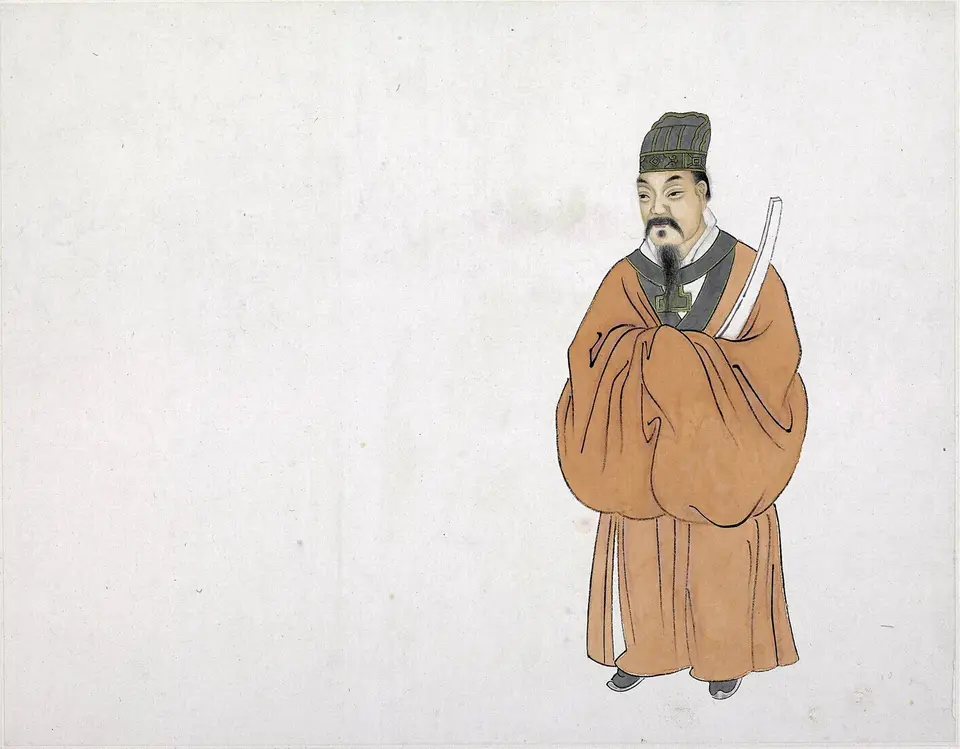
陆云
Lu Yun (陆云, 262–303), courtesy name Shilong (士龙), was an eminent literary figure and dedicated civil official of the Western Jin dynasty, hailing from the prestigious Lu clan of Wu Commandery. He was the grandson of Eastern Wu Chancellor Lu Xun and the fifth son of Grand Marshal Lu Kang. Showing precocious brilliance from childhood, he was able to compose sophisticated prose at the age of six and was recommended as Worthy and…
Lu Yun (陆云, 262–303), courtesy name Shilong (士龙), was an eminent literary figure and dedicated civil official of the Western Jin dynasty, hailing from the prestigious Lu clan of Wu Commandery. He was the grandson of Eastern Wu Chancellor Lu Xun and the fifth son of Grand Marshal Lu Kang. Showing precocious brilliance from childhood, he was able to compose sophisticated prose at the age of six and was recommended as Worthy and Excellent before reaching adulthood, with contemporaries admiring him as either an exceptional steed or a rising phoenix. Following the fall of Eastern Wu, he retired to his ancestral estate in Huating alongside his elder brother Lu Ji, engaging in reclusive, rigorous classical study for a full decade. In 289, during the late Taikang era of Emperor Wu of Jin, the brothers journeyed north to Luoyang, winning the profound esteem of Minister Zhang Hua and earning nationwide renown as the Two Lu. In his official career under the Western Jin, Lu Yun held positions including Gentleman of the Heir Apparent, Magistrate of Junyi, Director of the Household for the Prince of Wu, Gentleman of the Imperial Secretariat, Imperial Clerk, Imperial Gate Attendant, and Administrator of Qinghe. Throughout his administrative career, he was known for incorruptibility, legal rigor, and compassionate governance. As Magistrate of Junyi, he solved complex crimes with remarkable psychological acumen, winning the deep affection of the populace; while serving the imperial princely estates and central ministries, he repeatedly offered fearless remonstrance against extravagance, luxury, and the rise of eunuch influence. During the War of the Eight Princes, he served as Right Sima to the Generalissimo under Sima Ying, Prince of Chengdu. In 303, after Lu Ji was falsely accused and executed following a military setback at the Battle of Luyuan, Lu Yun was implicated and imprisoned. Despite desperate petitions from numerous senior officials defending his innocence, he was put to death in Ye at the age of forty-two. Lu Yun excelled in poetic composition, rhapsodies, and epistolary writings; his clean, disciplined prose and incisive literary theories occupy a revered position in medieval Chinese cultural history.
Born into the prominent Lu clan of Wu County, exhibiting early intellectual elegance, moral purity, and literary ability.
Nominated as Worthy and Excellent by the Eastern Wu court at age sixteen, earning praise from Minister Min Hong.
Following the fall of Eastern Wu, returned to Huating with his brother Lu Ji, spending ten quiet years studying classical canons and philosophical metaphysics.
Journeyed to the imperial capital Luoyang with Lu Ji, visiting the prominent statesman Zhang Hua and gaining immediate fame through his quick-witted conversations.
Appointed Assistant to Regional Inspector Zhou Jun, later serving as Gentleman of the Heir Apparent and Magistrate of Junyi, where he governed with exceptional judicial insight.
Served as Director of the Household for Sima Yan, Prince of Wu, successfully petitioning against extravagant palace construction and opposing intrusive audits conducted by petty officers.
Promoted through central posts including Gentleman of the Secretariat, Imperial Clerk, and Palace Attendant, recognized for unbending integrity.
Recommended by Sima Ying to serve as Administrator of Qinghe, establishing a distinguished record of regional order and later appointed Right Sima to the Generalissimo.
Implicated and imprisoned after Lu Ji was framed following a military defeat; despite impassioned appeals from colleagues like Jiang Tong, he was executed in Ye at age forty-two.
Lu Yun was born into the preeminent aristocrat lineage of Wu Commandery in southern China. His grandfather was the legendary Chancellor and Grand General of Eastern Wu, Lu Xun, while his father was the Grand Marshal and Regional Governor of Jing Province, Lu Kang. Ranking fifth among his brothers, Lu Yun showed unusual intellectual brilliance and moral refinement from early childhood, possessing the ability to draft sophisticated prose by the age of six. In his youth, he shared literary renown with his eldest brother Lu Ji. Contemporaries noted that while his stylistic ornamentation was slightly less voluminous than Lu Ji's, his analytical clarity, philosophical rigor, and debating skills often surpassed his brother, earning them the collective title of the Two Lu.
During the twilight years of Eastern Wu, Minister Min Hong met the young Lu Yun and was astonished by his composure and intellect, remarking to onlookers that if this youth was not a dragon colt, he was assuredly a phoenix fledgeling destined for greatness. In 277, at only sixteen years of age, Lu Yun was recommended by commandery authorities as Worthy and Excellent. Around this time, another southern figure, Zhou Chu, was notorious in Yixing for his violent temper and bullying habits, ranked among the three banes of the region alongside a man-eating tiger and a ferocious river monster. After slaying both beasts, Zhou Chu experienced a profound moral awakening and traveled to Wu Commandery seeking counsel from the Lu brothers. Finding Lu Yun alone, Zhou Chu was received with kindness and guided by Lu Yun's quotation of ancient sages on moral renewal, inspiring Zhou Chu to become an illustrious, loyal officer of the realm.
In 280, the Western Jin launched its final campaign against Eastern Wu, resulting in the extinction of the southern kingdom. Experiencing the bitter downfall of their homeland, Lu Yun and Lu Ji rejected initial offers of office from the new dynasty and returned to their ancestral home in Huating. For a full decade, the two brothers lived in secluded retirement, closing their doors to public affairs and dedicating themselves to exhaustive intellectual cultivation. During these ten years of solitude, Lu Yun absorbed the Confucian classics, the masters of the Hundred Schools of Thought, and contemporary northern metaphysical philosophy, developing a refined and harmonious style that prepared him for his subsequent emergence in the imperial capital.
In 289, as the Jin dynasty's peaceful governance reached its cultural zenith, Lu Ji and Lu Yun concluded their ten-year retreat and journeyed north together to Luoyang. When they first arrived at the imperial capital, the northern elite looked down upon them due to their southern accents and their status as descendants of a conquered southern dynasty. Undaunted by contemporary prejudice, the brothers paid a formal call upon Zhang Hua, Minister of the Right and the acknowledged arbiter of literary taste in the empire.
During the visit, Lu Ji entered the reception hall first. When Zhang Hua inquired after Lu Yun, Lu Ji smiled and explained that his younger brother possessed an incurable tendency to burst into spontaneous laughter and had hesitated to present himself abruptly. Moments later, Lu Yun entered in formal robes. Zhang Hua, known for his imposing grooming, was fond of securing his long beard with colorful silk bands. Upon seeing this sight, Lu Yun was overcome with amusement and laughed uncontrollably. On a previous occasion, Lu Yun had worn plain mourning clothes aboard a boat and, catching his reflection in the water, had laughed so hard that he tumbled overboard and was nearly drowned before being rescued. Zhang Hua took no offense at this display, admiring instead Lu Yun's uninhibited sincerity. At that time, scholar Xun Yin was also present. Zhang Hua introduced the two and encouraged them to avoid conventional pleasantries. Raising his hands, Lu Yun announced: "Lu Shilong amidst clouds." Xun Yin instantly rejoined: "Xun Minghe beneath the sun." This spontaneous verbal duel became a celebrated anecdote across the capital.
Zhang Hua held the talents of the two brothers in immense esteem, famously remarking that the southern campaign against Wu had yielded its greatest prize in the acquisition of these two extraordinary minds. Upon hearing of this, Regional Inspector Zhou Jun appointed Lu Yun as an Inspector's Assistant and praised him before senior ministers as the Yan Hui of the contemporary era. Promoted and championed by Zhang Hua, the Lu brothers quickly attained prominent standing in Luoyang, fundamentally changing the northern elite's perception of southern scholarship.
Upon entering imperial administration, Lu Yun served as an Assistant in the Ministerial Office and was soon appointed Gentleman of the Heir Apparent. Recognized for superior administrative talent, he was assigned as Magistrate of Junyi. Junyi was a vital metropolitan transit hub characterized by powerful local clans, bustling commerce, and endemic judicial disorder. Upon assuming duty, Lu Yun enforced the law with incorruptible impartiality, eradicating bureaucratic corruption and stabilizing market prices. In a celebrated criminal case where a husband was found murdered without clues, Lu Yun refrained from torturing the victim's wife; instead, after holding her for ten days, he released her and secretly sent constables to shadow her movements. As predicted, an anxious adulterer approached her within ten leagues of the town to discuss their plans and was apprehended on the spot, confessing to the murder. The populace marveled at his psychological brilliance, treating him with reverent affection. When an envious commandery administrator reprimanded him repeatedly out of jealousy, Lu Yun resigned his post; the grateful people of Junyi painted his likeness to receive local sacrificial honors alongside the household god.
Shortly thereafter, Lu Yun was appointed Director of the Household for Sima Yan, Prince of Wu. When the prince commenced extensive construction of lavish mansions and pleasure gardens in his western parks, Lu Yun submitted a memorial urging restraint. He cited the exemplary twenty-six-year reign of Emperor Wu, who avoided building new palaces and constantly advocated frugality, urging the prince to govern with simplicity to purify public morals. Later, when the prince listened to subordinate officers Li Xian and Feng Nan, ordering intrusive investigations into the private assets of senior officials, Lu Yun again intervened. He argued that tasking low-ranking retainers with auditing distinguished ministers eroded mutual trust between ruler and subjects, damaging the prince's reputation for magnanimity. Impressed by his principled reasoning, the Prince of Wu immediately rescinded the audit order.
During the late Yuankang era, Lu Yun transitioned into central ministerial roles, serving as Gentleman of the Imperial Secretariat, Imperial Clerk, Palace Attendant to the Heir Apparent, and Imperial Gate Attendant. Throughout these assignments, he executed his duties with fearlessness, impeaching corruption without hesitation and earning high prestige among righteous officials.
Following the political upheavals of the Yongkang era, the War of the Eight Princes plunged the Western Jin court into bloody internal conflict. Sima Ying, Prince of Chengdu, having played a prominent role in overthrowing the usurper Sima Lun, was deeply impressed by the literary stature of the Lu brothers and recommended Lu Yun to serve as Administrator of Qinghe. In Qinghe, Lu Yun pacified refugees, enforced discipline, and established exemplary order. When Sima Ying prepared to attack Sima Jiong, Prince of Qi, he designated Lu Yun as Advance Guard Commander; upon Sima Jiong's downfall, Lu Yun was transferred to Right Sima of the Generalissimo. However, as Sima Ying grew increasingly autocratic and self-indulgent, Lu Yun repeatedly voiced sharp dissent. When the favored eunuch Meng Jiu sought to appoint his own father as Magistrate of Handan, senior advisors like Lu Zhi servilely complied, but Lu Yun refused to endorse the appointment, declaring that such an important magistracy could not be granted to the father of a palace eunuch. Meng Jiu harbored deep resentment and waited for an opportunity to destroy him.
In 303, Sima Ying joined forces with Sima Yong, Prince of Hejian, to launch a massive campaign against Sima Ai, Prince of Changsha. Lu Ji was appointed Commander-in-Chief over a northern army of more than two hundred thousand men. Following Lu Ji's military defeat at the Battle of Luyuan, Meng Jiu seized the moment to frame Lu Ji for treason, and Sima Ying ordered Lu Ji's immediate execution. Meng Jiu's faction quickly moved to arrest Lu Yun, seeking the total extermination of the family. Colleagues in Sima Ying's administration, including Jiang Tong, Cai Ke, and Zao Song, were convinced of Lu Yun's innocence and jointly submitted a passionate memorial, pleading that the Lu brothers had served with generational loyalty and imploring the prince to conduct a transparent trial rather than alienate public opinion.
Confronted with the heartfelt pleas of his officials, Sima Ying wavered for three days. Senior advisor Lu Zhi, who harbored professional jealousy toward the literary fame of the Two Lu, urged harsh measures, while Cai Ke and dozens of colleagues prostrated themselves in the court hall, weeping until blood stained the stones as they begged for Lu Yun's life. Touched by their devotion, Sima Ying showed signs of granting a pardon. However, Meng Jiu escorted the prince into his private chambers and pressed him to execute Lu Yun without delay. Sima Ying succumbed to the eunuch's pressure, and Lu Yun was executed in Ye at the age of forty-two. Lu Yun left no sons, only two daughters; his disciples and former subordinates risked retribution to recover his body, burying him in Qinghe with a commemorative stele to maintain seasonal sacrifices.
One of Lu Yun's most enduring ethical achievements occurred during his early youth in Jiangnan, when he played the decisive role in reforming the infamous rogue Zhou Chu. In his early years, Zhou Chu possessed immense physical strength, a bellicose temperament, and an uncontrolled passion for violence, terrorizing his native Yixing Commandery. The local population grouped him alongside a man-eating tiger on Mount Nanshan and a rampaging dragon under Changqiao Bridge as the Three Banes of Yixing, regarding Zhou Chu as the most menacing of all. Cunning elders in the district tricked Zhou Chu into hunting the tiger and diving into the river to slay the monster, privately hoping that the banes would destroy one another. After hunting down the tiger, Zhou Chu pursued the dragon through churning waters for tens of leagues over three days and nights. When he failed to return, the villagers assumed he had drowned and held celebratory feasts in the streets.
Emerging victorious with the severed head of the beast, Zhou Chu was stunned to find his neighbors celebrating his supposed demise, suddenly realizing the profound disgust and terror he inspired in his community. Overcome with remorse, he traveled to Wu Commandery to seek counsel from the renowned Lu brothers. Finding that Lu Ji was away, Zhou Chu was received by Lu Yun. Overcome with emotion, Zhou Chu confided his desire to reform his conduct and serve the realm, but lamented that he had wasted his best years and feared it was too late to achieve anything of lasting value.
Confronted with this notorious warrior, the young Lu Yun displayed neither fear nor condescension. Instead, he met Zhou Chu with warm philosophical compassion, citing classical wisdom to rekindle his self-respect. Lu Yun observed that ancient sages prized hearing the moral truth in the morning even if one died in the evening, pointing out that Zhou Chu was still in his physical prime with ample years ahead. He emphasized that the true danger in life lay in failing to establish a resolute moral will, rather than in worrying whether an honorable reputation would eventually spread. Lu Yun's incisive, humane counsel struck Zhou Chu like a revelation; from that day onward, Zhou Chu dedicated himself to classical study and ethical discipline, eventually becoming one of the Western Jin's most celebrated heroes and a fearless Palace Assistant Imperial Clerk who gave his life for the empire on the battlefield.
Throughout his two decades of official service, spanning local counties, princely fiefdoms, and central ministries, Lu Yun consistently exemplified an unyielding standard of integrity and legal exactitude. During his tenure as Magistrate of Junyi, he confronted an entrenched network of regional gentry and corrupt clerks in a vital metropolitan district. Rather than relying on brutal coercion, Lu Yun governed through transparent legality and psychological acuity. In his handling of a baffling murder mystery where a husband was found slain without direct witnesses, he recognized the psychological bond connecting co-conspirators. By deliberately releasing the victim's suspected wife without interrogation and having hidden constables trail her secretly, he caught her anxious accomplice approaching her just outside town, securing an immediate confession and resolving a notorious case that had frustrated previous magistrates.
While serving as Director of the Household for Sima Yan, Prince of Wu, Lu Yun twice risked his career to offer fearless admonitions. At a time when royal princes competed in building opulent estates, Lu Yun held up the frugal legacy of Emperor Wu of Jin to denounce architectural excess, warning that elite self-indulgence undermined the foundations of public trust. When the prince appointed low-ranking retainers to conduct humiliating financial investigations of senior officials, Lu Yun exposed the corrosive impact of such policies on ministerial dignity, passionately arguing that relying on petty men to monitor honorable scholars destroyed the moral authority of the ruler. His principled courage persuaded the prince to abandon the invasive investigations.
As Administrator of Qinghe, Lu Yun demonstrated exceptional institutional fortitude by standing firm against the encroachment of court eunuchs. When the powerful palace eunuch Meng Jiu sought to install his father as Magistrate of Handan, most senior administrators bowed to the eunuch's influence; Lu Yun alone stood firm, categorically refusing to sign the commission and insisting that prominent civil posts could not be bartered away to corrupt imperial favorites. His steadfast defense of bureaucratic purity earned him the universal reverence of righteous contemporaries such as Jiang Tong and Cai Ke.
Lu Yun occupies a distinguished place in the development of third-century Chinese literature and critical theory. His surviving corpus spans classical verse, rhapsodies, panegyrics, commemorative elegies, and epistolary essays. Compiled in the Ming dynasty as Lu Shilong Ji, his extant writings comprise over three hundred pieces alongside ten philosophical essays entitled Xinshu. While Lu Ji was renowned for expansive ornamentation and exuberant vocabulary, Lu Yun was celebrated for clarity, balance, and logical rigor.
In poetry, Lu Yun excelled in the classical four-character verse form. Works such as Da Xiong Pingyuan (Reply to Brother Pingyuan), Gucheng Jianji (Sent from Gucheng), and Suimu Fude Linchuan Xianyu (Year-End Composition on Gazing at Fish by the River) demonstrate refined diction, subtle imagery, and profound brotherly affection, interwoven with reflections on dynastic turbulence. In his rhapsodies, compositions such as Dengtai Fu (Rhapsody on Ascending the Terrace) and Choulin Fu (Rhapsody on Mournful Rains) exhibit delicate observational power and stylistic restraint. His extensive epistolary exchanges with Lu Ji represent invaluable source materials for understanding the intellectual debates and aesthetic evolution of the Western Jin literary elite.
In literary theory, Lu Yun formulated a distinctive aesthetic canon centered on clarity and discipline. He vigorously advocated that literary composition should prioritize conciseness, structural lucidity, and sincerity of emotion, warning against hollow intellectualism and excessive ornamental clutter. His theories directly influenced fifth-century literary thought. In his seminal treatise The Literary Mind and the Carving of Dragons (Wenxin Diaolong), the Liang dynasty critic Liu Xie praised his achievements: "Lu Shilong possessed clarity and discipline, using his intellect to restrain chaos; hence he was able to display fresh, pristine ornamentation and demonstrated extraordinary agility in shorter compositions." Through these contributions, Lu Yun established himself as a model of disciplined elegance in early medieval literature.
FIGURES ASSOCIATED WITH THIS DYNASTY