Preserving the Family
Lost his father at age ten; brothers killed in war; supported widowed sisters-in-law and orphans amidst famine.
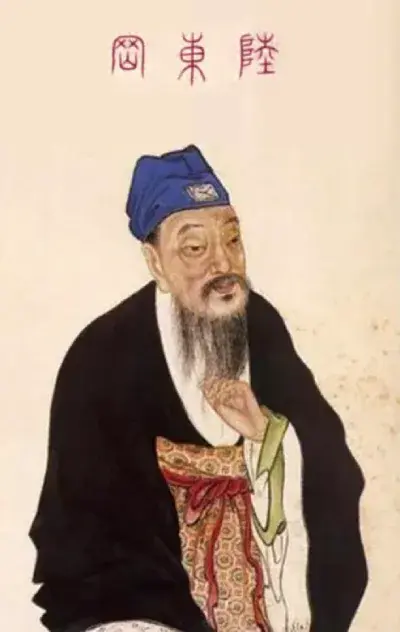
卢毓
Lu Yu (卢毓, 183–257 CE), courtesy name Zijia, was a native of Zhuo County, Zhuo Commandery (modern Zhuozhou, Hebei). He was the youngest son of the renowned late Eastern Han Confucian master Lu Zhi and an eminent statesman, administrator, and jurist who served five successive reigns of Cao Wei during the Three Kingdoms period, ascending to the Three Excellencies as Minister of Works and Minister of Education. He was ennobled…
Lu Yu (卢毓, 183–257 CE), courtesy name Zijia, was a native of Zhuo County, Zhuo Commandery (modern Zhuozhou, Hebei). He was the youngest son of the renowned late Eastern Han Confucian master Lu Zhi and an eminent statesman, administrator, and jurist who served five successive reigns of Cao Wei during the Three Kingdoms period, ascending to the Three Excellencies as Minister of Works and Minister of Education. He was ennobled as the Marquis of Rongcheng and granted the posthumous title of Marquis Cheng. Losing his father at age ten amidst violent civil wars between Gongsun Zan and Yuan Shao, both his elder brothers were killed in battle. Amidst severe famine, young Lu Yu dutifully provided for his widowed sisters-in-law and raised his orphaned nephews, gaining widespread acclaim for moral virtue. Recommended by Cui Yan as Document Officer of Jizhou, he cited the Classic of Poetry and Book of Rites to overturn the death sentences of unacquainted wives of runaway conscripts under Cao Cao's harsh military deserter laws, earning Cao Cao's deep esteem. Following the founding of Cao Wei, Lu Yu served as Gentleman of the Yellow Gate and Grand Administrator of Qiao. When Emperor Wen (Cao Pi) ordered massive forced relocations to populate Qiao, Lu Yu remonstrated against the policy and was demoted to Agricultural Commandant of Suiyang; he subsequently governed Anping and Guangping with upright benevolence, earning public love. During the Qinglong era under Emperor Ming (Cao Rui), he was summoned as Palace Attendant and appointed Minister of Personnel. He instituted the enduring bureaucratic selection standard of "prioritizing moral conduct over rhetorical wit" and asserting that "talent exists to accomplish good deeds," actively suppressing superficial cliques. When asked for ministerial recommendations, he boldly nominated the virtuous recluse Guan Ning, as well as Han Ji, Cui Lin, and Chang Lin. Under Cao Fang, he resisted the corrupt regency of Cao Shuang and He Yan, suffering demotions to Commandant of Justice and Grand Master for Splendid Happiness. Following the Gaoping Tombs Incident, Sima Yi appointed Lu Yu acting Colonel Director of Retainers to objectively try the Cao Shuang conspirators. Under Cao Mao, he was elevated to Minister of Works in 256 CE and Minister of Education in 257 CE, dying in office at age seventy-five.
Lost his father at age ten; brothers killed in war; supported widowed sisters-in-law and orphans amidst famine.
Served in Cao Cao's ministry; cited classics to reverse wrongful death sentences imposed on conscripts' wives.
Appointed Administrator of Qiao; demoted to Suiyang for opposing Cao Pi's forced civilian relocation.
Promoted to Minister of Personnel; established moral standards for selection and suppressed superficial gentry factions.
Survived Cao Shuang's political purges; appointed acting Colonel Director of Retainers by Sima Yi to try the conspirators.
Appointed Minister of Works and Minister of Education; passed away in the tenth month, receiving the posthumous title Marquis Cheng.
Lu Yu was born into the prestigious Fanyang Lu clan of Zhuo County, Zhuo Commandery, as the youngest son of Lu Zhi, a preeminent late Eastern Han scholar, general, and Master of Writing. In 192 CE, when Lu Zhi passed away, Lu Yu was only ten years old. Northern China soon plunged into chaotic warfare between warlords Gongsun Zan and Yuan Shao. With armies clashing across Youzhou and Jizhou, severe famines struck, and both of Lu Yu's elder brothers were killed in the fighting. Taking responsibility for his shattered household, young Lu Yu supported his two widowed sisters-in-law and raised his fatherless nephews with humble devotion, pursuing classical texts by candlelight despite grinding poverty.
Upon reaching adulthood, Cao Pi, then General of the Five Bureaus of Household Gentlemen, appointed him as a revenue clerk. Subsequently, the esteemed statesman Cui Yan recommended Lu Yu to Chancellor Cao Cao, who appointed him Document Officer of Jizhou. At that time, following decades of warfare, Cao Cao enforced the draconian "Deserter Law" (Shiwang Fa), which mandated execution not only for military deserters but also for their parents and wives. Several newly wedded women whose husbands deserted before ever meeting them were sentenced to death by imperial judicial clerks.
Lu Yu submitted a passionate memorial citing the Classic of Poetry and Book of Rites, arguing: "According to classical rites, a woman is formally wedded only after being presented to the ancestral temple and meeting her parents-in-law. These women had not even laid eyes on their husbands; their marriages were unconsummated by ritual. To punish them with execution as legally wedded wives violates ancient jurisprudence!" Deeply impressed by his classical erudition and humane justice, Cao Cao revoked the death penalties and appointed Lu Yu as Legal Secretary, later transferring him to the Western Bureau as an essential legal advisor.
In 213 CE, when Cao Cao became Duke of Wei, Lu Yu was promoted to Personnel Bureau Gentleman. In 220 CE, following Cao Pi's founding of the Cao Wei dynasty, Lu Yu served as Gentleman of the Yellow Gate, Chancellor of Jiyin, and Grand Administrator of Liang Commandery. Later, Emperor Wen (Cao Pi) merged Liang with his ancestral hometown of Qiao to form Qiao Commandery, ordering tens of thousands of peasant households forcibly relocated from neighboring provinces to populate the district.
Serving as Grand Administrator of Qiao, Lu Yu witnessed severe drought and widespread famine. Recognizing that uprooting hundreds of thousands of impoverished peasants would cause catastrophic starvation, he risked imperial wrath by memorializing against the relocation scheme. Enraged that Lu Yu obstructed his project, Cao Pi stripped him of his governorship and demoted him to Agricultural Commandant of Suiyang. Unfazed by political disgrace, Lu Yu devoted himself to agricultural drainage, land reclamation, and tenant relief. He was subsequently appointed administrator of Anping and Guangping commanderies, where his compassionate, upright governance earned the enduring devotion of the populace.
In 234 CE, Emperor Ming (Cao Rui) recalled Lu Yu to the capital as Palace Attendant. When Imperial Attendant Liu Shao struggled to codify statutory reforms, Lu Yu submitted a memorial stating: "Statutes are public instruments of the state; their language must be unequivocal and unified, leaving no room for dual interpretations that allow corrupt clerks to exploit ambiguities." Contemporary ministers embraced his principles, refining the Wei legal code.
During his three years as Palace Attendant, Lu Yu spoke with unyielding candor, debating imperial policy directly with the emperor. Recognizing his integrity, Emperor Ming decreed: "Allocating offices according to talent has always challenged monarchs; it requires righteous ministers to succeed. Palace Attendant Lu Yu unites civil and military wisdom; let him direct state appointments." He appointed Lu Yu as Minister of Personnel. When Minister of Education Chen Jiao died in 237 CE, Emperor Ming asked Lu Yu whom to appoint; Lu Yu first recommended the incorruptible recluse Guan Ning, and when the emperor demurred, he nominated Han Ji, Cui Lin, and Chang Lin. Emperor Ming appointed Han Ji, and the court praised Lu Yu's objective discernment.
Directing imperial personnel, Lu Yu established the principle of "examining moral character before rhetorical talent." He famously observed: "Talent exists to accomplish good deeds; great talent achieves great good, while small talent achieves modest good. If a man possesses eloquence but lacks virtue, his talent merely empowers wickedness." At that time, elite youth led by Cao Shuang, He Yan, Xiahou Xuan, and Zhuge Dan indulged in superficial philosophical banter. When Emperor Ming warned Lu Yu against selecting men of superficial renown, comparing reputation to "drawing a cake on the ground that cannot satisfy hunger," Lu Yu replied: "Reputation cannot be accepted blindly, yet it often reflects accumulated virtue. Rather than banning reputation, the court should rigorously audit practical administrative conduct." He weeded out superficial grandees, bringing integrity to Cao Wei bureaucracy.
In 239 CE, Emperor Ming passed away, and the young Emperor Cao Fang succeeded to the throne under the joint regency of General-in-Chief Cao Shuang and Grand Tutor Sima Yi. Cao Shuang soon sidelined Sima Yi, installing his favorites He Yan, Deng Yang, and Ding Mi into power. Eager to seize civil appointments, He Yan viewed Lu Yu as an obstacle, maneuvering him into the post of Vice Director of the Department of State Affairs. Subsequently, He Yan's ally, Colonel Director of Retainers Bi Gui, fabricated false charges against Lu Yu, demoting him to Grand Master for Splendid Happiness. Lu Yu bore this persecution with serene detachment.
In 249 CE, Sima Yi staged the Gaoping Tombs Incident, executing Cao Shuang's faction. Aware of Lu Yu's judicial mastery and unimpeachable prestige, Sima Yi appointed him acting Colonel Director of Retainers to preside over the treason trials. Lu Yu conducted the proceedings with strict adherence to evidence and statutory law, punishing conspirators without implicating innocent kin, earning universal respect. He was subsequently restored as Minister of Personnel, granted the title of Commandant of Equerry, and ennobled as Marquis of Rongcheng.
In 256 CE, under Emperor Cao Mao, Lu Yu was elevated to Minister of Works among the Three Excellencies, transferring to Minister of Education in 257 CE. In the tenth month of that year, he passed away in office at seventy-five. The imperial court mourned his death, granting funeral vestments, thirty thousand coins, and the posthumous title of Marquis Cheng. Serving across five successive reigns, Lu Yu maintained incorruptible integrity, laying the moral foundation that made the Fanyang Lu clan one of the eminent gentry lineages of Chinese history.
Under Cao Cao's administration, Lu Yu cited the Classic of Poetry and Book of Rites to prove that unconsummated marriages did not constitute legal wifehood, successfully halting the execution of innocent conscript wives and infusing statutory penal codes with classical Confucian mercy.
Directing personnel selection under Emperor Ming, Lu Yu formulated the doctrine that "talent exists to accomplish good deeds," prioritizing moral character over rhetorical flair. He promoted upright scholars such as Guan Ning, Han Ji, and Cui Lin, curbing the superficial factions of the Three Kingdoms era.
Confronting the autocratic regency of Cao Shuang and He Yan, Lu Yu refused to yield civil appointment authority, accepting demotion with dignity. After the Gaoping Tombs Incident, he presided over treason trials with objective fairness as acting Colonel Director of Retainers.
Elevated to Minister of Works, Minister of Education, and ennobled as Marquis of Rongcheng, Lu Yu served five reigns with unblemished rectitude, cementing the prestigious cultural and moral standing of the Fanyang Lu clan for centuries.
FIGURES ASSOCIATED WITH THIS DYNASTY