Wu Commandery Birth
Born in Wu County, passionately practicing drawing and studying Gu Kaizhi's brushwork.
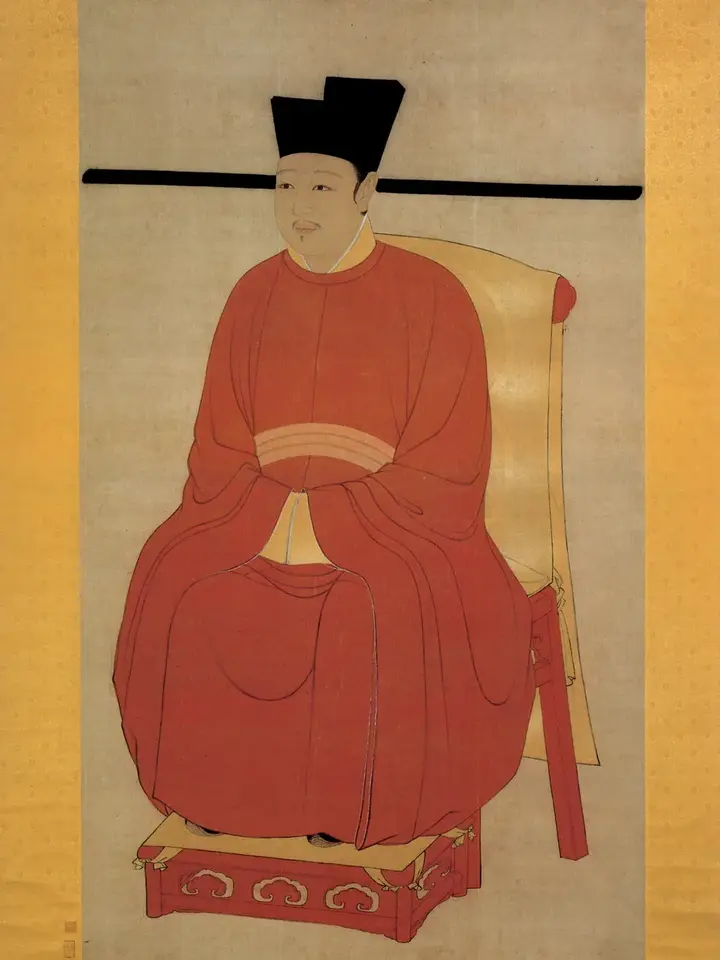
陆探微
Lu Tanwei (陆探微), a native of Wu County in Wu Commandery (modern Suzhou, Jiangsu Province), active during the mid-to-late 5th century under the Liu Song and Southern Qi dynasties, was a pivotal giant in Chinese art history, celebrated alongside Gu Kaizhi, Zhang Sengyao, and Wu Daozi as one of the ancient "Four Ancestors of Painting." Studying the artistic lineage of Eastern Jin master Gu Kaizhi, Lu Tanwei inherited and…
Lu Tanwei (陆探微), a native of Wu County in Wu Commandery (modern Suzhou, Jiangsu Province), active during the mid-to-late 5th century under the Liu Song and Southern Qi dynasties, was a pivotal giant in Chinese art history, celebrated alongside Gu Kaizhi, Zhang Sengyao, and Wu Daozi as one of the ancient "Four Ancestors of Painting." Studying the artistic lineage of Eastern Jin master Gu Kaizhi, Lu Tanwei inherited and transformed Gu's principle of "capturing the spirit through physical form." During the reign of Emperor Ming of Liu Song (Liu Yu), an avid patron of fine arts, Lu was summoned into imperial attendance, directing palace painting collections and executing official portraits of emperors and meritorious officials. Lu pioneered epoch-making breakthroughs in Chinese painting: in figure modeling, he captured the transcendent ethos of southern literati, creating the "slender bones and clear forms" (xiugu qingxiang) aesthetic that replaced archaic Han-Wei heaviness with slender elegance, serving as the canonical template for Six Dynasties Buddhist grottoes and tomb murals; in brushwork, he adapted the continuous kinetic flow of cursive calligraphy into painting, inventing the "single-stroke painting" (yibihua) method where vital force flows uninterrupted across the silk; in composition, his crisp, knife-like brushwork founded the intricate "dense style" (miti) that rivaled Zhang Sengyao's "sparse style." Southern Qi theorist Xie He ranked Lu as the "First Person of the First Class" in The Classification of Ancient Painters, praising his art as "exhausting inner nature and surpassing words." Zhang Huaiwan summarized: "Zhang gained the flesh, Lu the bone, and Gu the spirit." Surpassing seventy recorded masterpieces including Manjusri Descending and Mother and Child with Five Grains, his sons Lu Sui and Lu Hong inherited his craft, establishing a monumental milestone in classical Chinese figure painting.
Born in Wu County, passionately practicing drawing and studying Gu Kaizhi's brushwork.
Summoned into palace attendance by Emperor Ming of Liu Song, directing royal portraiture.
Integrated cursive calligraphic flow into painting, creating continuous line-work.
Painted Manjusri Descending, establishing the "slender bones and clear forms" aesthetic.
Retained as master painter under Southern Qi, training his sons Lu Sui and Lu Hong.
Ranked as the supreme master of all eras in Xie He's The Classification of Ancient Painters.
Passed away in Jiangnan, his scrolls treasured as sacred masterpieces in imperial archives.
Lu Tanwei was born in Wu County of Wu Commandery, a region blessed with rich cultural traditions. Since the Han and Three Kingdoms periods, the Wu territory had nurtured generations of master painters. In his youth, Lu displayed astonishing sensitivity toward color, contour, and spatial dynamics.
In his artistic lineage, Lu Tanwei scrupulously copied and absorbed the methods of Eastern Jin master Gu Kaizhi. Gu had established the core doctrine that capturing the spirit of human subjects resided fundamentally in the pupil of the eye. Lu Tanwei practiced line drawing relentlessly, studying ancient epigraphic carvings while integrating the calligraphic breakthroughs of Eastern Jin, forging a clean, penetrating line that seemed carved into wood. Jiangnan literati praised his early works for matching spirit with transcendent intuition.
During the Taishi era of Liu Song, Emperor Ming (Liu Yu) ascended the throne. An avid collector of fine art and literature, the emperor established palace workshops, summoning premier talents from across the empire. Recognizing Lu Tanwei's unmatched mastery, the emperor appointed him to palace attendance, placing court painting and portraiture in his charge.
In this royal capacity, Lu executed numerous imperial portraits, ancestral banners, and Buddhist murals. According to Zhang Yanyuan's Records of Famous Paintings Throughout the Dynasties, Emperor Ming instructed Lu to paint portraits of ancient worthies like Ji Kang to bestow upon favored princes, and commissioned him to paint the official imperial portrait. Handling his brush with agile speed, Lu portrayed emperors and grandees with immaculate fidelity, capturing both physical presence and inner temperament. Senior ministers like Wang Xiuzhi and Wang Jian considered obtaining a portrait by Lu's hand the supreme honor of their lives, celebrating him as the most accomplished master of all eras.
Lu Tanwei's epoch-making contributions to Chinese art history lay in his invention of the "single-stroke painting" (yibihua) and the "slender bones and clear forms" (xiugu qingxiang) aesthetic.
In brushwork technique, Lu creatively absorbed the continuous cursive flow of Han dynasty master Zhang Zhi and Eastern Jin calligrapher Wang Xianzhi. He dismantled the fragmented, broken lines of traditional painting, guiding the brush across silk in a continuous, rhythmic wave from start to finish, maintaining structural tension across lines. Art historian Zhang Yanyuan praised him: "Zhang Zhi transformed cursive into modern cursive in a single breath; Lu Tanwei alone understood this profound method and introduced it to painting. That painting and calligraphy share the same brush technique began truly with Master Lu!"
In figure modeling, Lu captured the early medieval intellectual ideal of transcendent detachment. Replacing the squat, robust forms of Han dynasty tomb reliefs, his scholars and Buddhist deities featured slender physiques, prominent bone structures, clear facial contours, and flowing draperies, canonized as "slender bones and clear forms." This aesthetic not only dominated southern courts, but radiated north, directly inspiring the Northern Wei Longmen Binyang Grottoes and southern Henan brick murals.
Lu Tanwei's artistic repertoire was sweeping in scope, extending far beyond royal portraiture. In Buddhist iconography, his Manjusri Descending (Wenchu Jiangling Tu) was legendary, depicting over eighty attendants and celestial maidens with four flying immortals riding the winds, even rendering foreign monks holding skull cups with exotic realism, each figure distinct in posture and spiritual expression. His iconic Portrait of Vimalakirti captured the ascetic debater's emaciated form and radiant inner enlightenment, establishing the classical benchmark for medieval Vimalakirti depictions.
In portraits of ancient sages and contemporary worthies, Lu painted Confucius and His Disciples, Portrait of Ji Kang, Xiao Shi, and The Goddess of the Luo River, all imbued with lofty detachment. When courtier Wang Xiuzhi admired recluse Zong Ce, he commissioned Lu to paint Zong Ce and himself facing one another on a single silk scroll, becoming an iconic cultural testament to the southern elite veneration of transcendent individual character.
Beyond figure painting, Lu achieved extraordinary mastery in landscapes, architectural perspectives, horses, and wildlife. Tang dynasty critic Zhu Jingxuan observed in Famous Paintings of the Tang Dynasty: "Lu Tanwei's architectural renderings ranked foremost among previous dynasties; his animals and human figures captured vital movement and infinite variations with profound concentration." His drapery folds resembled carved jade, employing dense line-work without clutter, demonstrating unrivaled rhythmic precision.
Compared with later master Zhang Sengyao, Lu Tanwei was revered as the supreme patriarch of the "dense style" (miti) in classical Chinese painting. His lines were intricate, tight, and resilient like spun silk, yet razor-sharp like a carving knife, maintaining clear hierarchical order without crowding, standing alongside Zhang Sengyao's "sparse style" as the twin peaks of Six Dynasties art.
In the Yongming era of Southern Qi, theorist Xie He authored The Classification of Ancient Painters, evaluating twenty-seven masters across history. Without hesitation, Xie ranked Lu Tanwei as the supreme master, the "First Person of the First Class," writing: "His art exhausts inner nature and surpasses words. Embracing previous traditions while birthing future paths, he stands alone through antiquity. Beyond highest praise, I can only place him in the foremost class." Zhang Huaiwan summarized: "Zhang gained the flesh, Lu the bone, and Gu the spirit."
Lu Tanwei transmitted his mastery to his sons Lu Sui and Lu Hong, who both became renowned painters under Southern Qi. This generational continuity preserved Lu's dense-style lineage, laying the aesthetic bedrock for Tang dynasty giants Yan Liben and Wu Daozi.
Lu Tanwei originated the "slender bones and clear forms" figure style, profoundly transforming Buddhist grotto sculpture, tomb murals, and scholar portraiture across the northern and southern dynasties as a canonical visual symbol of early medieval Chinese beauty.
Lu introduced the flowing dynamic cadence of Wang Xianzhi's cursive calligraphy into painting contours, creating the continuous "single-stroke painting" technique that established the theoretical foundation for "the shared origin of calligraphy and painting."
Employing tight, resilient line-work described as "sharp as an awl or knife," Lu founded the "dense style" in Chinese figure painting, paired with Zhang Sengyao's "sparse style" as the two foundational traditions of classical art.
In the earliest systematic work of Chinese art criticism formulating the "Six Principles of Painting," Xie He ranked Lu Tanwei as the ultimate master of all antiquity who perfectly synthesized all six laws, cementing his status as an immortal founding patriarch of Chinese art, revered across millennia as an insurmountable yardstick for classical figure painting.
FIGURES ASSOCIATED WITH THIS DYNASTY