Eminent Birth
Born into a cultured scholar-official lineage in Shanyin, Yuezhou, displaying intense scholarly devotion.
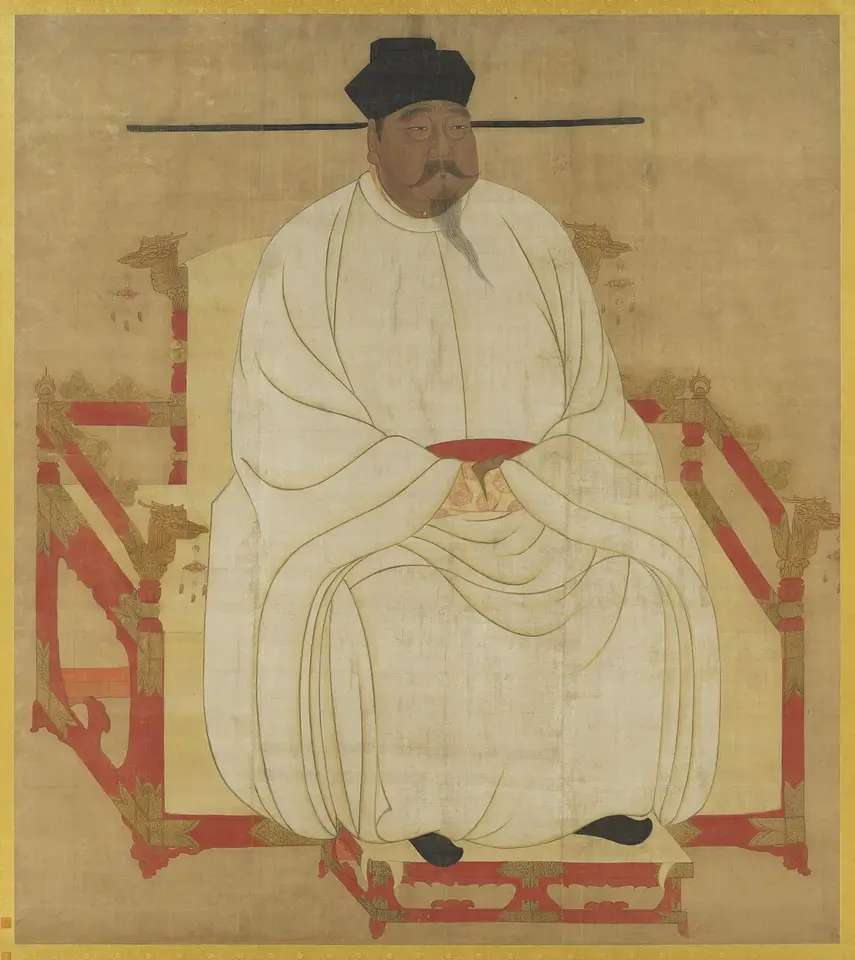
陆佃
Lu Dian (陆佃, 1042–1102), courtesy name Nongshi, art name Taoshan, was an ancestral native of Shanyin, Yuezhou (modern Shaoxing, Zhejiang Province), an eminent scholar, classical exegete, lexicographical taxonomist, and senior statesman of the Northern Song dynasty, as well as the grandfather of renowned Southern Song patriotic poet Lu You. In his youth, Lu Dian immersed himself in the Confucian canon, becoming a premier…
Lu Dian (陆佃, 1042–1102), courtesy name Nongshi, art name Taoshan, was an ancestral native of Shanyin, Yuezhou (modern Shaoxing, Zhejiang Province), an eminent scholar, classical exegete, lexicographical taxonomist, and senior statesman of the Northern Song dynasty, as well as the grandfather of renowned Southern Song patriotic poet Lu You. In his youth, Lu Dian immersed himself in the Confucian canon, becoming a premier disciple of Grand Councilor Wang Anshi, who prized his mastery of ancient institutional measures and character etymologies. In 1070, during the third year of the Xining era under Emperor Shenzong, Lu Dian obtained the jinshi degree, receiving appointment as Lecturer in the Directorate of Education to participate in compiling the official New Meanings of the Three Classics (Sanjing Xinyi). Possessing an independent intellect and unbending moral integrity, he honored Wang Anshi throughout his life yet refused to blindly endorse administrative overreach. He repeatedly submitted candid memorials to Emperor Shenzong highlighting the abuses and popular suffering caused by the Green Sprouts Law and the Market Trade Law, winning the sovereign's profound admiration for his impartial rectitude. During the protracted factional struggles of the Northern Song, Lu Dian steadfastly refused to align with partisan cliques: under the Yuanyou conservative regency, he refused to join wholesale attacks on Wang Anshi's scholarship, serving as Secretariat Drafter and Palace Remonstrance Official; when the New Policies faction returned to power under Emperor Zhezong during the Shaosheng era, he courageously spoke out to defend Sima Guang and Fan Chunren from posthumous degradation, enduring successive demotions orchestrated by Cai Jing and other courtiers. In 1101, during the first year of the Jianzhong Jingguo era under Emperor Huizong, the court sought to heal factional fractures, appointing Lu Dian Left Assistant Director of the Department of State Affairs (Vice Grand Councilor). However, in 1102, Cai Jing seized dictatorial power and compiled the notorious "Yuanyou Partisan Stele," exiling Lu Dian to Haizhou; he succumbed to illness en route at the age of sixty-one. During the reign of Emperor Lizong of Southern Song, he was posthumously invested as Grand Preceptor and created Duke of Chu. A master of textual scholarship, Lu Dian made pioneering contributions to ancient Chinese lexicography and natural taxonomy; his twenty-volume thesaurus Pi Ya established a systematic model for biological and botanical exegesis, alongside his New Meanings of the Erya, Later Commentary on the Spring and Autumn Annals, and Collected Works of Taoshan.
Born into a cultured scholar-official lineage in Shanyin, Yuezhou, displaying intense scholarly devotion.
Traveled to the capital, studying under Wang Anshi and mastering classical philology and institutional nomenclature.
Attained the jinshi degree, appointed Lecturer in the Directorate of Education, and assisted in compiling the New Meanings of the Three Classics.
Served as Secretariat Drafter and Palace Remonstrance Official, refusing to join partisan assaults on his mentor's scholarship.
Stood alone in protesting political purges against Sima Guang and Su Shi, incurring demotion to Jiangning Prefecture.
Recalled to court as Left Assistant Director of the Department of State Affairs, advocating political reconciliation.
Inscribed on Cai Jing's factional stele and banished to Haizhou, passing away en route at sixty-one; later created Duke of Chu.
Lu Dian was born in 1042 in Shanyin, Yuezhou, into an established scholar-official clan of the Jiangnan region. His father, Lu Zhen, had served in the central civil administration. From childhood, Lu Dian exhibited precocious intellectual maturity, reading through hundreds of volumes of historical chronicles and classical texts, with particular interest in phonology, lexicography, and ancient nomenclatures.
During the Zhiping and Xining eras, Wang Anshi conducted scholarly academies in Jiangning and Kaifeng, promoting practical statecraft and Confucian canonical reform. Drawn by Wang Anshi's intellectual vigor, Lu Dian journeyed to the capital to study under his guidance. Wang Anshi recognized Lu Dian's exceptional erudition, mentoring him in Confucian exegesis and linguistic theory. Lu Dian was universally recognized alongside Lü Huiqing and Cai Bian as one of the preeminent minds of the school of Wang Anshi.
In 1070, Lu Dian participated in the imperial civil service examinations and passed with the jinshi degree. Emperor Shenzong granted him an audience, admiring the dignified gravity of his compositions, and commissioned him Lecturer in the Directorate of Education, appointing him to assist Wang Anshi in drafting the official New Meanings of the Three Classics.
During the nationwide implementation of the New Policies, the reformist camp frequently prioritized aggressive administrative enforcement, condemning divergent opinions as obstructionism. Although Lu Dian revered Wang Anshi as his beloved mentor, he maintained independent intellectual integrity, refusing to pander to administrative dogma.
When the court promulgated the Green Sprouts Law and the Market Trade Law, predatory sub-bureaucrats converted voluntary state loans into compulsory assessments and abused market stabilization monopolies to squeeze commercial trades. Witnessing commoner distress firsthand, Lu Dian disregarded personal advancement, repeatedly urging Wang Anshi to revise execution guidelines and directly petitioning Emperor Shenzong that state trade offices were impoverishing common households. Emperor Shenzong was deeply impressed by his selfless honesty, remarking: "Among Wang Anshi's countless disciples, only Lu Dian possesses the upright courage to state clearly the successes and failures of the state!"
Subsequently, Lu Dian served as Vice Prefect of Caizhou, Associate in the Court of Imperial Sacrifices, and Gentleman of the Editorial Service, earning high praise for administrative probity, thrift, and compassion.
During the Yuanyou era of Emperor Zhezong, Grand Empress Dowager Gao held the regency and recalled Sima Guang, dismantling the New Policies. Flocks of turncoat officials seized the moment to curry favor by attacking Wang Anshi's character and demonizing reformist scholarship. In contrast, Lu Dian maintained unwavering composure. Appointed Secretariat Drafter and Palace Remonstrance Official, he exercised rigorous impartiality in reviewing court edicts, rejecting slanderous memorials aimed at defaming his late teacher and upholding Confucian scholarly dignity.
In 1094, when the Shaosheng era commenced under Zhezong's personal rule, reformist ministers Zhang Dun and Cai Bian reclaimed authority, reinstituting the New Policies while unleashing ruthless reprisals against Yuanyou conservative officials. Although Sima Guang had already passed away, extremists proposed digging up his tombstone and posthumously confiscating his titles, while banishing Lü Dafang, Liu Zhi, and Su Shi to distant borders. Terrified officials fell silent, yet Lu Dian bravely submitted memorials protesting that Sima Guang had served as a loyal pillar of the state and deserved honorable remembrance. Enraged by his defiance, Zhang Dun banished him from the capital to govern Jiangning, later moving him to Taizhou and Bozhou.
In 1101, upon Emperor Huizong's accession, Empress Dowager Xiang sought to end decades of factional hatred by recalling upright elder statesmen. Lu Dian returned to Kaifeng as Minister of Personnel and was elevated to Left Assistant Director of the Department of State Affairs (Vice Grand Councilor). In the state council, Lu Dian actively promoted leniency, reversing wrongful convictions and recommending virtuous officials across ideological divides.
However, in 1102, Cai Jing allied with palace eunuchs to claim the grand councillorship, reviving factional persecution. Cai Jing erected the "Yuanyou Partisan Stele," branding over three hundred scholars and officials—including Sima Guang, Su Shi, and Lu Dian—as factional criminals. Lu Dian was dismissed from his council post and banished to Haizhou. Stricken with sorrow and exhaustion, he fell critically ill while traveling through the Huai River basin, dying in the spring of 1102 at sixty-one. Following the founding of the Southern Song, Emperor Lizong fully cleared his name, posthumously investing him as Grand Preceptor and Duke of Chu.
While politically independent, Lu Dian achieved enduring eminence through monumental scholarship, standing as a founding master of Song dynasty textual philology and institutional taxonomy. He dedicated his life to rectifying classical terms, correcting errors made by Han and Tang commentators regarding flora, fauna, and ritual artifacts.
His masterpiece, the twenty-volume Pi Ya, organized ancient terms into eight categories: plants, trees, birds, beasts, insects, fish, and artifacts. Drawing exhaustively from ancient literature, he explicated the ecology, medicinal properties, and cultural resonance of natural entities mentioned in the Classic of Poetry and pre-Qin texts. His meticulous scholarship positioned Pi Ya as the most significant successor to the Erya in the history of traditional Chinese natural lexicography. He also produced the New Meanings of the Erya, the Later Commentary on the Spring and Autumn Annals, and the Collected Works of Taoshan. His grandson, Lu You, inherited his deep classical learning and moral steadfastness, rising to become the premier patriotic poet of the Southern Song.
Studying under Wang Anshi in youth, he passed the jinshi examination in 1070, served as Lecturer in the Directorate of Education, and contributed to the New Meanings of the Three Classics.
Refusing to blindly endorse policy excesses despite close personal ties to Wang Anshi, his honest criticisms of bureaucratic corruption won the deep praise of Emperor Shenzong.
Upholding scholarly dignity during the Yuanyou era and courageously defending Sima Guang from posthumous persecution during the Shaosheng era, he endured repeated exile without compromise.
Rising to Left Assistant Director of the Department of State Affairs under Huizong, his landmark twenty-volume lexicographical work Pi Ya established him as a founding figure in traditional Chinese taxonomy.
FIGURES ASSOCIATED WITH THIS DYNASTY