Lineage and Early Genius
Born into the prestigious Pingyuan Liu lineage; demonstrated precocious mastery of Daoist metaphysics and classical texts.
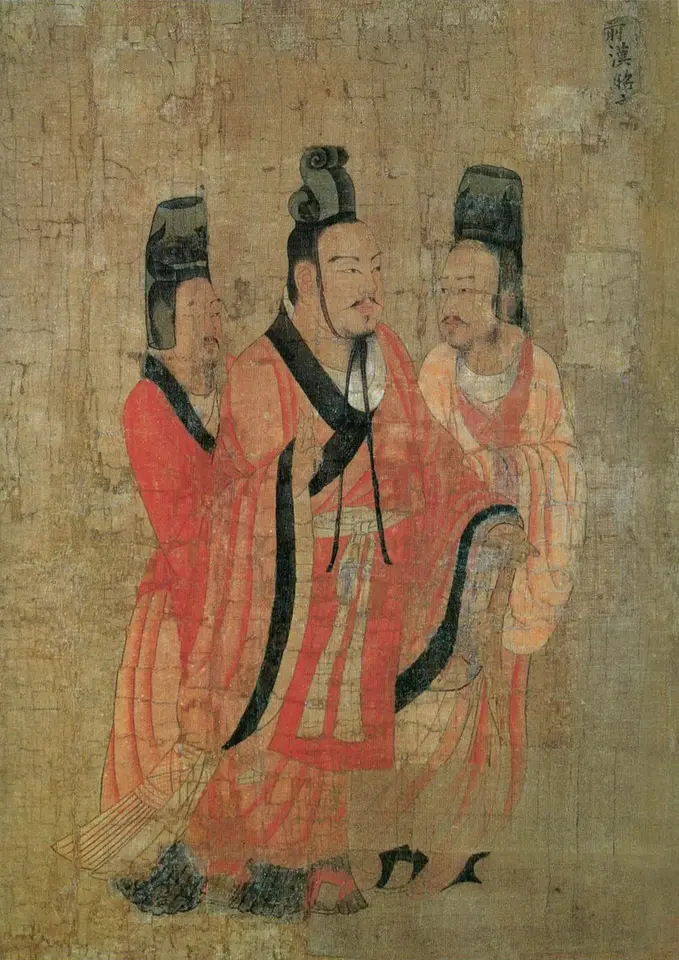
刘昭
Liu Zhao (刘昭, c. 475–535), courtesy name Xuanqing (宣卿), was a native of Gaotang County, Pingyuan Commandery (present-day Gaotang, Shandong Province). He was an illustrious historian, evidential scholar, and literary annotator during the Southern Dynasties Liang. Liu Zhao descended from the prominent Pingyuan Liu scholarly lineage, being the ninth-generation descendant of Western Jin Grand Commandant Liu Shi, the grandson of…
Liu Zhao (刘昭, c. 475–535), courtesy name Xuanqing (宣卿), was a native of Gaotang County, Pingyuan Commandery (present-day Gaotang, Shandong Province). He was an illustrious historian, evidential scholar, and literary annotator during the Southern Dynasties Liang. Liu Zhao descended from the prominent Pingyuan Liu scholarly lineage, being the ninth-generation descendant of Western Jin Grand Commandant Liu Shi, the grandson of Liu Song Chamberlain for the Palace Revenues Liu Bolong, and the son of Southern Qi Secretarial Counselor Liu Biao. Endowed with penetrating intellect from youth, he mastered the profound metaphysics of the Laozi and Zhuangzi, developing into a broadly learned scholar whose literary talent earned the highest acclaim from his maternal cousin, the renowned Liang literary statesman Jiang Yan. Entering officialdom under Emperor Wu of Liang, Liu Zhao served as Gentleman in Waiting, Record-Keeper Counselor in the central headquarters of Prince Linchuan (Xiao Hong), and Gentleman of Direct Transmission, concluding his administrative career as Magistrate of Shan County in Kuaiji. Liu Zhao's paramount contribution to Chinese classical historiography was his monumental annotation and structural integration of the Eastern Han standard histories. Earlier, his uncle Liu Rong had gathered competing Western Jin annals to annotate Gan Bao's Jin Ji in forty fascicles. Continuing this family legacy of rigorous textual collation, Liu Zhao addressed the critical historiographical lacuna left by Fan Ye's celebrated Book of the Later Han, which contained only imperial annals and biographies because Fan Ye had been executed before his ten projected institutional treatises could be written. Over decades of exhaustive research, Liu Zhao gathered the surviving fragments of eight distinct Wei-Jin histories of the Eastern Han to collate Fan Ye's ninety fascicles of annals and memoirs. Recognizing that the Eight Treatises (Ba Zhi) in Sima Biao's 80-fascicle Xu Hanshu represented the finest institutional scholarship of the era, Liu Zhao extracted them, reorganized them into thirty fascicles, and compiled encyclopedic commentaries citing hundreds of early texts, titled Annotated and Supplemented Later Han Treatises (Zhu Bu Hou Han Zhi). Liu Zhao's commentaries preserved immense quantities of rare fragments from classical, legal, ritual, and geographic texts that subsequently disappeared during the Tang and Song dynasties. In 1022, the Northern Song Directorate of Education officially published the combined canonical edition of Fan Ye's annals and biographies alongside Liu Zhao's annotated edition of Sima Biao's Eight Treatises, establishing the definitive, complete Book of the Later Han as preserved to this day. Author also of the one-fascicle Biographies of Notable Children (Youtong Zhuan) and a ten-fascicle literary collection, Liu Zhao remains universally celebrated as an exemplary pioneer of evidential historiographical annotation.
Born into the prestigious Pingyuan Liu lineage; demonstrated precocious mastery of Daoist metaphysics and classical texts.
Gained widespread acclaim for erudite essays; senior literary statesman and maternal cousin Jiang Yan praised his rare scholarship.
Following Liang dynastic founding, appointed Gentleman in Waiting and summoned as Record-Keeper Counselor to Prince Linchuan Xiao Hong.
Inherited family tradition of historical annotation, gathering eight Wei-Jin Eastern Han histories to systematically collate Fan Ye's text.
Extracted the Eight Treatises from Sima Biao's Xu Hanshu, reorganized them into thirty fascicles, and compiled exhaustive evidential commentaries.
Completed the 130-fascicle Collected Annotations on the Later Han, presenting it to Emperor Wu to universal court acclaim for encyclopedic breadth.
Served as Gentleman of Direct Transmission and Magistrate of Shan County; governed with benevolent simplicity and died in office at approximately sixty.
Liu Zhao was born into the prestigious Pingyuan Liu clan, an aristocratic lineage renowned since the Han and Wei dynasties for unwavering adherence to classical Confucian learning and statecraft. He was the ninth-generation direct descendant of Liu Shi, the illustrious Grand Commandant and Confucian statesman of the Western Jin. His grandfather, Liu Bolong, served as Chamberlain for the Palace Revenues under the Liu Song, celebrated across the realm for exemplary filial mourning, prompting founding Emperor Wu of Song to dispatch the crown prince and imperial princes to offer condolences. His father, Liu Biao, served as Secretarial Counselor to Prince Jin'an Xiao Zimao during the Southern Qi, earning wide respect for literary refinement.
Surrounded by exceptional family scholarship, Liu Zhao displayed remarkable intellectual curiosity from his childhood. In addition to mastering the Confucian Five Classics, he demonstrated early insight into the profound metaphysics of the Laozi and Zhuangzi, combining rigorous textual discipline with philosophical agility. Reaching maturity, he read indefatigably through imperial annals, bureaucratic registers, and geographic surveys of the Han, Wei, and Jin periods.
His maternal cousin was Jiang Yan, one of the supreme literary titans and high officials spanning the Liu Song, Southern Qi, and Liang dynasties. When Jiang Yan read Liu Zhao's historical compositions and textual critiques, he was astonished by the youth's meticulous verification and eloquent prose. Jiang Yan actively introduced and praised Liu Zhao among high ministers and literary circles in Jiankang, establishing Liu Zhao's scholarly reputation across the southern capital.
In 502, Emperor Wu founded the Liang dynasty, actively recruiting eminent Confucian scholars to restore civil governance and cultural institutions. Liu Zhao entered imperial administration as Gentleman in Waiting. Soon afterward, Emperor Wu's younger brother, the powerful Prince of Linchuan Xiao Hong, established his headquarters as General of the Central Army and recruited Liu Zhao as Record-Keeper Counselor. In this post, Liu Zhao oversaw ministerial correspondence, memorials, and archival documentation, which afforded him comprehensive access to imperial library collections and private historical archives.
Liu Zhao's devotion to evidential historiography was rooted in an exceptional family tradition. His paternal uncle, Liu Rong, had previously addressed the confusion caused by more than twenty competing dynastic histories of the Western Jin by compiling variant readings to annotate Gan Bao's Jin Ji in forty fascicles, establishing a respected precedent of critical comparative commentary.
Observing contemporary historiographical developments from within the princely headquarters, Liu Zhao perceived that while numerous scholars had compiled histories of the Eastern Han, serious textual problems persisted. Liu Zhao resolved to carry forward his uncle's legacy, dedicating his life to a far more demanding project: collating and completing the definitive history of the Eastern Han dynasty.
The historiography of the Eastern Han had been fragmented since the compilation of the official Dongguan Hanji in Luoyang, inspiring dozens of private annalistic and biographical works by Xie Cheng, Sima Biao, Hua Jiao, Xie Shen, and Yuan Shansong. During the Yuanjia era of Liu Song, historian Fan Ye synthesized these materials into his celebrated 90-fascicle Book of the Later Han, comprising ten imperial annals and eighty biographical memoirs.
Tragically, Fan Ye was implicated in Prince Pengcheng Liu Yikang's political conspiracy and executed in 445 before he could compile his planned ten institutional treatises. As a result, Fan Ye's history circulated for nearly a century as an incomplete work, devoid of vital institutional records concerning state sacrifices, rituals, astronomy, calendrical sciences, administrative offices, and commandery geography.
Determined to resolve this monumental defect, Liu Zhao initiated an ambitious research project. He gathered eight distinct Wei-Jin histories of the Eastern Han, rigorously collating discrepancies in dates, titles, and events across Fan Ye's ninety fascicles of annals and biographies.
Crucially, Liu Zhao surveyed surviving Eastern Han treatises and concluded that the Eight Treatises in Sima Biao's eighty-fascicle Xu Hanshu—covering Calendrical Science, Rites, Sacrifices, Astronomy, Five Phases, Commanderies and States, Hundred Officials, and Carriages and Vestments—were the most rigorous and exhaustive. Liu Zhao extracted Sima Biao's Eight Treatises, restructured them into thirty fascicles conforming to Fan Ye's format, and compiled encyclopedic commentaries verifying official titles, geographical changes, and ritual protocols.
After more than a decade of unremitting toil, Liu Zhao completed his 130-fascicle masterwork, Collected Annotations on the Later Han. When presented to Emperor Wu, court ministers and scholars acclaimed the work for its encyclopedic breadth, establishing it as the pinnacle of Southern Dynasties evidential scholarship.
Following the completion of his magnum opus, Liu Zhao advanced to Gentleman of Direct Transmission and was subsequently appointed Magistrate of Shan County in Kuaiji Commandery. Shan County was situated amid the scenic landscapes of eastern Zhejiang, characterized by simple folkways alongside demanding tax quotas. In office, Liu Zhao governed with benevolent clarity, lightening corvee demands, resolving local litigation impartially, and nurturing the livelihood of the common people.
In his leisure hours, Liu Zhao continued writing, authoring Biographies of Notable Children (Youtong Zhuan) in one fascicle to chronicle the virtues of precocious historical youths, alongside a ten-fascicle anthology of his own poetry and inscriptions. In the early Datong era, Liu Zhao died in office at Shan County at approximately sixty years of age.
His scholarly traditions flourished through his descendants. His eldest son, Liu Tiao, mastered the Three Ritual Canons, served as Vice Minister of Sacrifices, and authored the 10-fascicle Original Annals of Ancient Sages; his younger son, Liu Huan, served as Chief Secretary to Prince Xiangdong Xiao Yi (Emperor Yuan of Liang), celebrated throughout Jingzhou for intellectual breadth and elegant demeanor.
Liu Zhao's preeminent achievement in Chinese historiography was single-handedly completing and preserving the Book of the Later Han, ensuring its canonical status among China's "Four Early Standard Histories."
For eight decades following Fan Ye's death, scholars were frustrated by the absence of institutional treatises in Fan's work, forced to consult fragmented and contradictory manuscripts. Liu Zhao's scholarly insight led him to integrate Sima Biao's Eight Treatises with Fan Ye's annals and biographies.
In his annotations, Liu Zhao expanded the Eight Treatises into thirty fascicles, providing meticulous commentaries:
His commentaries revitalized Sima Biao's scholarship, providing medieval and later scholars with an indispensable bridge to ancient Han institutions. During the Tang dynasty, official compilers relied directly on Liu Zhao's commentaries. In 1022, Northern Song scholar Sun Shi petitioned Emperor Zhenzong to print Liu Zhao's annotated treatises alongside Fan Ye's text. This combined publication established the definitive 120-fascicle standard history known today.
The textual value of Liu Zhao's Collected Annotations on the Later Han lies in its preservation of immense quantities of early historical literature that subsequently disappeared.
During the upheavals of the Sui, Tang, and Five Dynasties transitions, almost all independent Wei-Jin Eastern Han chronicles were lost. However, Liu Zhao's commentaries preserved verbatim extracts from Xie Cheng, Hua Jiao, Xue Ying, Xie Shen, and Yuan Shansong, alongside fragments from Ying Shao's Fengsu Tongyi, Cai Yong's Duduan, Qiao Zhou's Gushi Kao, and Zhi Yu's Jueyi Yaozhu.
During the Qing dynasty, Qianlong-Jiaqing evidential scholars such as Hui Dong, Qian Daxin, Yao Zhiyong, Wang Wentai, and Wang Xianqian treated Liu Zhao's commentaries as their foremost textual goldmine when reconstructing lost pre-Tang texts. Modern historians acknowledge that without Liu Zhao's citations, our understanding of Eastern Han institutions and provincial geography would be riddled with irreparable voids.
Liu Zhao established a new evidential paradigm for standard historical commentary in early medieval China.
While Pei Songzhi's commentary on Records of the Three Kingdoms had pioneered the method of citing diverse sources to resolve narrative discrepancies, Pei focused primarily on biographical narratives and political maneuvers. Liu Zhao expanded this evidential method into institutional history, ritual protocol, astronomy, calendrics, and historical geography. Liu avoided speculative rhetoric, adhering strictly to verifiable primary evidence, documenting citations meticulously, and presenting conflicting accounts impartially.
This empirical methodology directly inspired Li Xian's Tang commentary on Fan Ye's Book of the Later Han and Sima Zhen's Shiji Suoyin, providing a model for the evidentiary scholarship of the late imperial period and establishing Liu Zhao as an enduring master of Chinese historiography.
FIGURES ASSOCIATED WITH THIS DYNASTY