Mountain Hermitage
Engaged in intensive classical studies in seclusion at Mount Song, mastering regulated verse prosody.
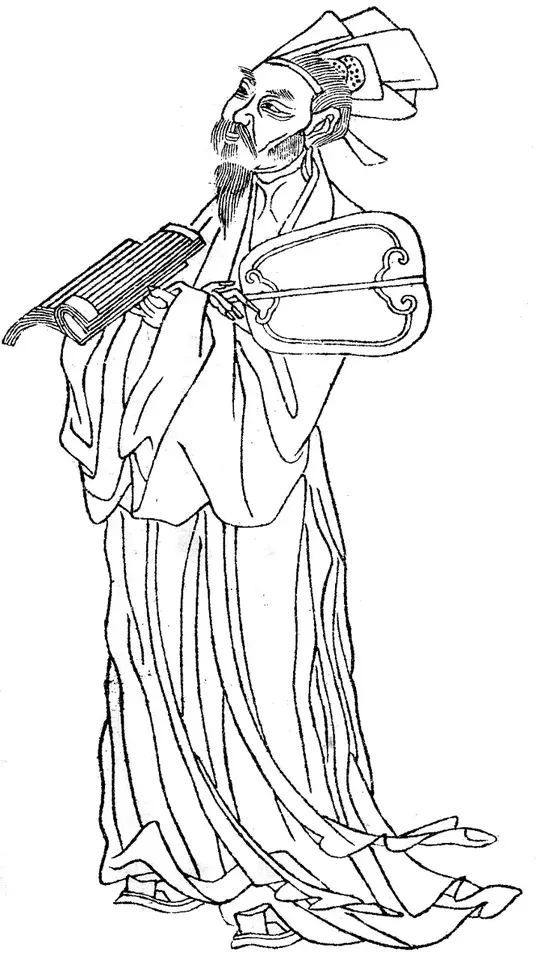
刘长卿
Liu Changqing (刘长卿, c. 709–c. 789), courtesy name Wenfang, was a native of Hejian in present-day Hebei (alternatively recorded as Xuanzhou or Luoyang) and one of the most illustrious poets of the mid-Tang dynasty. In his youth, he studied in the quietude of Mount Song before earning his jinshi degree during the Tianbao reign of Emperor Xuanzong. Appointed defender of Changzhou county during the Zhide era, his uncompromising…
Liu Changqing (刘长卿, c. 709–c. 789), courtesy name Wenfang, was a native of Hejian in present-day Hebei (alternatively recorded as Xuanzhou or Luoyang) and one of the most illustrious poets of the mid-Tang dynasty. In his youth, he studied in the quietude of Mount Song before earning his jinshi degree during the Tianbao reign of Emperor Xuanzong. Appointed defender of Changzhou county during the Zhide era, his uncompromising integrity incurred the wrath of corrupt superiors, leading to false imprisonment until he was cleared by imperial amnesty. He subsequently held posts including acting magistrate of Haiyan, transportation administrative judge, and regional commissioner of transport in Huaxi and Eyue. Characterized by unyielding rectitude and proud self-assurance, Liu clashed with Regional Surveillance Commissioner Wu Zhongru, who fabricated embezzlement charges that resulted in his demotion to assistant magistrate of Muzhou. Under Emperor Dezong, Liu was vindicated and promoted to Prefect of Suizhou, governing with exceptional benevolence and earning the enduring title "Liu Suizhou." When the warlord Li Xilie revolted and engulfed Suizhou in warfare, Liu evacuated and traveled through Jiangxi, concluding his career as an honored counselor on the staff of Regional Military Commissioner Du You in Huainan. Celebrated across the empire for his peerless mastery of five-character regulated verse (wuyan lüshi), contemporary literati praised him as the "Great Wall of Five-Character Verse." Masterpieces such as Seeking Shelter at Lotus Mountain during a Snowstorm and Bidding Farewell to Venerable Lingche secured his permanent place as a transitional titan between the High Tang and Mid-Tang literary worlds.
Engaged in intensive classical studies in seclusion at Mount Song, mastering regulated verse prosody.
Succeeded in the imperial jinshi examination in Chang'an, but remained without appointment due to factional obstruction.
Appointed defender of Changzhou county under Emperor Suzong; framed by corrupt superiors and imprisoned.
Released under general amnesty; served as acting magistrate of Haiyan, repairing coastal seawalls and restoring order.
Targeted by political enemies and demoted to defender of Nanba in Lingnan; delayed his departure due to severe illness.
Re-examined in Suzhou after the suppression of Liu Zhan's revolt, documenting war-ravaged Jiangnan communities in verse.
Appointed transportation administrative judge and overseer of grain shipments across the Huai and Yangtze rivers.
Clashed with Surveillance Commissioner Wu Zhongru over fiscal rectitude; falsely accused of graft and banished to Muzhou.
Formed a vibrant poetic salon in Muzhou alongside Huangfu Ran, Qin Xi, and Yan Wei, exchanging regulated verse.
Exonerated by Emperor Dezong and promoted to Prefect of Suizhou; administered tax relief and civil restoration.
Stepped down as Prefect when warlord Li Xilie besieged Suizhou, retreating to Jiangzhou.
Served as respected staff advisor to Du You in Huainan; died peacefully in Yangzhou at approximately age eighty-one.
Liu Changqing spent his youth during the prosperous Kaiyuan era. Determined to master scholarship free from metropolitan distractions, he retired to Mount Song near Luoyang, where he pursued classical literature and historical records. He focused intensely on the tonal structures and syntactic parallelisms of five-character regulated verse, developing an effortless technical fluency that defined his literary career.
During the Tianbao reign, Liu journeyed to Chang'an and passed the imperial jinshi examination. However, with Chief Minister Li Linfu monopolizing patronage, unheralded scholars were excluded from lucrative posts. Liu spent several years in the capital awaiting appointment, developing a proud independence and contempt for court sycophants that shaped his turbulent bureaucratic trajectory.
In 756, amidst the upheaval of the An Lushan Rebellion, Emperor Suzong ascended the throne at Lingwu, appointing Liu as defender of Changzhou county in Suzhou. The region was a vital fiscal hub, rife with administrative complexity. Liu carried out his duties with uncompromising judicial rigor, resisting the arbitrary levies demanded by provincial superiors. Resentful officials fabricated charges against him, subjecting him to imprisonment. Although interrogations yielded no evidence of wrongdoing, he languished in prison for months until an imperial amnesty restored his freedom.
In early 758, Liu served as acting magistrate of Haiyan, restoring agrarian order and tax registries along the coast. However, his unbending posture alienated entrenched grandees. In early 760, he was demoted to the distant post of defender of Nanba in Lingnan. Stricken by illness, Liu did not reach his remote southern post. In late 761, he was recalled to Suzhou for formal judicial rehearing. By then, the destructive mutiny of Liu Zhan had devastated the affluent cities of Jiangnan. Wandering through ruined villages, Liu channeled his melancholy into evocative poems commemorating the devastation of civilian livelihoods.
After 770, Liu's administrative ability earned him appointment as transportation judge overseeing the vital grain and salt fleets along the Huai and Yangtze rivers. In this critical logistical role, Liu audited account registries and ensured grain shipments reached the central government.
However, his uncompromising temperament brought him into sharp conflict with his immediate supervisor, Regional Surveillance Commissioner Wu Zhongru. Furious at Liu's refusal to accommodate irregular fiscal requests, Wu fabricated embezzlement charges. Convicted without impartial trial, Liu was stripped of his rank and banished as assistant magistrate to Muzhou. In this scenic retreat along the Xin'an River, Liu formed deep friendships with Jiangnan poets including Huangfu Ran, Qin Xi, and Yan Wei. Their continuous poetic exchanges elevated the elegance and prosodic perfection of mid-Tang poetry.
Following Emperor Dezong's accession in 781, imperial investigators reviewed past corruption trials and fully exonerated Liu, promoting him to Prefect of Suizhou. In Suizhou, Liu reduced burdens on war-weary peasants, repaired defensive stockades, and expedited criminal trials. His benevolent administration earned deep affection from local citizens, who reverently referred to him as "Liu Suizhou."
Between 784 and 785, the rebellion of warlord Li Xilie turned northern Hubei into a battleground. With Suizhou encircled and imperial reinforcements absent, Liu organized local defenses before transferring authority and relocating to Jiangzhou. In his final years, the renowned statesman Du You, appointed military governor of Huainan, invited the venerable poet to join his staff in Yangzhou. Around 789, Liu passed away peacefully at approximately age eighty-one.
Liu Changqing's foremost contribution to Chinese literature lies in elevating the five-character regulated poem (wuyan lüshi) to its aesthetic zenith. Chancellor Quan Deyu recorded that Liu took immense pride in his mastery, proudly boasting that his five-character verse was the "Great Wall"—an impregnable monument of prosodic perfection that no contemporary could breach.
His poems exhibited immaculate tonal symmetry, parallel antithesis, and evocative clarity without a trace of artificial strain. His immortal piece Seeking Shelter at Lotus Mountain during a Snowstorm—with its evocative lines "At dusk the azure peaks recede into distance, in freezing cold the thatched hut stands destitute; at the wicker gate a dog barks, a traveler returns through wind and snow"—remains one of the most beloved lyrics in Chinese literature. His crystalline, mournful landscape style established a definitive pedagogical model for subsequent generations of poets.
Spanning the High Tang and Mid-Tang epochs, Liu personally lived through the An Lushan Rebellion, the Liu Zhan uprising, and regional warlord wars. His writings functioned as an authentic poetic chronicle of a transforming society.
In masterpieces such as Seeing Off an Imperial Graduate Returning South of the River and Five Poems on the Luoyang Highway, he documented the destruction of imperial capitals, the desolation of agrarian landscapes, and the sorrows of displaced civilians. Moving far beyond six dynasties aestheticism, his verses conveyed the profound tragedy of an honest official repeatedly wronged by court intrigue, imbuing classical poetry with historical and ethical resonance.
FIGURES ASSOCIATED WITH THIS DYNASTY