Prince of Beihai
Enfeoffed as Prince of Beihai by Liu Yuan and granted royal favor.
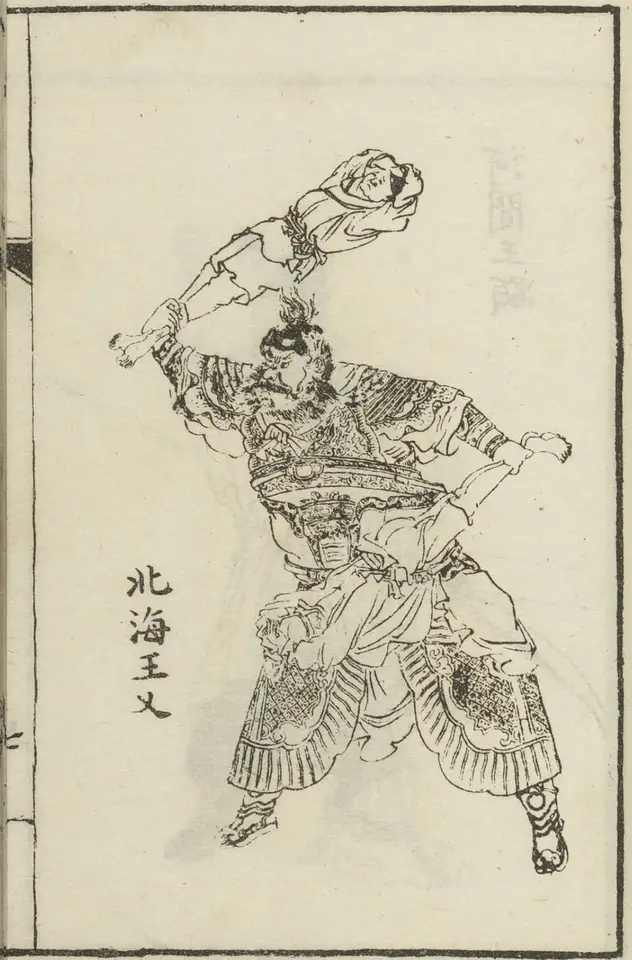
刘乂
Liu Yi was an imperial prince and Crown Brother of the Han Zhao (Former Zhao) state during the Sixteen Kingdoms period. He was the youngest son of Emperor Guangwen (Liu Yuan) and younger half-brother of Emperor Zhaowu (Liu Cong), born to Empress Shan. During Liu Yuan's reign, Liu Yi was deeply favored and initially enfeoffed as Prince of Beihai. In 310, as Liu Yuan lay dying, Liu Yi was commissioned Senior General Who…
Liu Yi was an imperial prince and Crown Brother of the Han Zhao (Former Zhao) state during the Sixteen Kingdoms period. He was the youngest son of Emperor Guangwen (Liu Yuan) and younger half-brother of Emperor Zhaowu (Liu Cong), born to Empress Shan. During Liu Yuan's reign, Liu Yi was deeply favored and initially enfeoffed as Prince of Beihai. In 310, as Liu Yuan lay dying, Liu Yi was commissioned Senior General Who Pacifies the Army and Colonel of City Gates, tasked with assisting Crown Prince Liu He alongside other princes. Shortly thereafter, Prince of Chu Liu Cong launched a palace coup, killed Liu He, and seized power. When Liu Cong offered him the throne, Liu Yi prudently declined, prompting Liu Cong to take the throne and formally designate Liu Yi as Imperial Younger Brother. Gentle, erudite, and steeped in Confucian decorum, Liu Yi strictly adhered to moral propriety. When Liu Cong incorporated female relatives of Grand Protection Liu Yin into the palace despite sharing the same surname, Liu Yi openly protested against the violation of ancestral taboos. Distressed by illicit court conduct, he also remonstrated with his mother Empress Dowager Shan, leading to her suicide and provoking Liu Cong's deep resentment. Liu Cong's eldest son Liu Can subsequently plotted with Jin Zhun to eliminate Liu Yi. In 317, Liu Cong succumbed to slander, demoted Liu Yi back to Prince of Beihai, and placed him under house arrest in the Eastern Palace. Soon afterward, Liu Can's subordinates murdered him. Liu Yi's execution intensified the dynastic succession crisis, accelerating the internal disintegration of the Han Zhao dynasty.
Enfeoffed as Prince of Beihai by Liu Yuan and granted royal favor.
Appointed Senior General Who Pacifies the Army and Colonel of City Gates on Liu Yuan's deathbed.
Declined the throne after Liu He's overthrow; named Imperial Younger Brother by Liu Cong.
Sternly objected to Liu Cong taking spouses of the same surname, defying imperial displeasure.
Framed for treason by Liu Can and Jin Zhun, degraded to Prince of Beihai, and executed in the Eastern Palace.
Liu Yi was born into the prominent Southern Xiongnu royal lineage in Xinxing Commandery. He was the youngest son of Liu Yuan, the founder of Han Zhao, and Empress Shan, daughter of the Di chieftain Shan Zheng. Empress Shan was celebrated for her grace and beauty, making Liu Yi a favored son from his earliest days. During his father's reign, he was created Prince of Beihai.
In 310, as Emperor Liu Yuan became critically ill, he sought to stabilize the succession. He confirmed his eldest son Liu He as crown prince while appointing Liu Yi Senior General Who Pacifies the Army and concurrent Colonel of City Gates, commanding elite palace guards. Liu Yi was charged with co-governing alongside influential princes including Liu Cong, Prince of Chu; Liu Yu, Prince of Qi; and Liu Long, Prince of Lu.
Following Liu Yuan's passing, Crown Prince Liu He assumed the throne. Suspicious and ungenerous, Liu He listened to conspirators and plotted to execute his royal brothers. Liu Cong acted preemptively, storming the palace in Pingyang, executing Liu He and his faction, and seizing supreme control of the state.
After securing the palace, Liu Cong, mindful of Empress Dowager Shan's prestige and Liu Yi's status as a legitimate imperial son, made an ostensible gesture offering the throne to Liu Yi.
The young Liu Yi possessed clear political insight, recognizing that Liu Cong held military hegemony and that accepting the crown would bring certain peril. He adamantly declined, insisting that state affairs required the veteran military leadership of Liu Cong. Liu Cong accepted the crown, elevated Empress Shan to Empress Dowager, and officially proclaimed Liu Yi Imperial Younger Brother, designating him prospective successor.
However, this arrangement fostered deep instability. After ascending the throne, Liu Cong engaged in illicit relations with Empress Dowager Shan. Distressed by this violation of propriety, Liu Yi repeatedly wept and admonished his mother to preserve moral honor. Overcome with shame, Empress Dowager Shan took her own life. Liu Yi's moral rectitude caused Liu Cong intense embarrassment and planted deep seeds of suspicion between the brothers.
Liu Yi was noted for his scholarly demeanor, love for classical learning, and cordial treatment of scholars, embodying traditional Confucian principles. In a court growing increasingly autocratic and volatile, his integrity made him vulnerable to court factions.
In 312, Liu Cong sought to take two daughters and four granddaughters of Grand Protection Liu Yin into the imperial harem. Liu Yi remonstrated vigorously, arguing that marrying women of the same surname violated timeless ritual traditions. Liu Cong dismissed the objection, claiming that their lineages differed because his family was Xiongnu while the Liu clan of Liu Yin was Han Chinese. This sharp confrontation deepened Liu Cong's estrangement from his brother.
Meanwhile, Liu Cong's son Liu Can, who served as Senior General Who Pacifies the Army and Prince of Henan, aggressively campaigned for the heirship. Liu Can's mother, Empress Huyan, persistently urged Liu Cong to prioritize his own sons, warning that if Liu Yi succeeded, the imperial lineage would pass out of Liu Cong's branch. Although Liu Cong hesitated initially, his trust in Liu Yi steadily eroded.
Aware of the looming danger, Liu Yi maintained strict obedience and scrupulously observed ritual boundaries. When retainers urged him to strike first and seize power, he angrily reprimanded them and executed the conspirators to demonstrate loyalty.
In 317, Liu Can joined forces with the scheming commander Jin Zhun to eliminate Liu Yi. Jin Zhun coerced Eastern Palace guards into falsely testifying that Liu Yi was organizing a coup alongside senior generals. Liu Can presented the fabricated confessions to Liu Cong, who immediately demoted Liu Yi from Imperial Younger Brother to Prince of Beihai, confining him under heavy guard in the Eastern Palace.
Shortly thereafter, Liu Can dispatched assassins into the palace compound, who strangled Liu Yi. Following his death, Liu Can was proclaimed crown prince. Liu Yi's demise unleashed rampant internecine bloodshed among the Han Zhao elite, culminating in Jin Zhun's bloody coup and the collapse of the dynasty.
In 310, when Liu Cong seized the imperial capital and offered him the crown, Liu Yi demonstrated exceptional political acuity. Recognizing the military dominance of Liu Cong's faction, he firmly renounced royal claims, averting immediate civil war within the royal house and securing temporary court stability.
In an era marked by shifting loyalties and social upheaval, Liu Yi steadfastly upheld classical Confucian ethical standards. He repeatedly remonstrated against imperial improprieties, risking royal wrath to preserve customary prohibitions against endogamous marriage and familial decorum, earning high regard among contemporary literati.
FIGURES ASSOCIATED WITH THIS DYNASTY